
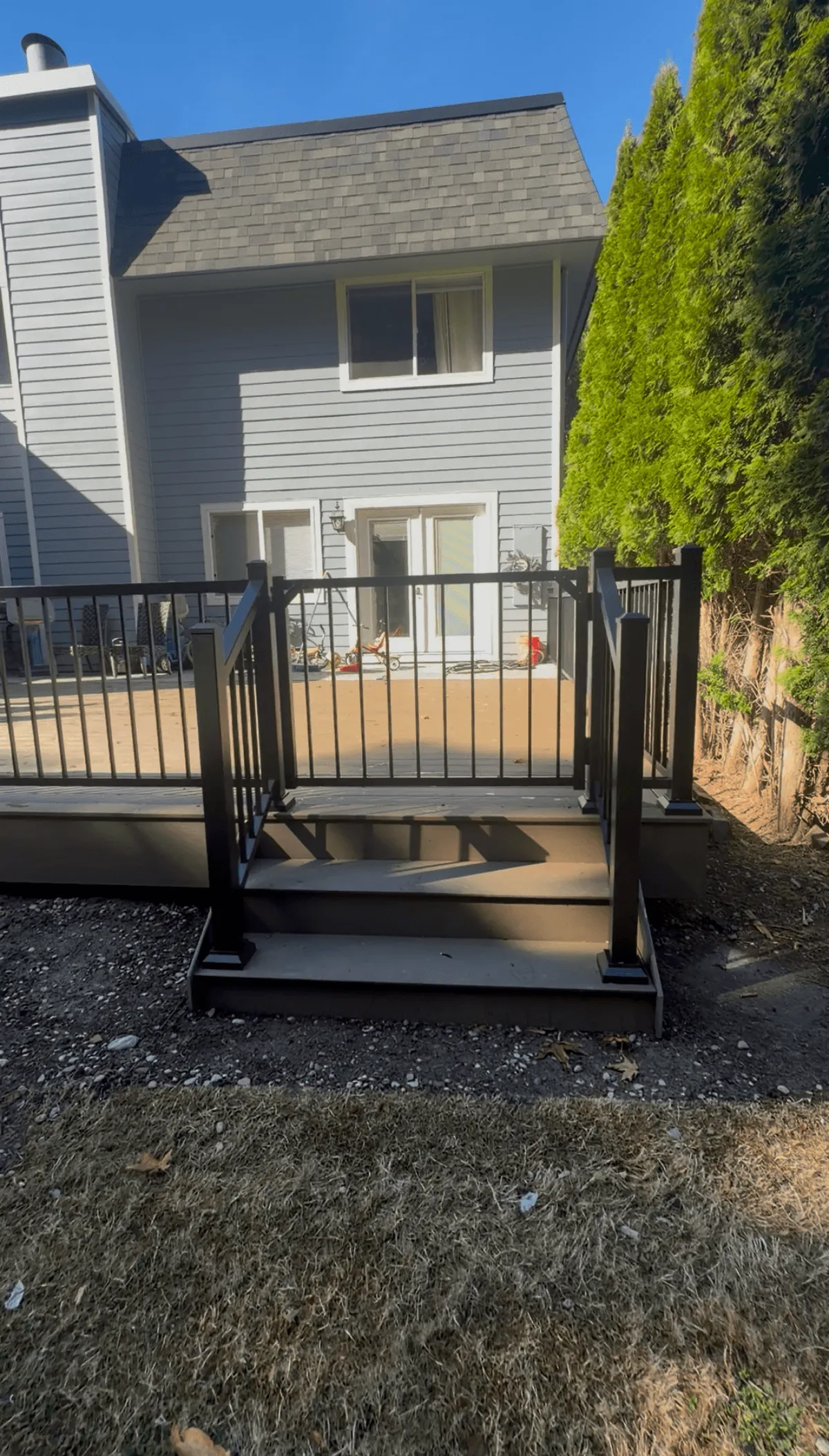
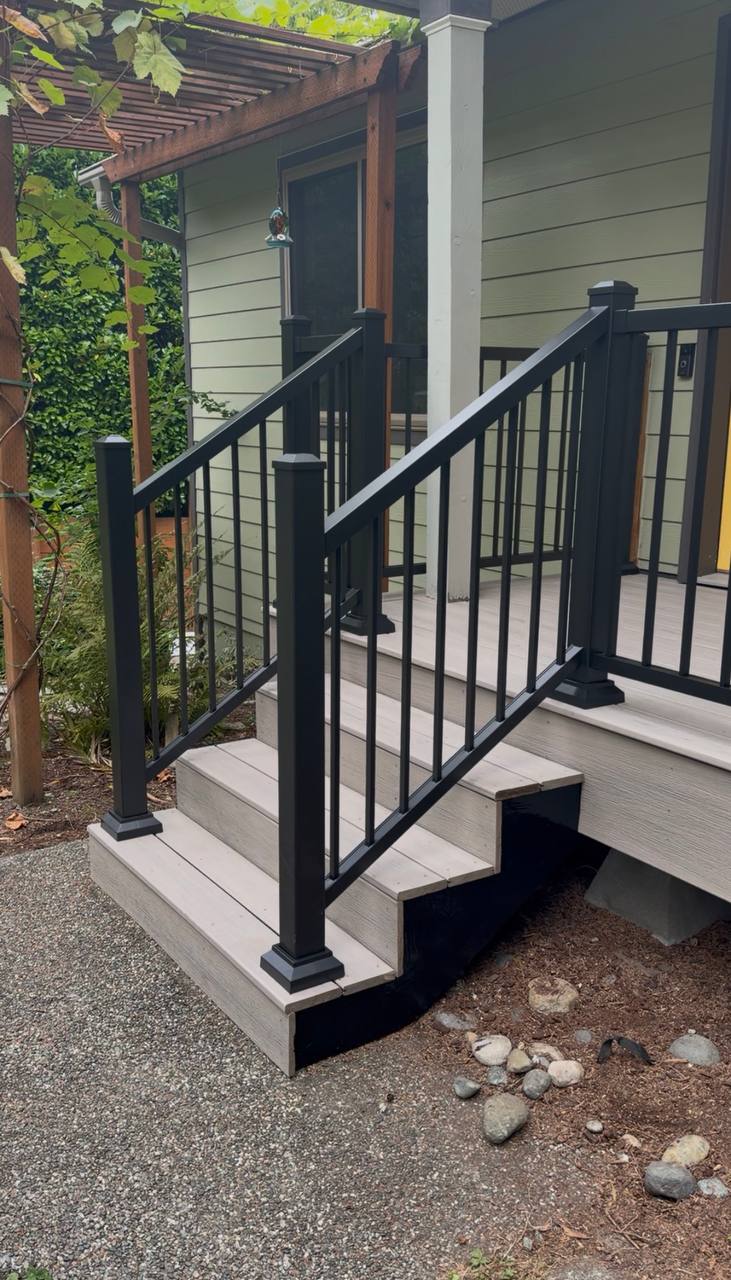
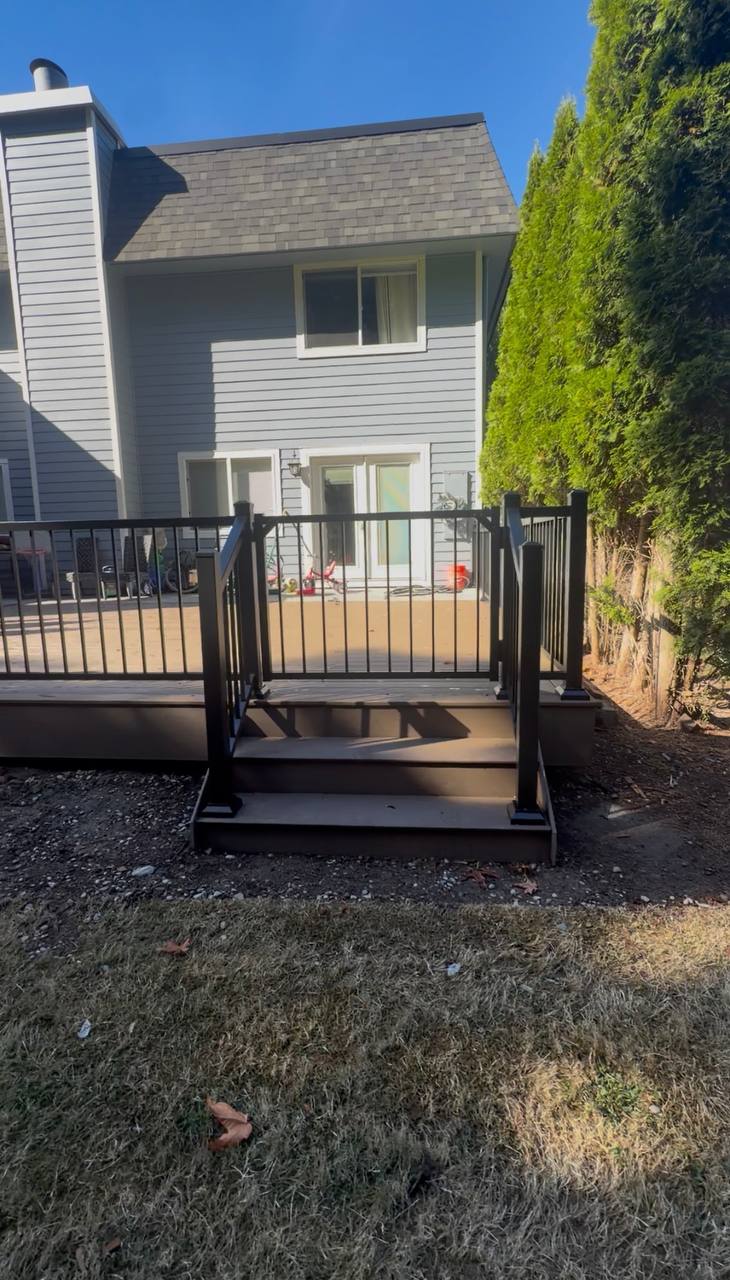
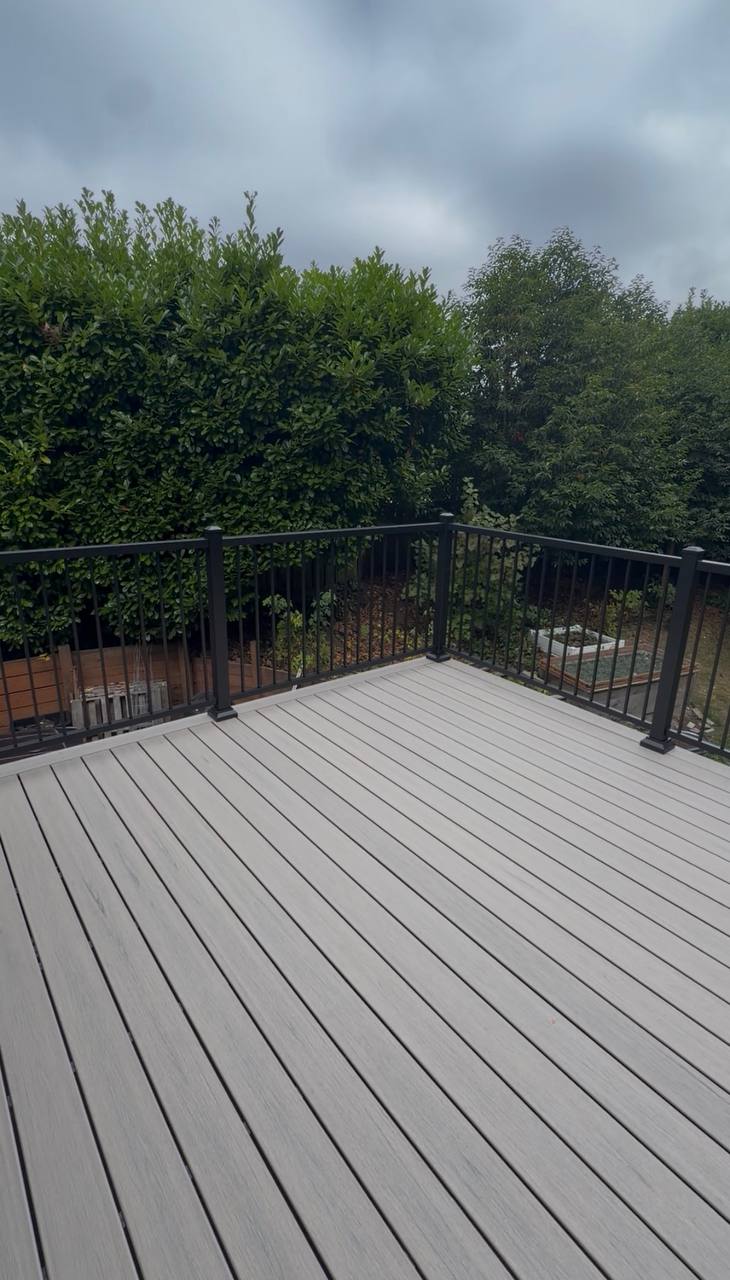
What are Seattle's rules for deck stairs and outdoor steps?
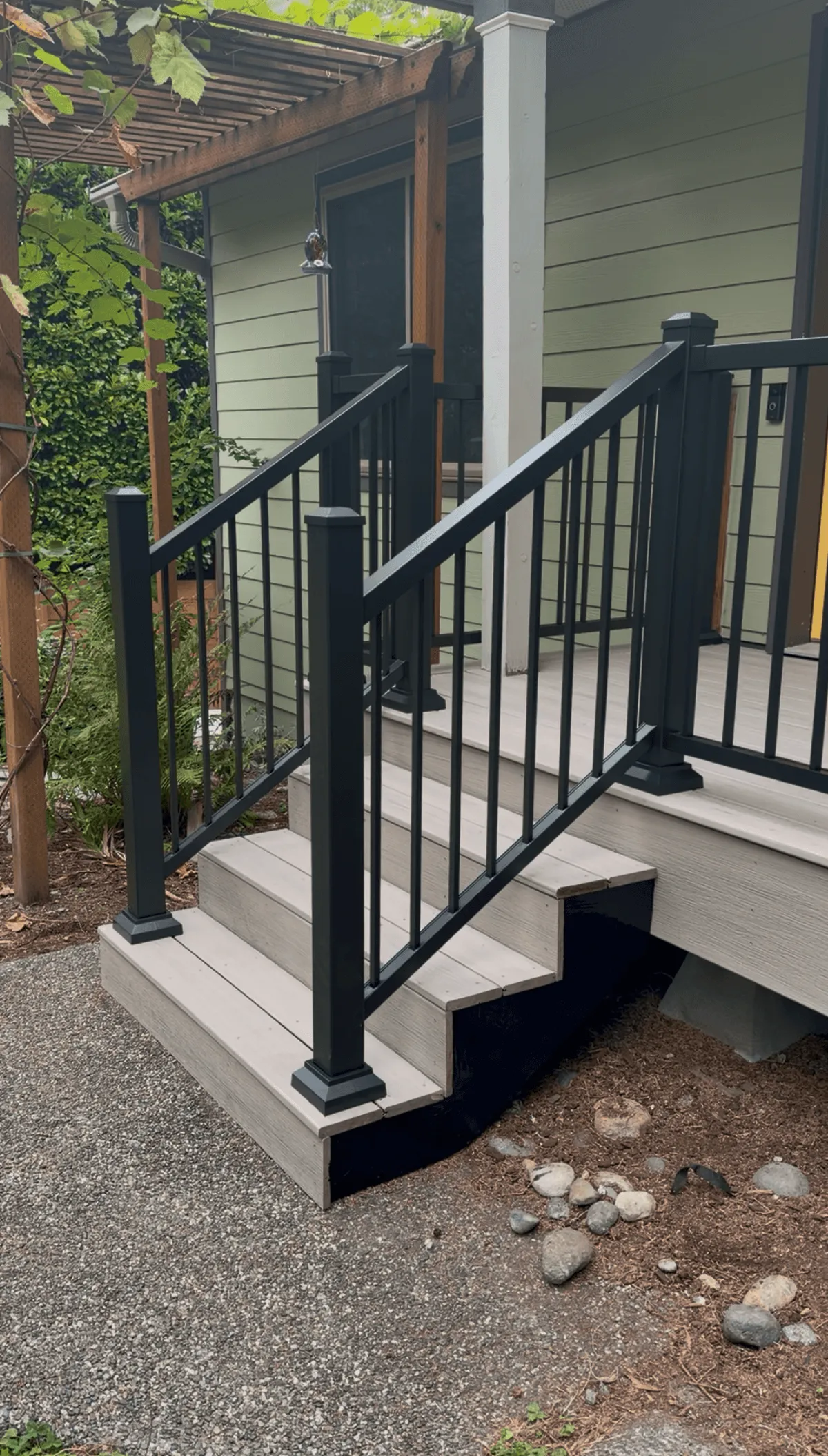
Deck stairs and outdoor steps in Seattle must follow SDCI's stair rules: risers no more than 7¾ inches, treads at least 10 inches deep, and a width of at least 36 inches. Stairs with four or more risers need a handrail 34 to 38 inches above the tread nosing, with a grip 1¼ to 2 inches across. On Seattle's sloped lots, long runs often need a landing or a switchback. Cactus Decking builds new stairs, rebuilds rotted or loose ones, and adds slip-resistant treads for the wet season. Estimates are free and written.
Professional deck stairs in Seattle
Safe, durable transitions between your home, yard, and deck that match the main structure. Cactus Decking, an Everett deck builder, provides Seattle homeowners with practical design guidance, weather-conscious construction, and a clear project process from the first site visit through the final walkthrough.
Planning deck stairs for Seattle properties
Seattle is in King County, about 20 miles from our Everett base. Inside Seattle city limits, deck permits are issued by the City of Seattle; addresses with a Seattle mailing address outside the city limits are permitted by the county. We confirm the jurisdiction for your exact address before pricing.
Compact lots
Tight side yards and small backyards call for compact stair layouts, sometimes with a landing and a turn instead of one long run.
Older homes
Older stairs often have uneven risers or no handrail, so rebuilding them brings them up to today's safety rules.
Trees and shade
Shaded stairs stay wet and grow moss, so slip-resistant treads and good drainage at the landing matter more.
Review complete ZIP-code coverage on our Seattle deck services page. The nearest other cities we serve for deck stairs are Bellevue, Redmond, Bothell and Woodinville.
Signs you may need deck stairs
- Stairs that land in a narrow side yard or block a path
- Uneven risers on stairs built decades ago
- Moss on treads that stays slippery most of the year
- Steps wobble, lean, or feel uneven underfoot
- Treads are slippery when wet or covered in moss
How many steps does your deck need?
- Steps (risers)
- 5, each 7 1/4″ tall
- Treads
- 4
- Stair run
- About 3.3 ft with 10″ treads, 3.7 ft with comfier 11″ treads
- Handrail
- Needed (4 or more risers)
- Deck guard
- Needed: the deck is over 30″ high
Based on IRC defaults. Local rules can differ, so we confirm them for your address.
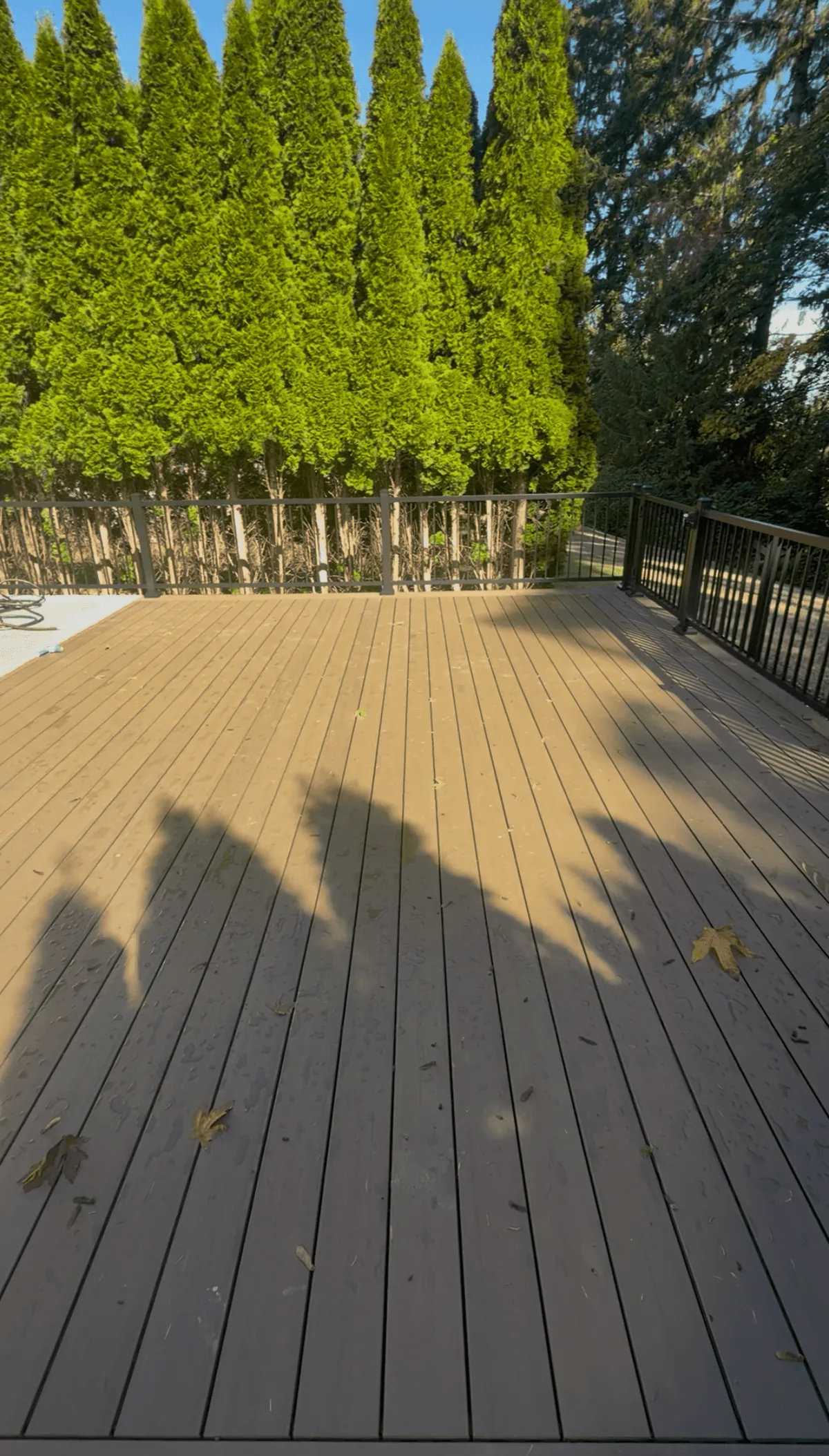
What we plan before deck stairs work starts
Rise and run
Every step is laid out with even riser heights and tread depths so the stairs feel natural.
Landing and footing
The bottom of the stairs lands on a solid pad or footing, not on soil that settles.
Stringers and support
Stringer spacing and mid-span support are planned so treads never flex.
Handrails and lighting
Graspable handrails and stair lights are planned with the stairs, not added later.
Deck stair and outdoor step options in Seattle
Each option meets SDCI's stair rules; the best one depends on how far down the yard is and how much room you have.
Deck Stairs work by Cactus Decking
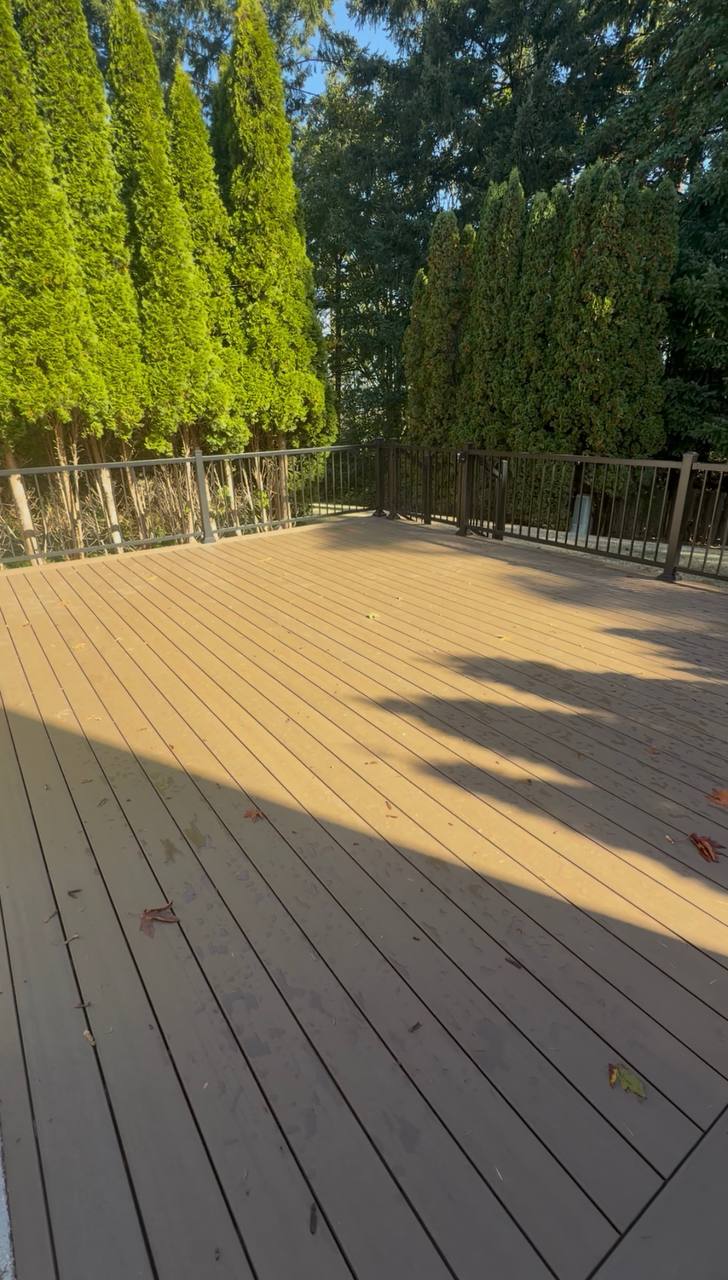
Real Cactus Decking projects from nearby Everett, built by the same crew that works in Seattle.
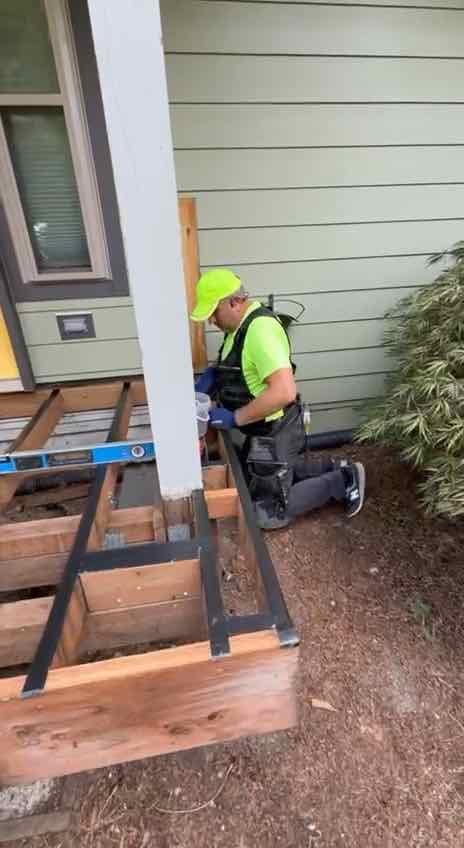
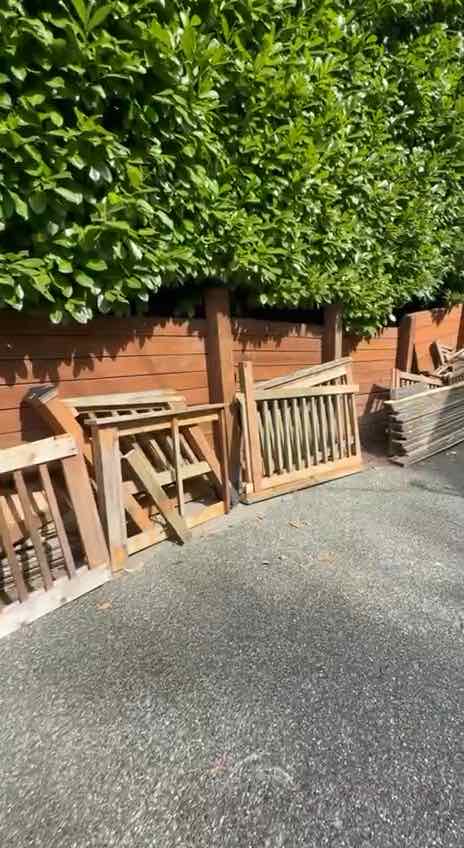
“Mak’s and his crew scheduled time very quickly to come out and take measurements and provided a very thorough and detailed quote breaking everything down. … He and his crew were professional, showed up on time, kept me apprised to any changes throughout the project, made suggestions, and cleaned up every day.”
Deck Stairs near you in Seattle
Searching for “deck stair builders near me”, “deck stairs in Seattle, WA”, “outdoor stairs in Seattle” or “outdoor steps on a sloped Seattle yard”? Cactus Decking is based at 12029 24th Ave SE in Everett (98208), about 20 miles from Seattle, so we give free on-site estimates anywhere in Seattle.
Look up your neighborhood or ZIP code in our Seattle neighborhood finder.
We also serve nearby Bellevue, Redmond, Bothell, Woodinville, Lynnwood, and Mill Creek.
Guides for deck stairs
Sources and building codes
- Seattle Department of Construction & Inspections (SDCI): Decks
- SDCI: Subject-to-Field-Inspection construction permits (Tip 316)
- 2021 Seattle Residential Code, chapter 1 (permit exemptions, R105.2)
- SDCI: Environmentally Critical Areas (ECA) code
- SDCI Director's Rule 7-2024: tree protection tiers
- NOAA 1991–2020 climate normals, Seattle-Tacoma Airport
- U.S. Census Bureau, ACS 2024 table B25034: year structure built, Seattle
What affects deck stairs cost in Seattle?
Your written estimate for deck stairs is based on the actual property. These are the biggest factors:
- Number of steps: total rise from the deck to the ground
- Layout: straight runs versus landings and turns
- Tight access: carrying materials by hand through narrow side yards
- Older structure: opening up and repairing the ledger or framing found during inspection
- Shade and trees: working around roots and planning airflow under the deck
For material options, installation standards, and warranty details, see our main deck stairs page.
Common deck stairs questions
Can you rebuild stairs without replacing the deck?
Yes. Stairs are often the first part of a deck to fail, and Cactus Decking can rebuild them on their own if the deck framing is sound. We set even riser heights and a solid landing at the bottom, and match the new stairs to your existing deck.
Do deck stairs need a handrail in Seattle?
Yes, when the stairs have four or more risers. SDCI requires the handrail to be 34 to 38 inches above the tread nosing, with a hand grip 1¼ to 2 inches across. We install handrails that match the deck railing.
Can you build outdoor stairs down a steep Seattle yard?
Yes. Long runs on sloped lots usually need a landing or switchback to keep each flight within SDCI's 7¾ in. riser and 10 in. tread limits. If the lot is in or near a steep-slope critical area, SDCI requires a site visit before the permit, which we arrange.
Do you work in all of Seattle?
Yes. We serve every Seattle ZIP code; you can look yours up by neighborhood on our Seattle page. Properties near a city boundary may use a neighboring postal city or a different permitting jurisdiction, so include your address and ZIP code with your estimate request.