
What are the deck and stair railing rules in Seattle?
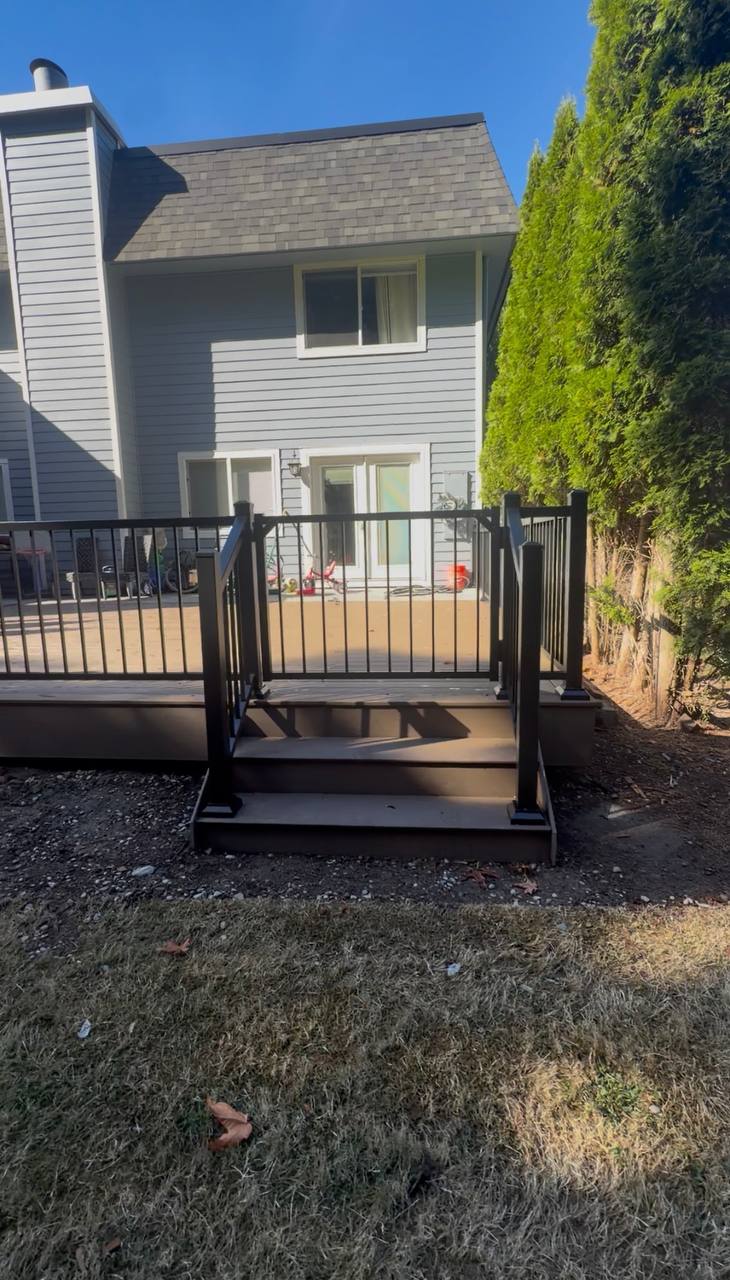
For deck railing in Seattle, SDCI requires a guard on any deck more than 30 inches above the ground or a lower roof, at least 36 inches tall with openings no larger than 4 inches. Stair railing (a handrail) is required with four or more risers, 34 to 38 inches above the tread nosing. Glass guardrails have extra requirements under Seattle Building Code sections 1015.2.1 and 2407 and may need a structural engineer. Cactus Decking installs aluminum, cable, glass, and composite railings, re-anchors loose posts, and replaces old railings on existing Seattle decks. Estimates are free and written.
Professional deck railing systems in Seattle
Code-ready aluminum, metal, composite, cable, glass, or wood railings that improve safety without losing the view. Cactus Decking, an Everett deck builder, provides Seattle homeowners with practical design guidance, weather-conscious construction, and a clear project process from the first site visit through the final walkthrough.
Planning deck railing systems for Seattle properties
Seattle is in King County, about 20 miles from our Everett base. Inside Seattle city limits, deck permits are issued by the City of Seattle; addresses with a Seattle mailing address outside the city limits are permitted by the county. We confirm the jurisdiction for your exact address before pricing.
Compact lots
Close neighbors make privacy a real concern, so we can mix open railing with privacy screens where you need them.
Older homes
Older decks often have railings below today's height or spacing rules, so upgrades bring them up to current guard requirements.
Trees and shade
Under trees, railings collect needles and moss; simple cable or metal systems are easier to keep clean than detailed wood balusters.
Review complete ZIP-code coverage on our Seattle deck services page. The nearest other cities we serve for deck railing systems are Bellevue, Redmond, Bothell and Woodinville.
Signs you may need deck railing systems
- No privacy from the neighbors' windows or yard
- Railing lower than today's standard height
- Moss and needles packed around balusters and post bases
- Posts or railing sections move when you lean on them
- Balusters are loose, missing, or spaced too far apart for kids or pets
Which railing fits your deck?
Aluminum
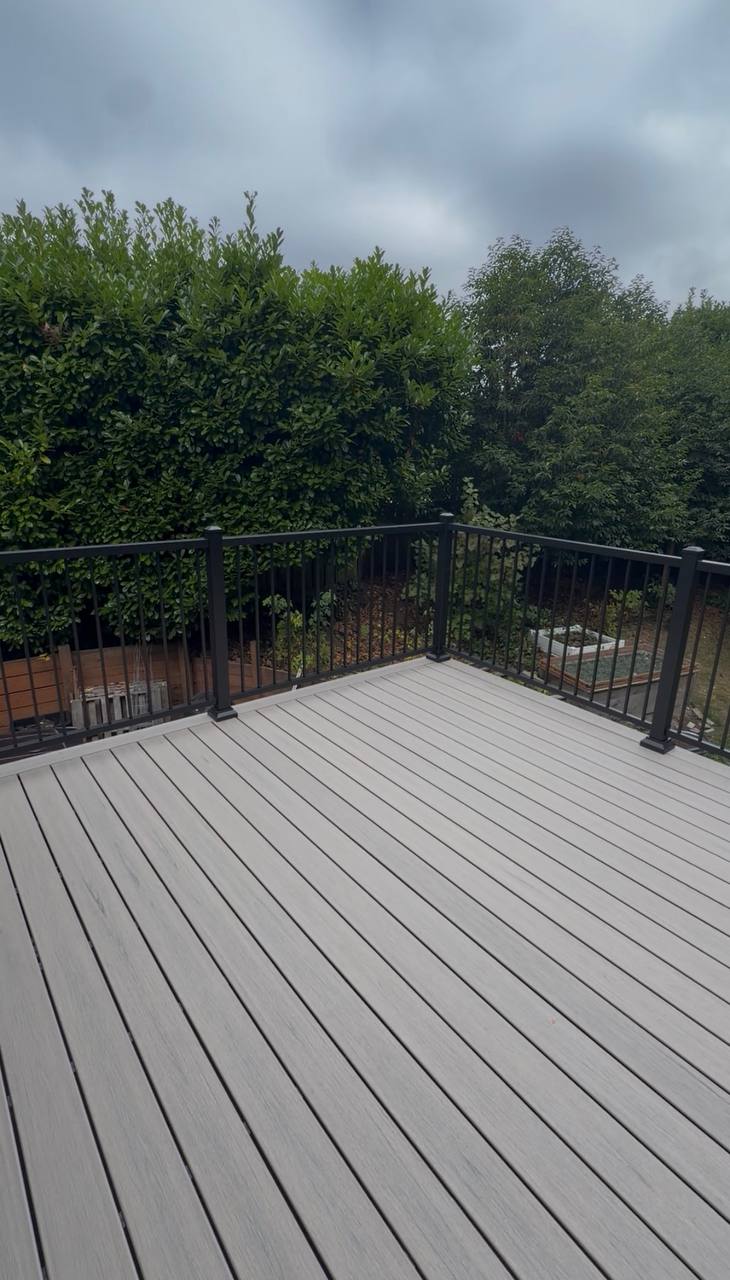
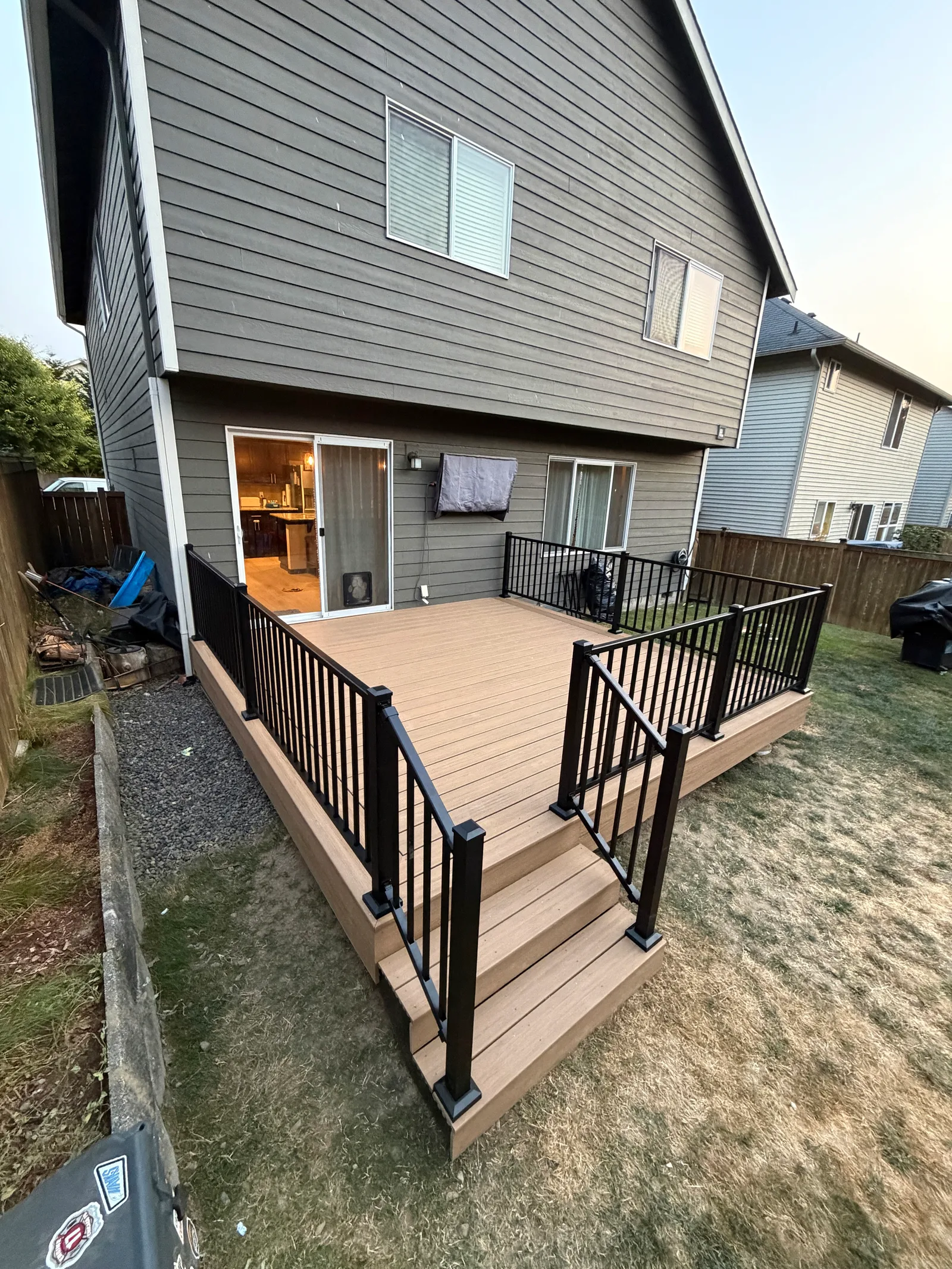
Powder-coated aluminum doesn't rot or need painting. Black is the most popular color.
At 36″ the deck needs a guard at least 36″ tall, with openings under 4″.
What we plan before deck railing systems work starts
Code and safety
Guard height, baluster spacing, and post strength are planned to meet code for your deck's height.
Post attachment
Posts are blocked and fastened into the framing so the railing stays solid long-term.
Style and view
We compare wood, composite, cable, and metal railings for looks, upkeep, and how much view they keep.
Stairs and gates
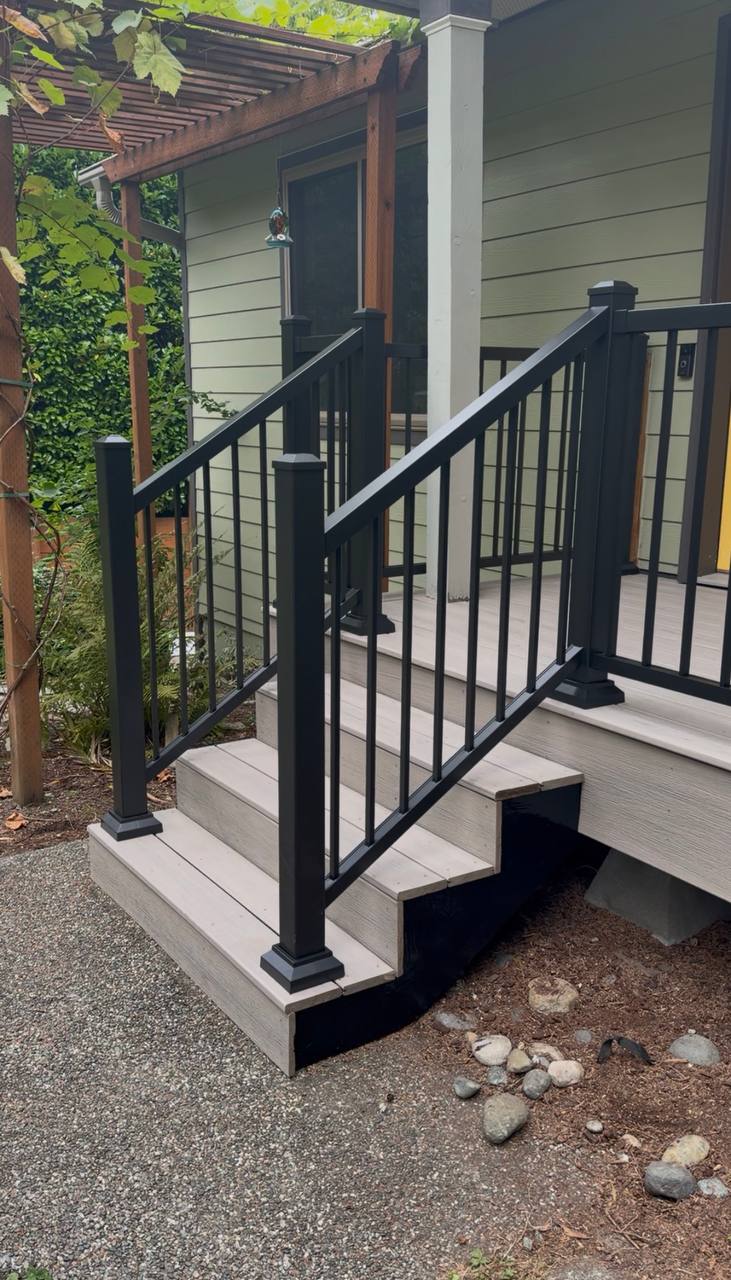
Stair railings, graspable handrails, and gates for kids and pets are planned with the main railing.
Deck railing, stair railing, and cable railing options
Every option here can meet SDCI's guard rules. The choice is mostly about views, upkeep, and budget.
Deck Railing Systems work by Cactus Decking
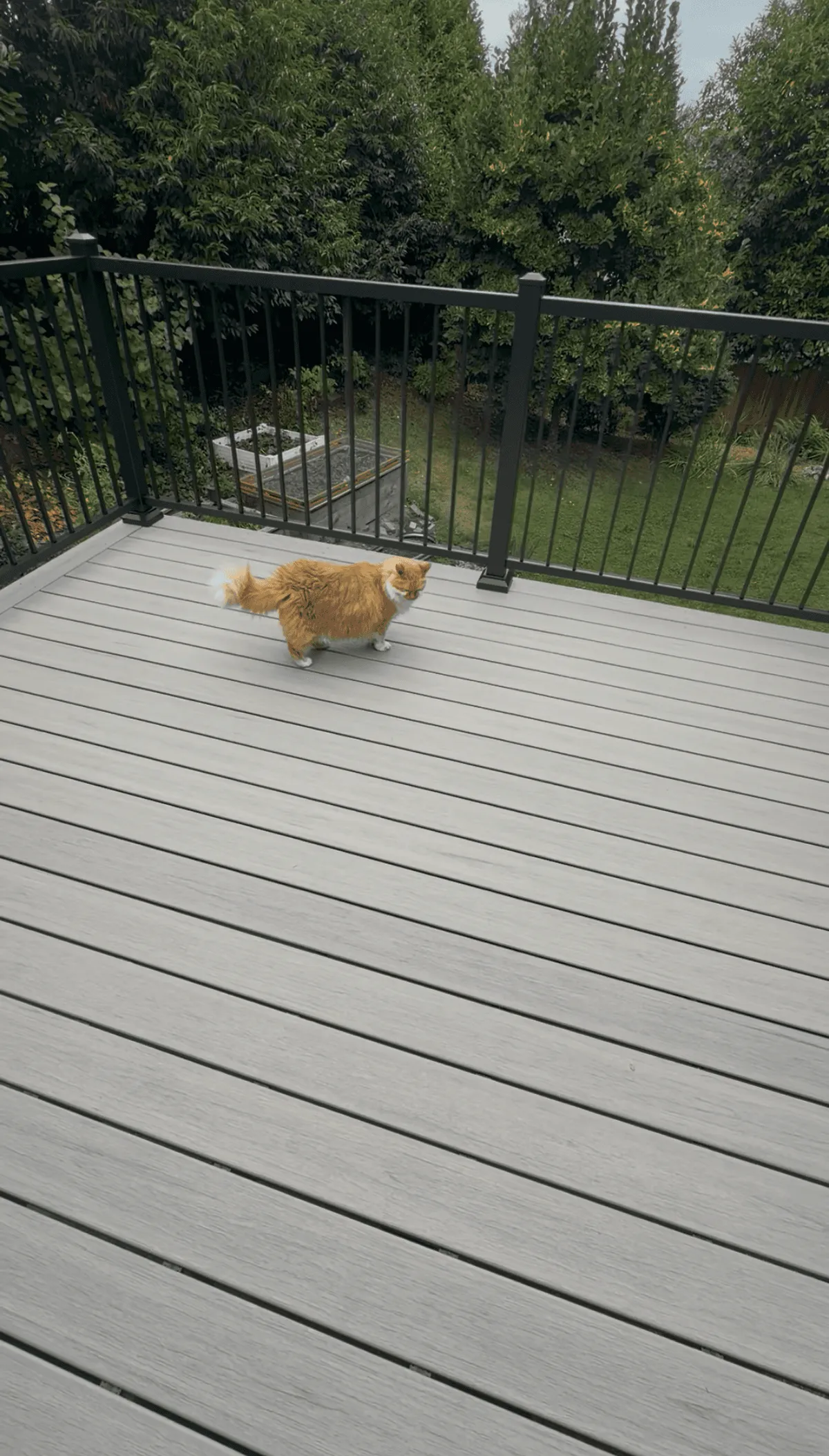
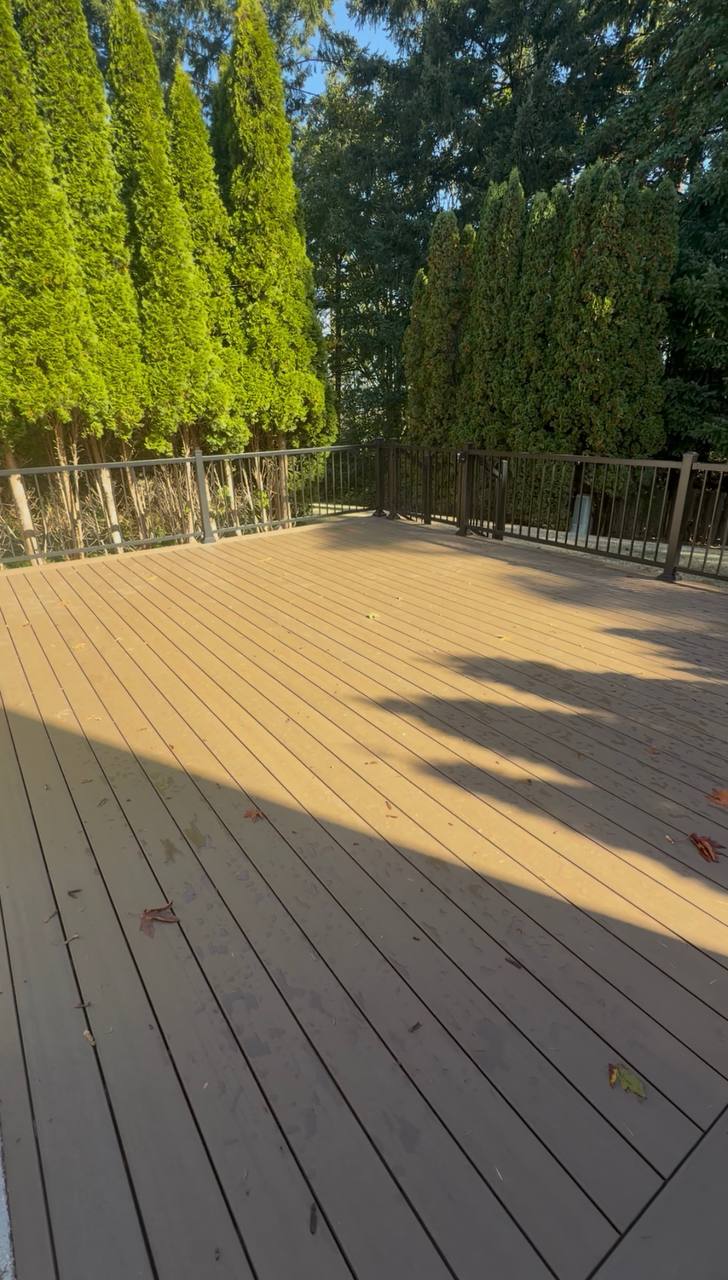
Real Cactus Decking projects from nearby Everett, built by the same crew that works in Seattle.
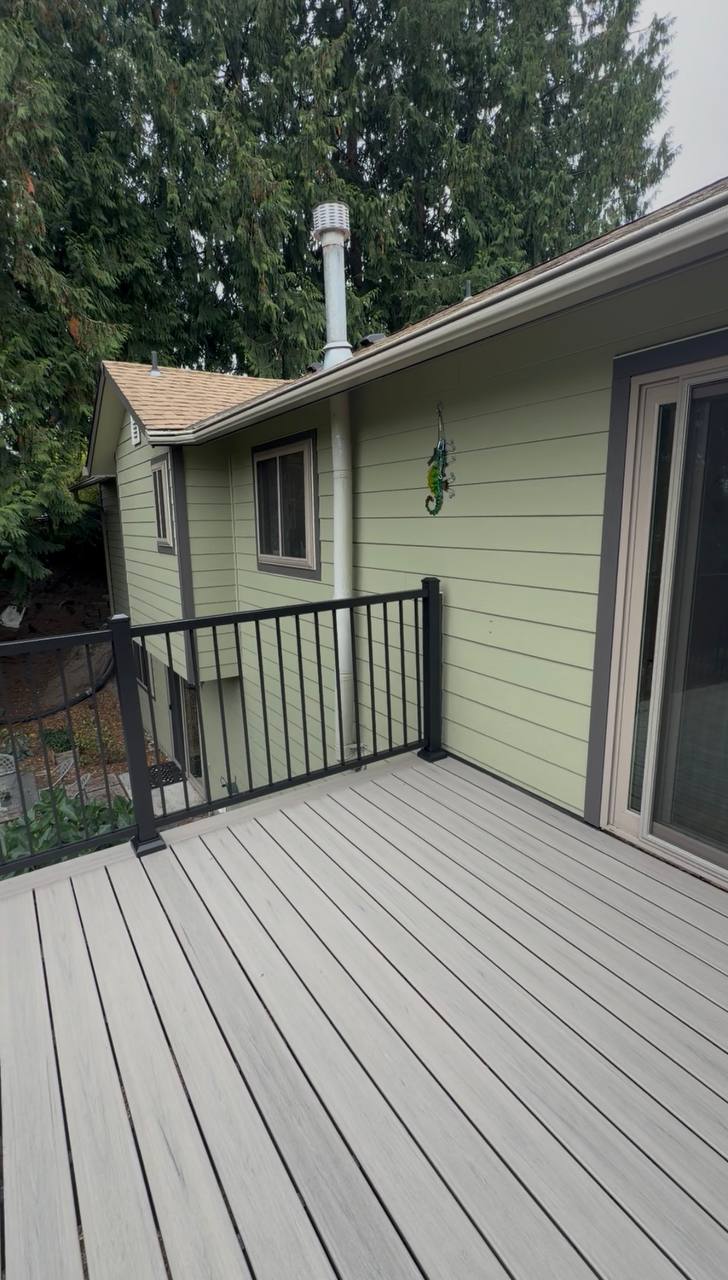
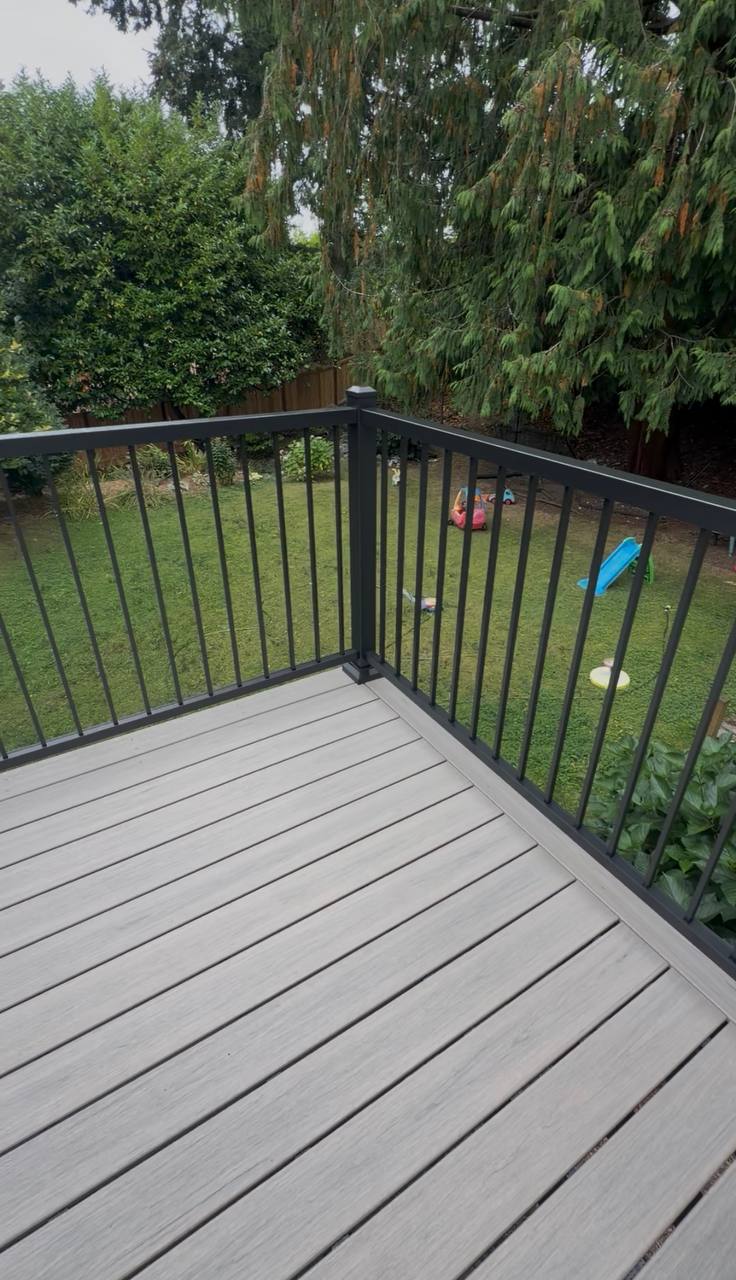
“We recently had our deck replaced by Cactus Decking, and we’re really happy with the results. The crew was professional, easy to work with, and paid attention to the little details. The whole project was finished on time, and our backyard looks so much better.”
Deck Railing Systems near you in Seattle
Searching for “deck railing installers near me”, “stair railing in Seattle”, “cable railing in Seattle” or “glass railing in Seattle”? Cactus Decking is based at 12029 24th Ave SE in Everett (98208), about 20 miles from Seattle, so we give free on-site estimates anywhere in Seattle.
Look up your neighborhood or ZIP code in our Seattle neighborhood finder.
We also serve nearby Bellevue, Redmond, Bothell, Woodinville, Lynnwood, and Mill Creek.
Guides for deck railing systems
Sources and building codes
- Seattle Department of Construction & Inspections (SDCI): Decks
- SDCI: Subject-to-Field-Inspection construction permits (Tip 316)
- 2021 Seattle Residential Code, chapter 1 (permit exemptions, R105.2)
- SDCI: Environmentally Critical Areas (ECA) code
- SDCI Director's Rule 7-2024: tree protection tiers
- NOAA 1991–2020 climate normals, Seattle-Tacoma Airport
- U.S. Census Bureau, ACS 2024 table B25034: year structure built, Seattle
What affects deck railing systems cost in Seattle?
Your written estimate for deck railing systems is based on the actual property. These are the biggest factors:
- Railing length: linear feet of deck edge and stairs
- System type: wood, composite, cable, or metal
- Tight access: carrying materials by hand through narrow side yards
- Older structure: opening up and repairing the ledger or framing found during inspection
- Shade and trees: working around roots and planning airflow under the deck
For material options, installation standards, and warranty details, see our main deck railing systems page.
Common deck railing systems questions
Can I replace just the railing?
Yes, if the deck framing is sound. Cactus Decking checks the post attachment points first, since a new railing is only as strong as what it's fastened to. Then we replace the old railing with aluminum, composite, cable, glass, or wood and fix loose posts at the same time.
How tall does a deck railing need to be in Seattle?
At least 36 inches, measured from the deck surface, whenever the deck is more than 30 inches above the ground or a lower roof. Openings in the railing can't be larger than 4 inches. Stair handrails go 34 to 38 inches above the tread nosing.
Can you add cable railing or stair railing to an existing deck?
Usually, yes. If the posts and framing are solid, we can replace old wood railing with cable, aluminum, or glass and add stair railing where it's missing. Cable railing is tensioned so no opening is larger than 4 inches, which is SDCI's limit. We check the posts first and replace any that are loose or rotted.
Can I put glass railings on my Seattle deck?
Yes, but glass guards have special requirements in the Seattle Building Code (sections 1015.2.1 and 2407), and SDCI notes you may need a structural engineer to design them. Cactus Decking plans glass railings with those rules in mind and coordinates engineering when it's required.
Do you work in all of Seattle?
Yes. We serve every Seattle ZIP code; you can look yours up by neighborhood on our Seattle page. Properties near a city boundary may use a neighboring postal city or a different permitting jurisdiction, so include your address and ZIP code with your estimate request.