
When does a deck need a railing, and which type is best?
Under the International Residential Code, which Washington adopts, a deck more than 30 inches above the ground needs a guard at least 36 inches tall, with openings small enough that a 4-inch ball can't pass through. Cactus Decking installs aluminum and metal, composite, cable, glass, and wood railings. Aluminum is the most popular for low upkeep, while cable and glass keep views the most open.
Professional deck railing systems in Everett
Code-ready aluminum, metal, composite, cable, glass, or wood railings that improve safety without losing the view. Cactus Decking, a deck builder in Everett, WA, provides Everett homeowners with practical design guidance, weather-conscious construction, and a clear project process from the first site visit through the final walkthrough.
A deck railing systems project begins with the conditions at your home. We look at how water moves through the site, how the deck connects to the structure, where people enter and exit, and how you want to use the finished space. That groundwork helps prevent expensive changes after construction begins.
Signs you may need deck railing systems
- Posts or railing sections move when you lean on them
- Balusters are loose, missing, or spaced too far apart for kids or pets
- Wood railings are cracked, splintered, or need staining every year
- Heavy railings block your view from the deck or the house
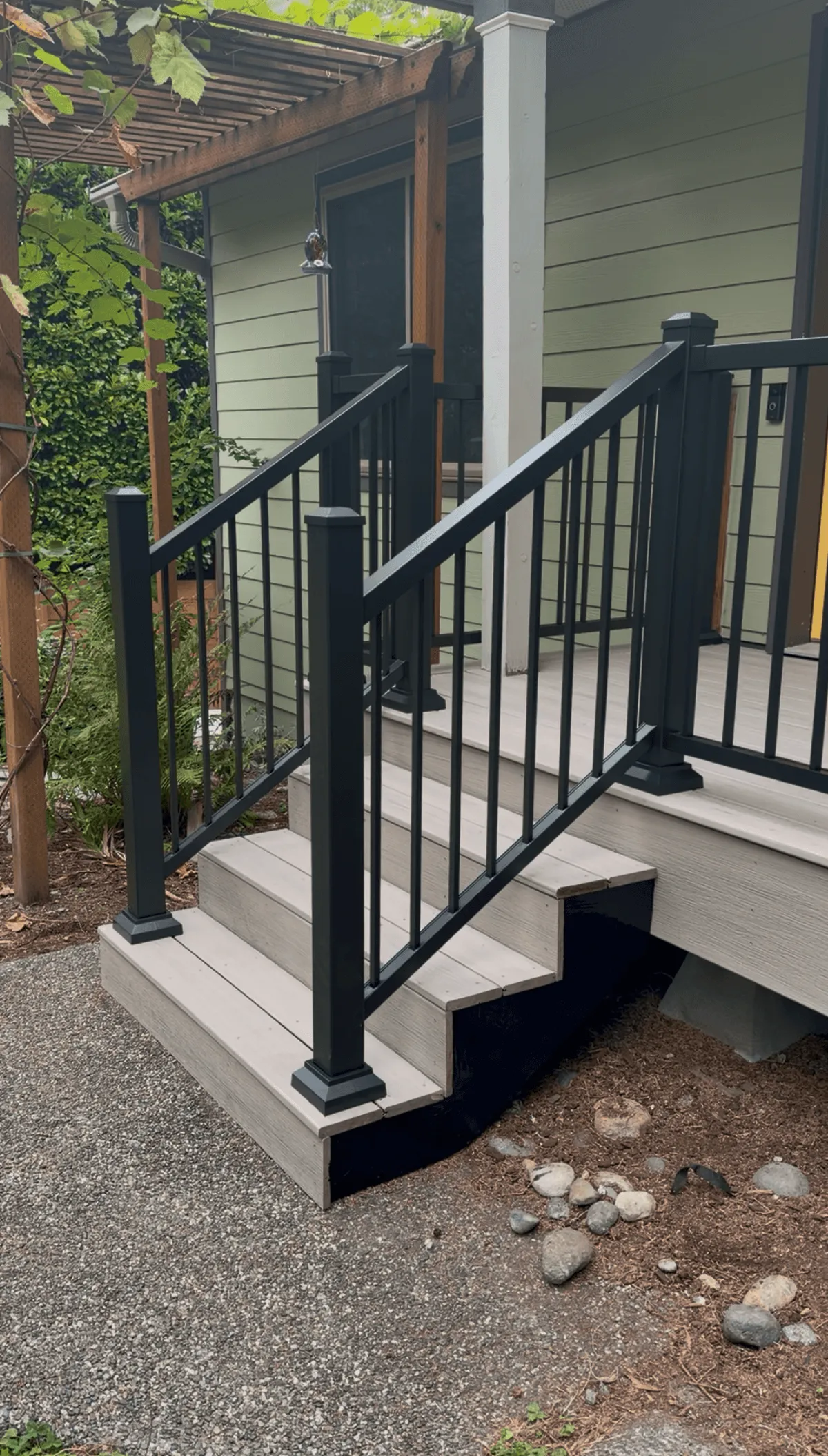
- Stairs have no handrail or one that is hard to grip
Deck Railing Systems in the rain season
Railings take the most weather. Rain and freeze-thaw loosen posts that felt fine all summer.
Push on every post
A guard post that moves at the top is a safety problem now, not a spring project. Loose posts usually mean a connection or rot issue below.
Check the handrail grip
Wet, mossy wood handrails are hard to hold. Aluminum or composite handrails stay cleaner through the winter.
Keep glass and cable clear
Glass panels and cable runs collect grime in the rain. A soft brush and plain water keeps them clear without scratching.
Which railing fits your deck?
Aluminum
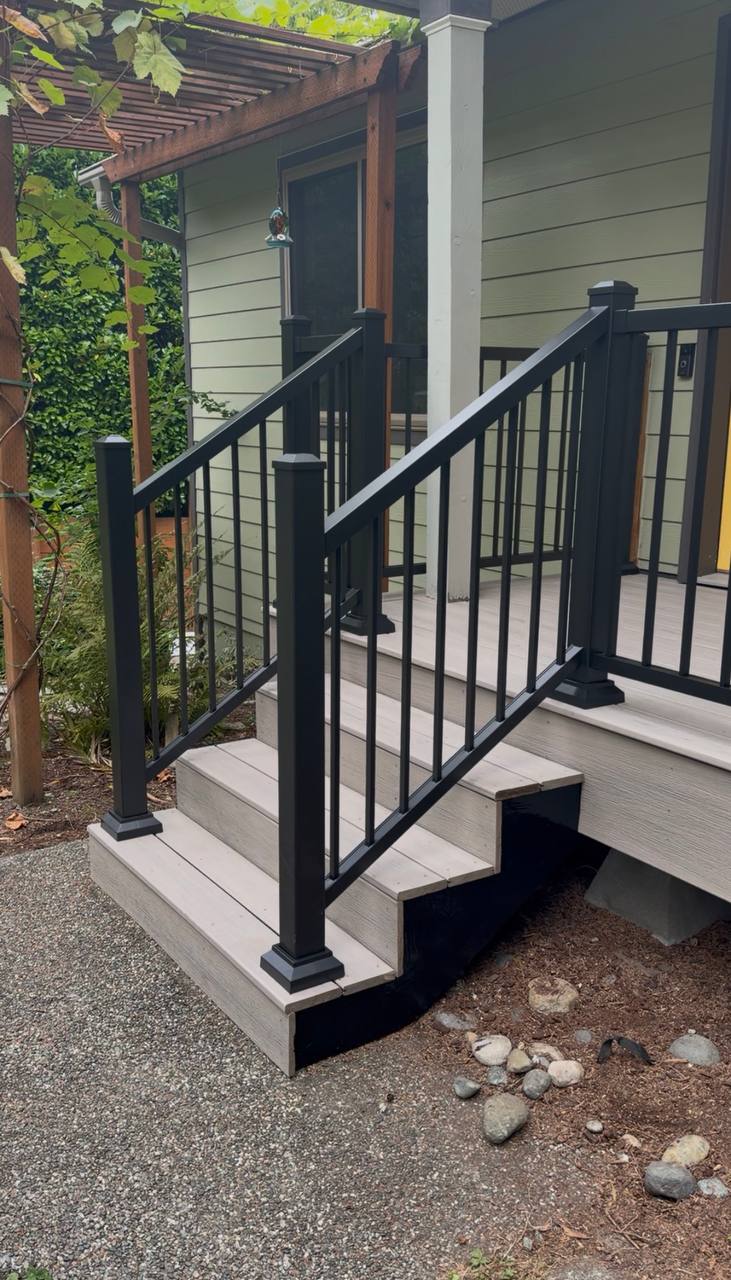
Powder-coated aluminum doesn't rot or need painting. Black is the most popular color.
At 36″ the deck needs a guard at least 36″ tall, with openings under 4″.
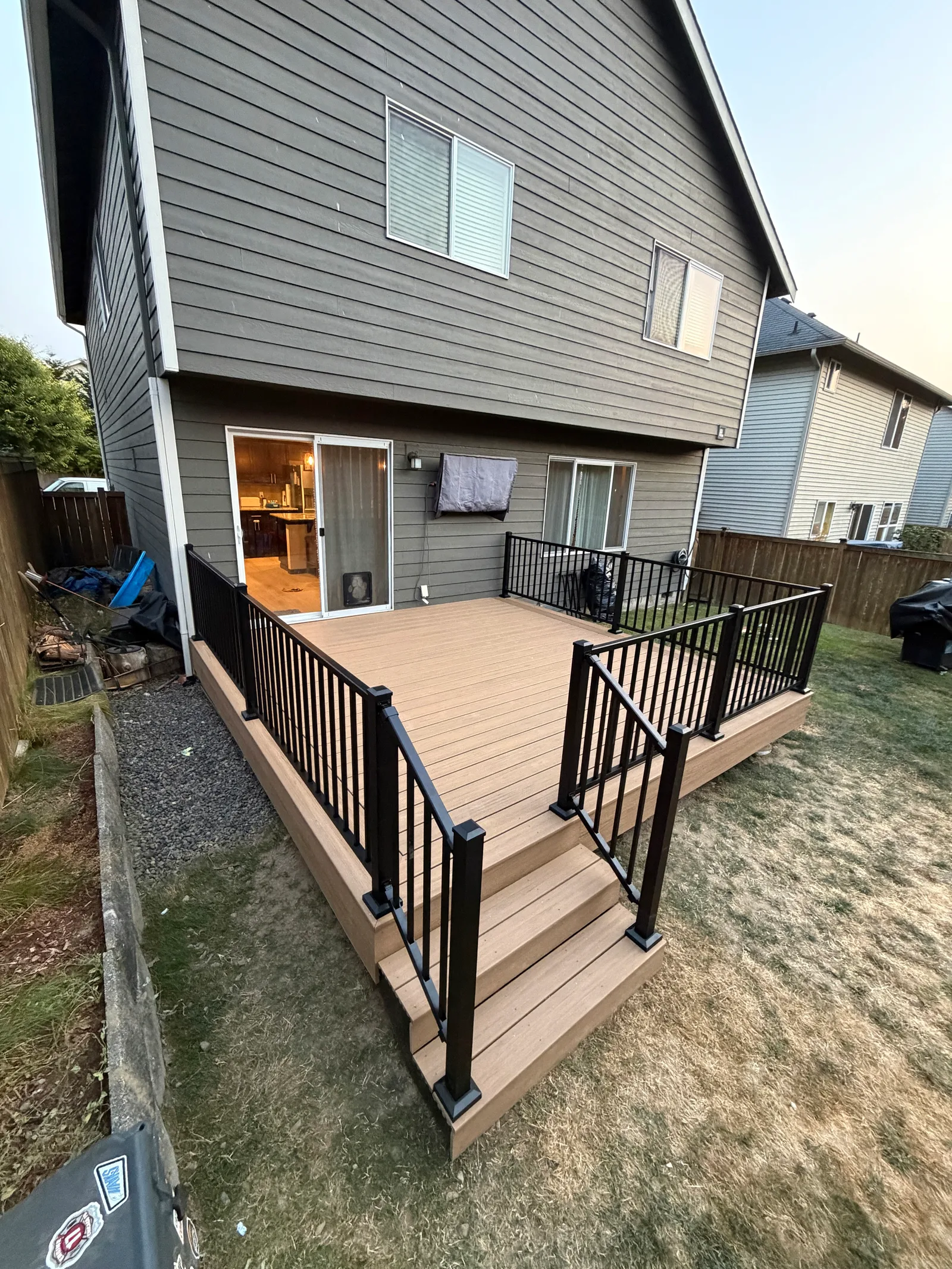
What we plan before deck railing systems work starts
Code and safety
Guard height, baluster spacing, and post strength are planned to meet code for your deck's height.
Post attachment
Posts are blocked and fastened into the framing so the railing stays solid long-term.
Style and view
We compare wood, composite, cable, and metal railings for looks, upkeep, and how much view they keep.
Stairs and gates
Stair railings, graspable handrails, and gates for kids and pets are planned with the main railing.
Decking and finish options
Material choices for deck railing systems include Trex, TimberTech, other composite brands, PVC, and cedar and other natural wood. Compare them on our composite and TimberTech decking page or see Trex vs TimberTech. The best fit depends on exposure, maintenance expectations, color, texture, budget, and how the surface should feel in sun and rain.
| Composite | Low maintenance, broad color range, durable capped surface |
|---|---|
| Cedar | Natural grain and warmth with periodic cleaning and finishing |
| PVC | High moisture resistance and a lightweight capped board |
| Railings | Aluminum, metal, composite, cable, glass, and wood systems coordinated to the deck |
Railing types we install
We install every common railing type. The right one depends on your view, your deck boards, and how much upkeep you want.
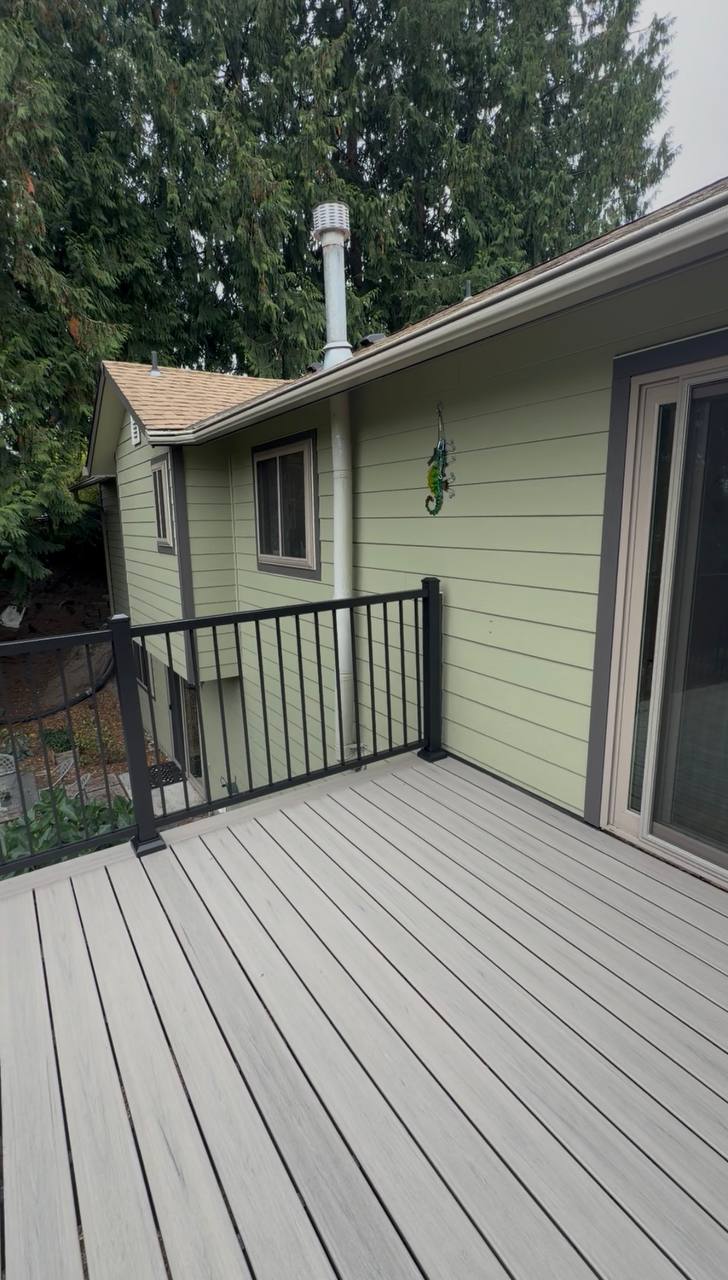
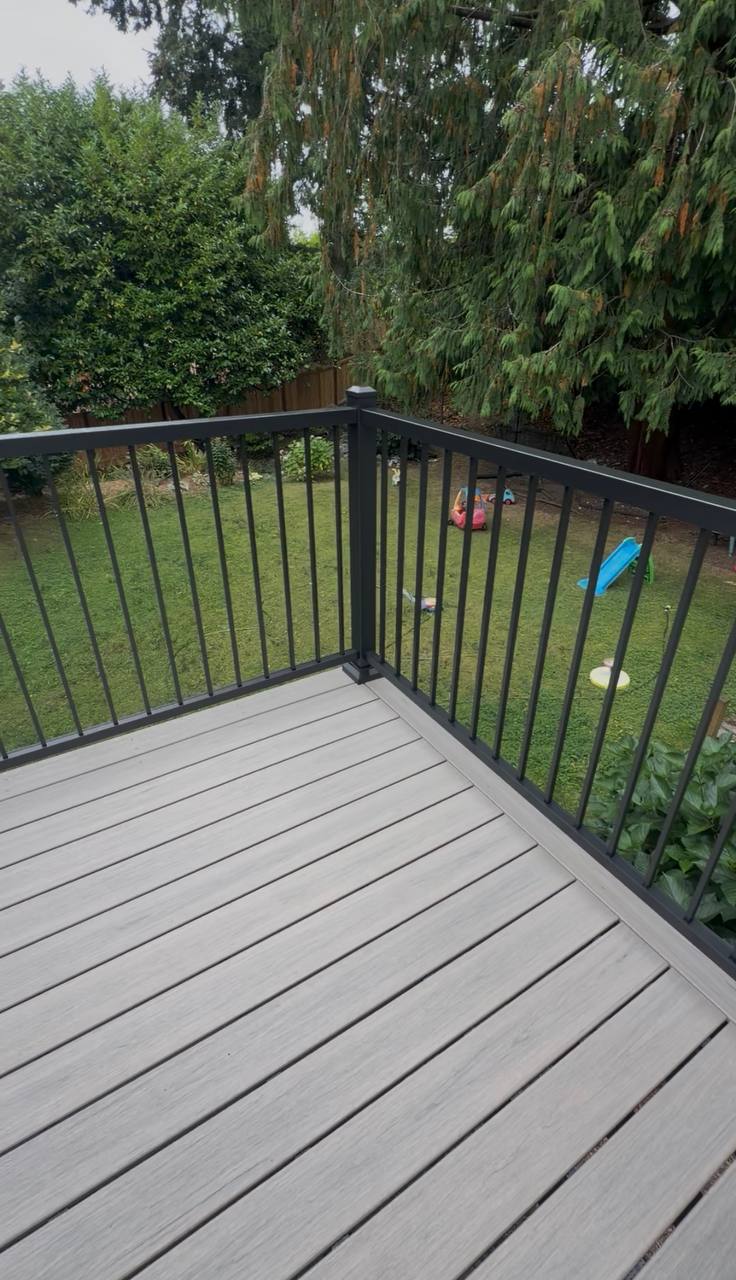
| Aluminum and metal | Slim, strong, and low maintenance. Black is the most popular color. |
|---|---|
| Composite | Matches composite decking for one finished look |
| Cable | Thin stainless cables that keep the view open |
| Glass | Clear panels for the widest view and some wind protection |
| Cedar and wood | A natural look that needs periodic finishing |
Under the IRC, decks more than 30 inches above the ground need a guard at least 36 inches tall, with openings small enough that a 4-inch ball can't pass through. Local rules can differ, so we confirm them for your address.
Deck Railing Systems work by Cactus Decking
Deck Railing Systems near you in Everett
Searching for “deck railing installation near me”, “deck railing in Everett, WA”, “metal deck railing” or “cable railing”? Cactus Decking is based in Everett at 12029 24th Ave SE (98208), so we’re close to every Everett neighborhood and give free on-site estimates.
Everett ZIP codes we serve
We also serve nearby Mill Creek (2 mi), Snohomish (5 mi), Mukilteo (6 mi), Lynnwood (7 mi), Woodinville (9 mi), and Bothell (9 mi).
Guides for deck railing systems
Sources and building codes
Professional installation standards
Quality deck railing systems depends on more than premium materials. Our crew focuses on correct layout, stable footings, sound framing, protected connections, consistent spacing, safe stairs, code-conscious guards, and clean finish work.
What affects deck railing systems cost?
Your written estimate for deck railing systems is based on the actual property. These are the biggest factors:
- Railing length: linear feet of deck edge and stairs
- System type: wood, composite, cable, or metal
- Posts and blocking: new posts or added framing to make posts solid
- Extras: gates, drink rails, and post-cap lighting
Common deck railing systems questions
Can I replace just the railing?
Yes, if the deck framing is sound. Cactus Decking checks the post attachment points first, since a new railing is only as strong as what it's fastened to. Then we replace the old railing with aluminum, composite, cable, glass, or wood and fix loose posts at the same time.
Which railing keeps the best view?
Cable and glass railings block the least view, which makes them popular on decks facing water or mountains. Slim aluminum railings are a good middle ground with less upkeep, while composite and wood railings give more privacy. Cactus Decking can show you samples of each.
Are you a deck railing contractor in Everett?
Yes. Cactus Decking is an Everett deck railing contractor based at 12029 24th Ave SE. We install aluminum, metal, composite, cable, glass, and wood railings on new and existing decks, built to the code rules for guard height and openings, with a free written estimate.
Do you install aluminum and metal deck railing in Everett?
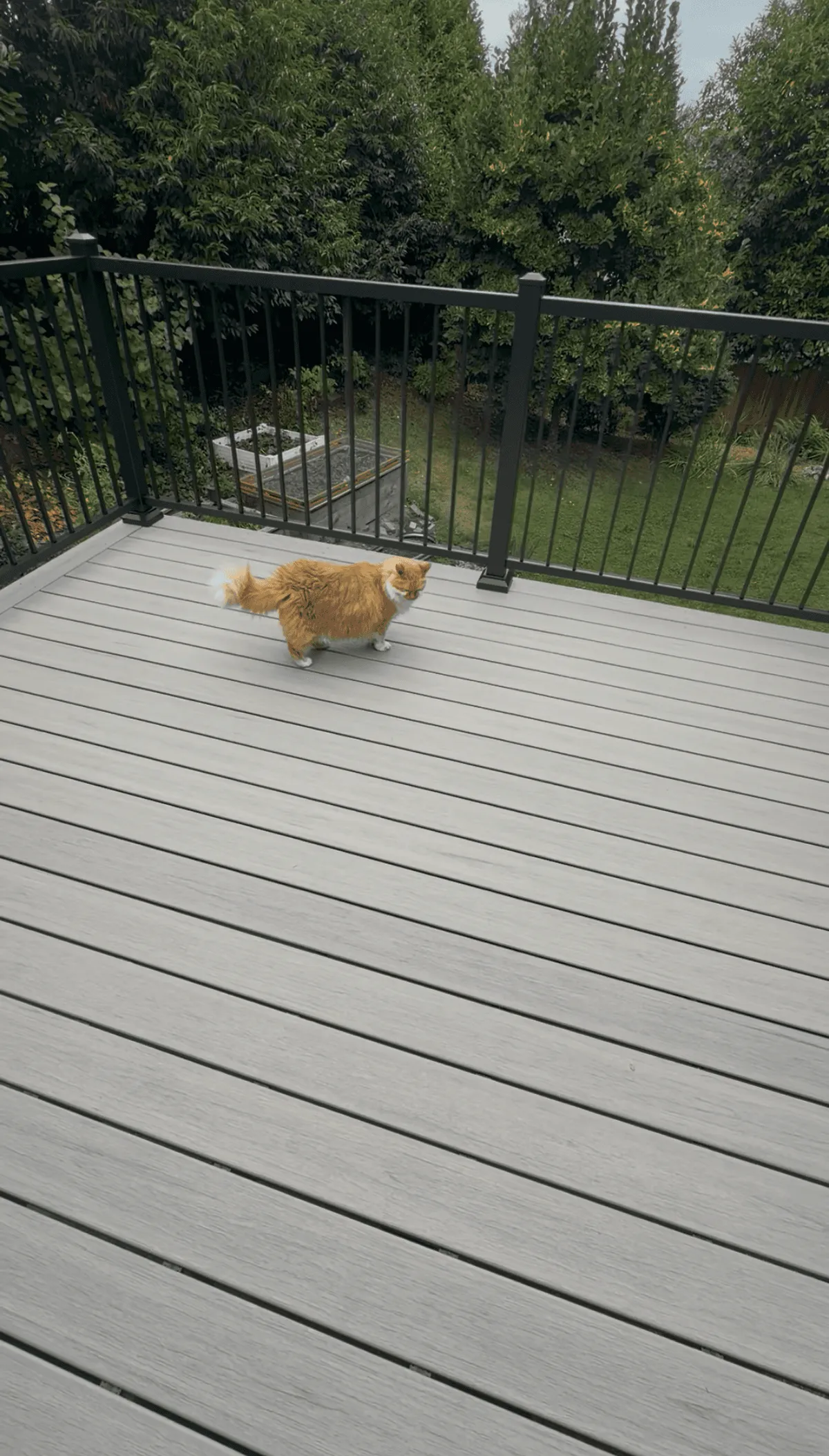
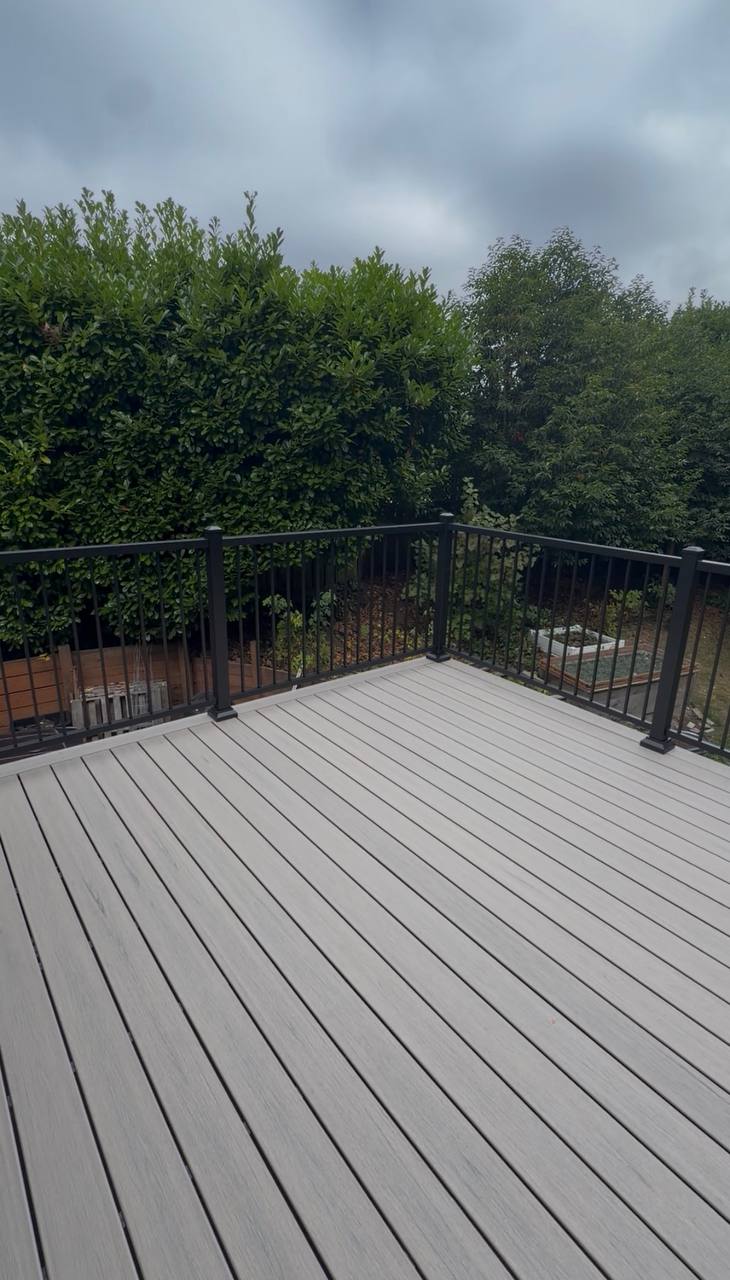
Yes. Aluminum and metal railing is the most popular type we install in Everett: it's slim, strong, and needs little upkeep, and black is the most requested color. Our gray composite deck project in Everett uses black metal railing. We match the post spacing and mounting to your deck boards and framing.
Do you install glass deck railing in Everett?
Yes. Cactus Decking installs glass panel railing in Everett and nearby cities. Glass keeps the widest view and blocks some wind, but it needs regular cleaning to stay clear, especially under trees and through the rainy season. We confirm the guard height and panel spacing rules for your address before ordering.
How tall does a deck railing have to be in Washington?
Washington builds to the 2021 International Residential Code. A deck whose surface is more than 30 inches above the ground (measured within 36 inches of its edge) needs a guard at least 36 inches tall along the deck. Along the open side of stairs, the guard can be 34 inches, measured from the front edge of the treads. Some cities, including Seattle, adopt the code with their own changes, so we confirm the rules for your address.
How far apart can deck railing balusters be?
Under the 2021 IRC, openings in a deck guard must be small enough that a 4-inch ball can't pass through. Along the open side of stairs the limit is 4⅜ inches, and the triangle formed by the tread, riser, and bottom rail can be up to 6 inches. Cable railing has to meet the same 4-inch rule, and cables flex, so cable tension and post spacing matter.
Do deck stairs need a handrail?
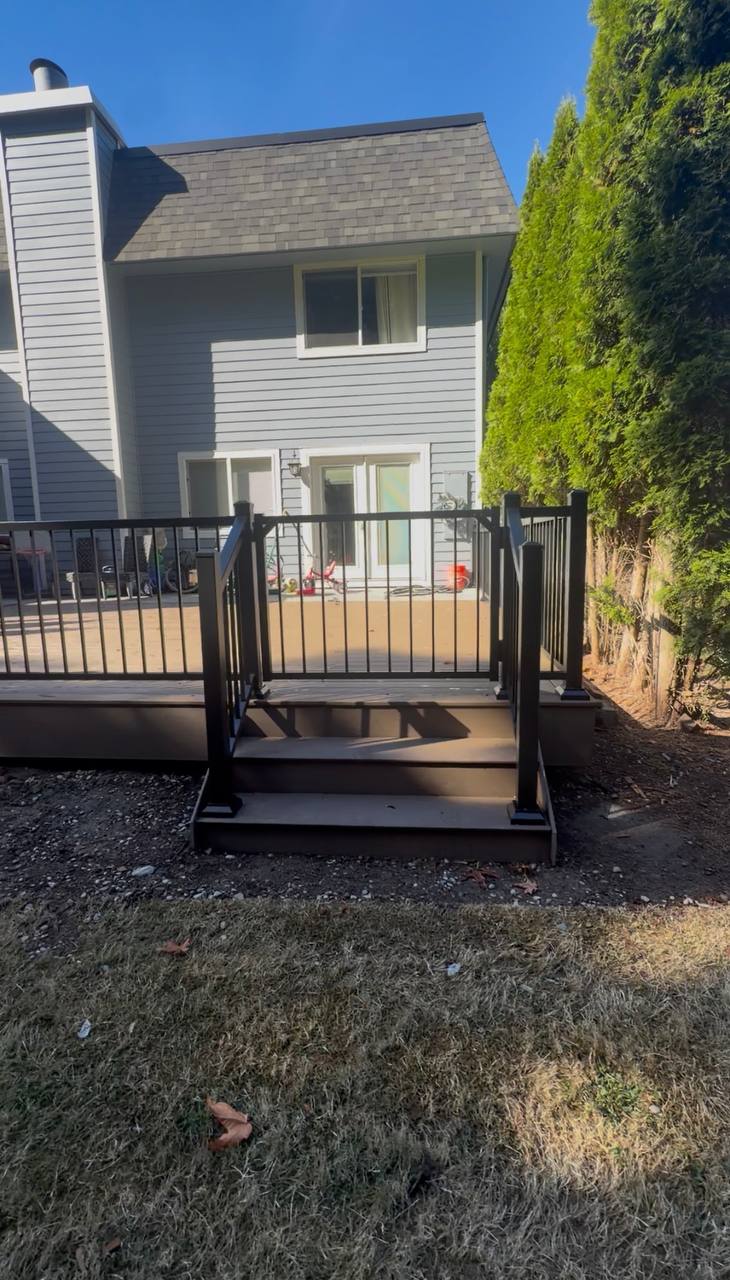
Yes, once a flight has four or more risers. The 2021 IRC requires a handrail on at least one side, between 34 and 38 inches above the tread nosings, continuous for the full flight and shaped so a hand can grip it. A guard on the open side of the stairs is a separate requirement, so many stairs need both.
Can you replace an old wood railing without replacing the deck?
Often, yes. If the posts and the framing they're bolted to are solid, an old wood railing can be replaced with aluminum, composite, cable, or glass on the same deck. Loose or rotted posts get re-anchored or replaced first, because a railing is only as strong as its posts.
Why homeowners choose Cactus Decking
For deck railing systems, our recommendations stay tied to the real site, the way you use the space, and the budget you establish. You receive clear communication, an organized scope, an experienced local crew, and one team responsible for the result. Comparing contractors? Use our checklist for choosing a deck contractor.
Warranty, maintenance, and long-term performance
At the end of a deck railing systems project, we review care requirements and applicable manufacturer information. Cedar needs periodic cleaning and refinishing, while composite and PVC generally need routine washing and prompt removal of organic debris.
Built with a clear final walkthrough
We review the completed deck railing systems work, answer care questions, and explain the important structural and finish details for your property.