
Are deck lights worth it in Seattle?
Deck lights are worth it in Seattle. Winter afternoons get dark early and decks are wet for about 156 days a year, so deck stair lights and lit edges make a deck safer and usable after work. Low-voltage LED lights in stair risers, posts, and rails use little power and are rated for wet locations. Wiring is easiest during a new build or replacement, but we also add lights to existing Seattle decks. Cactus Decking plans where the light falls, places the transformer, and gives a free written estimate.
Professional deck lighting in Seattle
Safer steps, warmer evenings, and a finished feel with post, stair, and recessed lighting. Cactus Decking, an Everett deck builder, provides Seattle homeowners with practical design guidance, weather-conscious construction, and a clear project process from the first site visit through the final walkthrough.
Planning deck lighting for Seattle properties
Seattle is in King County, about 20 miles from our Everett base. Inside Seattle city limits, deck permits are issued by the City of Seattle; addresses with a Seattle mailing address outside the city limits are permitted by the county. We confirm the jurisdiction for your exact address before pricing.
Compact lots
Low-glare, downward lighting keeps the deck usable at night without shining into neighbors' windows.
Older homes
On older decks, lighting is planned with any framing repairs so wiring runs through sound structure.
Trees and shade
Tree cover makes decks dark early in the evening, so stair and path lights are placed to cut through the shade.
Review complete ZIP-code coverage on our Seattle deck services page. The nearest other cities we serve for deck lighting are Bellevue, Redmond, Bothell and Woodinville.
Signs you may need deck lighting
- Lights that shine into neighbors' windows
- Old wiring or fixtures added without a plan
- The deck is in deep shade by late afternoon
- Stairs are hard to see after dark, especially in winter
- The deck goes unused once the sun sets
How many steps does your deck need?
- Steps (risers)
- 5, each 7 1/4″ tall
- Treads
- 4
- Stair run
- About 3.3 ft with 10″ treads, 3.7 ft with comfier 11″ treads
- Handrail
- Needed (4 or more risers)
- Deck guard
- Needed: the deck is over 30″ high
- Stair lights
- 5, one per step
Based on IRC defaults. Local rules can differ, so we confirm them for your address.
What we plan before deck lighting work starts
Safety first
Stair treads and level changes are lit first so every step is visible at night.
Fixture types
We combine post-cap, stair, and recessed fixtures to light walking paths and seating without glare.
Wiring path
Wire routes are planned through the framing so nothing is exposed or tripping anyone.
Controls
We plan how lights turn on: switches, timers, or photocells, depending on how you use the deck.
Deck lights and stair lights for Seattle decks
Most Seattle decks get a mix of these. Stairs come first for safety, then edges and seating areas.
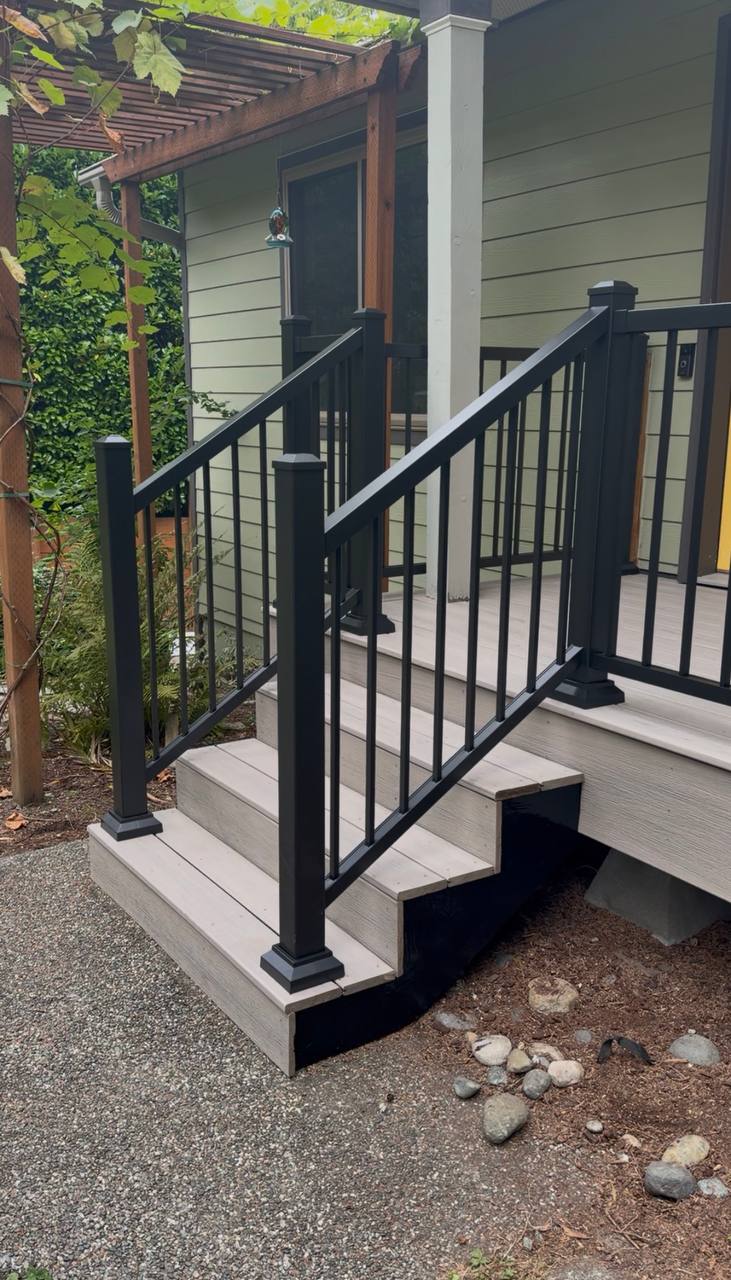
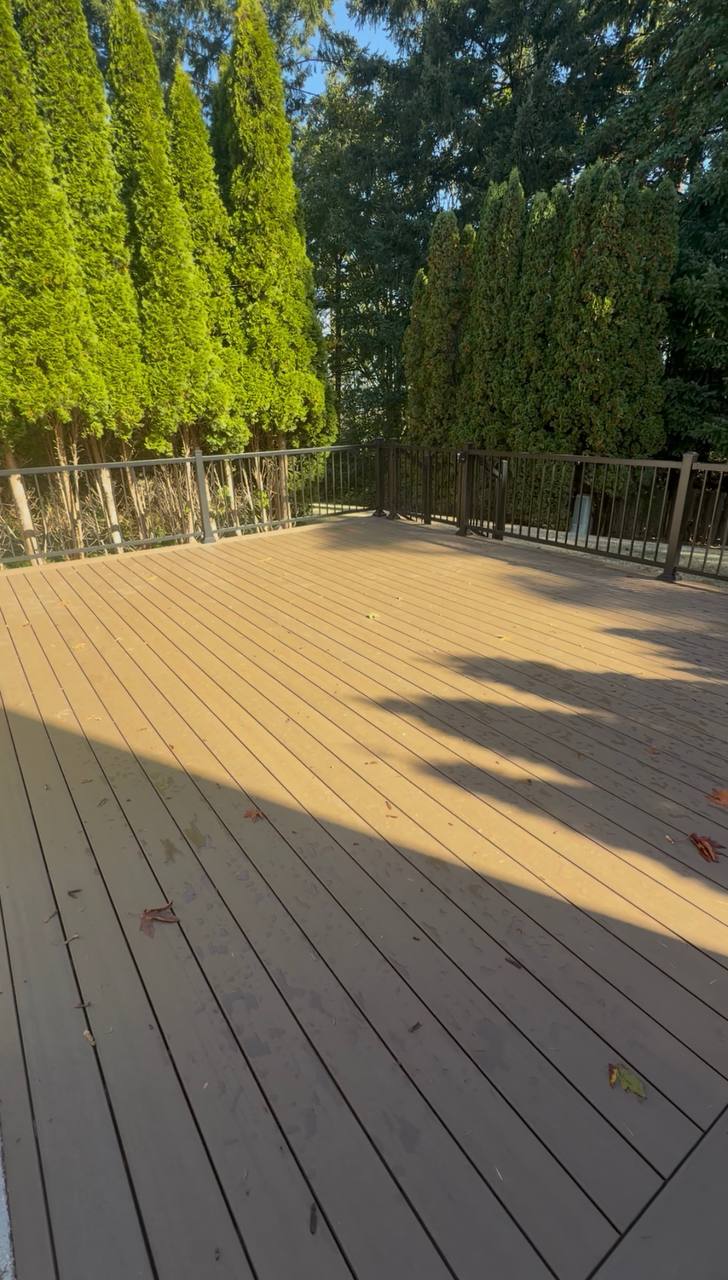
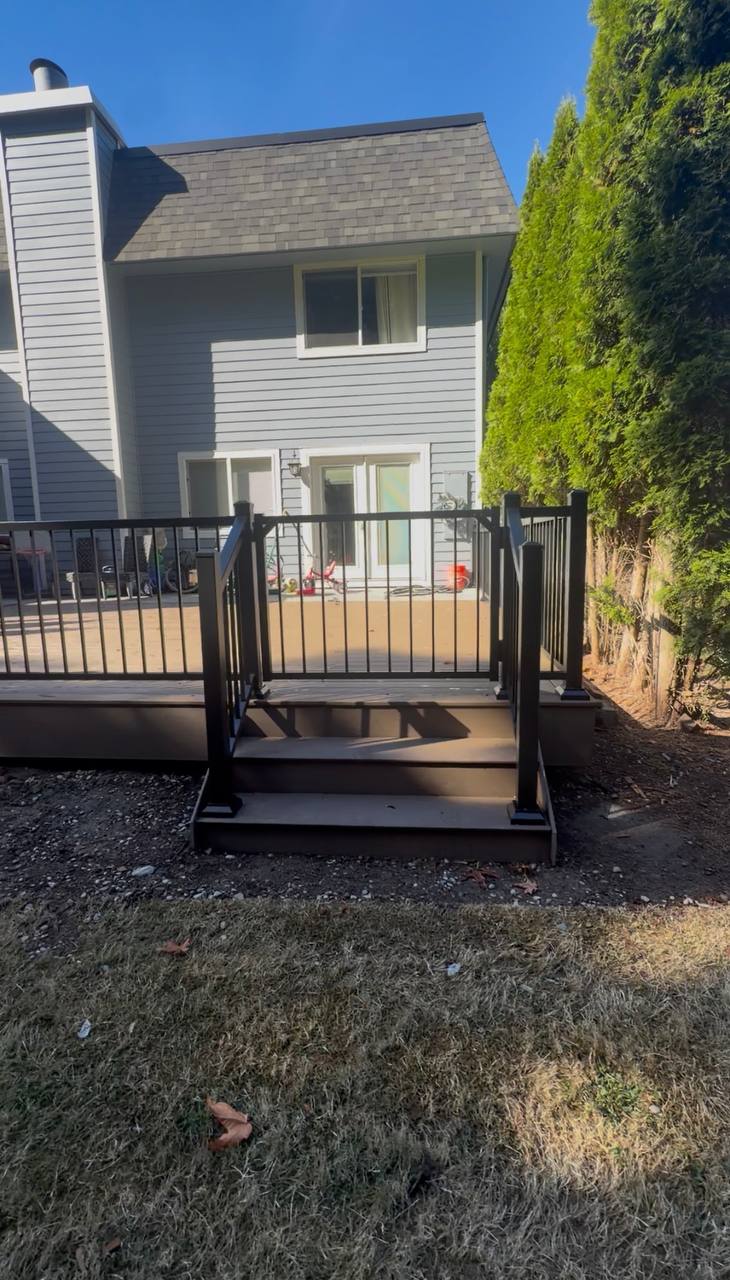
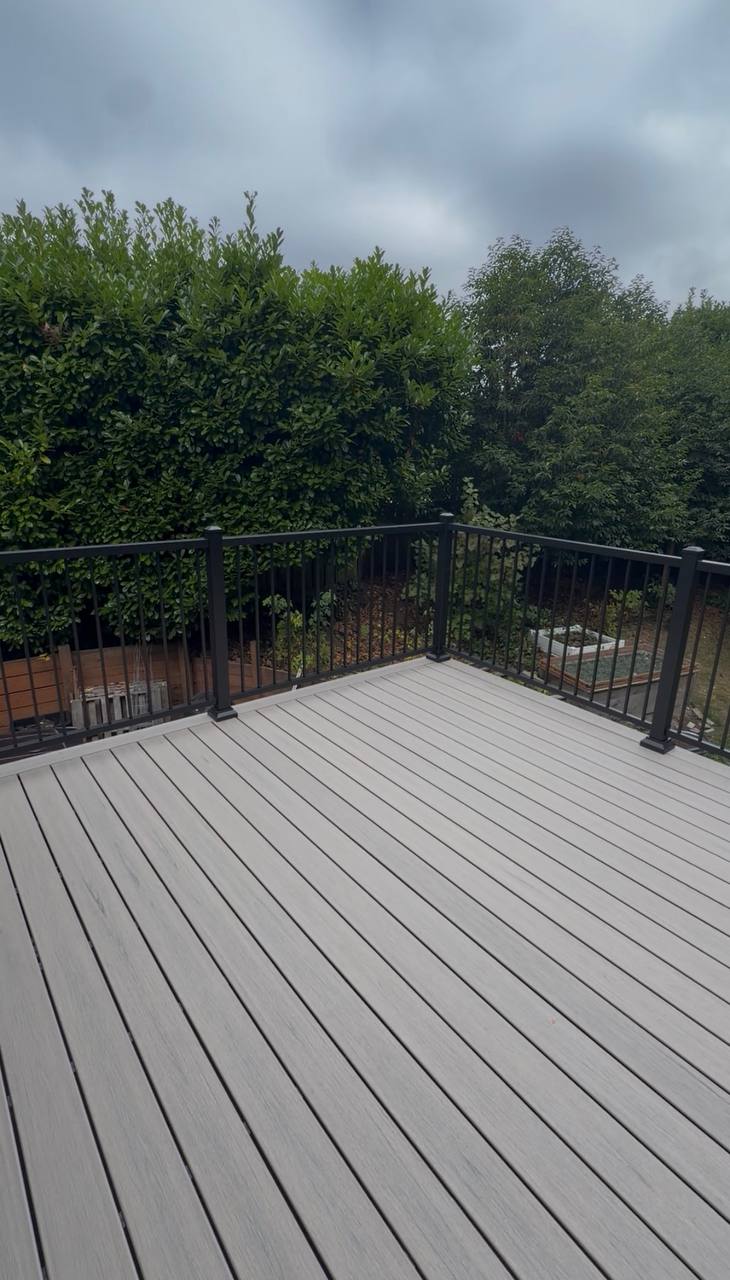
Deck Lighting work by Cactus Decking
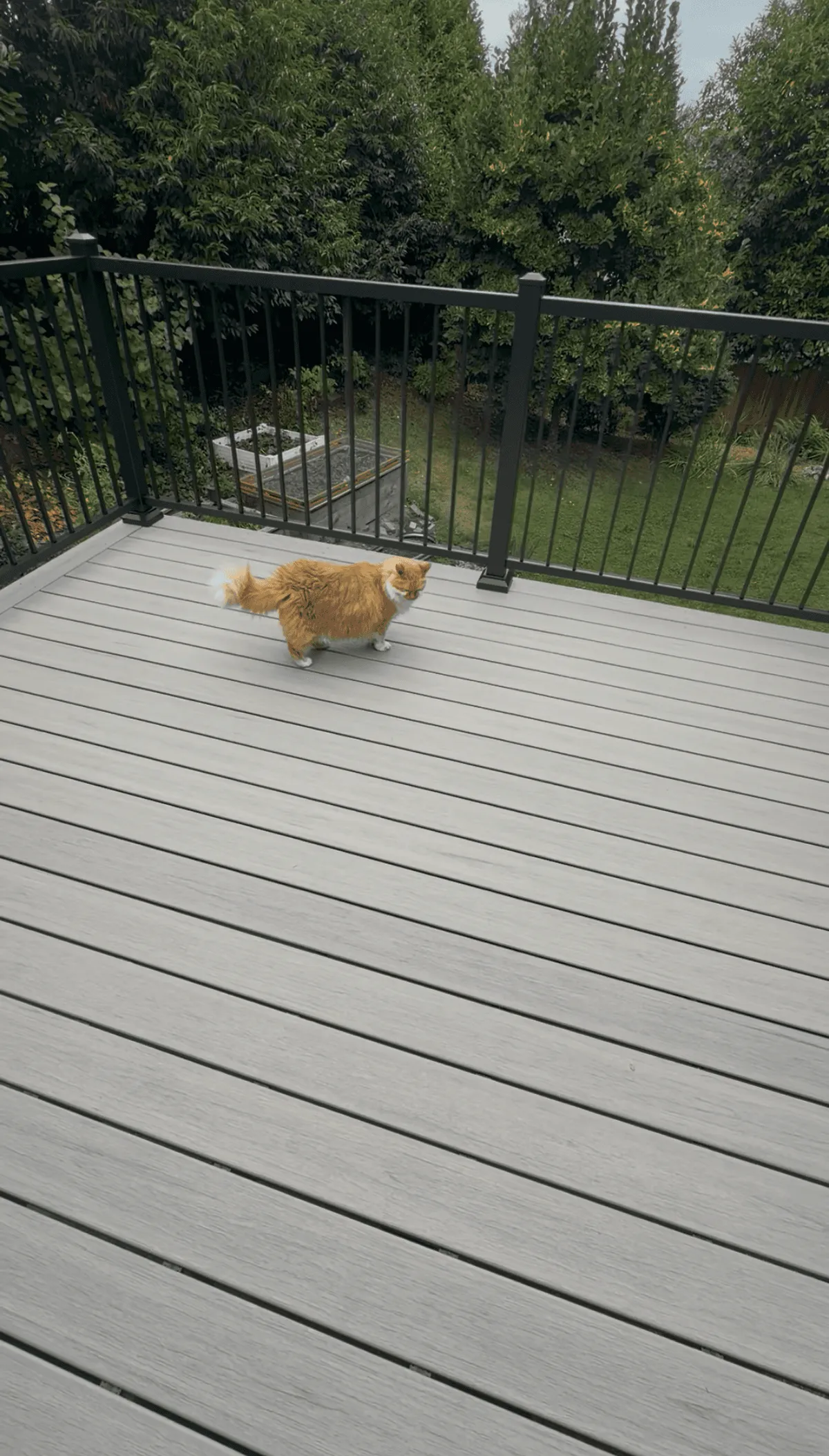
Real Cactus Decking projects from nearby Everett, built by the same crew that works in Seattle.
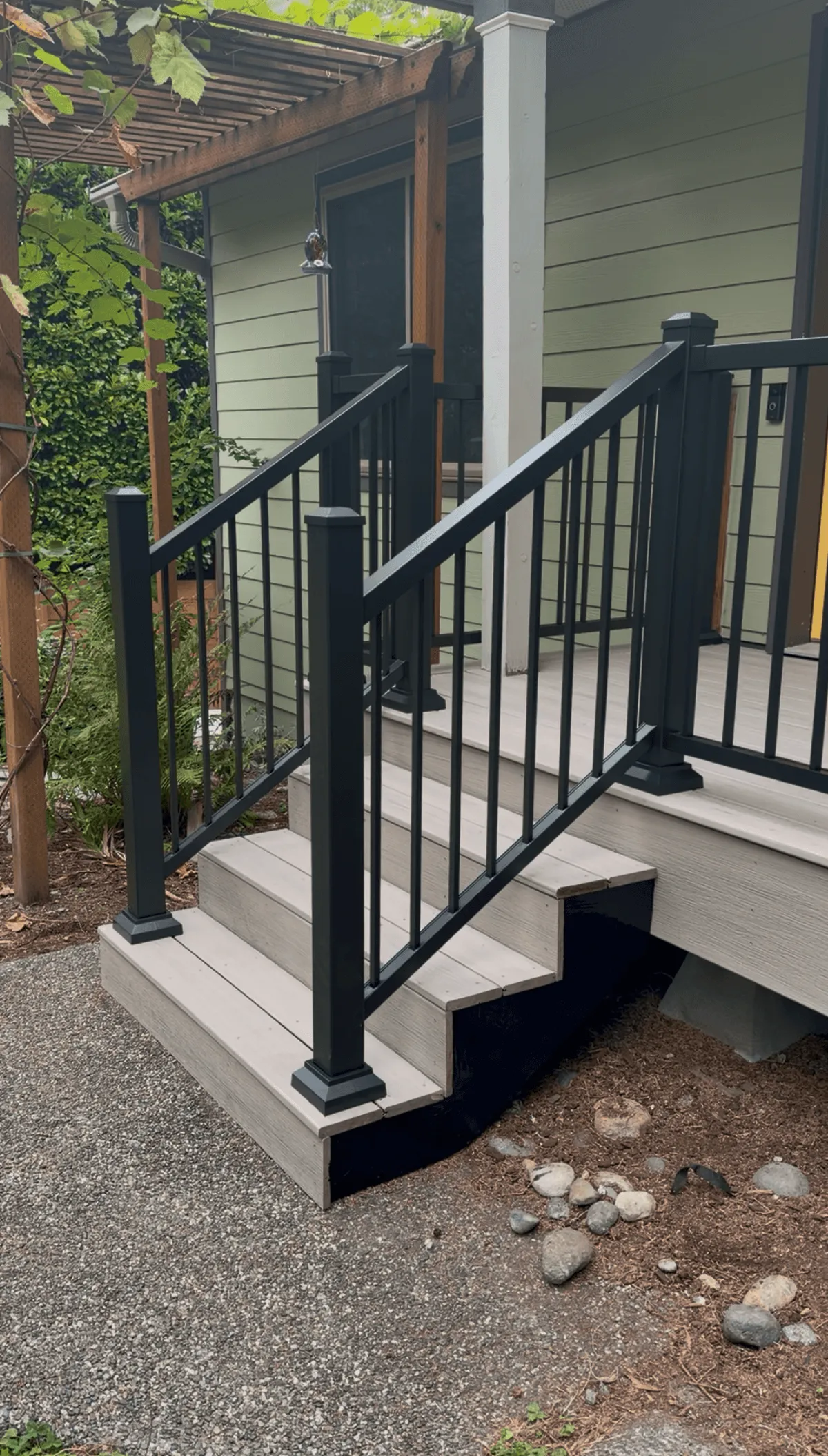
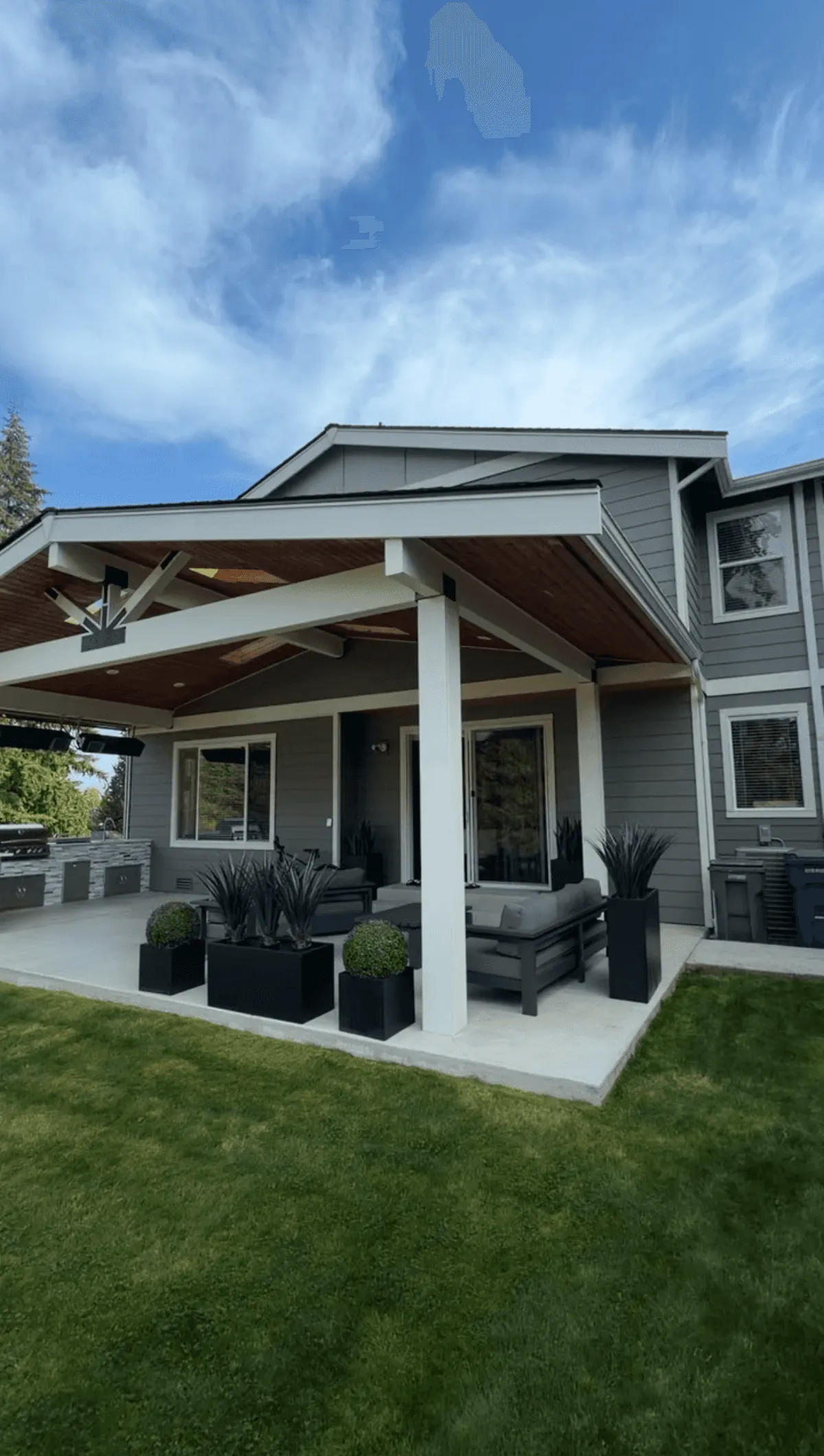
“Maks and his crew did an amazing job renovating our porch and deck. We must have had 15 companies come and talk through the project with quotes. No one else came close to doing the same amount of work for the price. The deck and porch turned out nicer than we even imagined.”
Deck Lighting near you in Seattle
Searching for “deck lighting installers near me”, “deck lights in Seattle”, “deck stair lights in Seattle” or “outdoor deck lights near me”? Cactus Decking is based at 12029 24th Ave SE in Everett (98208), about 20 miles from Seattle, so we give free on-site estimates anywhere in Seattle.
Look up your neighborhood or ZIP code in our Seattle neighborhood finder.
We also serve nearby Bellevue, Redmond, Bothell, Woodinville, Lynnwood, and Mill Creek.
Guides for deck lighting
Sources and building codes
- Seattle Department of Construction & Inspections (SDCI): Decks
- SDCI: Subject-to-Field-Inspection construction permits (Tip 316)
- 2021 Seattle Residential Code, chapter 1 (permit exemptions, R105.2)
- SDCI: Environmentally Critical Areas (ECA) code
- SDCI Director's Rule 7-2024: tree protection tiers
- NOAA 1991–2020 climate normals, Seattle-Tacoma Airport
- U.S. Census Bureau, ACS 2024 table B25034: year structure built, Seattle
What affects deck lighting cost in Seattle?
Your written estimate for deck lighting is based on the actual property. These are the biggest factors:
- Number of fixtures: stair lights, post caps, and recessed lights needed
- Wiring access: running wire through new framing versus retrofitting an existing deck
- Tight access: carrying materials by hand through narrow side yards
- Older structure: opening up and repairing the ledger or framing found during inspection
- Shade and trees: working around roots and planning airflow under the deck
For material options, installation standards, and warranty details, see our main deck lighting page.
Common deck lighting questions
Can lighting be added to an existing deck?
Usually, yes. Low-voltage stair, post, and railing lights can be added to most existing decks, powered by a transformer near an outdoor outlet. Wiring is easiest to hide when it's planned during a new build or replacement, but Cactus Decking retrofits lights on existing decks too.
Can you add deck lights to my existing Seattle deck?
Yes. Low-voltage lights can be added to most existing decks by running wire under the boards or along the framing to a transformer near an outdoor outlet. It's simpler and cleaner during a new build or replacement, so if you're planning either, we wire for lights at the same time.
Which deck stair lights hold up in Seattle's rain?
Use fixtures rated for wet locations, sealed connections, and a low-voltage system with a GFCI-protected outlet. Seattle decks see about 156 wet days a year, so we use sealed LED fixtures and keep connections off the deck surface where water collects.
Do you work in all of Seattle?
Yes. We serve every Seattle ZIP code; you can look yours up by neighborhood on our Seattle page. Properties near a city boundary may use a neighboring postal city or a different permitting jurisdiction, so include your address and ZIP code with your estimate request.