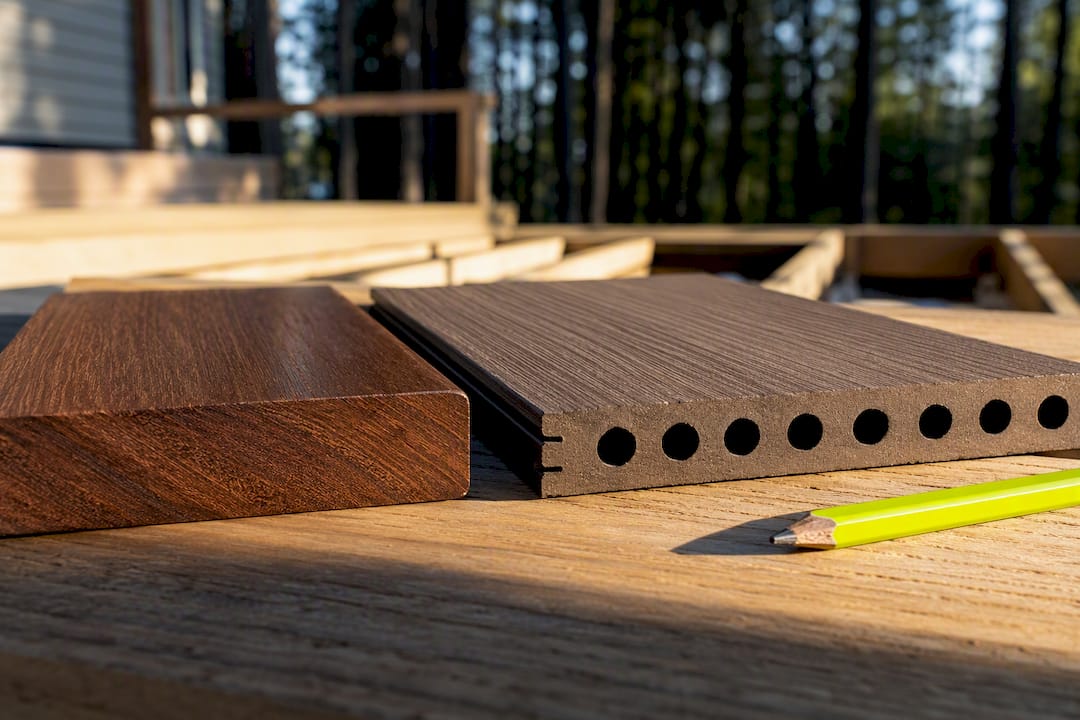

Calcium chloride is the safest bet for a composite deck, and every major brand’s guidance allows it. Rock salt is where the brands split: some allow it, one warns against it. Sand, dyed products and all-in-one mixes with abrasives are the ones to skip. Whatever you spread, sweep and rinse it off once temperatures allow, because leftover residue is what actually spoils the look of a deck.
This guide covers what the manufacturers say, how to read a de-icer label, how to clear snow without scarring the boards, and how to clean PVC and composite after a freeze. We build decks in Everett, Washington, so we also cover what a mild, wet Northwest winter means for how you handle ice.
TL;DR
- Calcium chloride-based ice melt is widely permitted on composite decking, but it can leave a white residue you should rinse off with a garden hose.
- Rock salt depends on the brand: Trex and Fiberon allow it, TimberTech advises against it. Check your own care guide before you buy a bag.
- Skip sand, dyed de-icers and metal tools. Use an all-plastic shovel and push along the board grain.
- Shoveling early beats chemicals. Less packed snow means less ice and less need for any melt.
- Clean with mild dish soap, warm water and the right brush. No bleach, ammonia or high-pressure washing.
Table of Contents
- Why ice melt choice matters more on composite and PVC
- What the major composite brands say
- How to read an ice melt label
- Use less of it: clear the snow first
- Applying ice melt without making a mess
- Cleaning composite and PVC after the freeze
- What about wood and cedar decks?
- Our perspective: winter care starts at the build
- Planning a deck that handles winter better
- Thinking about a new or replacement deck in Everett?
- A quick winter checklist
- FAQ
- Sources
Why ice melt choice matters more on composite and PVC
Composite and PVC boards are low-maintenance, but they are not indestructible. Most have a protective cap layer, and the cap is what you see and what resists stains and moisture. Anything that abrades it, dyes it or sits on it for weeks works against it.
The problem with de-icers is rarely dramatic damage after one storm. It is slow: a gritty product scuffs, a dyed product stains, and residue left to dry builds a chalky film that holds dirt. Manufacturers say the most common homeowner mistake is letting de-icing residue dry on the surface, which leaves a film that is hard to remove.
There is also a warranty angle. Care guides spell out what you may and may not use, and using a product your brand prohibits can cause trouble if you ever file a claim. That is why the answer to “which ice melt is safe” always ends with “check your brand.”
What the major composite brands say
The brands agree on more than they disagree on. Here is how the guidance lines up, based on the care guidance from each manufacturer.
| Product type | Trex | TimberTech | Fiberon |
|---|---|---|---|
| Calcium chloride | Allowed | Allowed | Allowed |
| Rock salt | Allowed | Advised against | Allowed |
| Sand | Avoid | Avoid | Avoid |
| Dyed or colored de-icers | Avoid | Avoid | Avoid |
TimberTech’s own guide says most products containing calcium chloride can be used for ice removal, and also warns that its surfaces may become slippery in freezing weather. Fiberon’s FAQ calls a calcium chloride-based ice melt or rock salt the best option for removing ice and snow from its decks. On rock salt specifically, 2026 guidance differs by brand: Trex and Fiberon permit it, TimberTech cautions that it is abrasive and can damage the surface.
That split is the reason a label reading “deck safe” on a bag means little by itself. Look up the manufacturer of your boards, find the care guide for your product line, and follow that.
Not sure which brand you have?
Check the paperwork from your installation, or look at the underside of a board for a stamp. If the deck came with the house and nobody knows, the safest default is the most conservative choice: a plain calcium chloride product with no dyes, no sand, and a quick rinse afterward.
How to read an ice melt label
A bag in a hardware store aisle can list several chemicals, and not all behave the same. Here is a quick way to screen them.
- Find the active ingredient. For composite and PVC, calcium chloride is the one named safe across brands. Magnesium chloride and other chlorides are less commonly addressed in brand guides, so if your care guide does not mention them, treat them as unverified.
- Look for added color. Manufacturers say to avoid products with colorants or dyes, since they can stain composite and PVC permanently.
- Check for sand or grit. All-in-one products that include sand or other abrasives will scratch the cap. Fiberon’s guidance on this is to avoid them.
- Match it to your brand. If you want rock salt, confirm that your brand allows it.
- Use the “safe for concrete” and “won’t kill grass” labels as a hint, not a verdict. Products that are gentle on concrete or lawns tend to be good candidates, but compatibility with your specific boards is still the real requirement.
Homemade mixes get searched a lot too. A dish soap and rubbing alcohol mixture is often suggested for walkways. We would not trust it on your deck without confirmation from your board manufacturer, because the brand guides do not list it, and a sticky soap film on a surface you walk on in socks is its own problem.
Use less of it: clear the snow first
The best de-icing strategy is not a product. Builders and manufacturers agree that melt only treats the symptom. Snow that gets packed down by boots and then refreezes is what turns into a sheet of ice. Remove the loose snow promptly and you reduce the freeze-and-thaw cycle that creates dangerous buildup, and often the need for chemicals at all.
A few habits that protect the surface:
- Use an all-plastic shovel. Metal shovels, metal-edged pushers and ice chippers can gouge the cap. Even a plastic blade with a metal leading edge can scratch it.
- Push along the boards, not across them. Working parallel to the grain lowers the chance of catching an edge or gap.
- Try a leaf blower for a light dusting. Fiberon suggests it as one of the easiest ways to clear a light layer.
- Do not chip at bonded ice. Let the melt do the work, then lift the slush.
- Treat stairs first. They are where a slip becomes an injury. If your stair treads feel slick even without ice, our piece on how slippery composite decking can be, and what slip rating to ask for is worth a read.
Applying ice melt without making a mess
Use as little as works. A thin, even scatter does the job; a thick pile just means more residue to rinse. Aim for stair treads, the path from the door to the steps, and any spot where meltwater pools.
Once the ice has loosened, sweep up the leftover granules with a soft broom. This “clean as you go” step also keeps chemicals from being tracked indoors, where they can mark floors. When a thaw arrives and the weather allows, rinse the deck with a garden hose so nothing dries in place. Residue left behind acts like a magnet for dirt and can leave a stubborn white film.

Note what rinsing does and does not need. A garden hose is enough. Pressure is not your friend here: the brand guidance caps any pressure washing on composite at a low level, and some manufacturers discourage it entirely.
Cleaning composite and PVC after the freeze
The other questions people type about this topic, such as how to clean PVC decking and what the best cleaner is, have a shorter answer than the shelf of products suggests.
For routine cleaning, the guidance from leading manufacturers is mild dish soap, warm water and the right brush: a stiff natural-fiber brush for PVC, a medium-to-stiff nylon brush for composite. Vinyl decking guidance is similar: sweep first, scrub in sections, then rinse well with a garden hose and avoid bleach, ammonia and abrasive cleaners.
Steps that work for most decks:
- Sweep off loose debris and leftover ice melt granules.
- Wet the surface with a hose.
- Scrub a few boards at a time with warm soapy water, moving along the grain.
- Rinse thoroughly before the soap dries.
- Let it air dry and check for any remaining white film. If it persists, repeat before reaching for anything stronger.
Harsh chemicals such as bleach and ammonia, and high-pressure washing, can degrade the protective cap and shorten the life of the boards. If you want a purpose-made product, some manufacturers sell their own, for example a bleach-free, biodegradable deck cleaner from TimberTech. For mold and mildew, which show up often in a damp Northwest climate, see our guide to removing mold from a deck safely, and for general routine care, how to clean composite decking without ruining it.
A note on temperature and washing
If you do bring in anyone with a pressure washer for the rest of the house or the driveway, keep them off the deck unless they follow your brand’s pressure limit, and avoid washing when temperatures are near freezing, since water left on a surface can refreeze. A Colorado power-washing company explains why washing only above 40°F matters when de-icers like magnesium chloride are in play. The local climate differs from ours, but the cold-water principle carries over.
What about wood and cedar decks?
If your deck is cedar rather than composite, the calculus changes. Wood is porous and takes up what you put on it, and de-icers can dry or discolor it over time. We cover this in our cedar deck maintenance guide, and the trade-offs between the two materials are laid out in cedar deck vs composite. The short version: wood asks more of you every winter, composite asks for a plan.
Our perspective: winter care starts at the build
Most of the ice problems homeowners call us about are not really ice melt problems. They are design and installation problems that winter exposes. Water that pools on a flat spot freezes. Stairs without good tread grip are slick before any frost. A railing that blocks the sun on the north side keeps the deck in shade, so ice lingers all day.
We build with our own in-house crew, not subcontractors, so the person who plans the slope and drainage of a deck is the same team that builds it. When we talk with a homeowner about materials, whether composite, PVC or cedar, we bring up winter on day one, because the best ice management is the one you rarely need: good drainage, proper board spacing, treads with grip, and a surface that is easy to shovel.
Our honest advice on products is the same as what you have read above. Pick calcium chloride unless your brand’s guide tells you otherwise, use it sparingly, and rinse. Read the care guide that came with your boards. If you can’t find it, ask us and we will help you work out what you have. And save your warranty paperwork: it is the document that decides what is allowed.
— Vlad
Planning a deck that handles winter better
If you are replacing a tired deck or building new, these are the choices that make winter easier:
- Pitch and drainage. A deck that sheds water leaves less to freeze.
- Stairs and treads. This is where slips happen. Our deck stairs service covers materials and details for safer steps.
- Railings you can grab. Solid, well-anchored rails matter most on icy mornings. See our deck railing systems.
- Lighting. Dark steps hide ice. Lighting built into the stairs and rail makes frost visible before you step on it.
- A cover. Keeping snow off the surface cuts the work. We build deck cover installation service for homeowners who want to use the space year-round.
- Material and fasteners. In wet or salty air, details matter; our post on coastal deck materials and fasteners goes further.
Winter care also overlaps with the rest of the year. Our winter deck care plan walks through a weekend routine, and heat and fading are covered in cutting composite decking heat and composite deck fading.
Thinking about a new or replacement deck in Everett?
If your deck is past the point where cleaning helps, we handle deck replacement, new deck installation service and custom builds in Everett and nearby communities. The process runs from consultation through design and permitting to construction, with warranty-backed installations and eco-conscious material options. You can see recent Everett projects or start at cactusdecking.com to request a consultation.
A quick winter checklist
- Find your deck brand and read its care guide before the first freeze.
- Buy a calcium chloride product with no dye and no sand.
- Keep an all-plastic shovel by the door.
- Clear loose snow early; do not let it pack down.
- Apply a thin layer only where you walk.
- Sweep leftovers and rinse with a garden hose when temperatures allow.
- Do a mild soap wash in spring and check for any white film or mildew.
FAQ
Can I use rock salt on my composite deck?
It depends on the brand. Trex and Fiberon permit it, while TimberTech advises against it because it is abrasive. If you do not know your brand, use calcium chloride instead and rinse afterward.
Is calcium chloride really safe for composite and PVC?
Manufacturer guidance generally allows it. The caveat is residue: it can leave a white film, so sweep up granules and rinse with a garden hose once temperatures permit. Skip any version with added dyes or sand.
What is the best way to clean PVC decking?
Use mild dish soap, warm water and a stiff natural-fiber brush, working along the boards, then rinse well. Avoid bleach, ammonia, abrasive cleaners and high-pressure washing, which can damage the protective cap.
Do I need to clear snow off my composite deck?
It is a good idea, mainly for safety and to prevent ice from forming, though a deck built to code can carry normal snow. Use an all-plastic shovel with no metal edge and push along the board direction.
Can a metal shovel or ice chipper be used if I am careful?
No. Metal tools and even plastic shovels with metal edges can scratch or gouge the cap, and that damage is permanent. Let the ice melt and lift it with plastic.
Sources
- TimberTech care and cleaning resources
- TimberTech Care & Cleaning Guide (PDF)
- Fiberon General FAQs
- Snow and Ice Removal on Composite Decks, Fiberon
- How to Clean Vinyl Decking the Right Way, Valordek
- TimberTech DeckCleaner
- Only Wash Above 40°F, All Day Power Washing