How to Clean Composite Decking Without Ruining It
Discover how to effectively clean your composite decking without damaging it. Follow these steps for a refreshed, lasting shine!

How to Clean Composite Decking Without Ruining It
Clean composite decking with a mild soap or oxygen-bleach cleaner, a soft or medium nylon brush, and a thorough rinse. Skip the chlorine bleach and don’t grab a pressure washer above manufacturer limits unless your board’s tag says it’s fine.
Three steps get you there:
Clear it. Sweep off leaves, dirt, and furniture before anything gets wet.
Wash it. Apply your cleaner and scrub with the grain, then across it, to work grooves and textured caps.
Rinse it, fully. Soap residue left to dry is the number one reason decks look dingy again within a week.
Before reaching for anything stronger than dish soap, check your decking manufacturer’s care instructions. Composite lines from different generations react differently to chemicals, and using the wrong one can void a warranty you paid good money for.
Key Takeaways
The most reliable way to clean composite decking is a mild soap or oxygen-bleach cleaner applied with a soft brush, followed by a complete rinse before it dries.
Point | Details |
|---|---|
Rinse before it dries | Leftover cleaner residue, not the product itself, is the top reason decks look dirty again fast. |
Match cleaner to deck type | Identify capped vs. uncapped composite first, since chemical tolerance differs between them. |
Respect PSI limits | Keep pressure washers at 1,200 to 1,500 PSI with a fan tip, 12+ inches from the surface. |
Use oxygen bleach for mildew | It removed about 95% of mildew in tests versus 70% for vinegar, though vinegar works for light spots. |
Call Cactusdecking for structural signs | Delamination, persistent stains, or soft spots warrant a professional inspection and scoped quote. |
Table of Contents
Gathering Tools and Knowing Your Deck Type
What Is the Best Way to Wash a Composite Deck?
How Do You Remove Stains From Composite Decking?
What Should You Never Use on Composite Decking?
How Often Should You Clean a Composite Deck?
When Composite Deck Cleaning Becomes a Job for a Pro
The Cleaning Advice Homeowners Get Wrong
Get a Professional Deck Assessment From Cactusdecking
Sources
Gathering Tools and Knowing Your Deck Type
You don’t need much: a garden hose with a spray nozzle, a soft or medium nylon brush (natural fiber works too), a 5-gallon bucket for mixing, a sponge or mop for tight spots, a plastic scraper for stuck debris, and a broom or leaf blower for pre-cleaning. That’s it. No wire brushes, no metal scrapers.
For routine washing, a mild dish soap diluted in water handles most dirt and pollen. For mildew or set-in stains, an oxygen-bleach product mixed per the label works better. Chlorine bleach and solvents are off the list entirely.
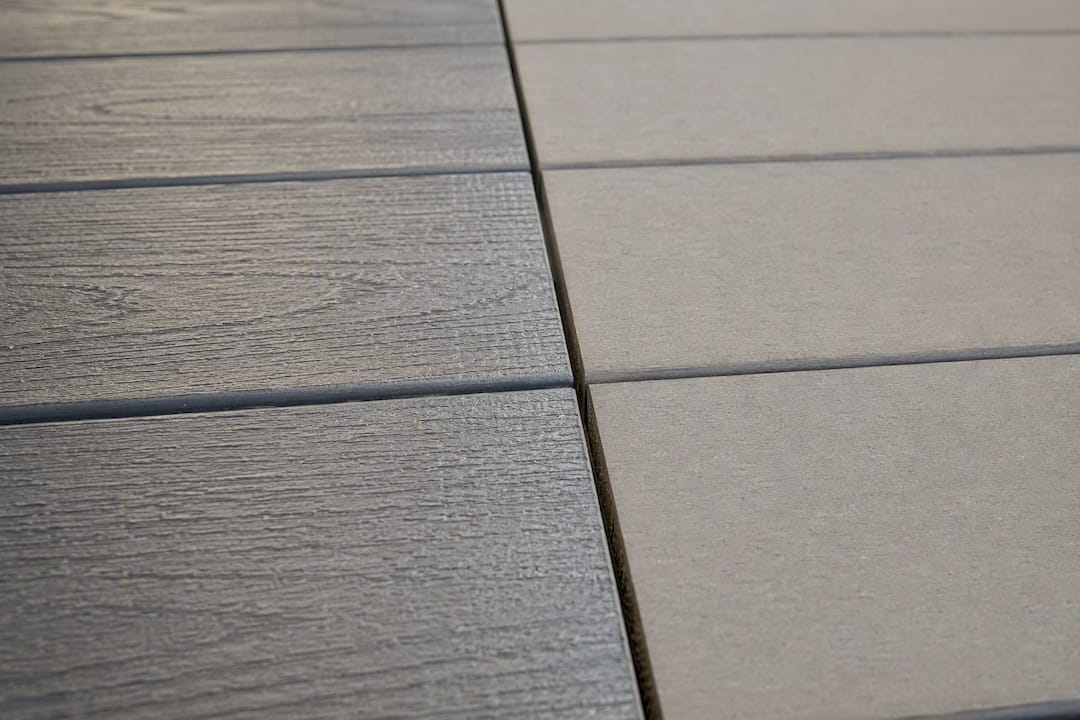
Figuring out whether your deck is capped or uncapped composite matters before you pick a cleaner. Capped boards have a plastic polymer shell over the composite core, usually with a visible texture or wood-grain pattern and a slight sheen. Uncapped composite looks more matte and uniform, and it absorbs moisture more readily. Check the manufacturer’s PDF or the tag from installation if you’re not sure.
Pro Tip: Snap a photo of your decking’s manufacturer tag when you move in or right after installation. You’ll need that model info again the first time you shop for a cleaner or file a warranty claim.
If you’re pressure washing, TimberTech caps rinsing pressure at 1,500 PSI with a fan tip, held at least 12 inches from the surface. Use it for rinsing only, not for blasting away grime, unless your manufacturer explicitly says otherwise.
What Is the Best Way to Wash a Composite Deck?
Work in 3 to 4-foot sections. Composite cleaners, especially oxygen-bleach types, start losing effectiveness if they dry on the surface before you scrub, so smaller sections keep you ahead of that clock.
Mix your cleaner. For routine cleaning, about 2 tablespoons of Dawn dish soap per gallon of warm water handles everyday grime. For mildew or algae, mix an oxygen-bleach cleaner exactly per its label, not stronger. Commercial composite-specific products, including TimberTech’s own DeckCleaner, follow their own dilution instructions.
Scrub deliberately. Apply the solution and scrub with the grain first, then across it, to reach into the textured grooves that trap dirt. Moderate pressure is enough. Anything metal, including wire brushes or metal-edged scrapers, will scratch the polymer cap and leave marks that don’t come out.
Rinse immediately, one section at a time. Don’t scrub the whole deck and rinse later. Independent testing has found that inadequate rinsing, not the cleaner itself, is the leading cause of a deck looking dirty again shortly after cleaning because leftover detergent film acts like a magnet for new dirt. Rinse from the house side outward using a garden hose or a pressure washer on its lowest, widest fan setting.
Let it dry and inspect. Composite decking typically air-dries in 2 to 4 hours in direct sun, longer in shade. Once dry, walk the whole deck and look for spots you missed. Spot-treat those before calling it done.
The rinse step is where most DIY cleanings quietly fail. A visibly clean deck with a thin film of soap left in the grain will look streaky or hazy within days, and homeowners often assume the cleaner didn’t work when the real issue was an incomplete rinse.
How Do You Remove Stains From Composite Decking?
Different stains need different fixes, and using the wrong one can do more damage than the stain itself.
Mold and mildew: Apply an oxygen-bleach cleaner per its label, or for lighter spots, mix equal parts white vinegar and water. Trex’s own care guide lists vinegar as an acceptable option for certain deposits, though it’s worth noting that in side-by-side testing, oxygen bleach removed roughly 95% of mildew compared to about 70% for vinegar. Vinegar is a fine first try for light spots; oxygen bleach is the stronger option for a real infestation. Let either sit 10 to 15 minutes, scrub gently, and rinse well.
Grease and oil: Blot fresh spills immediately with paper towels before they set. For grease that’s already soaked in, wash with a degreasing dish soap. If it’s stubborn, make a baking soda paste, let it sit overnight, then scrub and rinse.
Rust: Use a rust remover made for outdoor surfaces, but test it on a hidden spot first. Rinse it off fast and water down nearby plants beforehand to protect them from runoff.
Tannins and leaf stains: Sweep away debris quickly so leaves don’t have time to leach tannins into the surface. If a stain sets anyway, spot-treat with oxygen bleach rather than scrubbing harder, since aggressive scrubbing on a stain can wear the cap unevenly.
Pro Tip: If a stain fades but leaves a faint shadow after treatment, resist the urge to keep scrubbing. Repeated hard scrubbing on one spot is how homeowners accidentally dull the cap’s sheen in a visible patch.
If discoloration persists after trying safe methods, or if you notice bubbling, flaking, or separation in the board’s surface, that’s a sign of cap damage rather than a stain, and it’s time to call a professional. Our guide on removing mold from a deck walks through this in more depth.
What Should You Never Use on Composite Decking?
Chlorine bleach is the biggest mistake homeowners make. Simple Green warns that sodium hypochlorite based cleaners can discolor and degrade composite boards while also being harmful to nearby plants and pets. Oxygen bleach does the same job on mildew without the risk.
Homeowners routinely turn to whatever bleach is under the kitchen sink because it’s what they’d use on a wood deck. On composite, that habit can permanently discolor the cap and put a warranty claim in jeopardy.
Avoid these along with chlorine bleach:
Wire brushes, metal scrapers, or anything with a metal edge.
Abrasive powders or scouring pads meant for tile or grout.
Solvent-based cleaners not labeled safe for composite.
Pressure washers set above 1,200 to 1,500 PSI, or a narrow jet tip held close to one spot.
Keep the nozzle at least 12 inches away and always use a fan tip, never a pinpoint stream. If cleaner splashes onto nearby plants or painted railings, rinse it off right away, and water the soil around your deck before and after cleaning to dilute any runoff.
How Often Should You Clean a Composite Deck?
Sweep weekly. Removing debris before it decomposes into a stain takes two minutes and prevents most tannin problems.
Hose it down monthly. A quick rinse clears pollen, dust, and light grime before it builds up.
Deep clean twice a year, ideally spring and fall, matching the routine testing guides recommend. Shaded decks, poolside decks, and anything under trees need more frequent attention since they hold moisture longer.
Small habits pay off between deep cleans: move planters occasionally so you’re not trapping moisture under one spot, use furniture pads to prevent scuffing, clear leaves before they sit for days, and never leave wet towels or cushions on the boards overnight. A seasonal home maintenance calendar is a handy way to keep deck care on the same schedule as your gutters and HVAC filters. Spring is your big post-winter reset, fall is your pre-winter clear-off, and a five-minute walk-through after any major storm catches problems early.
When Composite Deck Cleaning Becomes a Job for a Pro
Cactusdecking builds and maintains decks in composite, PVC, and cedar with in-house crews and warranty-backed installations, which means we see what happens when DIY cleaning goes sideways, and what doesn’t.
Call a professional if you notice cap delamination (the surface layer peeling or bubbling), discoloration that won’t lift after trying oxygen bleach and vinegar, or anything that feels soft, spongy, or uneven underfoot, which can point to joist issues below the boards. A professional visit typically includes a full inspection, non-destructive checks on the substructure, a written assessment of what’s actually wrong, and a scoped quote before any work starts.
The Cleaning Advice Homeowners Get Wrong
Most articles on this topic treat cleaner choice as the whole story. It isn’t. The gap between a deck that looks freshly cleaned for months and one that looks streaky again in a week almost always comes down to rinsing, not the product used.
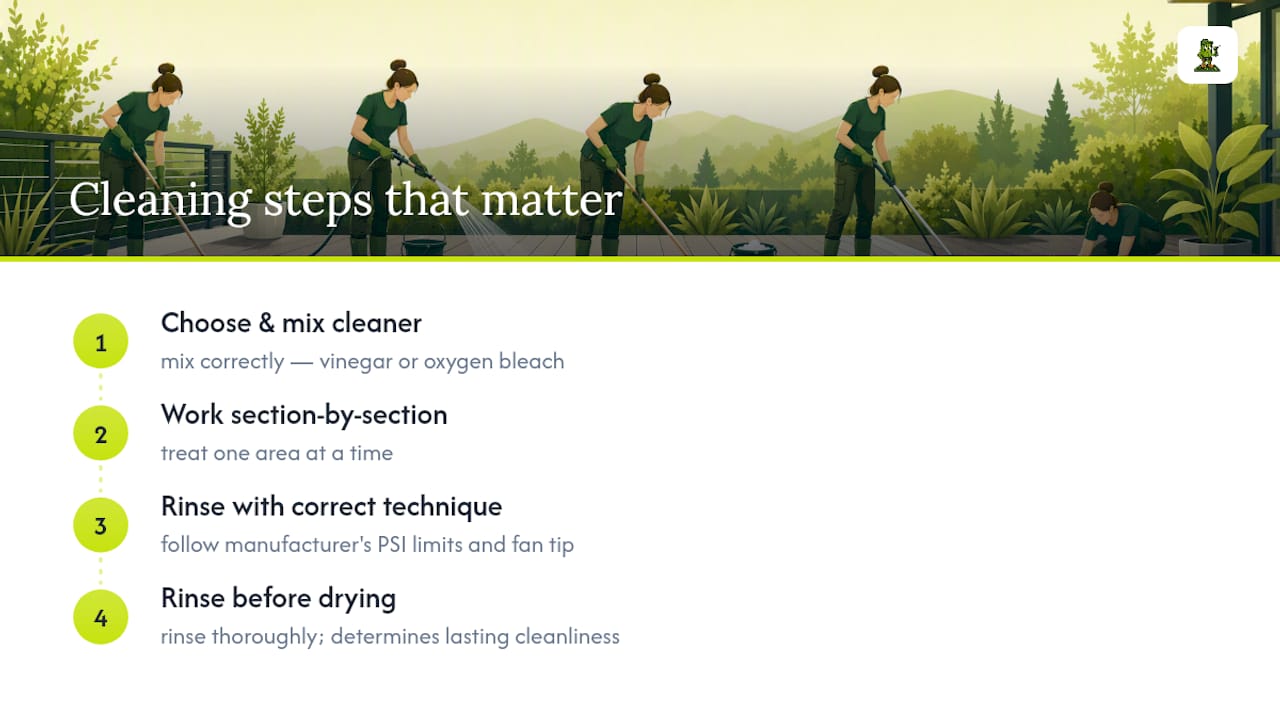
Manufacturer guides back this up more than marketing pages let on. TimberTech’s own PDF spends as much space on rinse technique and PSI limits as it does on cleaner selection, and testing that compares vinegar against oxygen bleach consistently shows the process, section by section, rinse before drying, matters as much as the mildew removal rate itself.
The other overrated piece of advice is the blanket “never pressure wash” warning some blogs repeat. Manufacturers don’t ban pressure washers. They cap the PSI and specify a fan tip. That’s a meaningfully different instruction than avoiding the tool altogether, and homeowners who over-correct into hand-scrubbing everything with a soft rag are working harder than they need to.
If you take one thing from this: mix your cleaner correctly, but obsess over the rinse. That’s the step DIYers skip, and it’s the one that actually determines whether your deck stays clean.
— Vlad
Get a Professional Deck Assessment From Cactusdecking
If a stain won’t lift, the surface feels off underfoot, or you’re just done spending Saturdays scrubbing grooves with a nylon brush, that’s the point where hiring a pro saves more time than it costs. Cactusdecking builds and services composite, PVC, and cedar decks around Everett with in-house crews and warranty-backed work, which means an inspection catches structural issues a cleaning product never will.

A typical visit starts with a walk-through of the deck’s surface and substructure, a look at whether discoloration is cosmetic or a sign of cap damage, and a straightforward quote if repair or replacement makes more sense than another round of cleaning. If your deck is closer to the end of its life than the beginning, our custom deck installation services page covers what a replacement project looks like from consultation to build. Request an inspection and get a clear answer on what your deck actually needs.