Homeowners: 3 Pro Backed Moves to Grill Safely on a Composite Deck
Three contractor backed steps for safer grilling on composite decking: meet clearance rules, use a composite rated grill mat, clear under-deck debris, and...
Homeowners: 3 Pro Backed Moves to Grill Safely on a Composite Deck
Yes, you can grill on a composite deck, but composite decking is combustible and not fireproof, so the setup matters more than the material; for advice on using compact grills safely, see Campingpoint. The three moves that keep it safe are following the grill and deck maker’s clearance guidance, placing a composite-rated grill mat sized well beyond the grill’s footprint, and clearing debris and stored items from under and around the deck. Add active supervision and a wind check, and if you can’t meet the clearances, grill on the ground instead.
TL;DR:
Using a composite-rated grill mat that extends well beyond the grill’s footprint and is kept clean reduces fire risk but cannot prevent ember entry through gaps.
Maintaining at least five feet of clearance from walls and overhangs, with additional space for wind and shifting embers, is essential for safe grilling on decks.
Regularly inspecting the deck after grilling for soft spots, discoloration, or stray embers helps identify heat damage early and prevent structural issues.
Avoid placing the grill directly on the deck if clearance is insufficient or if safety guidelines cannot be met, and consider ground-level setups instead.
Professional deck modifications, such as noncombustible buffers and joist protection, can significantly improve grilling safety where space constraints exist.
Cactusdeckingcactusdecking.comBuild A Safer Outdoor SpaceCactus Decking creates custom decks in Everett with durable materials, in-house craftsmanship, and options designed around your needs.Explore Cactus Decking
Table of Contents
What actually protects your deck when you grill
Choosing a composite-safe grill mat and useful accessories
Where to place the grill and when it’s not safe to stay on deck
A pre-grill checklist worth running every time
Checking your deck for damage after every cookout
What a deck professional actually does about grill safety
How Cactus Decking builds a safer, grill-ready deck
Sources
What actually protects your deck when you grill
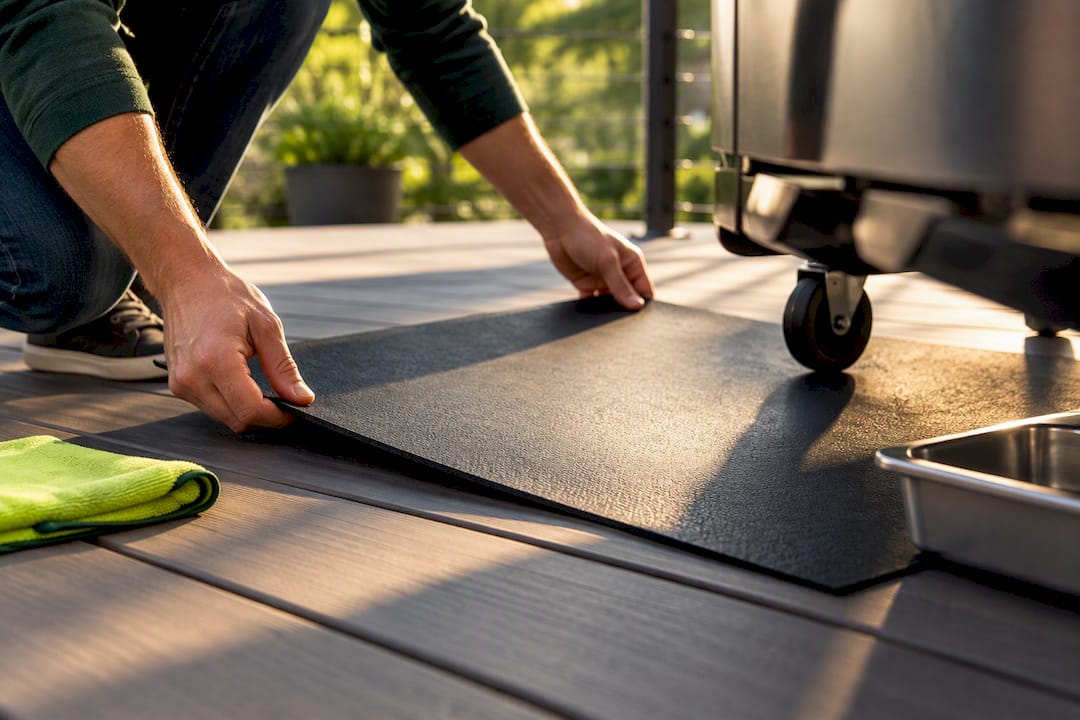
A grill mat or drip pan catches grease drips, blocks scorch marks from a hot grill base, and stops small sparks from touching the boards directly. That’s the job it’s built for, and manufacturer labeling matters here: a mat rated for composite decking has been tested to handle the heat a grill transfers through its feet and drip tray without melting or discoloring the surface underneath.
What a mat cannot do is stop an ember from traveling on the wind and lodging in a gap between boards or in the joist space below. The NFPA fact sheet on ember-ignited decks points to testing where embers lodged in board gaps and joist spaces led to smoldering that spread to nearby materials, a failure mode no surface mat addresses. That’s why mats work alongside clearance and supervision, never instead of them.
Practical rules for using one:
Size the mat so it extends past every side of the grill, not just the front.
Wipe grease off the mat after each use instead of letting it build up into a fire risk.
Keep the mat flat and anti-slip so a gust or a bump doesn’t shift the grill toward the house.
A common ignition path starts small. IBHS/NFPA testing on ember-ignited decks shows these fires often begin as a small smolder in a gap or at a joist, which is why clearing what’s under the deck matters as much as what’s on top of it.
Choosing a composite-safe grill mat and useful accessories
Not every grill mat belongs under a grill on composite boards. Check the label for language like “safe for composite decking” and a stated temperature tolerance, and skip mats with solid rubber backings, since rubber can trap heat against the boards instead of letting it dissipate.
For sizing, look for a mat that clears the grill’s perimeter by several inches on every side, not just front to back. Weight and grip matter too: a mat that curls at the edges or slides on a damp deck defeats the purpose.
Useful accessories to pair with a mat:
A metal drip pan under the grease trap for extra grease containment.
A spark screen if you’re running charcoal, since embers pop more with lump coal than gas.
A stable, level grill stand so the unit doesn’t rock or tip on uneven boards.
A soft-bristle brush and composite-safe cleaner kept nearby for quick grease wipe-downs.
Retailers carry mats built specifically for this, including the Cuisinart 65 in. Premium Deck and Patio Grill Mat and the DiversiTech 30" Ultra Grill Mat, both marketed with composite-deck labeling and stated heat tolerance.
Pro Tip: Buy the mat before the grill arrives. Sizing it to your specific grill’s footprint, rather than guessing, avoids the gap where grease sneaks past the edge.
Where to place the grill and when it’s not safe to stay on deck
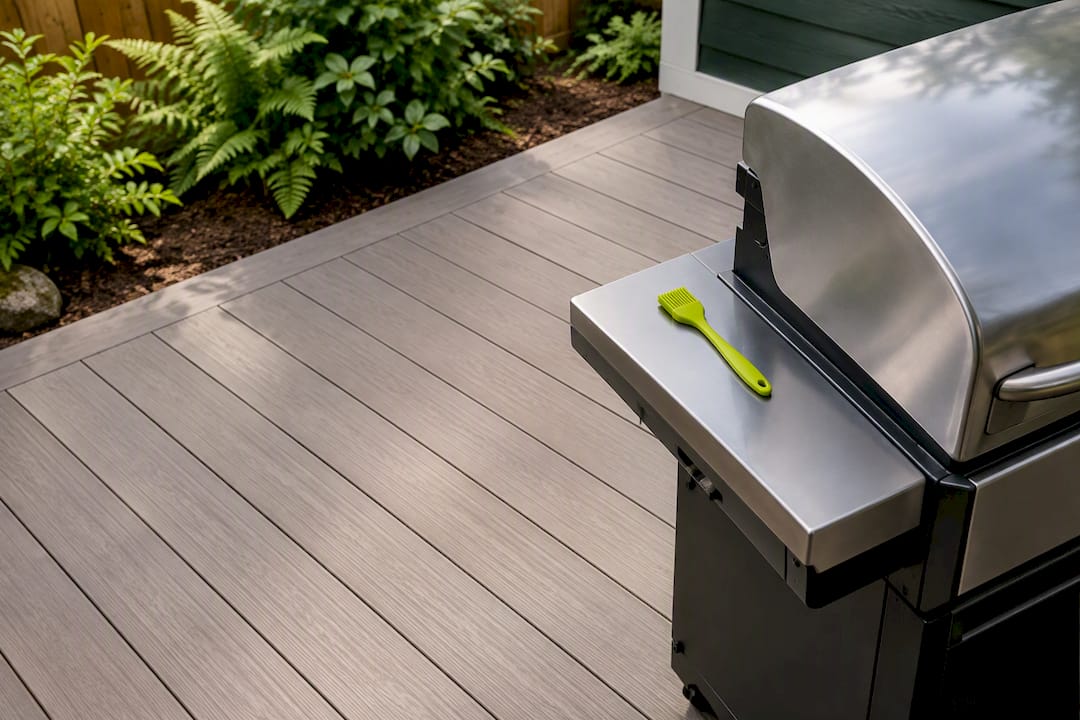
Start with the grill manual. Manufacturers publish clearance numbers for their specific unit, and those override general advice. When a manual is missing or vague, Trex Furniture’s grilling guidance recommends a commonly cited minimum of 5 feet from walls and banisters, with seating and combustibles pushed back further, around 10 feet when the deck layout allows it.
Three siting rules to follow every time:
Keep the grill in open air, away from corners, overhangs, or tight nooks where wind can trap heat and embers.
Check wind direction before you start; a shifting breeze can carry sparks toward railings, siding, or dry planters.
Leave a clear path from the grill to the door so no one has to step around it in an emergency.
If the deck’s layout can’t give you those clearances, or if there’s no way to clear combustibles from underneath it, move the grill to a noncombustible ground-level spot instead of forcing it to fit.
A pre-grill checklist worth running every time
A short routine beats memory. Before you light anything, walk through these steps in order.
Confirm the grill manual’s clearance distance and measure it against your actual setup.
Sweep debris out of board gaps and clear anything stored under the deck.
Lay the mat, then check that the grill sits level and doesn’t rock.
Check wind direction and strength, and reposition if it’s blowing toward the house.
Keep a hose or fire extinguisher within reach and confirm there are no local burn restrictions in effect.
If you’re using charcoal, set up a spark screen and never dump hot coals directly onto the deck or into a regular trash bin.
Pro Tip: Run this list out loud with whoever’s helping you cook. Saying it catches the step you’d otherwise skip on autopilot.
Checking your deck for damage after every cookout
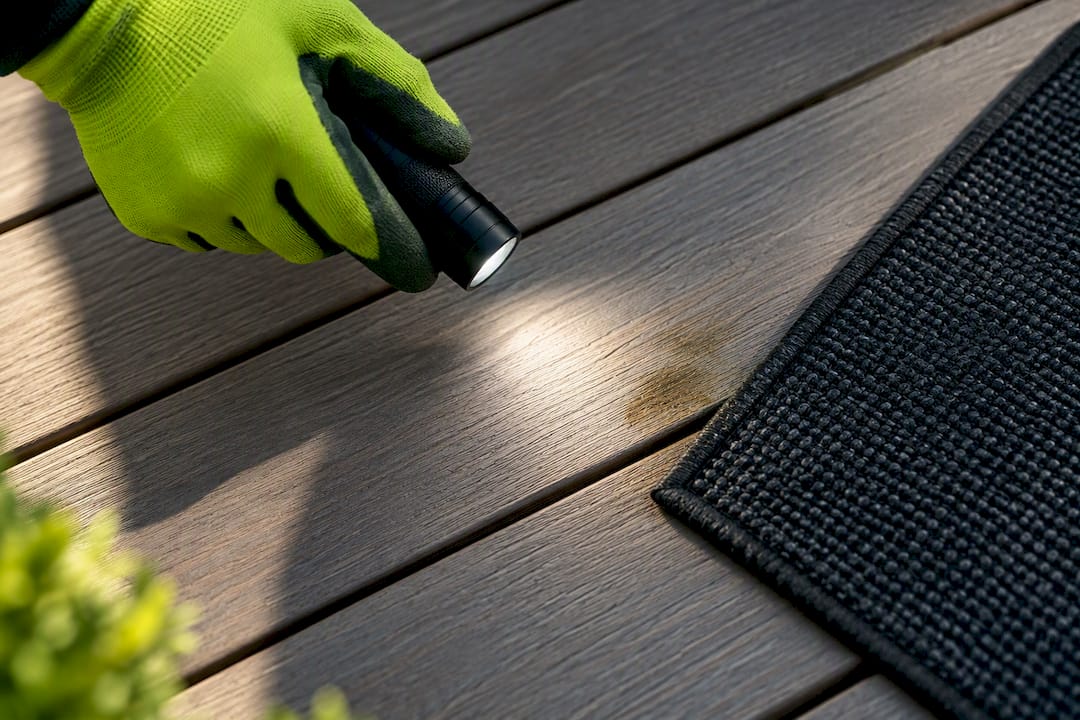
Once the grill’s cooled, walk the area before you put anything away. Look for soft spots, melting, discoloration, or slight warping on the boards nearest the grill, and check underneath for charred debris or stray embers that landed in a gap.
What to look for and how to handle it:
Clean grease spots with a manufacturer-recommended cleaner or mild detergent, not a harsh solvent.
Skip abrasive scrubbing pads, which can dull or scratch the composite finish permanently.
Treat any soft, warped, or melted board as a sign to stop using that spot until it’s assessed.
Note repeated heat marks in the same location, since that pattern usually means the clearance or mat sizing needs adjusting, not just cleaning.
Our guide on cleaning composite decking without ruining it covers safe products in more detail. If you find structural damage, soft joists, or the same trouble spot showing up cookout after cookout, that’s a job for a contractor, not a bottle of cleaner.
What a deck professional actually does about grill safety
Homeowners typically call a contractor when the deck simply can’t give a grill enough clearance, when there’s no practical way to clear storage from underneath it, or when they want a permanent, purpose-built grilling zone instead of a mat and a checklist every time.
A contractor’s toolkit for this goes beyond a mat. Options include a noncombustible buffer surface set into the deck near the grill, screening to keep debris and embers out of the under-deck space, and joist protection like foil-faced tape in vulnerable spots. Site-specific clearance planning, factoring in railings, overhangs, and prevailing wind, is something a manual can’t fully account for. For related detail, see our post on fire pit on deck safety and joist checks.
— Vlad
How Cactus Decking builds a safer, grill-ready deck
If your current layout can’t give a grill the clearance it needs, that’s a design problem, not just a habit to fix. Cactus Decking’s deck design service maps out a dedicated cooking zone with the right distance from railings and walls, and our deck replacement service can swap in a noncombustible buffer area where the grill sits most often.

A consult starts with a site assessment and a clearance plan, followed by an estimate you can compare against your own project timeline. Every installation is completed by an in-house crew rather than subcontractors. We don’t publish a standard timeline for these projects, since layout and permitting vary by site, but the first step is a conversation about what your deck needs.
Sources
FAQ
Is it safe to have a grill on a composite deck?
Yes, as long as you follow clearance distances, use a mat rated for composite decking, and clear debris from underneath, according to NFPA’s ember-ignited deck guidance. Composite boards are combustible, so treat clearance and supervision as the primary safeguard, with the mat as backup protection against grease and scorching.
Is it legal to have a grill on a deck?
Grill placement on a deck is generally allowed for homeowners, but local fire codes and rental or condo rules can restrict propane or charcoal grills on elevated structures. Check your local fire authority or property rules before assuming a deck grill setup is permitted in your situation.
How much weight can a Trex deck handle?
Trex doesn’t publish a single blanket weight limit, since capacity depends on the joist spacing and framing underneath the boards rather than the decking material itself. A grill’s weight is rarely the concern; placement and clearance from combustibles matter far more for safety.
What should you not use on a composite deck?
Avoid harsh solvents, abrasive scrubbing pads, and grill mats with solid rubber backings that trap heat against the boards. Stick to manufacturer-recommended cleaners and mats specifically labeled for composite decking to avoid discoloration or heat damage.