Composite Deck Fading: Homeowners, Try a Soap Test First
Learn why composite decks fade, use a mild soap test to assess surface change, and know when to restore, document damage, or call a deck professional.
Composite Deck Fading: Homeowners, Try a Soap Test First
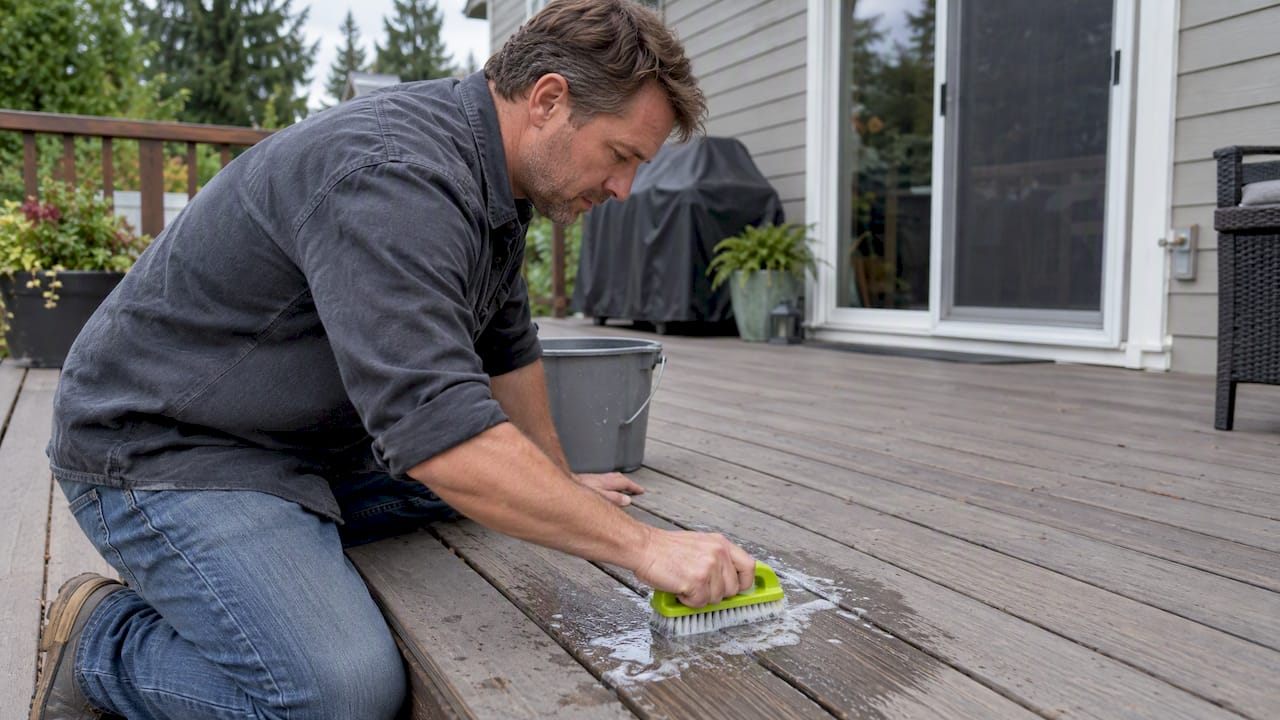
Yes, composite decking can fade from sun exposure and moisture, and most boards lighten noticeably within the first year or two before leveling off. Before reaching for a pressure washer or a restorer, assess the damage: photograph the current color, then clean a small, hidden spot with a mild soap and water solution to see how much change is actually surface-level.
TL;DR:
Test a hidden area with mild soap and water first; if color returns after washing, treat the issue as surface buildup before buying a restorer.
Choose a refresh product only after checking whether boards have wood or plastic caps, because some formulas suit only one board type.
Avoid sanding capped boards and use only low pressure with a wide fan nozzle, since aggressive washing can gouge the cap and affect warranty coverage.
Cracking, flaking, soft spots, or widespread surface breakdown call for professional inspection; dated photos and approved cleaning records can support a warranty claim.
Clean the deck fully once a year, redirect sprinklers, clear drainage gaps, and reapply compatible refresh coating only when noticeable fading returns.
Cactusdeckingcactusdecking.comPlan a Deck Built to LastIf fading signals it may be time for a new deck, Cactus Decking offers composite, PVC, and cedar options tailored to your needs.Explore deck options
Table of Contents
What causes composite deck fading
How to tell if fading is cosmetic or something worse
How to restore faded composite decking step by step
How to slow future fading with the right maintenance routine
When to involve the manufacturer or a deck professional
What we see most often in the field
Get a professional assessment from Cactus Decking
Sources
What causes composite deck fading
Sunlight is the main driver. Ultraviolet rays break down the pigments and polymer bonds in the plastic shell that wraps most composite boards, and that breakdown shows up as a gradual lightening of color. Moisture speeds up the process. Research from the Forest Products Laboratory found that boards exposed to both UV light and water spray in accelerated weathering tests faded faster and lost more surface integrity than boards exposed to UV alone, which means rain, sprinklers, and standing water all work against your deck’s color.
Manufacturing choices matter too. Boards with heavier pigment loads and built-in ultraviolet absorbers resist lightening better than lower-grade formulations, and the Forest Products Lab’s weathering research notes that pigment concentration tends to outperform some stabilizer additives at slowing color loss. Surface composition plays a role as well: boards with more plastic at the surface layer typically hold their color longer than boards where the wood fiber is closer to the surface.
A few practical factors you can actually control:
Direct sun exposure on south-facing or unshaded sections fades faster than shaded areas of the same deck.
Standing water from poor drainage or sprinkler overspray accelerates both fading and surface wear.
Darker colors show fading more visibly than lighter tones, simply because the contrast is bigger.
Shading, drainage adjustments, and the right cleaning routine won’t stop fading entirely, but they slow it down meaningfully.
How to tell if fading is cosmetic or something worse
Not all fading means the same thing, and figuring out which kind you’re dealing with changes what you should do next.
Look for uniform lightening. If the whole deck has shifted to a slightly paler version of its original color, that’s typical UV fade and almost always cosmetic.
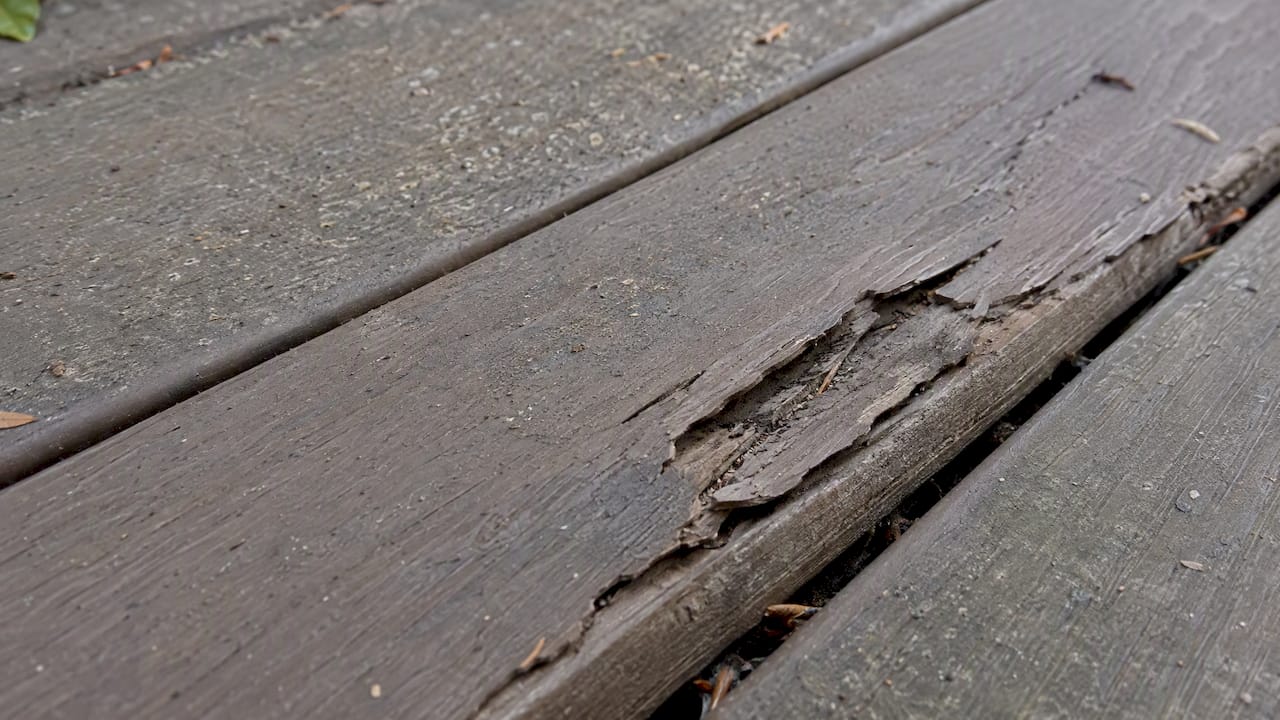
Check for chalking or a rough, fibrous texture. A powdery residue or a surface that feels splintery instead of smooth suggests the capstock is breaking down, not just losing color.
Inspect for cracking or flaking. Visible cracks, peeling capstock, or chunks coming loose point to material degradation that goes beyond surface fade.
Run a cleaning test. Wash a small, inconspicuous section with a manufacturer-approved cleaner and compare it to an unwashed area after it dries.
Photograph everything with a date stamp. This documentation matters if you later need to support a warranty claim.
Pro Tip: Always test in a spot hidden from view, like under a bench or near a rail post, so any unexpected reaction doesn’t show on your main deck surface.
If you see cracking, flaking, or soft spots alongside the fading, a professional inspection is the safer next step rather than continuing to experiment with cleaners.
How to restore faded composite decking step by step
Restoration works best when you move from the gentlest option to the strongest, and stop as soon as you get the result you need.
Start with soap and water. A basic dish soap and warm water mix, applied with a soft-bristle brush, removes surface grime that often looks like fading but is actually just dirt and pollen buildup.
Try a composite-specific cleaner if soap isn’t enough. These are formulated to lift embedded stains without stripping the capstock, but always test a hidden patch first.
Move to a restorer or refresh product only if cleaning alone doesn’t help. Product bulletins for restorers like the RockSolid composite deck refresh line note that some formulas only suit wood-capped boards, not plastic-capped ones, so check your board type before buying.
A few guardrails matter more than the product you choose:
Avoid bleach or homemade chemical mixes unless your manufacturer confirms they’re safe for your specific board.
Skip sanding on capped boards. Sanding through the capstock exposes the wood-plastic core underneath and usually can’t be undone.
Use a pressure washer carefully, if at all. A low-pressure setting with a wide fan nozzle is the only safe approach. High pressure can gouge the capstock and may void your warranty.
Pro Tip: Apply refresh coatings only within the temperature and humidity window listed on the product label, and avoid application if rain is expected within 24 hours, since the manufacturer’s application guidance ties performance directly to those conditions.
Set realistic expectations. Restorers and refresh coatings improve appearance and can make a faded deck look noticeably better, but they typically do not completely reverse deep photodegradation accumulated over many years. For a full breakdown of safe cleaning methods and products to avoid, see our guide on cleaning composite decking without causing damage.
How to slow future fading with the right maintenance routine
A consistent, light maintenance routine does more for color retention than any single product. Plan on a full clean once a year, with spot cleaning whenever you notice dirt, pollen, or organic buildup starting to collect.
Water management deserves attention too. Constant wetting from a sprinkler head aimed at the deck, or water pooling where drainage is poor, accelerates both fading and surface erosion, a pattern confirmed in weathering studies where UV exposure combined with water spray caused faster color loss than sun alone. Redirecting sprinklers and clearing debris from drainage gaps are simple fixes with a real payoff.
Add shade where you can. An umbrella, pergola, or retractable awning over heavily used sections reduces direct UV exposure.
Manage reflected heat. Glass doors, pool surfaces, or light-colored siding can bounce extra heat and light onto a deck, so consider how nearby surfaces interact with your decking.
Keep a simple maintenance log. Note cleaning dates, products used, and photos, since this record becomes useful if you ever need to support a warranty claim.
Manufacturer and field guidance consistently point to a cleaning-first approach: if color improves after a recommended wash, the issue is likely surface-level and a good candidate for a refresh product rather than replacement.
Reapply a refresh coating only when fading returns to a noticeable degree, typically every few years depending on sun exposure and color choice. For more on what to expect over the life of your deck, our piece on composite deck lifespan covers how materials age under normal use.
When to involve the manufacturer or a deck professional
Most composite decking warranties define acceptable fading using a color-change benchmark called Delta E, and a threshold around 5 is common in manufacturer documents, as seen in TimberTech’s fade and stain warranty language. Warranties typically exclude damage from improper installation, reflected heat, or misuse, so read the specific terms for your brand before assuming you’re covered.
Document everything first. Dated photos, cleaning records, and a clear description of the fading pattern strengthen any claim.
Follow the required cleaning procedure. Many warranties require you to attempt manufacturer-approved cleaning before a claim is considered.
Call a professional for structural signs. Matrix cracking, widespread flaking, or deterioration across large sections usually means a targeted board swap or larger repair, not a cosmetic fix. For perspective on when repair costs make sense versus a full rebuild, see our breakdown of replacing individual deck boards.
What we see most often in the field
The most common mistake we run into is homeowners cranking a pressure washer to full power on a faded deck, which chews into the capstock instead of restoring it. A close second is grabbing a restorer without checking whether it’s rated for their specific board type. Restoration makes sense when fading is uniform and the boards are structurally sound. Replacement becomes the smarter move once you see cracking, soft spots, or fading paired with surface breakdown across multiple boards. Before hiring anyone, ask about workmanship warranties, examples of past restoration work, and what documentation they provide, or explore experienced deck builders in Hot Springs Village for reliable local options.
— Vlad
Get a professional assessment from Cactus Decking
A faded deck doesn’t always mean a full rebuild, and knowing the difference saves money. Our in-house crew handles everything from targeted board replacement to full deck replacement, backed by warranty coverage on the installation itself, so you’re not guessing whether a repair will hold up.
If your deck’s fading comes with structural concerns, uneven boards, or damage beyond what cleaning and restorers can fix, a professional assessment tells you exactly what you’re working with.
Assessment and diagnosis of fading severity, structural condition, and repair versus replacement options.
Targeted board replacement for sections with cracking or heavy wear, without rebuilding the whole deck.
Full deck replacement using composite, PVC, or cedar materials suited to your climate and budget, detailed on our deck installation page.
If you’re ready for a straightforward next step, reach out to schedule an assessment or request a quote through our deck replacement services page.
FAQ
How do you restore faded composite decking?
Start with a mild soap and water cleaning, then move to a composite-specific cleaner if that doesn’t bring back enough color. If the board is compatible, a refresh coating applied according to the manufacturer’s instructions can improve appearance further, though it typically won’t fully reverse deep fading.
What is the average lifespan of a composite deck?
Composite decking is generally built to last for decades with proper care, though exact lifespan depends on climate, sun exposure, and maintenance habits. Our guide on composite deck lifespan covers what homeowners can realistically expect over time.
What ruins composite decking?
Constant moisture exposure combined with UV light causes the fastest fading and surface wear, according to accelerated weathering research. Improper cleaning methods, like high-pressure washing or harsh chemical mixes, can also damage the capstock and shorten the board’s appearance life.
What is the best restorer for composite decks?
The right restorer depends on whether your boards are wood-capped or plastic-capped, since many refresh products are formulated for one type and not the other. Always confirm compatibility and test a hidden area before treating the full deck.
What should I check before choosing a deck restoration service?
Ask about warranty coverage on the workmanship, examples of past restoration or replacement projects, and whether they document the assessment process. A contractor who explains the difference between cosmetic fading and structural wear is giving you useful information before you commit to a repair.
Sources
Considerations in weathering wood–plastic composites — USDA Forest Products Lab
RockSolid / Rust-Oleum Composite Deck Refresh product bulletin (excerpt)