Homeowners: When Ipe Beats Composite Decking and When to Hire a Pro
Compare Ipe and composite decking with a 25 year cost snapshot, maintenance checklist, and a contractor's view on when to hire a pro.
Homeowners: When Ipe Beats Composite Decking and When to Hire a Pro
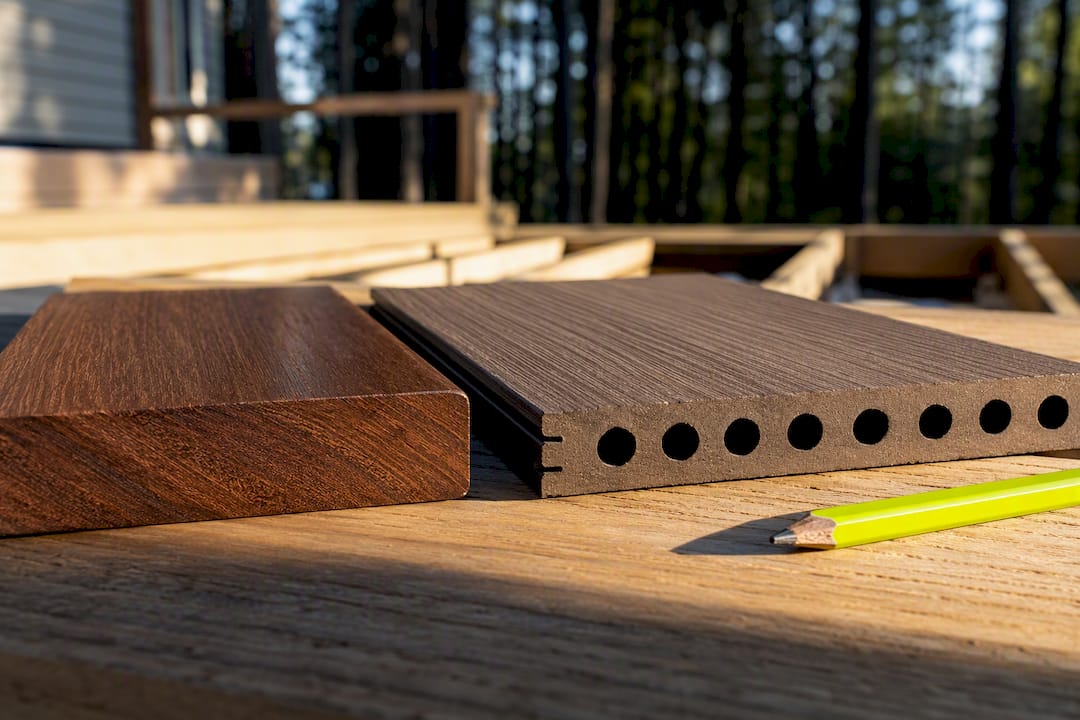
Choose Ipe if you want a deck that can outlast your mortgage and you don’t mind an annual oiling ritual. Choose composite if predictable costs and minimal upkeep matter more than owning a genuine hardwood. Ipe costs more upfront and demands real maintenance, but it can outlive two or three composite decks. Composite trades a little bit of soul for decades of low-effort ownership. The quick comparison below breaks down exactly where each material wins.
TL;DR:
Ipe decking costs more upfront, with installed prices between $25 and $45 per square foot, and requires annual oiling to maintain its color.
Composite decks are cheaper to install, generally between $20 and $38 per square foot, with minimal maintenance mainly involving regular washing.
Ipe offers superior durability and resistance to dents, scratches, rot, and insects, lasting 40 to 75 years with proper care, whereas composite resists moisture and freeze-thaw cycles but often wears faster under heavy foot traffic.
Installation of Ipe demands pre-drilling, special fasteners, and end-sealing, making professional installation crucial, unlike composite, which uses hidden fasteners and is easier and quicker to install.
Long-term cost balance depends on maintenance routine and lifespan; composite often breaks even around 10 to 14 years, while Ipe’s longevity more than compensates despite initial higher expenses.
CactusdeckingBuild Your Right-Fit DeckCactus Decking creates tailored outdoor living spaces with composite, PVC, or cedar materials and an organized process from consultation through construction.Explore deck construction
Table of Contents
Ipe vs Composite Decking: A Quick Side-by-Side Comparison
What Does Ipe vs Composite Decking Cost Over Time?
Which Material Actually Holds Up Better Over Time?
How Do Maintenance and Looks Compare Over the Years?
What Should You Know About Installing Each Material?
Does Climate Change Which Material Is Right for You?
Is Ipe or Composite the More Sustainable Choice?
How Do You Actually Decide Between Ipe and Composite?
Why a Professional Installer Matters More With Ipe Than Composite
The Real Trade-Off Nobody Likes to Admit
Ready to Move From Comparison to a Real Quote?
Sources
Ipe vs Composite Decking: A Quick Side-by-Side Comparison
Before you get into warranties and Janka numbers, here’s the shape of the decision. Ipe decking vs composite really comes down to whether you value long-term material performance or long-term convenience.
Material cost: Ipe runs roughly $8 to $12 per square foot for boards alone; composite typically runs $6 to $10 per square foot depending on the line.
Installed cost: Ipe decks often land between $25 and $45 per square foot installed, largely because of labor; composite installs usually fall between $20 and $38 per square foot.
Lifespan: Ipe can last 40 to 75 years with proper care; composite is commonly backed by 25 to 50 year warranties, though real-world surface wear sometimes shows sooner.
Maintenance: Ipe needs an oil application roughly once a year to hold its color, or none if you’re fine letting it silver naturally; composite needs periodic washing but no sealing or staining.
Fasteners and installation: Ipe requires pre-drilling and stainless fasteners due to its density; composite typically uses hidden-fastener clip systems on standard joist spacing.
Feel underfoot: Ipe stays relatively cool and has a traditional wood grain; composite, especially in dark colors, can get noticeably hot in direct sun.
Best for: Ipe suits homeowners planning to stay long-term who want a premium, natural look. Composite suits homeowners who want a “set it and forget it” deck and value budget predictability over decades.
Neither material is objectively better. They’re built for different owners, which is exactly why so many people get this comparison wrong when they shop on price alone.
What Does Ipe vs Composite Decking Cost Over Time?
The sticker price only tells part of the story. What actually separates hardwood decking vs composite is what happens in years 5, 15, and 25.
1. Upfront installed cost. Ipe’s installed price sits higher mainly because of labor, not material markup. The wood’s density means slower cutting, mandatory pre-drilling, and specialty fasteners, all of which add hours to a job. Composite installs faster with hidden clip systems, which is part of why contractors quote it lower per square foot even when material costs are close.
2. Maintenance cost over the ownership period. Ipe generally needs an oil-based finish applied once a year to preserve its honey brown color. Skip it, and the wood simply weathers to a silver gray patina instead, which costs nothing but changes the look. Composite needs occasional washing with soap and water, maybe twice a year, and that’s typically the extent of it.
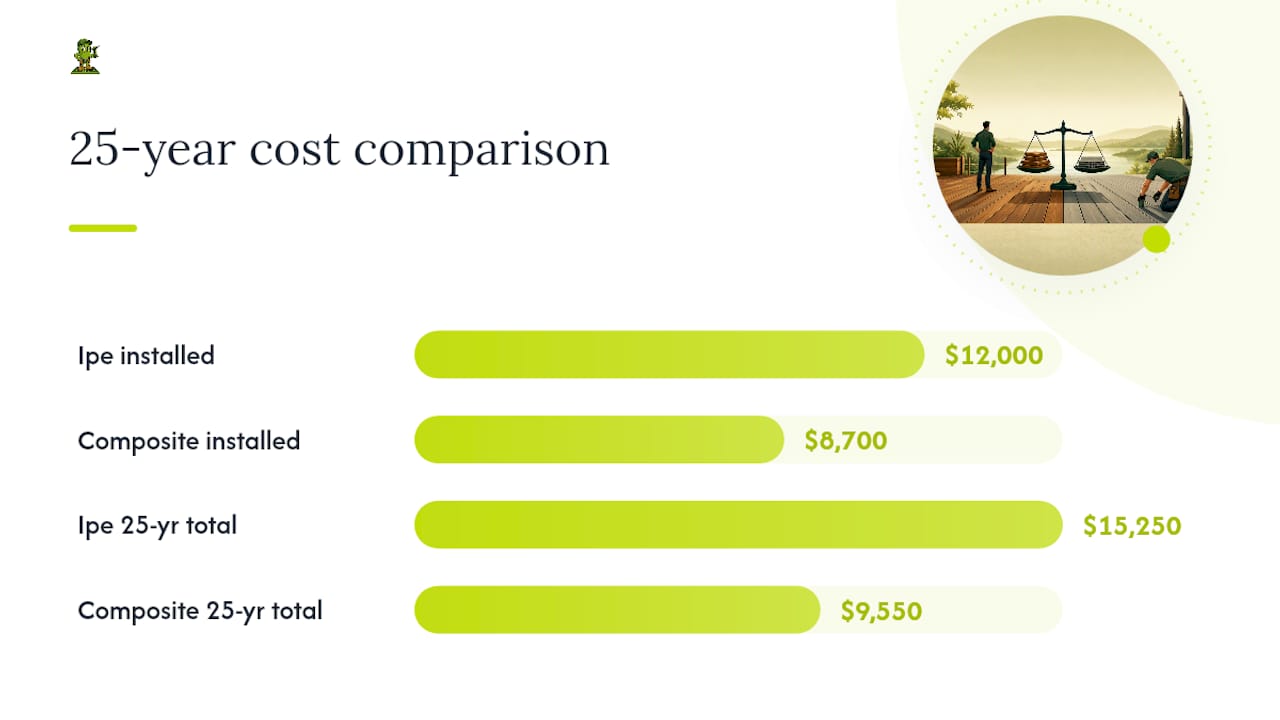
3. The break-even point. Mid-tier composite decking frequently breaks even on total cost of ownership within about 10 to 14 years compared with other wood species, once you factor in staining, sealing, and eventual board replacement. Premium composite lines push that math even further in their favor, though buyers there are usually paying for convenience rather than chasing pure savings.
Here’s a simplified 25-year snapshot for a 300-square-foot deck, using mid-range installed pricing:
Cost factor | Ipe | Composite |
|---|---|---|
Installed cost | $10,500–$13,500 | $6,000–$11,400 |
Annual maintenance (25 years) | $2,500–$4,000 (oiling/materials) | $500–$1,200 (cleaning supplies) |
Expected replacement in 25 years | Rarely needed | Rarely needed under warranty |
Approximate 25-year total | $13,000–$17,500 | $6,500–$12,600 |
Pro Tip: *Ask your contractor whether their quote separates material cost from labor.
Premium composite warranties commonly run 25 to 50 years, but read the fine print. Most exclude labor costs for warranty repairs and don’t cover normal color fading, which means the warranty protects the board itself, not your wallet if something needs replacing.
Which Material Actually Holds Up Better Over Time?
Ipe wins on raw hardness. Its Janka hardness rating runs about 3,510 to 3,684 lbf, significantly harder than most composite capstocks and many domestic hardwoods used in flooring. That density is why Ipe decks resist dents from dropped grills, dragged furniture, and dog claws far better than composite.
Composite fights back in a different arena: moisture and freeze-thaw stability. Because it’s engineered from wood fiber and plastic, composite doesn’t absorb water the way solid hardwood can, and it doesn’t develop the surface checking that shows up on wood exposed to repeated wet-dry cycles.
Here’s how the two compare on the performance points that actually matter to homeowners:
Dent and scratch resistance: Ipe rarely dents under normal residential use; composite caps can scratch, and repair options are limited once the capstock is damaged.
Span and joist spacing: Ipe’s strength allows slightly wider joist spacing in some installations, while composite boards often require tighter framing, commonly 16 inches on center, to avoid sagging between joists.
Fire resistance: Ipe carries a Class A fire rating naturally due to its density, matching many treated materials without added chemical treatment; composite fire ratings vary significantly by manufacturer and formulation.
Rot and insect resistance: Ipe’s natural oils make it highly resistant to rot and termites without chemical treatment; composite’s plastic content resists rot entirely but the wood-fiber core in some products can be vulnerable if the capstock is breached.
Failure modes: Ipe’s main failure point is checking at cut ends if untreated; composite’s main failure point is capstock delamination or fading once the outer layer degrades, exposing the core underneath.
Testing standards from organizations like ASTM International inform how manufacturers rate fire performance and structural load for both material categories, giving buyers a baseline for comparing claims across brands.
How Do Maintenance and Looks Compare Over the Years?
This is where the two materials tell genuinely different stories, and it’s worth being honest about which one fits your patience level.
Ipe left unfinished weathers to a silver gray patina within 6 to 12 months, and plenty of homeowners actually prefer that look. If you want to preserve the original reddish brown tone, plan on an oil-based finish annually, sometimes twice a year in harsh sun. Sanding and refinishing are possible on Ipe decades into its life, something you simply can’t do with composite.
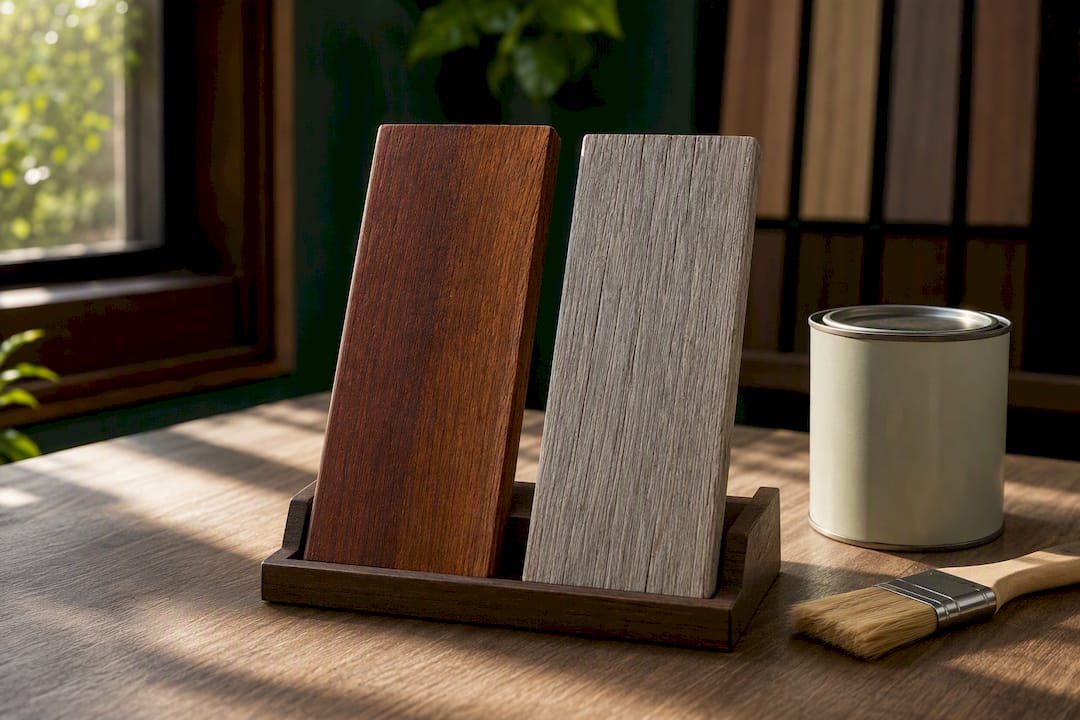
Composite doesn’t fade the same way wood does, but it isn’t immune to change. Cap-stock composite can lighten slightly over years of UV exposure, and once a board scratches deep enough to expose the core material underneath, there’s no sanding it back to new. Cleaning is straightforward: soap, water, and a soft brush handle most mildew and grime.
Surface heat is a factor people underestimate on both materials, but it hits composite harder. Dark-colored composite boards can reach significantly higher surface temperatures in direct sun than lighter colors, and the color choice matters more than the material category itself. Ipe tends to stay more moderate underfoot even in full sun, though a dark-stained Ipe board in July afternoon sun still gets warm.
A few practical habits keep either material looking its best:
Rinse both materials seasonally to prevent pollen and organic buildup from staining the surface.
Avoid pressure washing Ipe at close range, which can raise the wood grain and strip protective oils prematurely.
Choose lighter composite colors if your deck gets full afternoon sun and you plan to walk barefoot.
Skip oil-based deck stains formulated for softwoods on Ipe. They rarely penetrate dense hardwood evenly.
Readers weighing other wood species against composite might also find our cedar deck vs composite comparison useful for a mid-range alternative perspective.
What Should You Know About Installing Each Material?
Installation is where a lot of homeowners get blind sided by labor costs they didn’t budget for, especially with Ipe.
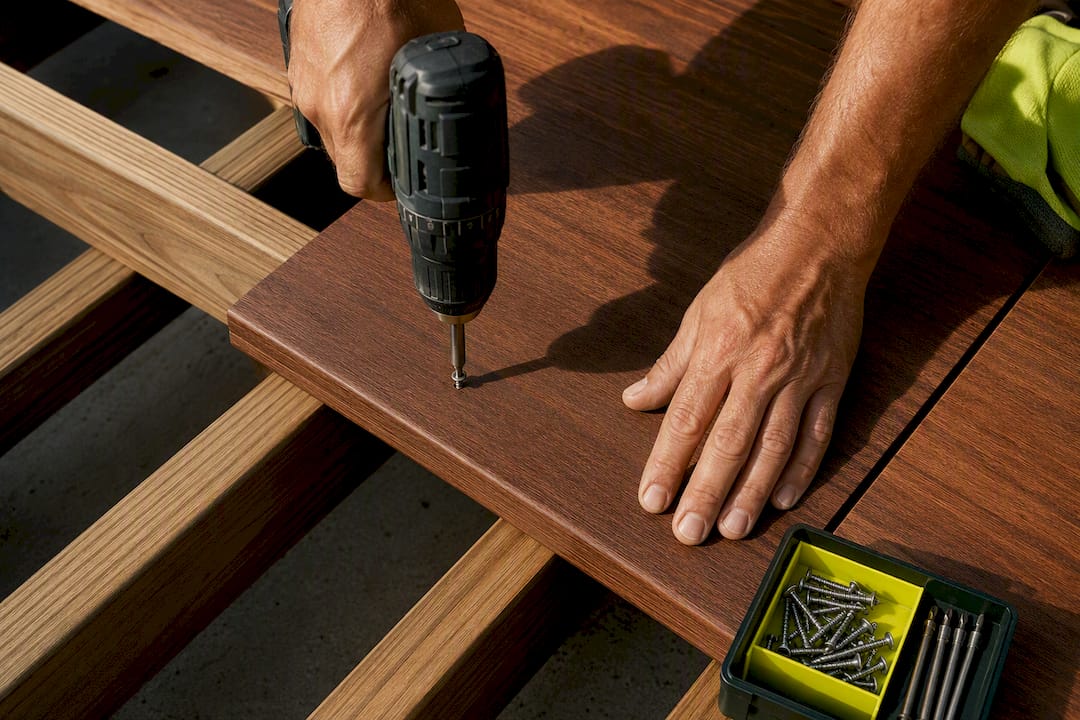
Pre-drilling is mandatory on Ipe. Its density makes it prone to splitting if you drive a fastener without a pilot hole. Installers typically use stainless steel fasteners, often 305 or 316 grade, to resist corrosion from the wood’s natural tannins and acidity.
Composite relies on hidden-fastener clip systems that lock into a groove along the board edge, which speeds up installation but requires manufacturer-specified joist spacing, commonly 16 inches on center, to prevent sagging between supports.
End-cut sealing on Ipe isn’t optional if you want a clean result. Applying a wax-based end sealer to cut ends immediately after trimming significantly reduces moisture-related checking and splitting as the board acclimates. Skip this step and you’ll likely see cracks radiating from the cut ends within a season.
Subframe choice interacts with material selection. Heavier Ipe boards benefit from properly sized treated lumber or steel-reinforced framing, particularly on longer spans, while composite’s lighter weight is more forgiving on standard residential framing.
Pro Tip: If your contractor doesn’t mention end-grain sealing when quoting an Ipe project, ask about it directly. This single step prevents one of the most common and most avoidable Ipe complaints homeowners run into within the first year.
Composite is also notably sensitive to over-tightened fasteners, which can cause capstock dimpling around the fastener head, something installers need to watch for on every board.
Does Climate Change Which Material Is Right for You?
Your local conditions matter as much as your budget preference. A material that performs beautifully in the Pacific Northwest can behave differently in Arizona or coastal Florida.
Hot, sunny sites: Composite in dark colors can get uncomfortably hot underfoot by mid-afternoon; Ipe tends to stay more temperate, though light-colored composite closes much of that gap.
Coastal and marine environments: Ipe’s natural oil content resists salt air corrosion well, provided fasteners are marine-grade stainless; composite resists moisture intrusion entirely but should still use corrosion-resistant hardware near saltwater.
Freeze-thaw regions: Composite generally handles temperature swings with minimal dimensional movement; Ipe can experience slight seasonal expansion and contraction, which proper spacing during installation accounts for.
High-traffic or rental properties: Composite’s scratch-prone surface can show wear faster under heavy foot traffic and furniture movement, making Ipe’s dent resistance appealing for short-term rental decks that see constant use.
If your deck sits in full sun for most of the day, pairing either material with a weather-resistant shade solution can meaningfully extend comfortable use hours and reduce UV exposure on the decking surface itself.
Is Ipe or Composite the More Sustainable Choice?
Sustainability claims get thrown around loosely on both sides, so it’s worth asking pointed questions before you buy.
Tropical hardwoods like Ipe come from forest regions where deforestation directly affects regional carbon balance, which is why chain-of-custody and FSC certification matter. Ask your supplier for documentation, not just a verbal assurance.
Composite often uses recycled wood fiber and plastic in manufacturing, which sounds appealing, but the finished product typically can’t be recycled again at end of life and usually ends up in a landfill. Neither material is a clean win environmentally. The honest answer is that responsible sourcing on Ipe and honest end-of-life expectations on composite both require the buyer to ask harder questions than most suppliers volunteer.
How Do You Actually Decide Between Ipe and Composite?
Start by ranking your own priorities honestly, because the “best” material is really the one that matches how you live.
If longevity and authentic material appeal matter most, Ipe is the stronger long-term investment despite the annual oiling commitment.
If minimal upkeep and predictable costs matter most, composite decking advantages, especially warranty coverage and washing-only maintenance, make it the practical pick.
If your budget is tight right now but your timeline is long, run the 25-year cost comparison before deciding. The upfront gap narrows more than most people expect.
Before your consultation, bring these details to the table:
Your deck’s sun exposure and typical foot traffic patterns.
Whether you want the natural brown Ipe tone maintained or you’re fine with a silvered patina.
Your realistic willingness to commit to annual maintenance versus a wash-only routine.
Any local climate factors, coastal salt air or freeze-thaw cycles, that could affect either material.
Ask any contractor bidding the job about warranty labor exclusions, fastener grade, and joist spacing plans before signing anything. If low maintenance is your top priority, our guide to low-maintenance decking materials digs deeper into composite and PVC options side by side.
Why a Professional Installer Matters More With Ipe Than Composite
Ipe punishes shortcuts. A crew that skips pre-drilling, uses the wrong fastener grade, or forgets end-cut sealing will hand you a deck that develops problems within a year or two, even though the material itself can last decades. Composite is more forgiving, but manufacturer joist-spacing specs still need to be followed precisely to avoid long-term sag.
This is exactly the gap Cactus Decking fills with an in-house build crew rather than subcontractors, meaning the same team that quotes your project handles the pre-drilling, fastener selection, and framing decisions from start to finish. Warranty-backed installations give homeowners a real answer when something needs attention years down the road, not just a manufacturer warranty that excludes labor. For heavier hardwoods like Ipe, or complex spans that need engineered subframe support, professional installation isn’t a luxury. It’s what makes the material’s 40-plus year lifespan achievable rather than theoretical.
The Real Trade-Off Nobody Likes to Admit
Most decking comparisons pretend there’s a universal winner, and that’s the part I disagree with most. Ipe vs composite isn’t a durability contest. Ipe wins that outright. It’s a question of what kind of ownership experience you actually want for the next few decades.
The conventional advice tells people to pick based on price per square foot, which misses the point entirely. Price per square foot ignores the 25-year maintenance math, and it ignores that a badly installed Ipe deck (skipped end-sealing, wrong fasteners) will disappoint you faster than a well-installed composite one ever will.
If I had to name the single most overlooked factor, it’s installation quality, not material choice. A mediocre install undermines even the best material on either side of this debate. Homeowners should prioritize finding a crew that treats fastener grade and joist spacing as seriously as they treat the sales pitch. The material matters. The hands putting it together matter just as much.
— Vlad
Ready to Move From Comparison to a Real Quote?
Once you know whether Ipe’s premium durability or composite’s low-maintenance convenience fits your household better, the next step is getting a quote grounded in your actual yard, not a generic estimate. Cactus Decking handles both material paths with an in-house crew, which means the same team quoting your project also builds it, with no subcontractor handoffs to worry about.
A typical consultation covers a site review of your existing structure or yard, a straightforward conversation about which material fits your climate and maintenance appetite, and a detailed quote that separates material and labor costs so you can see exactly what you’re paying for. Whether you’re replacing an aging deck or starting from scratch with a custom Ipe or composite design, deck installation and deck replacement are both handled start to finish, permitting included. If your project involves a full redesign rather than a straight swap, the custom deck installation service covers layout, railing, and stair planning together. Reach out for a consultation and get a quote built around your yard, not a national average.
Sources
Several of the figures in this guide come from industry-standard testing and cost-analysis sources worth bookmarking if you want to dig deeper. ASTM International publishes the material testing standards that inform fire ratings and structural claims across both wood and composite decking. DeckMath’s 25-year cost comparison breaks down long-term composite versus wood economics in more detail than most contractor quotes will. DeckWise’s end-seal guidance covers the specific installation step that prevents most Ipe cut-end failures, and NOAA’s forest research explains the broader stakes behind demanding certified tropical hardwood sourcing.
Material Deck Comparison: Wood vs Composite in 2026 | BuildMat Insight
NOAA: Deforestation warming flip part of Amazon forest from carbon sink to source
FAQ
What Are the Disadvantages of Ipe Decking?
Ipe’s biggest downsides are cost and maintenance commitment. It requires annual oiling to keep its color, mandatory pre-drilling with stainless fasteners during installation, and its density makes it heavier and more expensive to work with than composite or softwoods.
Is Ipe Better Than Trex?
Ipe outperforms Trex and other composite brands on hardness and natural longevity, with a Janka rating around 3,510 to 3,684 lbf compared to composite’s much softer capstock surface. Trex-style composite wins on maintenance simplicity and warranty predictability, so “better” depends on whether you prioritize durability or low upkeep.
What Is the Best Material for an Outdoor Deck?
There’s no single best material. It depends on your priorities: Ipe suits homeowners wanting maximum longevity and a natural wood aesthetic who don’t mind yearly maintenance, while composite suits homeowners who want minimal upkeep and predictable long-term costs. A contractor like Cactus Decking can help match the material to your specific climate and usage pattern.
Is Ipe or Trex More Expensive?
Ipe is more expensive both in material and installed cost, largely due to labor intensity from pre-drilling and specialty fasteners. Installed Ipe decks often run $25 to $45 per square foot, while composite decks like Trex typically run $20 to $38 per square foot installed.
How Long Does Each Material Actually Last?
Properly maintained Ipe can last 40 to 75 years, while premium composite lines are commonly backed by 25 to 50 year warranties. Composite warranties usually exclude labor costs and normal fading, so read the terms closely before assuming full coverage.