4 Inch Rule First: Family-Friendly Deck Ideas Homeowners and Pros Trust
Family-friendly deck ideas that protect kids and pets: meet the 4 inch railing rule, choose cool capped boards with proper traction, and know when to hire...
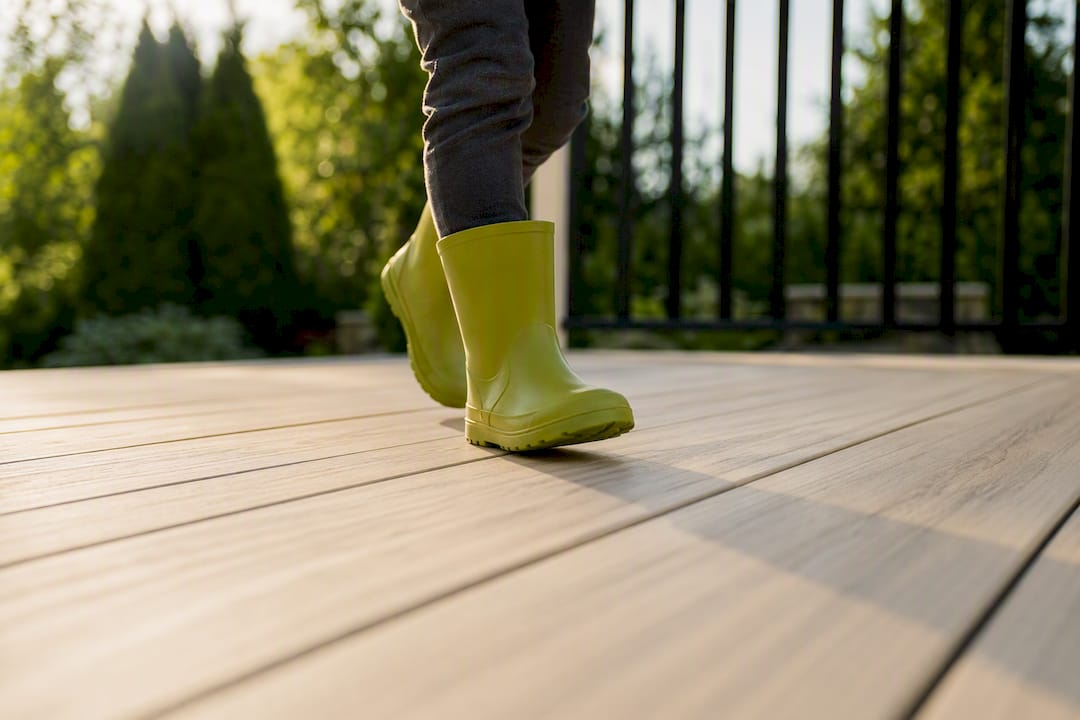
4 Inch Rule First: Family-Friendly Deck Ideas Homeowners and Pros Trust
Capped composite or PVC decking, paired with tight-spaced railings and a locking gate, gives you the safest foundation for a family deck. Add shade, light-colored boards to cut down heat, and clear play and storage zones, and most safety boxes are checked. For anything touching structure, footings, or permits, bring in a contractor before you build.
TL;DR:
Most safety enhancements like mesh rail guards and shade sails can be added without structural modifications or permits, easing DIY efforts for small updates.
Railing gaps must be no wider than 4 inches to prevent small pets and toddlers from slipping through, ensuring safety compliance.
Lighter, variegated composite or PVC boards stay cooler and hide scratches better than dark solid colors, improving comfort and appearance.
Regular cleaning with pet-safe, enzyme-based products is sufficient for composite and PVC decks, but cedar requires more maintenance and sealing.
Structural work, such as replacing footings or load-bearing railings, requires professional installation and should never be attempted as a DIY project.
CactusdeckingBuild a Safer Family DeckCactus Decking creates tailored outdoor living spaces with durable materials, thoughtful design, and warranty-backed installation in Everett.Explore deck solutions
Table of Contents
What Are the Best Family-Friendly Deck Ideas for Safety and Style?
What Pet-Friendly Deck Features Should You Add?
How Do You Childproof a Deck Without Losing the Design?
How Should You Zone a Family Deck for Play and Supervision?
Where Should You Put Deck Lighting for Safety?
How Often Should You Clean and Maintain a Family Deck?
When to DIY and When to Call a Pro
Ready to Build a Deck That Works for Kids and Pets?
Sources
What Are the Best Family-Friendly Deck Ideas for Safety and Style?
A family-friendly deck starts with the boards under your feet, not the furniture on top. Capped composite and PVC decking eliminate the splinter risk that comes standard with bare wood, and they need no staining or pressure-treating to hold up season after season, according to DecksDirect’s pet-friendly deck guide. Capped boards also resist scratching from dog claws far better than early-generation composite did.
Color and texture matter more than most homeowners realize. Darker solid boards trap heat and show every scuff a dog’s nails leave behind. Lighter, variegated finishes hide light claw marks and run noticeably cooler underfoot, a detail Daedalus Decks points out when comparing PVC lines to older composite generations.
Pro Tip: When you’re comparing samples, ask the supplier for the product’s PTV (pendulum test value). A rating of PTV 36 or higher is a solid benchmark for wet-weather traction, especially around pool decks or shaded corners that stay damp longer.
Cleaning products matter just as much as the board itself:
Skip oil-based sealers and anything with harsh VOCs. They off-gas near paws and bare feet.
Use mild soap-and-water solutions or manufacturer-approved composite cleaners.
Avoid bleach-heavy mixes that can discolor capped boards or irritate pet paws.
For cedar, stick to water-based, low-VOC sealants rated for high-traffic outdoor use.
What Pet-Friendly Deck Features Should You Add?
A dog-friendly deck starts with keeping the animal contained, comfortable, and off boards that can hurt or overheat it.
Close the gaps. Standard railing spacing can let small dogs squeeze through. Add mesh guards or tighten baluster spacing to block escape routes and prying paws.
Install a locking gate at the top of the stairs, especially if the yard isn’t fully fenced.
Add a shade structure and a mounted water station. A shade sail over the main lounging area combined with a fixed water bowl keeps pets from overheating on hot boards, an approach Greene Eco Dream recommends as a baseline for any dog-owning household.
Choose capped boards over uncapped composite to resist mold buildup from wet pet feet and reduce splinter risk near paws.
Skip toxic landscaping. Keep pet-safe plants near the deck perimeter and consider a dedicated turf patch or mulch zone for digging instead of letting a dog tear up the lawn.
Pro Tip: Clean pet messes with an enzyme-based cleaner rather than ammonia. Enzyme formulas break down odor at the source instead of masking it, which matters more on porous cedar than on sealed composite.
How Do You Childproof a Deck Without Losing the Design?
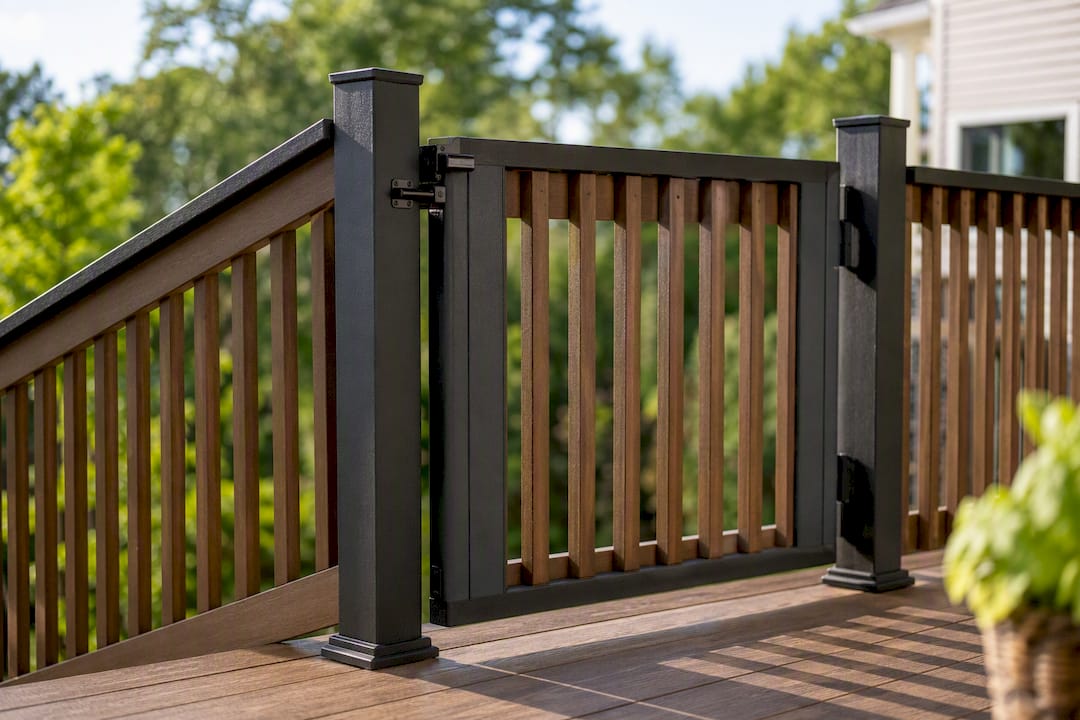
Railing height and spacing are non-negotiable. Code generally requires a railing that blocks a 4-inch sphere from passing through, a rule that protects toddlers’ heads and small pets equally, according to DecksDirect. If your existing railing was built before that standard tightened up, a mesh guard retrofit closes the gap cheaply.
Beyond railings, a few build choices do double duty for safety and fun:
Stair gates at the top and bottom of any deck stairs used by kids under five.
Rounded corners on built-in benches and planters instead of sharp 90-degree edges.
Anchored furniture (bolted, not just weighted) so nothing tips when a kid climbs on it.
A recessed sandbox or a chalk-friendly section of decking that doubles as a game board inlay, an idea Decks highlights as a way to build play directly into the structure.
Built-in storage seating that swallows toys at the end of the day instead of leaving them as trip hazards.
Pro Tip: Bare feet notice board temperature before adults do. If your deck gets full afternoon sun, test a sample board in direct light before committing. A PVC or capped composite in a lighter tone will almost always outperform dark wood-look composite on hot days.
How Should You Zone a Family Deck for Play and Supervision?
Most decks fail families not because of bad materials, but bad layout. A workable split for a typical family deck includes distinct zones for play space, dining and seating, and circulation and storage, adjusted based on how many kids or pets actually use the space day to day.
Keep the play lane open and unobstructed, ideally visible from the main seating area so supervision doesn’t require getting up.
Built-in benches with hinged storage keep toys and pet gear out of the walking path, a design choice that also gives parents clear sightlines to stairs and play zones without moving.
Route the main walking path around the play zone, not through it, to cut down on collisions between running kids and carried plates.
If your yard is on the smaller side, our deck design guide for compact yards covers layout tricks specific to tighter footprints.
Where Should You Put Deck Lighting for Safety?
Lighting isn’t decorative on a family deck. It’s a safety system.
Step lights on every stair riser, so kids and pets can see the edge in low light.
Post cap lights along the railing to mark the deck’s perimeter after dark.
Low-level path lighting leading from the deck to the yard, useful for late-night pet runs.
A quick annual railing check: grab the top rail and push. If it flexes or any gap exceeds the 4-inch sphere rule, fix it before summer gatherings start.
Cheap retrofits that punch above their cost: a stair gate, mesh rail guard, and anti-skid coating on stair treads solve most safety gaps without touching the deck’s structure.
How Often Should You Clean and Maintain a Family Deck?
Maintenance cadence depends heavily on material. Composite and PVC need a rinse and mild soap wash two to three times a year, while cedar needs a more thorough cleaning plus a fresh sealant coat roughly every one to two years to keep splinters from forming as the wood weathers.
Use pet-safe, enzyme-based cleaners for messes and a soft-bristle brush for general grime.
Watch for mold or algae in shaded, damp corners. Capped composite resists it better than cedar, but neither is immune.
Small scratches on capped boards are largely cosmetic and rarely need more than a manufacturer-approved touch-up kit.
If boards are cupping, railings are loose beyond a quick tighten, or stair treads feel spongy, that’s the signal to call a contractor rather than patch it yourself.
When to DIY and When to Call a Pro
Most family-deck upgrades, from mesh rail guards to shade sails, are weekend fixes. Structural work is not. A reliable process includes consultation, design, material selection, construction by a dedicated crew, and a warranty-backed handoff, which keeps liability and craftsmanship in one accountable place instead of split across subcontractors.
If you’re weighing composite against PVC for a play-heavy household, Vlad’s breakdown on composite versus PVC decking is a genuinely useful starting point before you call anyone. Once you’re touching footings, load-bearing railings, or anything requiring a permit, that’s where a site visit earns its cost. Guessing on structural loads with kids on the deck isn’t a place to save money.
— Vlad
Ready to Build a Deck That Works for Kids and Pets?
Cactus Decking is the option built specifically around this problem: unlike patching together a DIY railing fix and hoping the boards hold up, our in-house crew handles design, custom installation, and warranty-backed construction as one connected process, so nothing gets lost between the contractor who designed it and the one who built it.

If you want visual proof before committing, our deck gallery shows finished family decks with the railing, shade, and zoning choices covered above. For a covered outdoor space that protects kids and pets from direct sun year-round, our deck covers page is worth a look too. When you’re ready to talk specifics, our deck design page is the fastest way to book a consultation and get a real plan for your yard.
Sources
For deeper reading on the material and safety points above, see DecksDirect’s pet-friendly deck tips, Greene Eco Dream’s pet-friendly design guide, and Decks.com’s kid-friendly deck ideas. For outdoor play inspiration beyond the deck itself, ToylandEU’s guide to outdoor kids’ games and Doll House’s UPF swimwear guide round out sun-safety planning for young children.
FAQ
Does Composite Decking Splinter Like Wood?
No. Capped composite and PVC decking are engineered to eliminate splinters entirely, which is why they’re the top pick for bare feet and paws over untreated cedar.
How Wide Can Railing Gaps Be for Child and Pet Safety?
Railings should not allow a 4-inch sphere to pass through any gap, a standard that blocks both small pets and toddlers’ heads from getting stuck.
Does Deck Color Really Affect Surface Heat?
Yes. Lighter, variegated composite and PVC boards run noticeably cooler underfoot than dark solid colors, which matters most for bare feet and dog paws on sunny afternoons.
Can I Retrofit Pet and Kid Safety Features Without a Full Rebuild?
Most of the time, yes. Stair gates, mesh rail guards, shade sails, and turf patches can all be added to an existing deck without touching the structure.
When Should I Call a Contractor Instead of DIYing a Fix?
Call a pro any time the work touches footings, load-bearing railings, or requires a permit. Cactus Decking’s deck installation services cover exactly that kind of structural work with a warranty attached.