
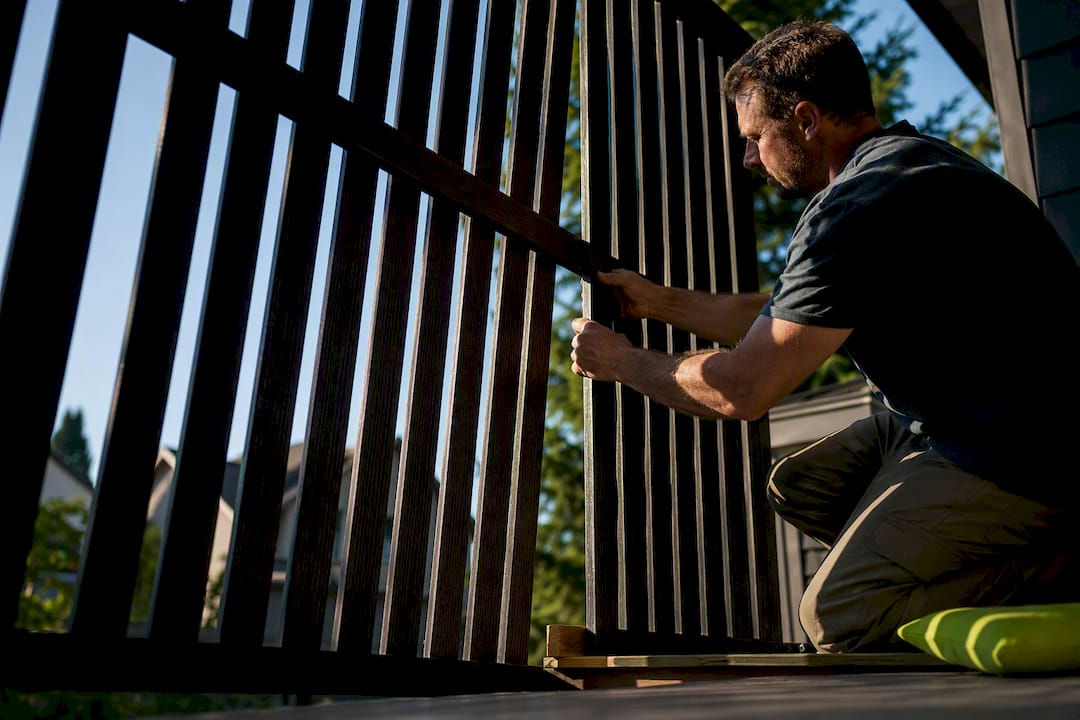
For instant privacy, use freestanding screens, outdoor curtains, or retractable shades. For privacy that lasts, build a slatted privacy wall or plant a dense evergreen hedge. Small setups (curtains, potted plants) are weekend DIY projects; anything involving structural posts, wind-load calculations, or permits is where hiring a contractor pays off.
TL;DR:
- Installing a slatted privacy wall or planting a dense evergreen hedge provides long-lasting, effective privacy at a medium to high cost, with permits needed for structural features.
- Freestanding folding screens and outdoor curtains offer immediate privacy solutions but are less durable and prone to wind or fading, suitable for short-term use.
- Plant-based screens like emerald green thuja or climbing vines grow gradually and improve in appearance over time, requiring strategic placement alongside structural elements.
- DIY options such as fabric screens or curtain wires are inexpensive and quick to install, while contractor-built walls and pergolas cost more but ensure structural integrity and lasting privacy.
- Proper attachment methods and consideration of wind load are essential, with perforated or slatted designs better withstanding strong outdoor breezes than solid panels.
Table of Contents
- 12 Deck Privacy Ideas Ranked by Speed and Cost
- Materials, Attachments, and When Wind Becomes a Structural Problem
- Plant-Based Privacy: What Grows Fast Enough to Matter
- Renter-Friendly Privacy That Leaves No Trace
- Lighting, Sound, and Layering Tricks That Make a Deck Feel More Private
- What Deck Privacy Actually Costs and How Long It Takes
- When to Bring in a Contractor for Deck Privacy Walls
- What I’d Actually Build First
- Ready to Build a Privacy Solution That Lasts?
- Sources
12 Deck Privacy Ideas Ranked by Speed and Cost
Some of these solve the problem tonight. Others take a season or two. Here’s how they stack up.
- Slatted privacy wall. Best for permanent street-facing privacy. Blocks sightlines completely while allowing airflow through the gaps. Requires posts and possibly a permit. Cost: medium to high.
- Pergola with curtains. Best for overhead exposure plus side privacy in one build. Doubles as shade structure. Curtains need seasonal washing. Cost: medium to high.
- Retractable shades. Best for decks that need privacy sometimes, not always. Adjustable on demand, but motorized versions add cost. Cost: medium.
- Outdoor curtains. Best for a soft, resort-style look on a covered deck. Cheap and easy to hang, but flap in wind and fade over time. Cost: low.
- Trellis with vines. Best for gradual, natural screening against a fence line. Looks better every year, but takes seasons to fill in. Cost: low to medium.
- Potted tall plants or container hedges. Best for renters or anyone who might move. Fully portable, but needs regular watering and winter protection in cold climates. Cost: medium.
- Decorative metal or laser-cut panels. Best for a modern look that doubles as art. Nearly maintenance-free, but pricier than wood. Cost: medium to high.
- Freestanding folding screens. Best for quick fixes with zero installation. Move them anywhere, but lightweight versions blow over in wind. Cost: low.
- Shade sails. Best for angled sun and partial visual blocking overhead. Striking look, but limited straight-on privacy. Cost: medium.
- Privacy fabric or roll-up bamboo screens. Best for budget fence-line coverage. Installs in an afternoon, but shorter lifespan than hard materials. Cost: low.
- Built-in seating with a high back. Best for combining function with a privacy buffer at seating height. Permanent and sturdy, but only blocks lower sightlines. Cost: medium.
- Planter boxes with climbers. Best for pairing a permanent structure with living greenery. Looks intentional immediately, fills in fully within a year or two. Cost: medium.
Materials, Attachments, and When Wind Becomes a Structural Problem
Cedar looks warm and takes stain well, but it needs refinishing every two to three years. Composite panels cost more upfront and need almost no upkeep beyond occasional washing. Aluminum and corten steel shrug off weather entirely, though corten’s rust patina isn’t for everyone. Outdoor fabrics are the cheapest option and the shortest lived, especially in coastal wind.
Attachment matters more than most homeowners realize:
- Privacy posts should tie into the deck framing or sit in independent footings, never rely on the railing alone for structural support.
- Through-bolting works for panels mounted to existing posts.
- Z-channels give a clean, hidden mounting method for lightweight decorative panels.
Wind load quietly makes or breaks a screen. A solid panel catches full wind pressure. A perforated screen with roughly 50% open area cuts that effective load down to about 40 to 60 percent of a solid equivalent, which is why laser-cut and slatted designs hold up better on exposed decks than solid fences do.
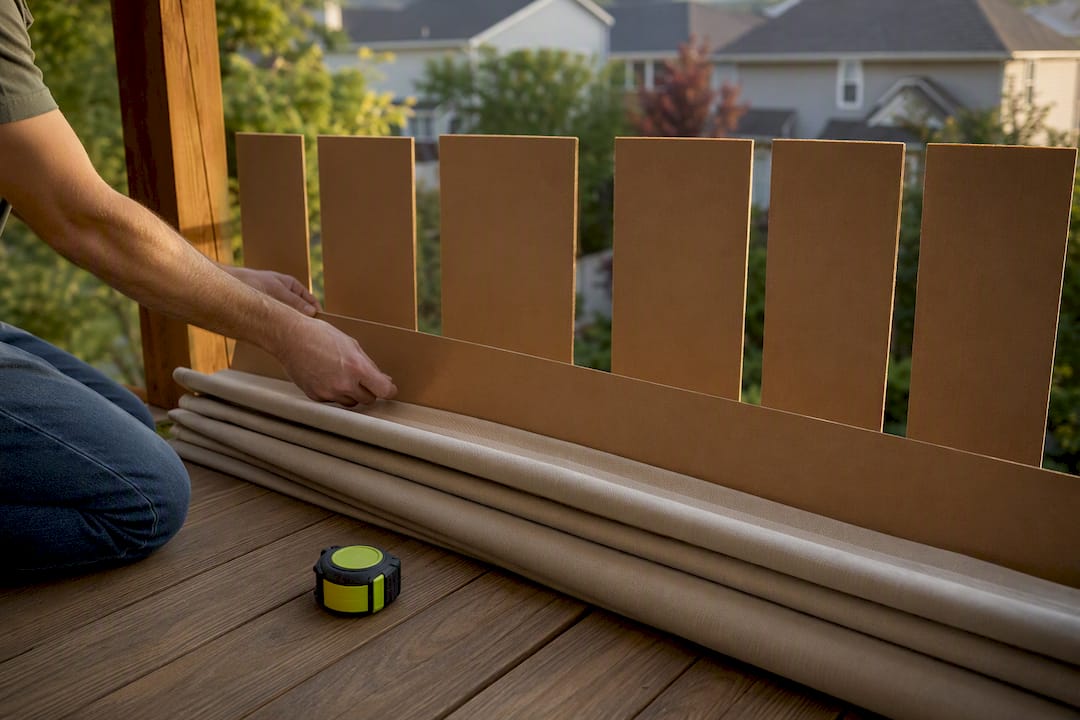
Pro Tip: Mock up your screen with cardboard or fabric before building anything permanent. Stand where you actually sit and check what your neighbors can see. It’s the cheapest insurance against building a wall in the wrong spot, or one that’s taller than it needed to be.
Plant-Based Privacy: What Grows Fast Enough to Matter
Living screens take patience, but they’re the only option that gets better looking every year instead of worse.
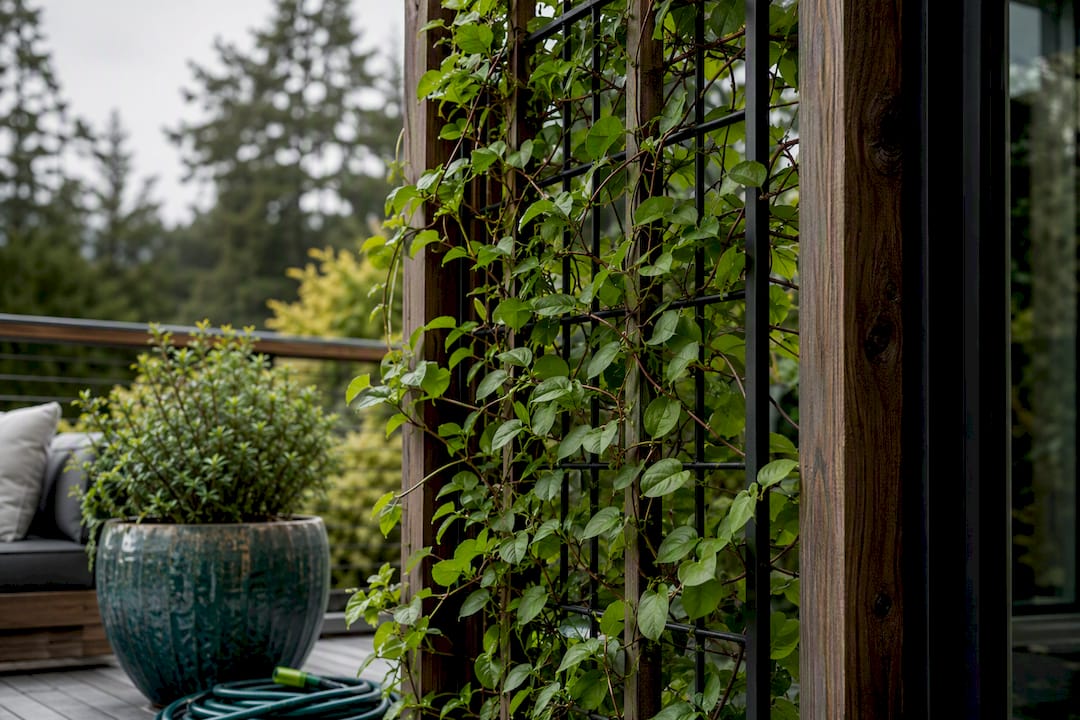
Emerald Green Thuja is the workhorse evergreen for backyard hedges. Clumping bamboo varieties (never running types) fill vertical space fast without invading the yard next door. Jasmine and clematis both climb trellises quickly and add fragrance that fabric screens never will.
- Use lightweight potting mixes in containers so root systems don’t sit waterlogged.
- Water container plants more often than in-ground beds, especially through summer.
- Bring tender species indoors or into a garage before the first hard freeze.
- Pair containers with a trellis or pergola frame so vines have something to climb immediately.
Skip running bamboo entirely. It spreads through rhizomes and shows up in a neighbor’s yard within a year or two. Clumping varieties stay put.
Pro Tip: Stage full-grown potted plants in front of your trellis on day one. You get privacy immediately while the climbing vines take their time filling in behind them, so the deck never looks bare during the wait.
Designers generally recommend pairing a structural element like a trellis or panel with plantings rather than counting on vegetation alone, since plants take multiple seasons to reach full coverage on their own.
Renter-Friendly Privacy That Leaves No Trace
If you can’t drill into the deck or fence, you still have real options.
- Weighted freestanding panels stand on their own base plate. No attachment needed.
- Tensioned curtain wires run between two portable posts and hold lightweight drapes.
- Roll-up bamboo screens hang from an existing railing with zip ties or removable clips.
- DIY PVC-pipe-and-fabric screens cost under $50 in materials and pack flat for winter storage.
Choose UV-rated outdoor fabric over indoor curtains left outside; regular fabric breaks down in a season of direct sun. Weight the base of any freestanding screen with sandbags or paver blocks, since a strong gust will topple an unanchored panel fast. Retail privacy screens built specifically for outdoor use tend to hold color and shape longer than repurposed indoor pieces.
Lighting, Sound, and Layering Tricks That Make a Deck Feel More Private
Privacy isn’t only about blocking sightlines. It’s also about what people notice.
- Aim string or bistro lights downward and inward, not outward toward the property line, so your deck glows without broadcasting every detail to the street.
- Uplight a hedge or tree instead of lighting the deck itself; it draws the eye to the greenery, not to you.
- A small fountain or water feature masks conversation and traffic noise, which does more for a sense of enclosure than most people expect.
- Layer planters, a trellis, and a tall-backed bench at different heights so no single sightline runs straight through your seating area.
What Deck Privacy Actually Costs and How Long It Takes
Instant fixes exist, but so do options that take years to mature. Set your budget and your patience level accordingly.
Cost bands:
- DIY fabric screens and curtain setups: under $200
- Prebuilt panels, planters, and freestanding screens: $200 to $2,000
- Custom-built privacy walls, pergolas, and integrated covers: $2,000 and up
Timeline: Freestanding screens and curtains deliver privacy the same day you install them. Panel systems and small pergolas usually take a few weeks from order to finished install. Plant-based screening is the slow lane: Emerald Green Thuja and similar evergreens grow multiple feet per year making them a popular choice for quick backyard hedges under good conditions, but reaching full hedge height often takes two to four growing seasons.
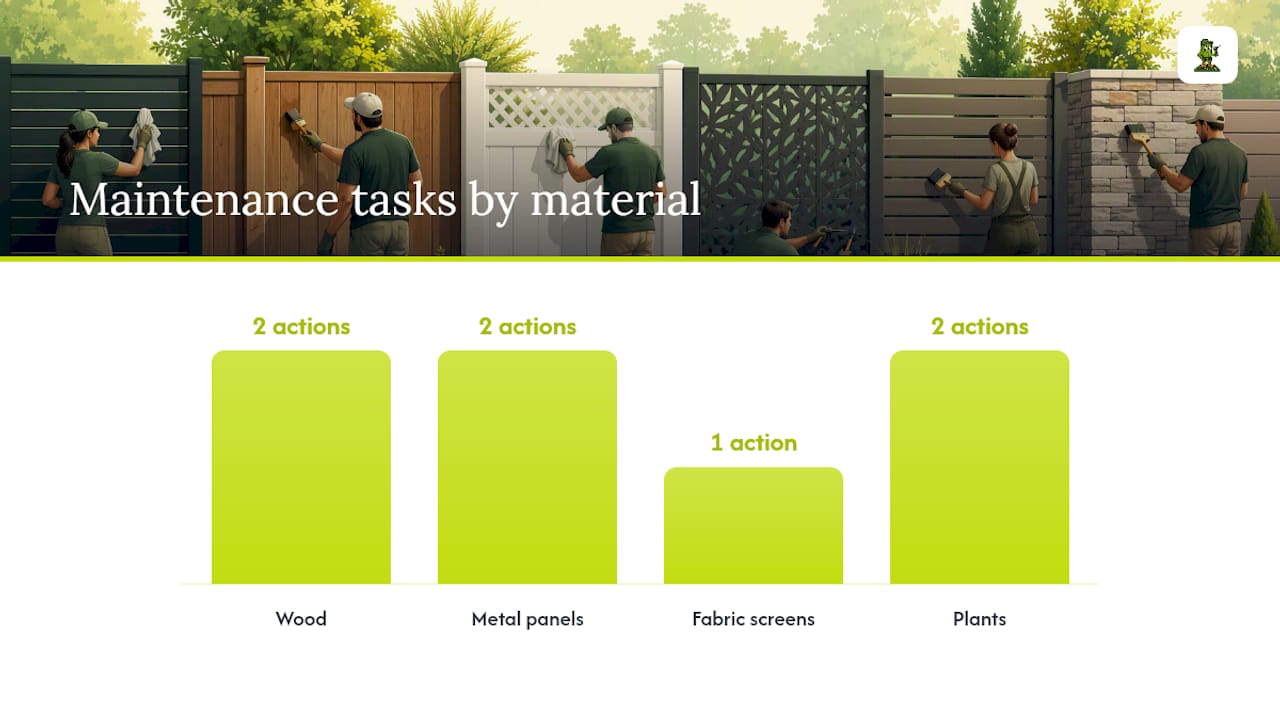
Maintenance by material: wood needs re-staining and hardware inspection every couple of years; metal panels need occasional rinsing and rust touch-up; fabric screens need seasonal storage or replacement; plants need regular pruning and a consistent watering schedule through their first two summers.
When to Bring in a Contractor for Deck Privacy Walls
DIY covers most of the ideas above. A privacy wall tied into your deck’s structure, a pergola with an integrated cover, or anything involving permits is a different job.
These projects benefit from being built by an in-house crew rather than subcontracting, which keeps the design consistent from the first sketch to the last board. Warranty-backed installation means structural elements like posts and framing are covered, not just the visible finish.
- Material options include composite, PVC, or cedar, chosen based on climate and maintenance preference.
- The typical process runs consultation, then design, then permitting, then build.
That sequence matters most for privacy walls specifically, since permitting and structural tie-in decisions made early avoid expensive rework later.
What I’d Actually Build First
If you want privacy tonight, buy a weighted freestanding screen or hang a curtain wire. If you want privacy that gets better every year, build a slatted wall and plant a hedge behind it on the same weekend, so the structure carries the load while the greenery grows in.
The best move I keep coming back to: mock up your sightlines with cardboard before you commit to lumber. It costs nothing, takes twenty minutes, and saves you from building a wall that blocks the wrong view.
— Vlad
Ready to Build a Privacy Solution That Lasts?
Curtains and folding screens solve tonight’s problem. A slatted privacy wall or a pergola with integrated covers solves it for the next fifteen years, filling a gap for homeowners who are done re-buying fabric screens every summer. Experienced crews can handle design through permitting and construction to ensure the privacy wall you picture is the one that actually gets built.
Browse the Everett deck design service to see how a custom privacy wall or slatted railing fits your layout, or check the deck cover installation service if a pergola or shade structure is more your speed. Want to see finished examples first? The project gallery shows real privacy walls and covers built for other Everett homeowners. Ready to talk specifics? Reach out to start a consultation and get a plan built around your actual deck, not a generic template.
Sources
For deeper how-to detail beyond this list: BHG’s deck privacy roundup covers layering structure with plants. HGTV’s backyard privacy guide has more fast-growing plant picks. Build-Construct explains screen materials and wind load in more technical depth. Trex’s privacy ideas and Martha Stewart’s backyard privacy guide round out design inspiration, and Lowe’s privacy screen selection is a good starting point for shopping prebuilt panels.
- 18 Deck Privacy Ideas to Create a Secluded Backyard Retreat — BHG
- Outdoor Decks with Decorative Screens: Design, Materials, and Construction — Build-Construct
- 45 Inexpensive Backyard Privacy Ideas — HGTV


