Cool Decking Colors for Homeowners: SRI Beats Guesswork
Learn why light grays, pale tans, and stone tones stay cooler, how SRI and shade affect comfort, and what to ask a contractor before choosing decking.
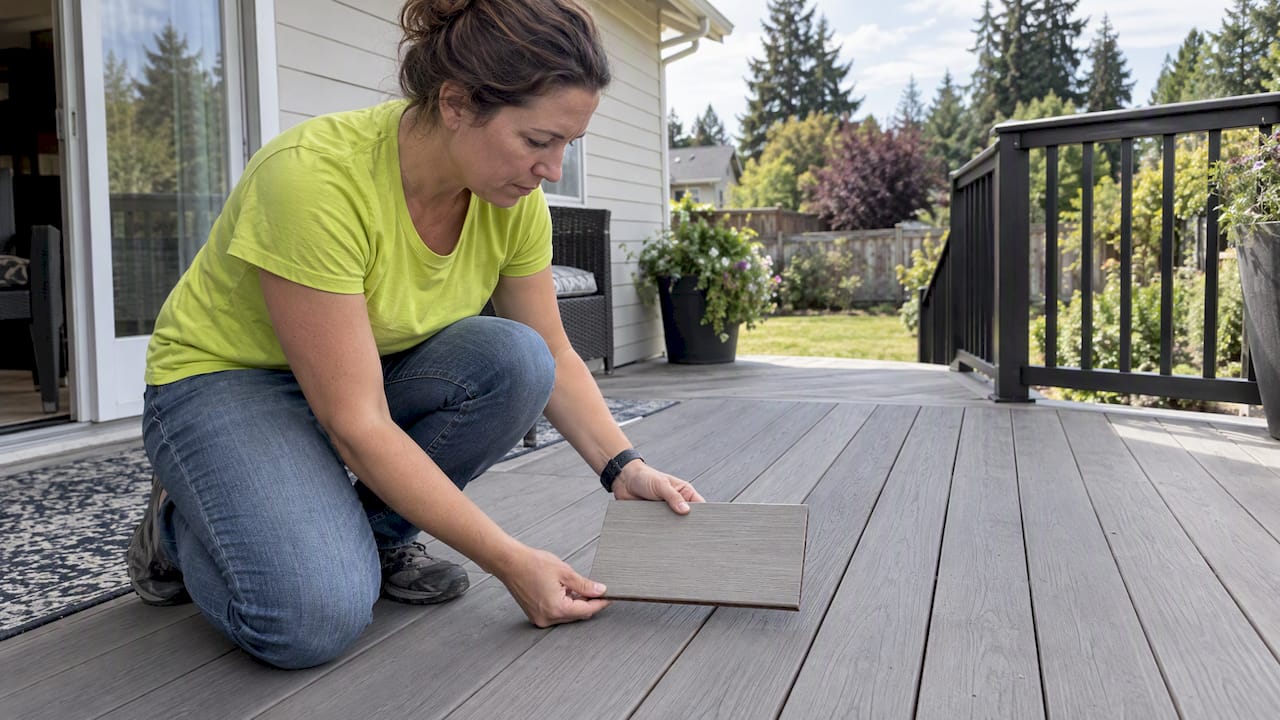
Cool Decking Colors for Homeowners: SRI Beats Guesswork
To keep a deck noticeably cooler underfoot, choose light neutrals: light grays, pale tans, and stone tones that reflect more sunlight than darker shades. Where your decking brand offers them, pick a manufacturer’s dedicated “cool” color line or an SRI-rated option built for heat performance. The single most effective follow-up move is pairing that color choice with shade or better airflow, since color alone only gets you partway there.
TL;DR:
Solar Reflectance Index combines reflectance and thermal emissivity, so compare rated boards and test a physical sample at your site around 2 or 3 PM.
Decks facing west and poolside settings need the lightest boards, since afternoon sun peaks then and nearby water, concrete, or siding can add reflected heat.
Visible color alone cannot predict surface heat: cap technology and emissivity matter, and some light composite or PVC boards have tested hotter than darker hardwood.
Duradek reports select PVC colors run up to 16% cooler than its warmest shade, based on internal and SRI testing rather than universal results.
CactusdeckingBuild a Deck Made for Your SpaceCactus Decking builds custom outdoor spaces in Everett, with composite, PVC, and cedar options to suit your needs and preferences.Explore Cactus Decking
Table of Contents
1. Which color families actually stay coolest
2. Why color matters: SRI, reflectance, and surface-temperature safety
3. Matching color to sun exposure, orientation, and material
4. Design moves that amplify cooling and style
5. Keeping cool colors looking right for years
6. Comparing cool colors across composite, PVC, and cedar
7. How cool decking colors shape curb appeal and value
Why color choice is only half the comfort equation
How we help you choose and build a cooler deck
Sources
1. Which color families actually stay coolest
Light grays, pale tans, sandy beiges, and stone tones top the list for homeowners who want a deck that stays walkable on a hot afternoon. These hues reflect a larger share of incoming sunlight than deep browns, charcoals, or black composites, which absorb more solar energy and hold onto heat longer after the sun moves. Within the light neutral category, a few directions each bring a different look:
Light stone gray or ash gray: reads modern and pairs well with contemporary siding, black railings, and concrete or stone hardscaping.
Pale sand or driftwood tan: leans coastal or relaxed, works nicely with cedar fencing, white trim, or weathered wood accents.
Weathered-wood neutrals: mimic naturally grayed cedar or teak, giving a rustic feel without the heat absorption of a true dark wood tone.
Cool-toned taupe with a slight green or gray undertone: blends into landscaping and softens the look of a large deck surface.
When you’re sampling colors with a supplier or contractor, specific phrasing helps avoid confusion. Saying “light stone gray” or “pale sand, not tan-brown” gives a clearer target than a vague request for “something light.” Many composite and PVC lines use marketing names that don’t describe the actual tone, so asking to see a physical sample in direct sun, not just a catalog photo, is worth the extra step before you commit to a full board order.
Avoid deep espresso, black, or saturated dark brown finishes if comfort on hot days is a priority. They look striking in photos but run measurably hotter underfoot, especially on decks with little shade.
2. Why color matters: SRI, reflectance, and surface-temperature safety
Solar Reflectance Index, or SRI, is a standard metric defined under ASTM E1980, and it predicts surface heat more reliably than a simple “light versus dark” guess because it accounts for both reflectance and thermal emissivity together. A material can be moderately light in color but still run hot if it holds heat rather than releasing it, which is why two similarly colored boards from different brands can feel very different underfoot.
Research backs up why this matters for bare feet. A technical bulletin on deck surface temperatures found that full-sun decking can exceed skin-burn thresholds, with surfaces climbing past 109°F and brief contact near 176°F capable of causing near-instant skin damage.
Full-sun decking can reach temperatures that exceed common skin-burn thresholds within minutes, according to measured surface temperature data. That single fact is the reason color choice on a sun-exposed deck isn’t just a style decision.
Material interacts with color in ways that can surprise homeowners:
Some capped-polyethylene or PVC composites have measured hotter in direct sun than darker hardwoods in side-by-side testing, despite looking lighter.
Albedo tables from the Forest Products Laboratory show that reflectance and surface gloss both shift how hot a wood or painted surface gets, and those factors change with geography and material aging.
Manufacturer “cool” claims are a useful starting point, but every major brand still recommends shade or airflow alongside color for the best comfort outcome.
3. Matching color to sun exposure, orientation, and material
A deck baking in full afternoon sun needs a stricter color strategy than one tucked under mature trees. West-facing decks catch the harshest, longest afternoon sun, which is exactly when surface temperatures peak, so the lightest heat-mitigating tones paired with shade matter most there.
Full sun or west-facing decks: choose the lightest available heat-reflective tone and add shade immediately, since color alone won’t offset hours of direct afternoon exposure.
Partial shade from trees or structures: mid-to-light tones hold comfort while opening up more style options, including some taupes and warmer neutrals.
Poolside or reflective settings: light-colored siding, concrete, or water nearby can bounce extra heat back onto the deck, so compensate with an even lighter board tone or added shade.
South and east exposures: generally milder than west-facing spots, giving more flexibility in color without sacrificing comfort.
Material changes the equation too. Composite and PVC boards with infrared-reflective cap technology generally run cooler than darker natural woods finished with standard stains, since the cap layer is engineered to bounce more solar energy. Cedar and other softwoods absorb heat differently depending on species and stain pigment, with darker, oil-based stains trapping more warmth than lighter, water-based finishes.
Pro Tip: Test a sample board in your actual deck location at 2 or 3 PM, the hottest stretch of the day, rather than relying on a showroom display under different light.
4. Design moves that amplify cooling and style
Color choice works best as part of a bigger plan. A few design tactics stack comfort gains on top of whatever tone you pick:
Add adjustable shade first. Pergolas with retractable canopies or sail shades often outperform a fixed roof because you can open them for light in cooler months and close them during peak summer heat.
Prioritize airflow underneath. Vented skirting and generous clearance beneath the deck, ideally more than six inches, help hot air escape rather than radiate back up through the boards, according to industry guidance on keeping composite decks cooler.
Use two-tone or picture-frame borders. A darker accent border around a lighter field adds visual contrast without covering enough surface area to meaningfully raise overall heat. Our picture-frame and two-tone design guide covers layout options that keep this balance.
Choose breathable rugs and light furniture. Woven outdoor rugs let heat escape rather than trap it against the boards, and light-colored furniture frames avoid adding another hot surface to the space.
For homeowners weighing shade structures more seriously, our guide to deck shade ideas breaks down options that hold up for years rather than a single season.
5. Keeping cool colors looking right for years
Cool decking colors fade or dull over time without some basic upkeep. UV exposure is the main culprit: constant sun bleaches pigments unevenly, especially on boards that get partial shade from furniture or planters, which creates visible color blotching.
Routine cleaning matters more for light colors than dark ones, since dirt, pollen, and mildew show up faster on pale gray or tan boards. A simple rinse with a garden hose every few weeks, followed by a mild soap-and-water scrub a couple of times a season, keeps most composite and PVC surfaces looking consistent. Avoid high-pressure washing on wood decking, since it can strip stain unevenly and expose raw fibers to faster graying.

For cedar and other natural wood decks, a UV-protective sealant reapplied every one to two years preserves both color and surface integrity, since unsealed wood grays naturally as it weathers. Composite and PVC boards with factory-applied caps generally need less maintenance, but manufacturers still recommend avoiding harsh solvents or bleach-based cleaners that can dull the cap’s reflective properties over time.
Keeping gutters and nearby landscaping trimmed back also reduces the organic debris and shade patterns that cause uneven fading, which matters more on light colors where blotches stand out visibly.
6. Comparing cool colors across composite, PVC, and cedar
Each decking material handles cool colors differently, and knowing the tradeoffs helps you set realistic expectations before ordering samples.
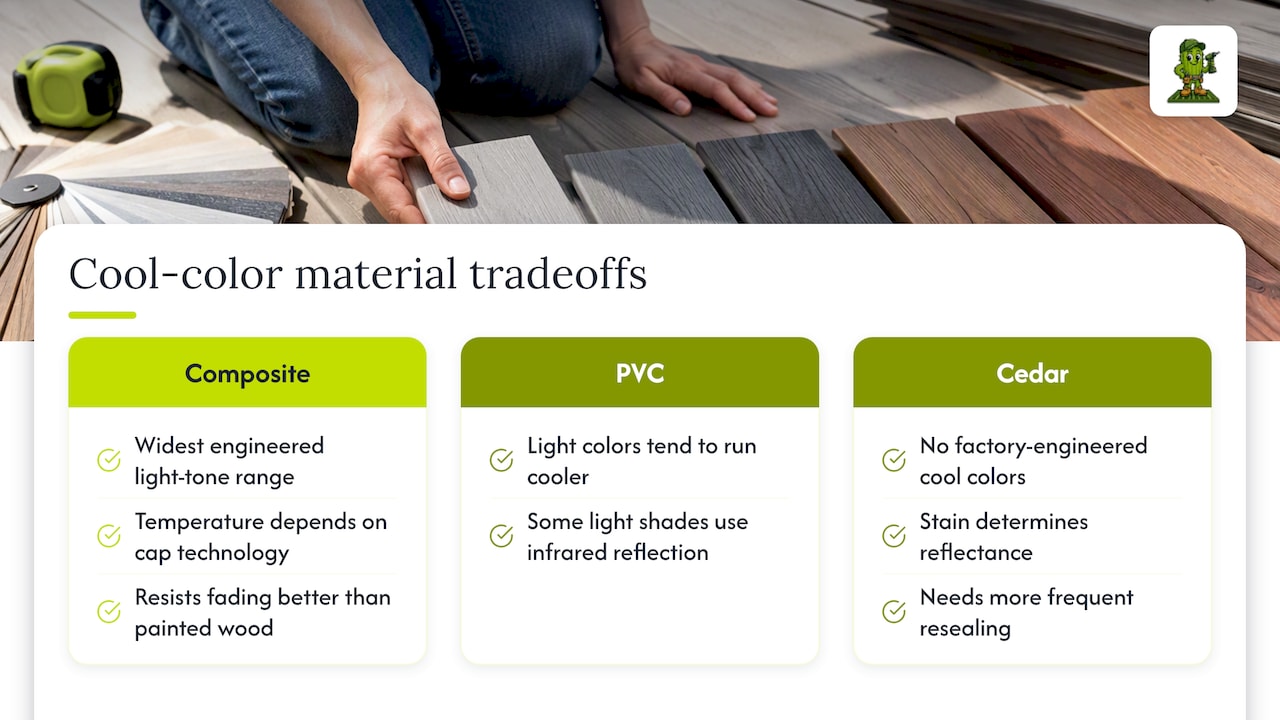
Composite decking, a wood-plastic blend, offers the widest range of engineered light tones, often including dedicated heat-mitigating lines from major manufacturers. These boards resist fading better than painted wood but can still vary in surface temperature based on the cap technology used, not just the visible color.
PVC decking is fully synthetic and tends to run cooler in light colors than composite, in part because some PVC lines use infrared-reflective technology specifically engineered into lighter shades. Duradek’s Cool-Dek line is one example, with specific colors reported as up to 16% cooler than the warmest shade in the same product range, based on internal and SRI testing.
Cedar, a natural softwood, doesn’t offer factory-engineered cool colors the way composite and PVC do. Its surface temperature depends on the stain applied: lighter, semi-transparent stains keep more of the wood’s natural reflectance than solid, dark stains. Cedar also requires more frequent resealing to maintain both its lighter color and its weather resistance compared to capped composite or PVC.
7. How cool decking colors shape curb appeal and value
Light decking colors do more than manage heat. They visually expand smaller outdoor spaces, make a yard feel brighter, and pair naturally with the gray and white exterior palettes common in current home design. A pale stone-gray deck against light siding reads cohesive and current, while a dark deck against a light house can look like an afterthought rather than a planned extension of the home.
Buyers touring a home tend to notice outdoor living spaces that feel move-in ready, and a deck that looks clean, current, and comfortable to use in summer supports that impression. A deck that’s visibly sun-faded, blotchy, or too hot to use for half the day signals deferred maintenance, even if the structure itself is sound.
Cool, light color schemes also photograph better for real estate listings, since they reflect more ambient light and show detail and texture more clearly than dark boards that can appear as a flat black shape in photos. For homeowners weighing resale against immediate comfort, a light neutral deck tends to serve both goals at once: it’s comfortable to use now and presents well whenever the home eventually goes to market.
Why color choice is only half the comfort equation
Homeowners often treat deck color as the whole solution to a hot backyard, when it’s really one input among several. We’ve seen plenty of decks built in the lightest available color that still bake by mid-afternoon, simply because nobody addressed orientation, shade, or airflow at the design stage.
The bigger mistake is picking a color from a small sample chip indoors and assuming it will perform the same outside, in full sun, on the actual board profile you’re installing. Reflectance, surface texture, and board width all change how a finished deck feels compared to a swatch. Treating color as one piece of a build plan that also accounts for sun exposure, shade structures, and ventilation produces a far more comfortable result than chasing the “coolest” color alone.
— Vlad
How we help you choose and build a cooler deck
We specialize in premium deck construction and build each project around your specific comfort, aesthetic, and maintenance goals, including eco-conscious material options suited to Northwest weather. Our process stays organized from the first consultation through final walkthrough, backed by a build crew, with installations supported, so you’re not managing subcontractors or guessing at timelines.

If you’re weighing color samples against your yard’s sun exposure, we can walk the site with you and make that call together. Our services that solve this exact problem include:
Deck design: professional color and layout selection matched to your home and sun exposure.
Custom deck installation: built around the material and color combination that fits your space.
Deck covers: shade structures that pair directly with your color choice for real comfort gains.
Deck replacement: swap an aging, heat-trapping deck for a cooler, better-designed one.
Reach out for a consultation and we’ll help you land on a color and build plan that actually holds up on hot afternoons.
FAQ
What is the coolest color for composite decking?
Light grays, pale tans, and stone tones generally stay coolest because they reflect more sunlight than dark browns or charcoals. Manufacturer “cool” color lines, where available, often combine light pigments with reflective cap technology for an added comfort boost, though shade and airflow still make the biggest difference.
How much hotter are dark deck boards than light ones?
Exact differences vary by material and testing method, but some vinyl decking lines report their coolest colors running up to 16% cooler than the warmest color in the same product range. Real-world results depend on sun exposure, board material, and whether the deck has any shade.
Can a deck get hot enough to burn bare feet?
Yes. Full-sun decking has been measured exceeding common skin-burn thresholds, with some surfaces climbing well past 109°F during peak sun hours. Choosing a lighter color and adding shade both reduce this risk significantly.
Is a travertine or stone patio cooler than a composite deck?
Natural stone surfaces like travertine are known for staying cooler underfoot in direct sun, which is one reason they’re popular around pools; stone finish guidance covers these options alongside slip-resistance considerations for high-exposure areas. For a raised wood or composite deck structure, though, a light-colored, shade-paired decking material remains the more practical cooling strategy.
Does cool decking color affect home value?
Light, cohesive deck colors tend to photograph well and read as move-in ready, which supports a stronger first impression during a home sale. There’s no fixed dollar figure tied specifically to deck color, but a well-maintained, comfortable outdoor space generally supports a home’s overall curb appeal.
Sources
Understanding Deck Board Surface Temperatures - Technical Bulletin
Parameters for Predicting Maximum Surface Temperatures of Wood in Exterior Exposures (FPL 62)
Pro tips: keep composite decks cooler — shade, color & airflow