
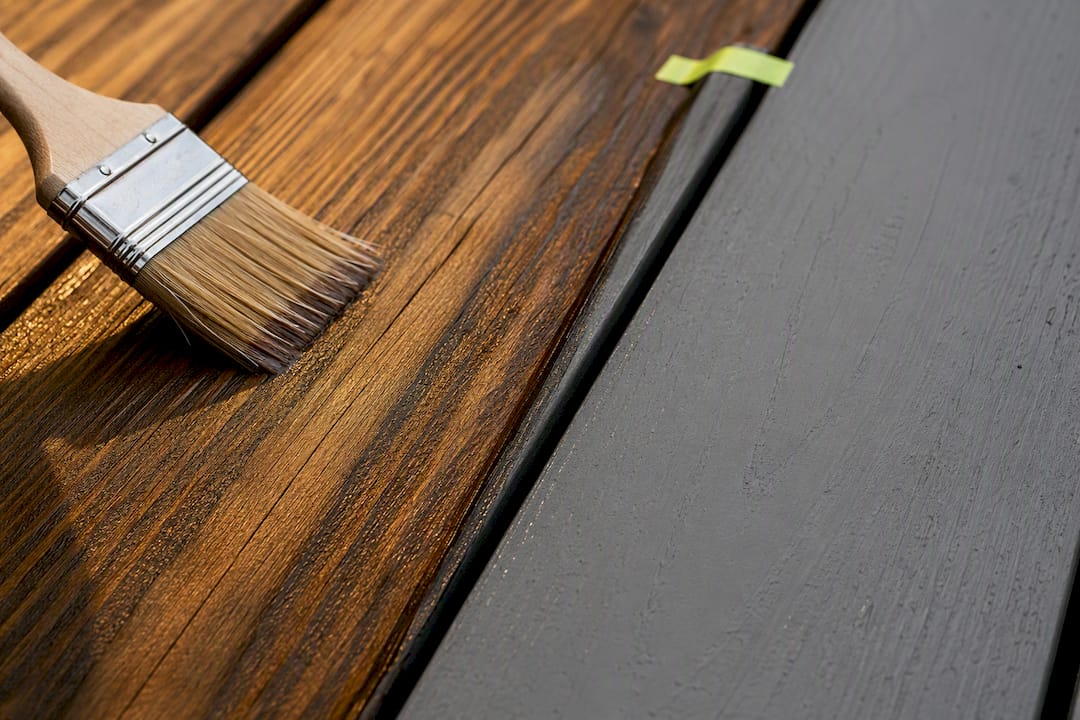
Stain wins for most decks, and the reason comes down to physics: it soaks into the wood and fades over time instead of forming a surface film that eventually cracks and peels. Paint still earns its place when boards are mismatched, patched, or badly weathered and you need to hide that damage under one solid color. Both jobs demand real prep, but stain’s failure mode is simply easier to live with.
TL;DR:
- Stain penetrates wood fibers and fades gradually, making touch-ups easier and less labor-intensive than peeling and stripping paint, which lifts in sheets.
- Light or semi-transparent stains are ideal for attractive, new wood, while solid stains or paint better hide flaws on weathered or patched boards.
- Oil-based stains last longer and penetrate deeper but are messier, while water-based stains dry faster and are easier to apply for DIY projects.
- Proper prep, including cleaning, sanding, and avoiding application over wet or old paint, is critical to prevent early finish failure.
- Over a decade, homeowners who choose stain often spend less total labor because recoat work is simpler, despite more frequent maintenance.
Table of Contents
- Stain vs Paint Deck: Appearance, Durability, and Cost
- How to Decide: Stain or Paint for Your Deck
- Stain Types and Chemistry: What You’re Actually Buying
- Prep and Application: What Actually Matters Before You Coat
- Maintenance Schedules and Real Lifetime Costs
- Mistakes That Wreck a Finish Fast
- When to Call a Pro Instead of Doing It Yourself
- Get a Professional Finish Without the Guesswork
- Sources
Stain vs Paint Deck: Appearance, Durability, and Cost
The two finishes solve different problems, and once you see how each one fails, the choice usually makes itself.
Appearance. Stain lets the wood grain show through, from a faint tint to a heavier semi-solid look. Paint hides the grain completely and gives you flat, uniform color, which is exactly what you want when the boards underneath are not something you want anyone examining closely.
Durability and failure mode. This is the part most buying guides skip. Stain penetrates the wood fiber and fades gradually, so a worn spot just looks lighter. Paint sits on top as a film, and once moisture gets underneath it, it lifts and peels in sheets. On a horizontal surface that collects rain, snow melt, and foot traffic, that film has nowhere good to go.
Maintenance. Recoating stain usually means a wash, a light scuff, and a fresh coat. Recoating peeled paint means scraping, sanding, maybe chemical stripper, then priming again before a single new coat goes on.
Cost. Stain is generally the cheaper material per gallon, while exterior deck paint often requires a separate primer and sealer, which adds to the upfront bill. Paint can stretch longer between full jobs when it holds up, but when it fails, the labor to strip and redo it usually costs more than a stain recoat would have.
Quick summary:
- Stain shows grain; paint hides it entirely.
- Stain fades; paint peels.
- Stain recoats are lighter work; paint failures mean scraping and stripping.
- Stain costs less per gallon; paint adds primer and sealer costs.
How to Decide: Stain or Paint for Your Deck
Run through this checklist in order. The first rule that applies to your deck should decide the finish.
- New or attractive wood? Choose stain. It keeps your options open, and you’re not locking in a solid color over grain you’d rather show off.
- Weathered, mismatched, or patched boards? Choose paint or a solid-color stain. Both hide surface flaws that lighter stains will only highlight.
- Want the longest possible gap between jobs and can tolerate a harder removal later? Paint fits, as long as you accept the scraping and stripping when it eventually fails.
- Want easier touch-ups and lower labor over the years? Stain fits. Recoating a faded stain is a fraction of the work of stripping peeled paint.
- Heavy foot traffic, harsh sun, or a wet climate? Lean stain. Film-forming paint under constant abrasion and moisture is the fastest path to peeling.
- Not planning to maintain it yourself? Factor that into the cost math. A lower-maintenance finish now can save you a contractor bill later.
Stain Types and Chemistry: What You’re Actually Buying
Stains aren’t one product. They range from transparent, which barely tints the wood and shows every grain line, up through semi-transparent, semi-solid, and finally solid, which behaves much closer to paint in coverage and hides almost as much. Opacity level determines how much UV and moisture protection you get: more pigment generally means more protection, but less visible wood.
- Transparent to semi-transparent: best on attractive new wood you want to show off; lowest protection, shortest recoat interval.
- Semi-solid: a middle ground that hides light imperfections while still hinting at grain.
- Solid stain: near-opaque coverage, closer to paint’s protection, but it can still peel if applied too thick.
Then there’s the oil versus water question. Oil-based stains penetrate deeper and typically last longer, but they’re messier, slower to dry, and higher in VOCs. Water-based versions dry faster, clean up with soap and water, and are the easier choice if you’re doing the work yourself on a weekend.
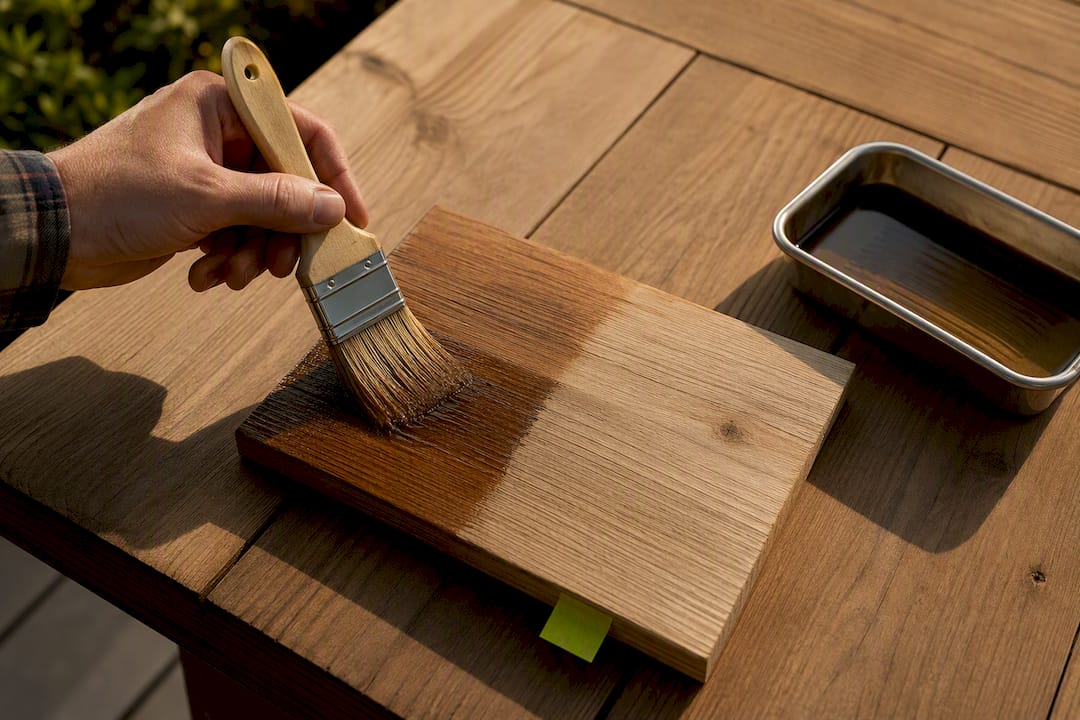
Pro Tip: Always test your chosen stain or paint on a scrap board or a hidden corner of the deck first. Lighting and wood age change how a color reads once it’s actually on the boards.
Prep and Application: What Actually Matters Before You Coat
Skipping prep is the single most common reason a finish fails early, on either side of this comparison.
- Clean thoroughly and treat any mold or mildew before doing anything else.
- Pressure wash carefully. Softwoods can gouge under too much pressure, so keep the nozzle moving and use the lowest setting that gets the job done.
- Let new pressure-treated lumber season before finishing. Wood that’s still holding factory moisture won’t accept stain or paint properly, and you’ll see adhesion failures within a season.
- Sand rough spots, replace any rotted boards, and prime bare wood if you’re painting.
- Apply in mild, dry weather, not blazing sun, and respect the dry time on the can before foot traffic returns.
- Never layer water-based product over oil-based residue. It won’t bond, and you’ll get peeling almost immediately.
Switching finishes later has its own rules. Going from stain to paint is usually straightforward: clean, sand, prime, paint. Going from paint back to stain is harder, because stain can’t penetrate through a paint film, so you’re stripping the old paint down to bare wood first.
Maintenance Schedules and Real Lifetime Costs
Recoat intervals vary by finish type, and the ranges vary according to product and conditions. Transparent stains typically need more frequent reapplication, while solid stains and paint last longer before recoating is necessary. Paint can last significantly longer before failing, but when it does, the failure is more severe.
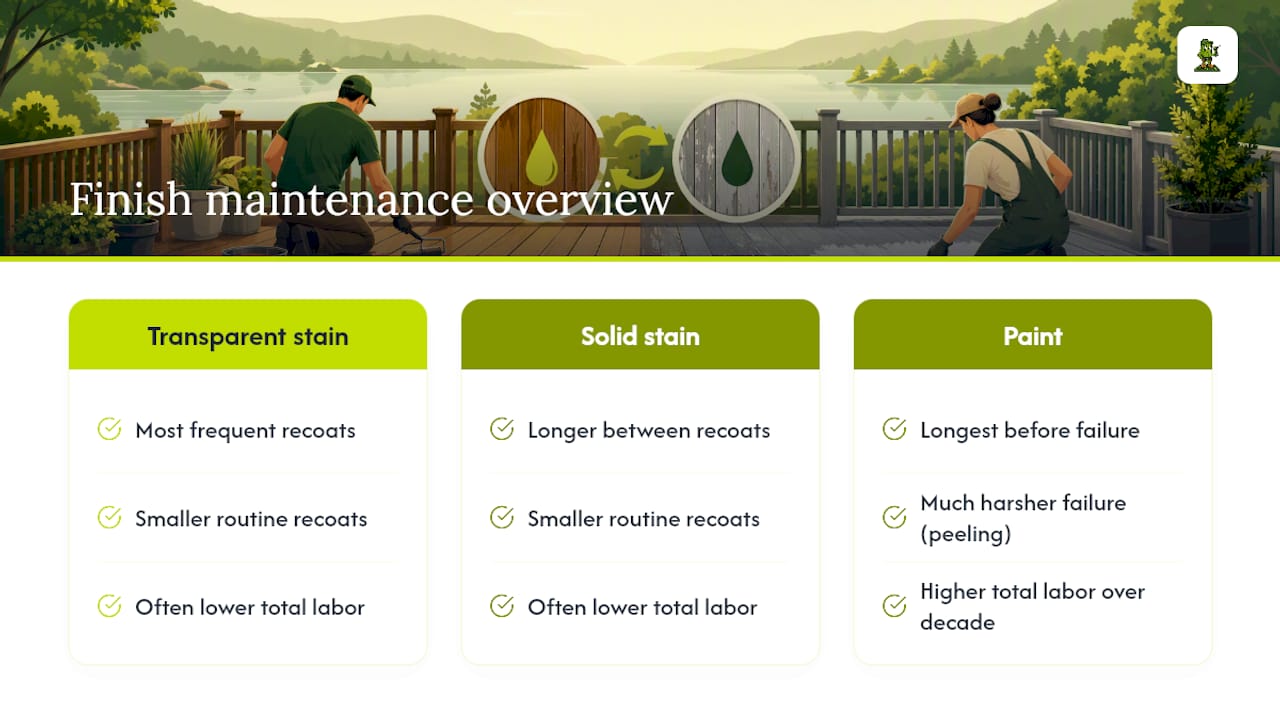
Plan on an annual deep clean regardless of finish, with a full wash and inspection before deciding whether that season needs a recoat. The pattern to remember: paint’s longer interval trades for a much rougher job when it finally peels, since scraping and stripping a failed paint job costs more labor than a routine stain recoat. Over a decade, homeowners who chose stain often spend less total labor even with more frequent touch-ups, simply because each one is smaller.
Mistakes That Wreck a Finish Fast
Most deck finish failures trace back to one of these:
- Painting over peeling paint without stripping it down to bare wood first.
- Staining directly over old paint, which won’t absorb anything.
- Finishing wood that’s still wet or unseasoned.
- Layering oil-based product over water-based, or the reverse, causing peeling within months.
- Rushing application on a hot, sunny day, which causes lap marks and uneven puddling.
If you spot rot, severe cupping, or soft, spongy boards, stop. That’s a structural problem, not a finish problem, and no amount of stain or paint fixes it. Compare your options for wood versus composite lifespan before you sink more money into refinishing a deck that might need replacing instead.
When to Call a Pro Instead of Doing It Yourself
Hiring a contractor makes sense once the job involves board replacement, structural repair, or a warranty you actually want honored. A professional crew brings a real inspection first, catches rot before it’s hidden under fresh stain, and can match materials and color across old and new sections without guesswork. A professional crew handles that inspection, repair, and finish work under warranty, which matters most on the prep steps that are hardest to get right alone.
— Vlad
Get a Professional Finish Without the Guesswork
If your deck needs board repairs, a color consult, or a finish that’s backed by an actual warranty instead of a can of stain and a Saturday afternoon, professional services can help. Such crews handle the inspection, the material matching, and the application, often managing all work in-house, so you’re not juggling separate contractors for repair and refinishing.

Everett homeowners can browse Everett deck design service to see what a refresh or rebuild could look like, or check out the deck gallery for finished examples before deciding. If your boards are past saving, custom deck installation replaces the whole structure with materials built for your climate and traffic. For homeowners weighing a full rebuild against a stain job, resources like A to Z Construction’s deck and pergola guide are worth a look too. Reach out to Cactus Decking to schedule a consultation and get a clear estimate on repair, refinishing, or replacement.
Sources
- Stain vs Paint a Deck: The Full Decision — PaintPricing
- How to choose stain colors — Sherwin‑Williams
- Latex vs Oil exterior stain for deck or fence — The Spruce
- Bobvila


