The Best Deck Color Ideas for 2026 (And How to Pick Yours)
Discover the best deck color ideas for 2026. Choose from warm wood tones to modern grays that enhance your outdoor space beautifully.

The Best Deck Color Ideas for 2026 (And How to Pick Yours)
For most homeowners, the safest and most stylish choice today is a mid-tone warm wood neutral, cedar, honey, or walnut, or a driftwood gray with warm undertones underneath. Pick your color family first, then choose opacity based on how old and weathered your wood already is.
Here’s the shortlist worth testing on your own boards before you buy a single gallon:
Warm cedar or honey tones — the safest bet for full-sun decks and traditional homes
Rich redwood or mahogany — best against brick or stone facades
Driftwood or warm gray — the modern pick, but only with warm undertones, not cool blue-gray
Walnut or espresso — dramatic, works on large or elevated decks
Two-tone accents — black or crisp white railings paired with any of the above
Pro Tip: Don’t fall in love with a color chip indoors. Buy three to five sample cans and brush them directly onto your actual deck boards. The FacadeColorizer 2026 guide notes that among homeowners who test multiple HD mockups on their own surface, 73% end up changing their original pick.
Key Takeaways
Mid-tone warm neutrals and driftwood gray with warm undertones offer the best balance of style, heat performance, and long-term durability for most deck projects in 2026.
Point | Details |
|---|---|
Start with opacity, not color | Match opacity to your wood’s age and condition before picking a specific shade. |
Match undertones first | Pair warm woods with warm siding and cool grays with cool siding to avoid visual clashes. |
Test in real conditions | Apply sample patches directly on your deck and check them in morning and evening light. |
Plan for recoat cycles | Expect semi-transparent stains to need recoating every 2 to 3 years, solid stains every 4 years. |
Work with a pro for full projects | Cactus Decking guides color selection through mockups and test patches before any warranty-backed install. |
Table of Contents
Deck Color Ideas by Family: What Each Shade Actually Does
Choosing Deck Stain Opacity: Transparent to Solid
Matching Deck Color With Your House and Trim
Two-Tone Deck Color Combinations Worth Testing
Picking Deck Colors for Your Climate and Sun Exposure
How to Test Deck Colors Before You Commit
Deck Stain Maintenance and Recoat Schedules
How Cactus Decking Approaches Color and Finish Selection
Does Wood Species Change How Deck Stain Colors Look?
Why UV Protection in Stain Determines How Long Your Color Lasts
How Lighting Changes the Way You See Deck Colors
Coordinating Deck Color With Furniture and Landscaping
Common Deck Color Mistakes and How to Avoid Them
Ready to Turn These Deck Color Ideas Into a Real Project?
A Quick Note From Vlad
Sources
Deck Color Ideas by Family: What Each Shade Actually Does
Every deck color family carries its own personality, and picking one is really about picking a mood for your backyard.
Warm browns and cedar tones stay timeless because they hide dirt and pollen between cleanings, and they pair naturally with warm siding, brick, or fieldstone.
Redwood and mahogany read richer and more formal. They shine next to brick or stone but can clash with cool-gray siding.
Driftwood gray is the defining shade of the moment. Deckorators reports that driftwood gray is the fastest-growing gray variant this year, but only the versions with warm undertones, not the flat blue-gray tones that felt trendy a decade ago.
Deep espresso and charcoal create strong contrast on large or shaded decks. Skip these in a sun-drenched backyard, since dark boards absorb far more heat.
Accent hues like sage green, coastal blue-gray, or crisp white work best in small doses, on trim, railings, or furniture, rather than across the whole deck surface.
Choosing Deck Stain Opacity: Transparent to Solid
Opacity determines how much of the wood grain shows through and how much UV protection you get. More pigment means more protection but less character.
Transparent stain shows off the full grain pattern but offers the least UV protection, so expect to recoat almost every year.
Semi-transparent stain is the most popular option because it balances a natural wood look with reasonable maintenance intervals, and it’s usually the smartest starting point for newer wood, according to TINOS Inc’s 2026 finish guide.
Semi-solid stain hides minor unevenness in older boards while still adding solid protection.
Solid stain looks almost like paint, ideal for gray, weathered decks, but it’s difficult to strip back to a lighter shade later.
Pro Tip: If you’re torn between two opacities, start lighter. FacadeColorizer’s stain guide points out that going darker later is simple, but stripping a solid stain down to something lighter means sanding and significant labor.
Matching Deck Color With Your House and Trim
Get the undertone right before you worry about anything else. Warm woods pair with warm siding; cool grays pair with cool siding, and mixing the two is the fastest way to make a deck look off, even when the individual colors are attractive.
White siding is the most forgiving backdrop, since it works with either warm neutrals or a bold black and charcoal combination.
Use your railings and fascia boards as a visual bridge between deck and house, matching the fascia to your existing trim color.
Small, low decks look best with subtle contrast. Save the dramatic dark-on-light combinations for larger or elevated platforms.
Deck height changes how bold you can go: Decks notes that a raised deck can visually support a darker tone that would overwhelm a ground-level patio.
Two-Tone Deck Color Combinations Worth Testing
The most common two-tone approach uses lighter field boards with a darker “picture frame” border running along the deck’s edge.
Walnut field boards with matte black railings for a modern, high-contrast look.
Pale oak boards with crisp white trim for a coastal or farmhouse feel.
Driftwood gray field with black railings for a clean, contemporary finish.
Espresso border with warm beige field boards for depth without going fully dark.
Pros often use this darker-border trick for a practical reason beyond looks: a darker border along stairs and high-traffic edges hides scuffing and wear far better than a single uniform color across the whole surface.
Picking Deck Colors for Your Climate and Sun Exposure
Your local weather should narrow the list before style even enters the conversation.
Full sun exposure: skip ultra-dark stains. On a 95°F day, dark decking surfaces can climb toward roughly 140°F, according to FacadeColorizer’s climate notes, which makes bare feet miserable and accelerates fading. Mid-tone cedar or honey reflects more heat.
Coastal or salt-air conditions: work with the natural silvering process instead of fighting it. Driftwood and weathered grays already mimic that look.
Shaded or north-facing decks: colors read one to two shades darker in low light, so designers often compensate by choosing a half-step lighter shade during the mockup stage.
Older, already-grayed decks: semi-solid or solid stains even out blotchy discoloration better than transparent options ever will.
How to Test Deck Colors Before You Commit
Skipping this step is the single most common regret homeowners mention after a stain job goes wrong.
Narrow to three to five candidates and run them through a photo visualizer or digital mockup tool to see them against your actual house.
Buy small sample cans and brush real test patches directly onto your deck boards, not scrap wood, since your wood’s age and grain affect the final color.
Check the patches at two different times, once in morning light and again in late afternoon, ideally with a chair or planter nearby so you can judge the color in context.
Confirm the manufacturer’s opacity recommendation and drying window before buying full cans, since recoat timing varies by product.
Pro Tip: If your deck is freshly built from pressure-treated pine, wait 30 to 60 days before staining. New treatment leaves a green or yellow cast that skews transparent and semi-transparent colors until the wood dries out fully.
Deck Stain Maintenance and Recoat Schedules
Your color choice comes with a maintenance contract attached, whether you realize it upfront or not. Here’s roughly what to expect by opacity, though your region’s sun and rain will shift these numbers:
Opacity Level | Typical Recoat Interval |
|---|---|
Transparent | About every year |
Semi-transparent | Every 2 to 3 years |
Semi-solid | Every 3 to 4 years |
Solid | Every 4 years |
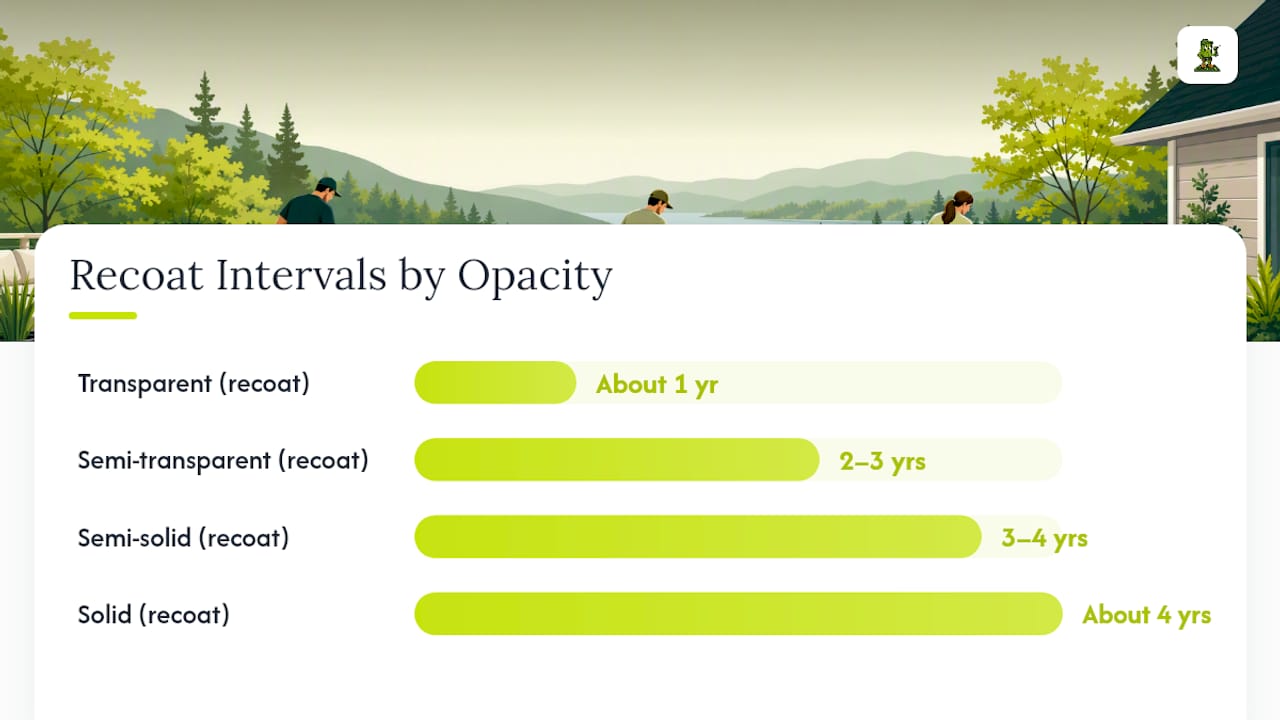
Dark colors fade noticeably faster in high-UV regions, while mid-tones do the best job of hiding everyday dirt and foot traffic between cleanings. Plan on a simple wash once a year regardless of color, and remember that dropping from solid to a lighter opacity later means stripping and sanding, not just a fresh coat.
How Cactus Decking Approaches Color and Finish Selection
Cactus Decking walks every project through the same sequence: consultation, material selection between composite, PVC, or cedar, mockups and test patches on-site, then a warranty-backed install.
Our crews lean toward mid-tone families and two-tone framing because they age gracefully over the 10 to 15 year window homeowners actually live with a finish.
Every color decision gets tested in real light on your property before installation day, not guessed from a swatch card.
Browse finished examples in our deck gallery to see how these combinations hold up outdoors.
Does Wood Species Change How Deck Stain Colors Look?
Wood species changes the final color more than most homeowners expect, even when the same can of stain goes on. Cedar has a naturally reddish, warm base tone, so a “honey” stain over cedar reads noticeably warmer than the identical product applied to pressure-treated pine, which carries a greenish or yellow cast straight out of the lumber yard.
Pine and other pressure-treated softwoods absorb stain unevenly because the grain is tighter in some boards and looser in others, which is why semi-transparent finishes sometimes look blotchy on treated lumber even when applied correctly. Redwood and mahogany already carry deep, rich pigment in the wood itself, so a transparent or semi-transparent stain barely changes the color; you’re mostly adding protection, not color.
Composite decking behaves differently altogether. Multi-tonal composite boards, engineered to mimic natural wood grain variation, are gaining ground specifically because they hold color evenly across the whole surface and don’t gray or blotch the way solid-color composite once did. That’s a meaningful advantage if you’re choosing between staining real wood every few years or installing a material that keeps its color with far less upkeep.
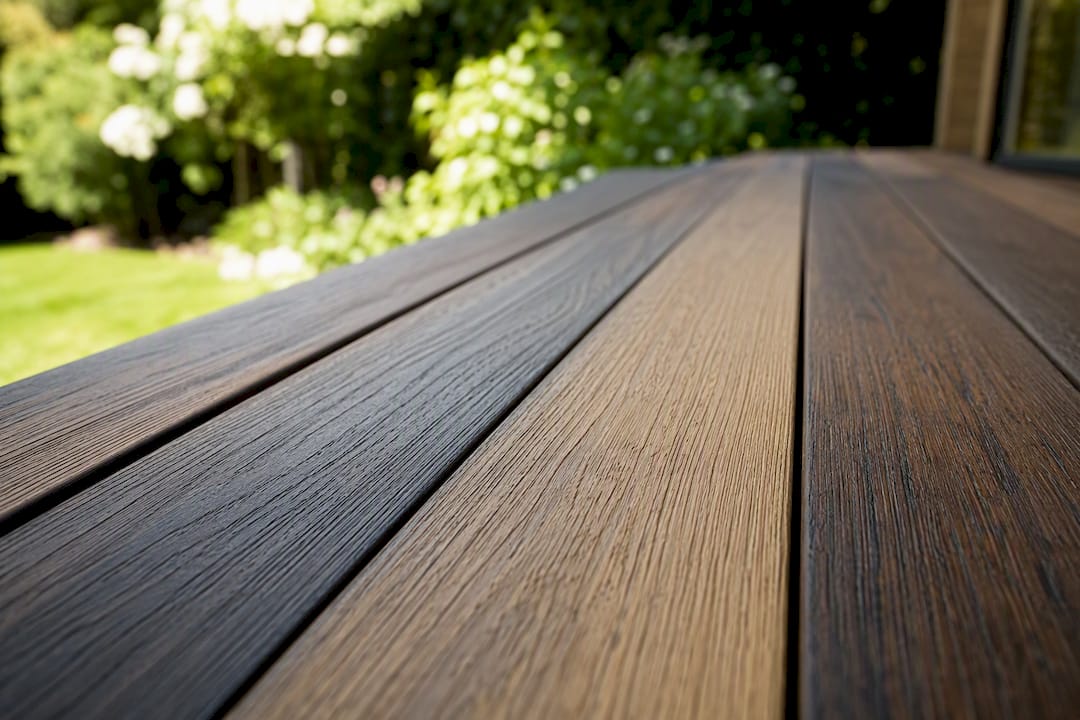
If you’re staining an older deck, always test on the actual wood species you have installed, not a sample board at the hardware store. The same stain can shows up two or three shades different depending on whether it’s going onto cedar, pine, or a weathered composite surface.
Why UV Protection in Stain Determines How Long Your Color Lasts
UV protection is the ingredient most homeowners never ask about, yet it’s the single biggest factor in whether your deck color still looks good in three years or looks chalky and faded. Stain pigment itself blocks UV rays; that’s why transparent finishes with minimal pigment need recoating almost every year, while heavily pigmented solid stains can go four to five years before fading noticeably.
Darker colors absorb more UV energy and heat, which accelerates the breakdown of the wood fibers underneath even as the color itself holds. That’s part of why deep espresso and charcoal stains, gorgeous as they look fresh, tend to show wear and require more frequent touch-ups in high-sun climates than a mid-tone cedar would.
Manufacturers have improved UV-blocking additives significantly in recent formulations, which is part of why 2026’s semi-transparent products can now stretch toward the 2 to 3 year recoat window instead of the annual cycle older formulas demanded. Still, no additive makes a stain permanent. Sun exposure, humidity, and foot traffic all chip away at that UV barrier over time, so a north-facing deck under tree cover will hold its original color far longer than an unshaded, south-facing platform with the exact same product applied.
If color longevity matters more to you than raw maintenance frequency, choosing a higher-opacity stain with strong UV additives is a more reliable lever than chasing a specific trendy shade.
How Lighting Changes the Way You See Deck Colors
The stain chip at the hardware store lies to you a little, and it’s not the store’s fault. Fluorescent indoor lighting shifts colors cooler and flatter than they’ll ever look outdoors, which is exactly why a gray that looked neutral inside can read distinctly blue or purple once it’s on your actual deck in daylight.
Natural sunlight itself isn’t consistent throughout the day. Morning light carries a cooler, bluer cast, while late afternoon and early evening light turns warmer and more golden, which can make the same walnut stain look almost brown at 9 a.m. and nearly amber by 6 p.m. That’s exactly why testing a sample patch at two different times of day matters more than testing it once and calling it done.
Shade changes color perception too. A deck under a covered patio or shaded by mature trees will read one to two shades darker than the same stain applied in open sun, which is why designers often compensate by choosing a half-step lighter shade specifically for north-facing or heavily shaded decks. If your outdoor space gets evening use with string lights, sconces, or overhead fixtures, factor that into your decision as well; warm-toned bulbs deepen browns and reds, while cooler LED lighting can wash out warm stains and make grays look more clinical than intended. Test your top choices under whatever lighting you’ll actually be living with most often, not just under midday sun.
Coordinating Deck Color With Furniture and Landscaping
Your stain color doesn’t exist in isolation. It has to work with the furniture, planters, and plants that will sit on and around that deck for years.
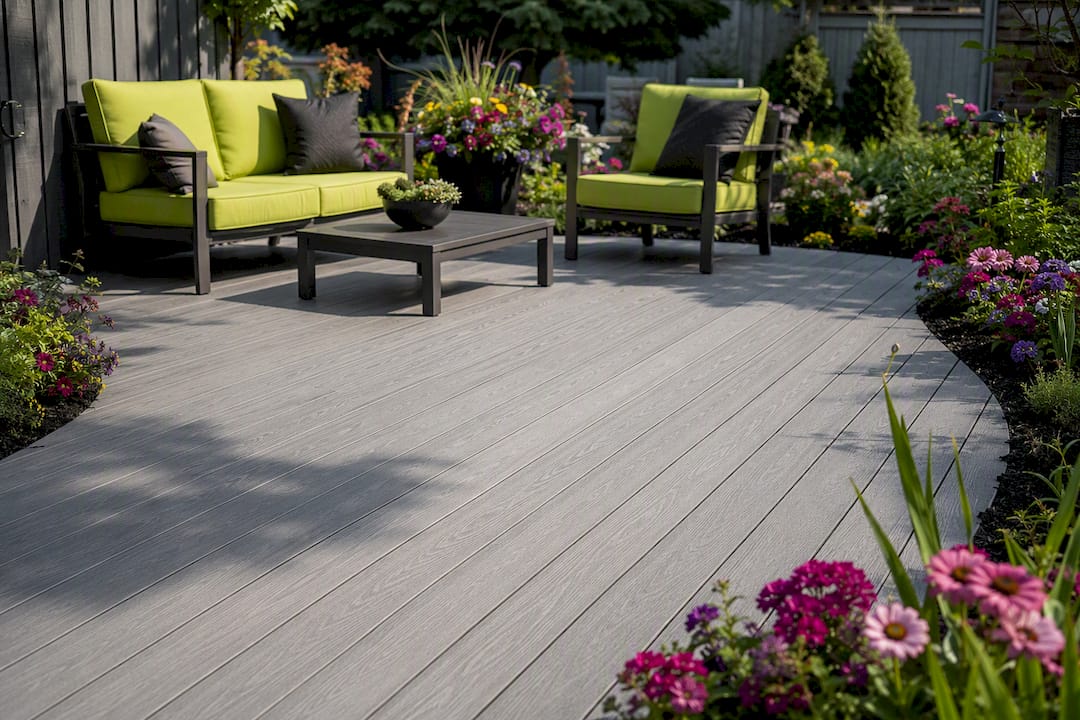
Start with your furniture, especially if you already own it. Dark furniture frames pop against a lighter deck like driftwood gray or pale oak, while light-colored furniture, think white-painted Adirondack chairs or natural rattan, tends to disappear into a similarly light-toned deck and stands out more against a richer walnut or espresso surface.
Landscaping matters just as much. A deck surrounded by green lawn and lush plantings can handle a wider range of colors, since the greenery provides natural contrast either way. A deck near a lot of hardscaping, stone pavers, gravel, or a pool deck, benefits from picking up an undertone already present in that hardscape so the whole yard reads as one connected design rather than a patchwork of clashing materials.
Cushions, umbrellas, and outdoor rugs are the easiest and cheapest way to test a color relationship before committing to a full stain job. If you’re considering a bold two-tone deck with black railings, borrow or buy a few black-accented cushions first and see how the combination actually feels in your space before the stain goes on permanently.
Common Deck Color Mistakes and How to Avoid Them
Most deck color regrets trace back to one of a handful of avoidable mistakes.
Choosing color before opacity. Picking a beautiful shade and only later realizing it comes in a transparent formula that won’t survive your climate is backwards; settle opacity based on your wood’s condition first, then find the color within that opacity range.
Ignoring undertones. Pairing a warm cedar deck with cool blue-gray siding, or vice versa, is the single fastest way to make an otherwise attractive combination look accidental rather than intentional.
Testing on a paint chip instead of the actual wood. Chips and printed swatches never match how a stain reacts with your specific wood species and grain.
Going too dark in full sun without checking surface temperature. A stunning espresso deck loses its appeal fast if it’s too hot to walk on barefoot by midafternoon.
Underestimating the maintenance commitment. A transparent stain that needs annual recoating is a real ongoing chore, not a one-time decision, so weigh your willingness to maintain it before falling for the look.
Skipping the two-time-of-day test. Colors shift enough between morning and evening light that a single glance at a test patch isn’t a reliable basis for a decision that lasts years.
Ready to Turn These Deck Color Ideas Into a Real Project?
Picking the right shade is only half the job. Getting it installed correctly, on the right material, with a finish that holds up in your yard’s actual sun and weather, is where most DIY color plans run into trouble. Cactus Decking handles both sides: color and material selection through guided mockups, then a warranty-backed build from our in-house crew, so you’re not relying on a paint chip and a guess.

Full replacements, structural repairs, or a coordinated color plan across your deck, railings, and stairs are exactly when it’s worth calling a pro instead of tackling it solo. Our Deck Design service walks you through material and color mockups before anything gets built, and our Custom Deck Installation team handles the construction itself. Browse the gallery for real color combinations we’ve installed around Everett, then reach out to schedule a consultation.
A Quick Note From Vlad
We recently walked a homeowner through the driftwood gray versus warm cedar decision on their own deck, three sample patches, two lighting checks, one afternoon. Warm cedar won because their siding leaned warm too. Take a look through our gallery before you decide, and reach out if you want a second opinion on your own combination.