Deck Lifespan Comparison: Wood vs. Composite
Discover how deck lifespan varies between wood and composite materials. Learn the factors affecting durability and make an informed choice.
Deck Lifespan Comparison: Wood vs. Composite
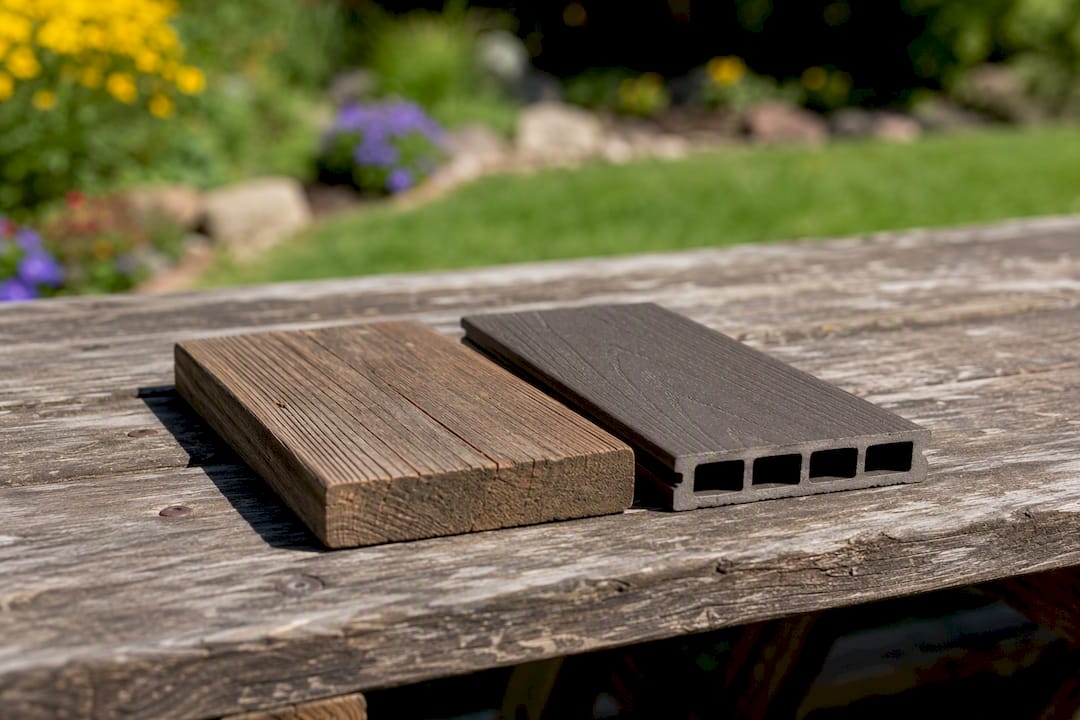
Composite and PVC decking last longer than every common wood option, typically running 25 to 50 years against 15 to 25 years for pressure-treated pine and 20 to 30 years for cedar or redwood with regular care. Tropical hardwoods like ipe close the gap, often reaching 30 to 50-plus years, but they cost more upfront and need specialized fasteners.
Those ranges are starting points, not guarantees. Three things swing them more than species or brand ever will:
Installation and substructure quality — a poorly flashed ledger board or undersized joists can cut any material’s life short, regardless of what’s on top.
Moisture and drainage — standing water under boards or against posts is the single fastest way to end a deck early.
Maintenance frequency — cedar cleaned and resealed every two to three years can outlast a neglected one by a decade or more.
Key Takeaways
Composite and PVC decking typically outlast wood by a wide margin, but installation quality and maintenance decide whether any material reaches its upper lifespan range.
Point | Details |
|---|---|
Composite outlasts wood | Composite/PVC typically runs 25–50 years versus 15–30 years for treated wood and cedar. |
Condition beats age | A deck’s framing, ledger, and drainage determine real lifespan more than the calendar does. |
Warranties cover boards, not decks | Board warranties often exclude framing and labor, so the substructure remains the weak point. |
Maintenance changes outcomes | Sealing cedar every 1–3 years can add a decade compared to neglected upkeep. |
Cactusdecking builds for the long term | Cactusdecking’s warranty-backed, in-house installs address framing and flashing, not just board selection, to extend real-world deck life. |
Table of Contents
Deck Lifespan Comparison: Wood vs. Composite at a Glance
How Long Does a Wood Deck Last, and Why Does the Range Swing So Much?
What Determines How Long Your Wood Deck Actually Lasts
Wood Deck Maintenance: What to Do and When to Worry
How Long Does Composite and PVC Decking Last?
Keeping Composite and PVC Decking at Its Best
What Wood and Composite Really Cost Over 25 to 30 Years
Choosing Between Wood and Composite for Your Situation
Why Installation Quality Changes Everything About Lifespan
Which Material Is Better for the Environment?
Wood vs. Composite: The Lifespan Trade-Offs That Actually Matter
Ready to Find Out How Long Your Deck Should Last?
Sources
Deck Lifespan Comparison: Wood vs. Composite at a Glance
Here’s the short version, side by side, before you get into the details that actually decide which range you land in.
Factor | Wood (pressure-treated/cedar) | Composite/PVC |
|---|---|---|
Typical lifespan (years) | 15–30 (species-dependent) | 25–50 |
Upfront cost per sq ft | Lower | Higher |
Maintenance needs | Annual cleaning, sealing/staining every 1–3 years | Periodic washing, minimal sealing |
Common failure modes | Rot, splitting, fastener corrosion | Fading, staining, thermal expansion at fasteners |
Warranty framing | Manufacturer treatment warranty, not full-deck | 25–50 year fade/stain warranty, boards only |
The biggest trade-off isn’t really lifespan versus cost. It’s lifespan versus effort. Wood asks for your time every year or two; composite asks for a bigger check upfront and then mostly leaves you alone.
Wood rewards owners who don’t mind a weekend with a pressure washer and a can of sealant.
Composite rewards owners who want to stop thinking about the deck once it’s built.
Board warranties are not deck warranties. A 30-year fade warranty on composite boards says nothing about your joists, ledger, or fasteners. Those components carry their own risks, and they’re usually the reason a deck fails before its boards do.
How Long Does a Wood Deck Last, and Why Does the Range Swing So Much?
Pressure-treated pine, the most common wood decking material in the country, typically runs 15 to 25 years. Cedar and redwood do better, usually landing at 20 to 30 years with consistent care, though some cedar decks last just 15 to 20 years when maintenance is minimal. Tropical hardwoods like ipe or cumaru sit at the top of the wood category, often reaching 30 years or beyond, but they’re dense, heavy, and require pre-drilled holes and corrosion-resistant fasteners to avoid splitting.
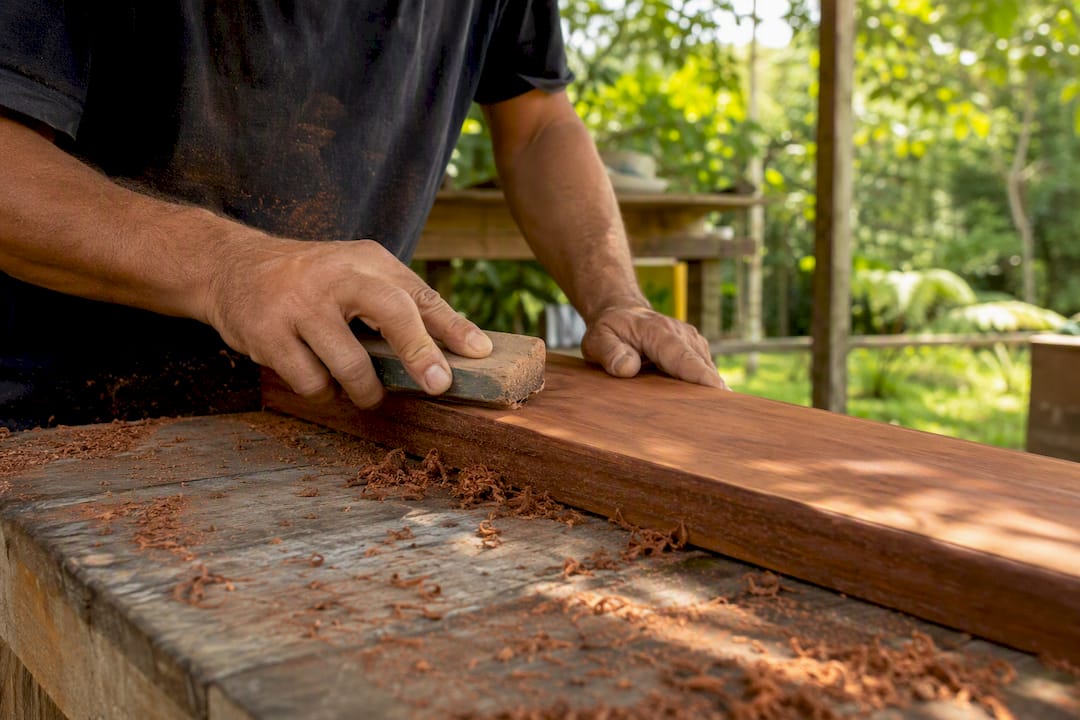
The species you pick matters less than what happens underneath it. A deck’s ledger connection, its flashing, and how well water drains away from the frame usually decide whether you hit the low end of a range or the high end. A deck’s actual service life depends on structure, installation quality, drainage, and exposure far more than it depends on the calendar.
Visually, wood ages the way you’d expect. Cedar grays out within a year or two without sealant. Pressure-treated pine can splinter and check as it dries. None of that alone means failure.
Age tells you almost nothing on its own. A 12-year-old deck with soft joists and a rotting ledger is in worse shape than a 20-year-old deck that’s been sealed on schedule and kept dry underneath.
Look at condition, not the number on the building permit.
What Determines How Long Your Wood Deck Actually Lasts
Four categories of decisions control most of the variance between a wood deck that dies at 12 years and one that thrives past 25.
Installation and design come first. Ledger flashing that keeps water out of the house band joist, proper board spacing for airflow, and ventilation underneath the deck all prevent the trapped moisture that rots framing from the inside out.
Environment plays a bigger role than most homeowners expect. Full southern sun exposure dries and cracks boards faster than shaded decks. Freeze-thaw cycles work joints loose over a few winters. Soil that stays wet around post bases is one of the most common culprits behind early structural failure.
Material and hardware choices round it out: the species and grade of lumber, whether it’s factory-treated to the right retention level, and whether your fasteners are rated for contact with treated wood. Mismatched hardware corrodes and loosens years before the boards show any wear.
Ledger flashing and drainage
Sun and moisture exposure
Fastener compatibility with treated lumber
Sealing and staining consistency
Pro Tip: If you can only budget for one intervention, make it drainage. Regrading soil away from posts and clearing debris that traps water under the deck costs far less than replacing rotted joists, and it addresses the root cause behind most premature wood failures.
Wood Deck Maintenance: What to Do and When to Worry
A realistic seasonal routine keeps most wood decks tracking toward the upper end of their lifespan range.
Clean the surface each spring with a deck cleaner formulated for your wood type, not just a hose rinse.
Reseal or stain every one to three years depending on species and sun exposure. Cedar in full sun needs it closer to annually.
Inspect fasteners each fall and replace any that show rust streaking or backing out.
Check for standing water on the surface after rain. Pooling means drainage or slope problems.
Beyond surface care, an annual structural check matters just as much. Consumer safety checklists recommend probing joists and the ledger board with a screwdriver for soft spots, checking post bases for rot at the soil line, and clearing leaves or planters that trap moisture against boards.
Soft or spongy boards mean localized rot. Often repairable.
A soft ledger board or rotted joists mean the structure is compromised. That’s a replacement conversation, not a repair one.
Loose railings or wobbly stairs are safety issues that need immediate attention regardless of the deck’s age.
How Long Does Composite and PVC Decking Last?
Composite decking, made from wood fiber and recycled plastic, typically lasts 25 to 50 years depending on the product line and climate. Capped PVC boards, which use a fully synthetic outer layer, tend to sit at the higher end of that range because they resist moisture absorption better than composites with exposed wood fiber.
The catch is that the boards usually outlive the structure underneath them. If a composite deck is built on a standard pressure-treated frame, that frame is still subject to the same 15 to 25-year wood lifespan discussed earlier. Manufacturer board warranties typically exclude framing and labor entirely, which means the practical lifespan of the whole assembly is often set by the weakest link, not the boards you paid extra for.
Composite and PVC have their own failure modes. Fading happens even with UV-stabilized formulas, just more slowly than with wood. Some early-generation composites showed staining and mold in shaded, damp spots. Thermal expansion is real: boards grow and shrink with temperature swings, and gaps left too tight at installation can buckle in summer heat. Moisture can also get trapped underneath boards if ventilation was skipped during the build.
The boards rarely fail first. What fails is whatever’s underneath them, which is exactly why the framing question matters more than the brand of composite you choose.
Reading more on composite deck lifespan expectations before you buy is worth the twenty minutes it takes.
Keeping Composite and PVC Decking at Its Best
Composite and PVC ask for far less than wood, but “low maintenance” doesn’t mean “no maintenance.”
Wash boards twice a year with a soft brush, mild soap, and water. Skip pressure washers above manufacturer-recommended PSI, since they can etch the surface.
Avoid bleach-based or abrasive cleaners that dull the cap layer or strip color over time.
Confirm fasteners are the hidden-clip or composite-rated screw type specified by the manufacturer, not generic deck screws.
Leave manufacturer-specified gaps between boards to accommodate thermal expansion, especially on decks with significant sun exposure.
Installation is where most premature composite problems start. Skipped ventilation gaps trap moisture against the underside of boards. Fasteners driven too tight crack the cap layer. Both show up early, usually within the first two or three years, as discoloration or slight buckling along board edges.
Pro Tip: Ask your installer to show you the ventilation gap specification before the frame gets covered. It’s a five-minute conversation that prevents a problem you won’t see until it’s already trapped moisture for a season.
What Wood and Composite Really Cost Over 25 to 30 Years
Upfront price tells you almost nothing about total cost. Here’s a simplified model over a 25 to 30-year ownership window.
Cost factor | Pressure-treated wood | Composite/PVC |
|---|---|---|
Upfront material cost | Lowest of the group | Higher, often 2 to 3 times wood |
Recurring maintenance | Sealing/staining every 1–3 years, plus labor or time | Occasional washing, no sealing |
Likely mid-life repairs | Board replacement, fastener swaps | Rare board replacement |
25–30 year outlook | Cost gap narrows as maintenance adds up | Often favorable if owned long-term |
Maintenance materials and time can close much of that upfront gap over 25 years, especially once you factor in the value of your own weekends. That comparison assumes typical maintenance and no early structural failure. Skip a few resealing cycles on wood, or build composite on a neglected frame, and both models fall apart fast.
Composite tends to pull ahead financially the longer you plan to own the home.
Wood stays cheaper for shorter ownership horizons where you won’t be around for the maintenance payoff.
Labor costs for staining, if you hire it out, erode wood’s upfront advantage faster than most homeowners expect.
If you’re planning to sell within five to seven years, pressure-treated wood’s lower upfront cost is hard to beat. If you’re staying put for two decades or more, composite’s maintenance savings usually catch up and surpass it.
Choosing Between Wood and Composite for Your Situation
Run through these questions before you commit to a material.
How long do you plan to own this home? Under seven years favors wood’s lower upfront cost. Beyond fifteen, composite usually wins on total cost.
How much annual maintenance are you actually willing to do? Be honest. A deck that needs sealing every year and doesn’t get it will underperform its lifespan range badly.
What’s your climate exposure? Full sun, heavy rain, or freeze-thaw cycles all shorten wood’s practical life faster than composite’s.
What’s your budget ceiling today versus your tolerance for spending on upkeep later?
When you’re talking to a contractor, ask about framing material, ledger flashing details, and whether the warranty covers just the boards or the installation too. Vague answers on framing are a red flag regardless of which decking material you choose.
Choose wood if you want the lowest upfront cost, don’t mind seasonal upkeep, and won’t own the home for more than a decade.
Choose composite or PVC if you want to minimize ongoing work and plan to stay long enough for the lifecycle math to pay off.
Why Installation Quality Changes Everything About Lifespan
Most of the lifespan gap between a deck that hits its upper range and one that fails early comes down to what happens before the first board goes down. Proper ledger flashing, correctly spaced joists, and adequate ventilation underneath the structure prevent the moisture buildup that shortens both wood and composite decks.
At Cactusdecking, that means upgrading framing when it makes sense, not just replacing boards on top of an aging structure. Manufacturer installation requirements for composite and PVC often specify fastener type, spacing, and ventilation clearances, and skipping them can void the board warranty even if the boards themselves are fine years later.
Site prep and drainage grading before any framing goes in
Correct flashing at the ledger board connection
Upgraded joists when replacing an old deck, not just new boards on old bones
Pro Tip: If your existing frame is more than 15 years old, ask whether upgrading the substructure during a resurface makes sense. It typically costs less than a full tear-out and resets the clock on the part of the deck most likely to fail first.
Which Material Is Better for the Environment?
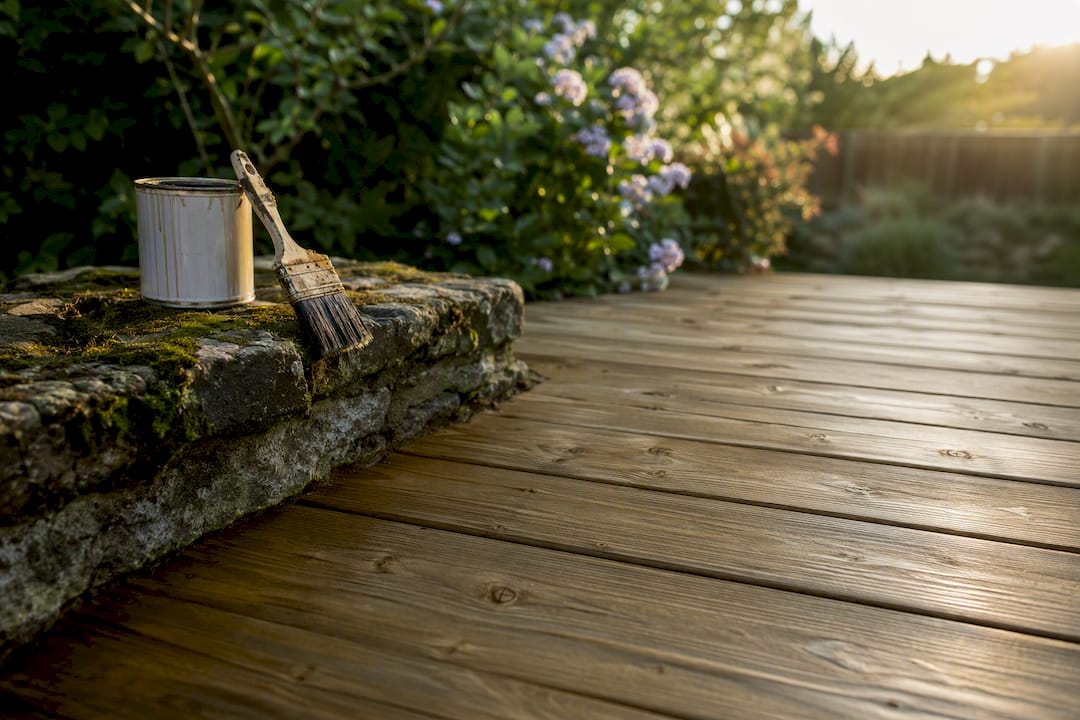
Pressure-treated wood comes from a renewable resource, but the chemical treatments used to resist rot raise disposal concerns at end of life, and shorter lifespans mean more frequent replacement and more lumber consumed over time. Cedar and redwood are more naturally rot-resistant and often require fewer chemical treatments, though old-growth sourcing raises its own sustainability questions depending on where the lumber comes from.
Composite decking is typically made from a mix of recycled plastic and reclaimed wood fiber, diverting material that would otherwise go to a landfill. That’s a genuine environmental positive on the front end. The trade-off shows up at the back end: composite boards are difficult to recycle again once they reach the end of their service life, and most end up in landfills rather than being reprocessed.
Longevity itself is a sustainability factor that’s easy to overlook. A composite deck lasting 40 years replaces a wood deck that might need rebuilding twice in that same span, which means less total material consumption even if the manufacturing footprint per board is higher. PVC decking, being fully synthetic, shares that recycling limitation with composite but often lasts longer still, stretching the replacement cycle further.
Neither material is a clear environmental winner. Wood wins on renewable sourcing; composite and PVC often win on reducing landfill waste at the front end and cutting down how often the whole structure gets rebuilt.
Wood vs. Composite: The Lifespan Trade-Offs That Actually Matter
Strip away the marketing and the choice comes down to a handful of honest trade-offs.
Wood’s advantages: lower upfront cost, natural appearance that many homeowners prefer, and easier board-by-board repairs if only a section fails. Wood’s downsides: shorter typical lifespan, annual to biennial maintenance demands, and higher vulnerability to rot if maintenance lapses even briefly.
Composite’s advantages: longer typical lifespan, minimal upkeep, and strong resistance to rot and insect damage. Composite’s downsides: higher upfront cost, harder and pricier repairs if a board is damaged since matching aged color can be tricky, and a lifespan that’s still capped by whatever framing sits underneath it.
The real trade-off isn’t which material is “better.” It’s which set of downsides you’d rather manage. A homeowner who enjoys yard work and wants the classic wood look may find the annual sealing routine barely counts as a chore. A homeowner who travels often or simply wants to enjoy the deck without a maintenance calendar will find composite’s higher upfront cost pays for itself in peace of mind alone.
A contractor’s take on lifespan
Homeowners fixate on which material wins, but the real question is what’s happening under the boards. I’ve seen young composite decks compromised by bad framing and old wood decks still solid because someone stayed on top of drainage. Before deciding to replace or keep a deck, get underneath it and check the joists and ledger, not just the surface.
Ready to Find Out How Long Your Deck Should Last?
If you’re staring at an aging deck and wondering whether it needs a repair, a resurface, or a full rebuild, guessing from the surface won’t give you a real answer. A proper inspection checks the ledger connection, joist condition, post bases, and drainage, the parts of the deck that actually determine whether you’re looking at another decade of use or a structure quietly failing underneath new boards.
Cactusdecking’s in-house crew handles that evaluation directly, without subcontracting out the parts that matter most, and every installation comes with warranty-backed workmanship covering both materials and build quality. Whether the answer turns out to be a targeted repair or a full custom deck installation, you’ll know the actual condition of your structure before spending a dollar. Reach out to schedule an inspection and get a straight answer on what your deck has left in it.