Ledger Rot or Heaved Footings? Replace a Wood Deck, Not Resurface
Learn when to replace a wood deck instead of resurfacing. Prioritize ledger, footings, and permits; know $15–$60 per board and how material affects lifespan.
Ledger Rot or Heaved Footings? Replace a Wood Deck, Not Resurface
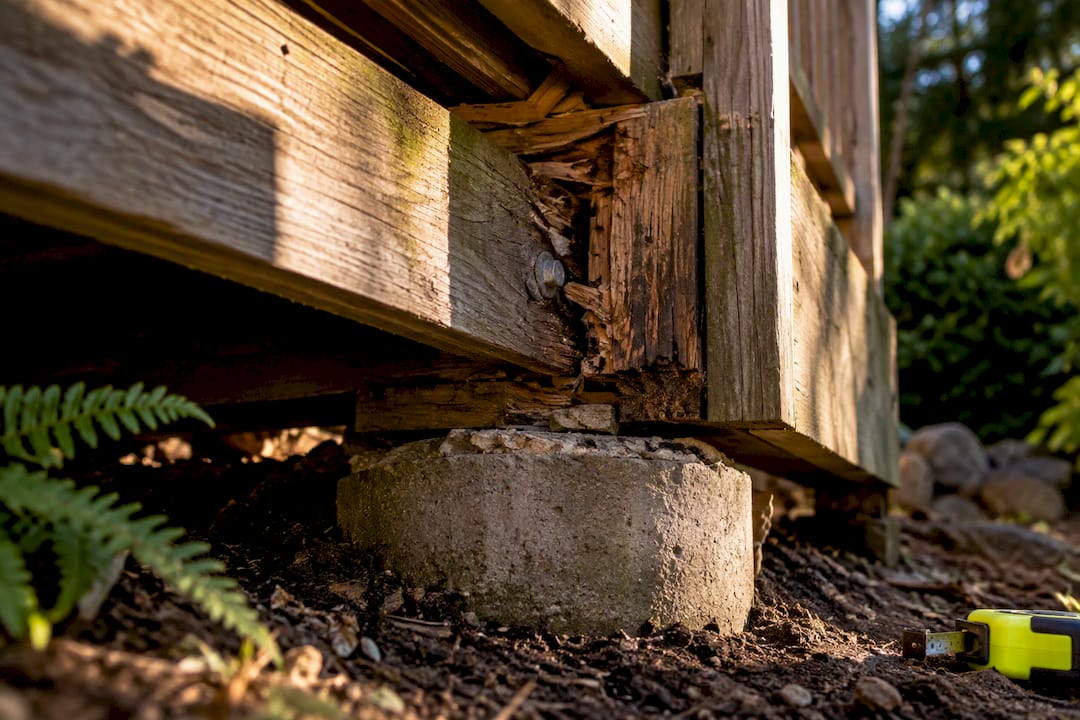
Replace boards only, and you save money in the short term if the frame, ledger, posts, and footings pass inspection clean. If any of those show rot, sagging, or a failing ledger connection, a full rebuild is the safer choice. Before touching a single board, inspect the ledger and confirm what your local permit office requires.
TL;DR:
If the ledger, posts, or footings show signs of rot or failure, full replacement is safer than repairs, even if resurfacing might seem cheaper initially.
Resurfacing works best when the substructure is intact, but it cannot address hidden issues like a deteriorating ledger or inadequate footings that require a rebuild.
Replacing with composite or PVC decking extends lifespan to over 20 years with minimal maintenance, but often requires framing adjustments and tighter joist spacing.
Budget-wise, board replacement costs $15 to $60 per board, while full rebuilds are significantly more expensive but reset the deck’s lifespan entirely.
Most jurisdictions demand permits for deck replacement, focusing on ledger bolting, flashing, footing depth, and lateral load connections to ensure safety.
CactusdeckingBuild A Safer, Better DeckCactus Decking creates tailored outdoor spaces with quality craftsmanship, durable materials, and warranty-backed installations in Everett.Explore deck construction
Table of Contents
How Do You Know If You Should Repair or Replace a Deck?
Resurfacing vs Full Replacement: What Each Actually Fixes
Which Decking Material Should Replace Your Old Deck?
What Does It Cost to Replace a Wood Deck?
Do You Need a Permit to Replace a Deck?
How Do You Replace Deck Boards Step by Step?
What Cactus Decking Prioritizes on Every Deck Project
Get an Inspection Before You Commit to a Path
Sources
How Do You Know If You Should Repair or Replace a Deck?
Start at the house and work outward. The ledger board, the piece bolted to your home that carries a huge share of the deck’s load, is where most catastrophic failures begin. A thorough inspection checks every structural point before you decide anything about the surface.
Work through this order:
Ledger and flashing: Look for gaps, rust streaks, soft wood, or missing flashing at the house connection.
Joists and beams: Probe with a screwdriver for soft spots; bounce-test the deck for excessive give.
Posts and footings: Check for heaving, cracking, or posts that shift when pushed.
Fasteners and spacing: Rusted or pulled fasteners and inconsistent joist spacing both signal deeper problems.
Railings: Wiggle every post. A railing that moves is a fall risk regardless of how the decking looks.
If repairs on any of these items start approaching half the cost of a full replacement, replacement almost always wins on value. Surface rot alone doesn’t doom a deck. A failing ledger or heaved footing does.
Resurfacing vs Full Replacement: What Each Actually Fixes
Resurfacing means stripping the old boards and installing new ones on the existing frame. A full rebuild replaces the frame, footings, and often the ledger too.
Resurfacing wins on speed and cost when the substructure is genuinely sound. You get a new deck surface in a fraction of the time, with far less demolition. The catch: resurfacing can’t fix what you can’t see. A sistered joist here or there might patch a weak spot, but it won’t address a ledger that’s slowly pulling away from the house or footings that never met current frost-depth requirements.
Resurfacing pros: Lower upfront cost, faster turnaround, less disruption to landscaping.
Resurfacing cons: Doesn’t correct hidden structural or code deficiencies; inspectors may still require upgrades.
Hidden costs to budget for: Ledger repairs, added lateral-load ties, joist sistering, and deeper joist work if your inspector flags spacing or fastening issues.
Pro Tip: Get a written scope from your contractor that separates “surface work” from “structural work.” Bids that lump everything together make it hard to spot where the hidden costs are hiding.
Which Decking Material Should Replace Your Old Deck?
Match the material to how long you actually want the frame to last, not just what looks good on day one. Installing a premium composite surface on a frame that’s already near the end of its life just means redoing the whole project sooner than planned.
Pressure-treated wood: Lasts roughly 10 to 15 years, needs annual staining or sealing, and costs the least upfront.
Cedar or redwood: Runs 15 to 25 years with regular maintenance, and offers a natural look that pressure-treated lumber can’t quite match. Read more on how cedar compares to composite before deciding.
Composite or PVC: Can run 20 to 50-plus years depending on the product, with minimal upkeep beyond occasional washing.
Moisture-heavy climates push most homeowners toward composite or PVC, since wood in constant damp conditions rots faster regardless of treatment. One catch: composite frequently needs tighter joist spacing and different fasteners than what your existing wood frame was built for, which can turn a simple resurfacing job into a framing project. Our deck lifespan comparison breaks down the maintenance tradeoffs in more detail.
What Does It Cost to Replace a Wood Deck?
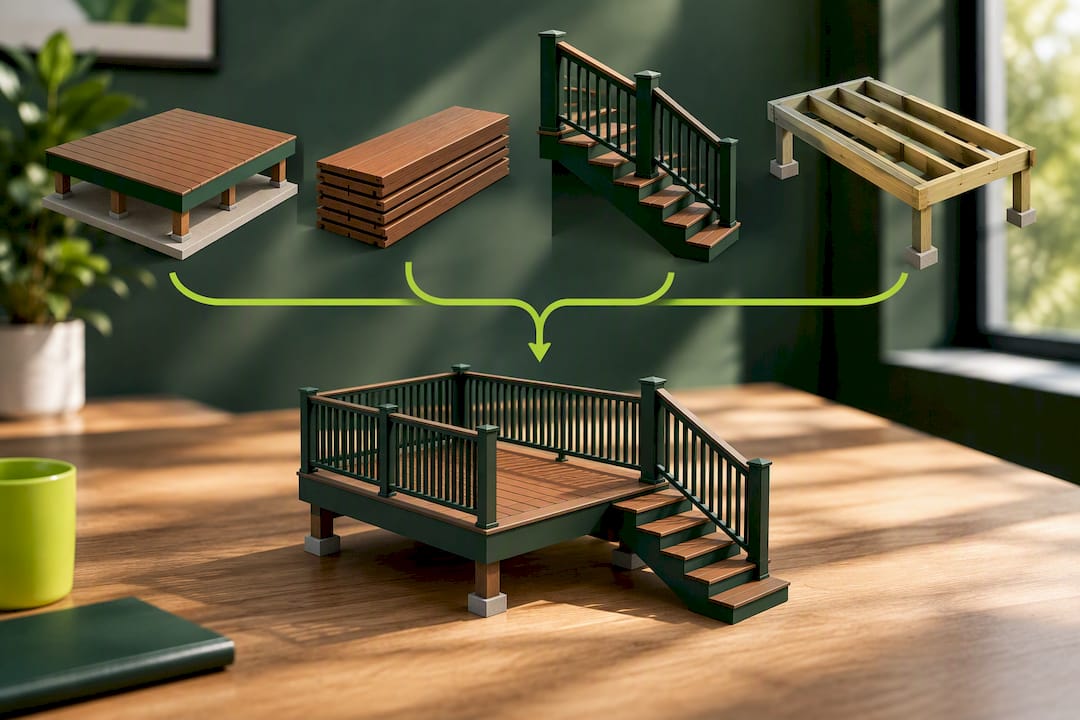
Board replacement runs cheapest, generally landing in the $15 to $60 per board range depending on material and labor rates in your area. Swapping the whole surface to composite costs more upfront than sticking with wood, but the math changes once you factor in 20 to 30 years without restaining. A full rebuild, frame, footings, and surface, costs significantly more than either resurfacing option, though it resets the deck’s entire lifespan clock.
What actually moves your bid:
Material choice: Composite and PVC cost more per square foot than pressure-treated lumber.
Frame condition: Every joist that needs sistering or replacing adds labor hours.
Permit fees: These vary by jurisdiction and add to the timeline, not just the invoice.
Railings and stairs: Code-compliant railing systems and stair rebuilds are frequently underestimated in DIY budgets.
Removal and disposal: Hauling away old lumber isn’t free, especially with pressure-treated wood that requires special disposal in some areas.
Timeline follows the same split. Resurfacing typically wraps in a few days for an average-size deck. A full rebuild often takes several weeks once you account for permit approval, inspections, and framing work.
Do You Need a Permit to Replace a Deck?
Most jurisdictions require a permit for decks attached to a house, decks built above a certain height off grade, or decks that serve as a required exit path. Code officials commonly reference IRC R507 for the specifics on ledger attachment, flashing, and lateral connections. Skipping this step isn’t just a legal risk. It’s how homeowners end up with an unsafe structure nobody caught until it failed.
Inspectors typically focus on:
Ledger bolting and flashing at the house connection
Lateral-load connectors that keep the deck from pulling away during use
Joist sizing and spacing appropriate to the decking material
Footing depth, which has to meet your local frost line
Treat the permit process as a safety check, not paperwork. It forces a second set of eyes on exactly the components most likely to fail catastrophically if built wrong. Through-bolts and lateral connectors required on older decks during permitting are labor-intensive retrofits, and they’re often the reason a “simple resurfacing” quote grows once the inspector gets involved.
How Do You Replace Deck Boards Step by Step?
Confirm your permit status, order materials, and set up temporary bracing if you’re working above ground level.
Strip the old decking down to bare joists. Never install new boards directly over the old surface; manufacturer guidance is explicit that this traps moisture against the substructure.
Inspect the exposed ledger and joists for rot, and repair or sister any compromised framing before moving forward.
Install joist tape or flashing tape across the joist tops if your material or climate calls for it.
Check joist spacing against your new decking’s fastening schedule. Composite frequently needs tighter spacing than standard wood framing.
Fasten boards per manufacturer specs, finish fascia and railing connections, then schedule your final inspection.
Pro Tip: If step 3 turns up rot in more than one or two joists, stop and reassess. That’s usually the signal that resurfacing has become a rebuild.
What Cactus Decking Prioritizes on Every Deck Project
We inspect the ledger and footings before we talk about materials, because that’s where safety actually lives. If a frame has limited life left, we’ll tell you to replace it rather than resurface, even when resurfacing looks cheaper on paper. Whoever you hire, ask for an itemized bid, a firm timeline, and written warranty terms before signing anything.
— Vlad
Get an Inspection Before You Commit to a Path
A deck inspection is a fair amount of guesswork if you’re doing it solo with a screwdriver and a flashlight, and the difference between a bad ledger bolt and a bad joist can mean thousands of dollars either way. Professional deck contractors commonly run full site inspections, handle the permit process directly with local building offices, and build out both resurfacing jobs and complete rebuilds with in-house crews rather than subcontractors.
Installations often come with warranty coverage, and customers typically choose composite, PVC, or cedar materials based on what fits the frame’s remaining life and local climate, not just aesthetics. If your ledger is questionable or you’re just not sure which side of the repair-versus-replace line your deck falls on, request a site consultation through our deck replacement page and get a straight answer before you spend a dollar on materials.
Sources
FAQ
How Much Does It Cost to Replace a Wooden Deck?
Costs vary widely based on scope. Board-only replacement can run $15 to $60 per board, while a full rebuild involving new framing, footings, and premium decking costs substantially more. Current pricing for your specific project is available through a site consultation.
What Can You Replace a Wood Deck With?
Homeowners typically choose between pressure-treated wood, cedar or redwood, and composite or PVC decking. Composite and PVC tend to last the longest with the least maintenance, while cedar offers a natural look with a shorter 15 to 25-year lifespan.
Is It Difficult to Replace a Deck?
Board-level resurfacing is manageable for an experienced DIYer comfortable with a circular saw and a drill. Ledger repairs, joist replacement, or footing work cross into territory where hiring a professional protects both your safety and your permit approval, similar to how DIY door replacement often runs into problems once structural elements are involved.
Is Replacing a Deck Worth It?
Yes, when the frame shows widespread rot, a failing ledger, or footing issues, since patchwork repairs on a failing structure just delay an inevitable and more expensive fix. If the frame is sound and only the surface has worn out, resurfacing gets you nearly the same result for less money.