U.S. Homeowners: Verify Permits & Insurance, Get 3 Deck Contractor Bids
For US homeowners: verify license, permit history and insurer certificates. Get three itemized quotes and hold final payment until inspection to protect...
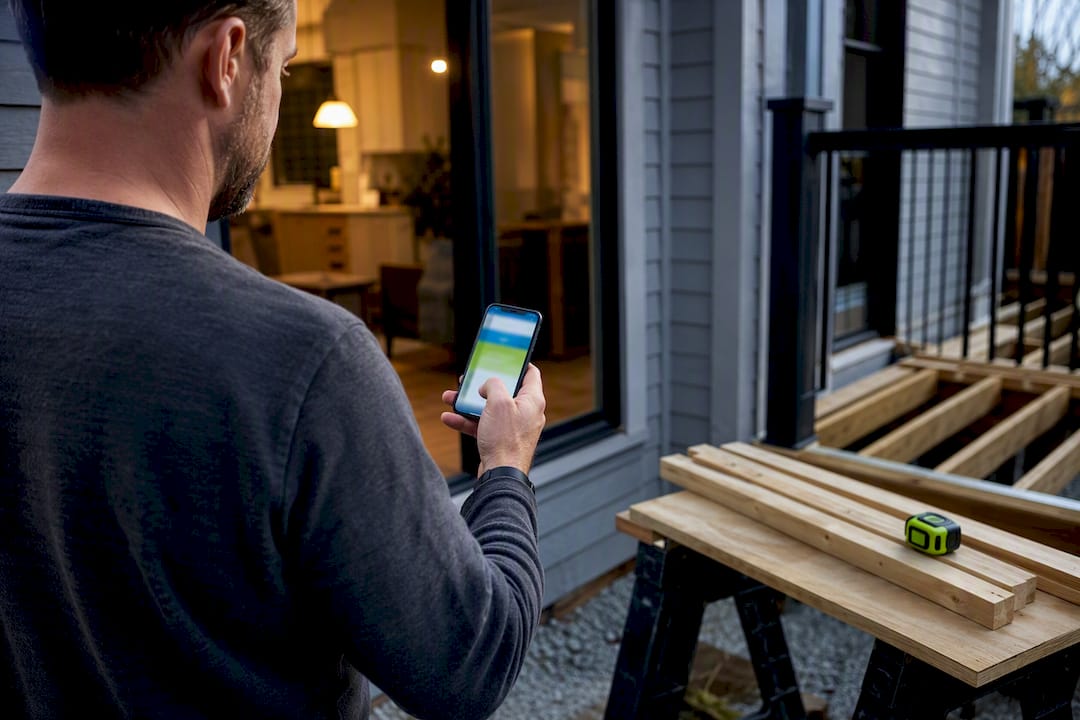
U.S. Homeowners: Verify Permits & Insurance, Get 3 Deck Contractor Bids
Hire a contractor who is licensed, carries insurance you can independently verify, pulls permits without being asked, and hands you an itemized written quote instead of a one-line number. Stage your payments with a real holdback until the final inspection passes. Some contractors meet that bar, but whoever you hire, your first move is the same: collect three written, itemized quotes before you sign anything.
TL;DR:
Verify the contractor’s license through state or local databases and ensure it is current, with no disciplinary issues or lapses.
Request signed certificates of insurance from the insurer directly, confirming active general liability and workers’ compensation coverage.
Insist on detailed, itemized quotes covering footing methods, fastener types, permit costs, materials, and scope to accurately compare bids.
Confirm that the contractor pulls permits and has a history of passing local inspections to ensure work quality and compliance.
Stage payments with a deposit of no more than 30 percent, progress payments tied to milestones, and a final holdback until passing inspections.
CactusdeckingPlan Your Deck With ConfidenceCactus Decking creates tailored outdoor living spaces with organized construction, in-house craftsmanship, and material options for your needs.Visit Cactus Decking
Table of Contents
How Do You Verify a Deck Contractor’s License and Insurance?
What Should You Ask During the Estimate?
How Do You Compare Written Quotes Fairly?
What Red Flags Mean You Should Walk Away?
What Belongs in the Contract and Payment Schedule?
Wood, Composite, or PVC: Which Material Fits Your Project?
How Do You Verify Permit History and Insurance Before Signing?
Why Does Bonding Matter Alongside Insurance?
What Should You Expect From Communication During the Project?
How Do You Check Local Reputation Beyond the Contractor’s Own Portfolio?
Who’s Responsible for Cleanup and Site Restoration?
What Cactus Decking Recommends and Why
Ready to Get a Quote You Can Actually Compare?
Sources
How Do You Verify a Deck Contractor’s License and Insurance?
Before you talk price or materials, confirm the contractor is legally allowed to build and financially covered if something goes wrong. This is the filter that eliminates most bad hires before you waste an afternoon on an estimate.
Start with your state or municipal contractor license lookup tool. Most states run a searchable database where you can check license status, expiration date, and any disciplinary history tied to the business name or license number. A lapsed or “pending” license is a dealbreaker, not a technicality.
Insurance is where homeowners get careless. Ask for proof of general liability and workers’ compensation coverage, then don’t stop at a PDF the contractor emails you directly. Request that the insurance agent or carrier email the certificate straight to you so you know the policy is active and hasn’t lapsed since the document was printed. A contractor-supplied PDF can be outdated or altered; an insurer-sent certificate can’t.
Permits matter just as much, and they’re often skipped by contractors hoping to save time. Most jurisdictions require a permit for any attached deck, any deck raised more than a step or two off grade, or any structure above a set height defined by local code. The inspection process exists specifically to catch problems in the substructure, footings, ledger bolts, joist hangers, before the decking boards hide them forever.
That’s why permit history doubles as a trust signal. A contractor’s track record of passed inspections validates work you’ll never see once the deck is finished.
Search your state’s contractor license lookup by business name or license number
Request insurance certificates emailed directly from the agent, not the contractor
Ask which permits apply to your specific project before the quote stage
Review the contractor’s local permit history for the address of any project they cite as a reference
What Should You Ask During the Estimate?
The estimate visit tells you more about a contractor than any brochure or website ever will. Watch how they answer technical questions, not just whether they show up on time.
Ask these in order, and pay attention to how fluently the answers come:
How will the deck attach to the house? You want to hear structural screws or through bolts with proper flashing, never nails alone.
How deep will the footings go, and how does that match local frost depth or code requirements in your area?
Who’s actually on site doing the work: your own employees, or subcontractors who change from job to job?
Who pulls the permit, what’s the realistic timeline, and what’s the daily cleanup routine during construction?
Can you provide two or three recent local references I can call, not just photos?
A contractor who answers the ledger and footing questions without hesitation is already ahead of most of the competition, because those two details separate someone who understands load-bearing structure from someone who’s mostly a salesperson. This same instinct for direct answers tends to carry through the rest of the project. Responsive, transparent communication at the estimate stage predicts how professional the crew stays once construction starts.
Pro Tip: Bring a notepad to the estimate and write down the contractor’s exact answers on footing depth and attachment method. Compare those notes against the written quote later. If the numbers don’t match, you’ve caught a discrepancy before it costs you.
For a fuller script of questions worth asking, this breakdown of what to say before you sign anything covers wording that tends to get straight answers out of evasive contractors.
How Do You Compare Written Quotes Fairly?
Comparing bids by the bottom-line number alone is how homeowners end up shocked by change orders halfway through the build. Bids without itemized detail often turn out to cover completely different structural standards, which makes the lower number meaningless until you know what it actually includes.
A quote worth trusting itemizes:
Footing method and depth (concrete piers, helical piles, or poured footings, and how deep)
Joist spacing and lumber or engineered-joist specification
Fastener type (structural screws, hidden fasteners, or nails, spelled out explicitly)
Flashing details at the ledger board
Decking brand, line, and color, plus railing system model
Permit fees and any required engineering costs
Demolition of the old deck and site cleanup
A quote should list these items by name; anything less specific isn’t really comparable to a competitor’s bid even if the total dollar amount looks close.
Requesting exactly three quotes tends to be the practical sweet spot: enough to spot an outlier on price or scope, not so many that you’re buried in paperwork for a month. Build a simple spreadsheet with each line item as a row and each contractor as a column, then fill in what’s actually written in the quote, not what you assume it includes.
Watch for a one-line total with no breakdown, a scope description that says “deck construction” and nothing else, or permit costs left out entirely. Any of those means you’re not looking at a real bid yet, just a placeholder number designed to get you to sign.
What Red Flags Mean You Should Walk Away?
Some warning signs are subtle. Others are obvious the moment you hear them, and homeowners still ignore them because the price was attractive.
A deposit request above 30%, especially anything approaching 50% before work starts
“No permit needed” for a project that clearly requires one under local code
A one-line quote with no itemized scope, or evasive answers when you ask for detail
No certificate of insurance, or refusal to have the agent confirm it directly with you
A pattern of short-lived business names, or an inability to produce recent local references
Any single item on this list is worth a follow-up question. Two or three together mean you should stop the conversation and move to the next contractor on your shortlist. A legitimate business has nothing to hide about its insurance, its permit process, or its last three jobs in your area, and a contractor who gets defensive when you ask for verification is telling you something real about how the rest of the project will go.
What Belongs in the Contract and Payment Schedule?
A verbal agreement, even a friendly one, protects nobody once a dispute starts. The contract is what actually determines whether you have leverage if something goes wrong.
Your contract should spell out the full scope of work, exact material brands and specifications, a realistic timeline, the payment schedule tied to milestones, warranty terms in writing, the process for approving change orders, and who handles cleanup and debris removal.
Payment staging protects you more than almost any other clause. The accepted structure is a modest deposit of 10% to 30%, progress payments tied to visible milestones, and a final payment held back until the project passes its final building inspection. That final holdback is your leverage. It gives the contractor a real incentive to schedule the inspection promptly and fix anything the inspector flags before they see the rest of their money.
Confirm the deposit falls within the 10% to 30% range, never higher without a strong reason
Tie each progress payment to a completed, visible milestone (footings poured, framing done, decking installed)
Request lien waivers from any subcontractors or suppliers as each payment clears
Require every change order in writing, signed by both parties, with the price difference stated before work continues
Pro Tip: Never release the final payment until you’ve seen the signed inspection approval yourself, not just a text saying “it passed.” Ask for a copy of the inspection card or certificate.
Wood, Composite, or PVC: Which Material Fits Your Project?
Material choice affects cost and upkeep more than almost any other decision you’ll make, but it matters less than the substructure underneath it. A beautiful composite surface on a poorly built frame is still a poorly built deck.
Pressure-treated wood costs the least upfront and needs the most ongoing attention: annual staining or sealing, regular inspection for rot, and eventual board replacement. Cedar sits a step up in price with a warmer natural look and moderate maintenance demands if you keep up with sealing. Composite and PVC decking cost more initially but cut maintenance dramatically since there’s no staining, sealing, or splinter risk, though correct installation by a crew familiar with the specific product line still matters for warranty coverage and long-term performance.
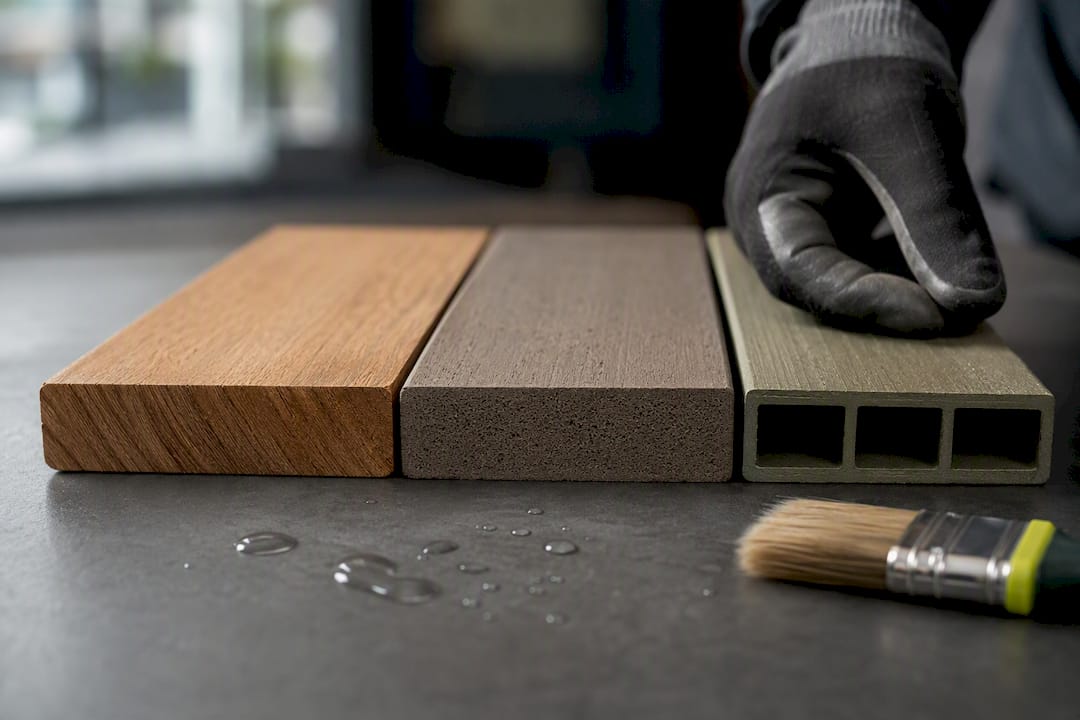
Whatever surface you choose, the footings, joist spacing, and fastener details underneath it are what actually keep the structure safe for decades. A contractor who gets those details right on a treated-wood deck is doing better work than one who cuts corners under a premium composite surface.
How Do You Verify Permit History and Insurance Before Signing?
Most homeowners take a contractor’s word on permits and insurance because checking feels like extra work. It takes fifteen minutes and it’s the single most reliable filter available to you.
Start by searching your local building department’s public permit database using the contractor’s business name or license number. Look for permits tied to addresses similar to your project type, and check whether those permits show a final passed inspection rather than an open or expired status.
Search your city or county’s online permit portal by contractor name
Cross-check any address the contractor cites as a past project
Look specifically for framing and footing inspection results, not just a final sign-off
Email the contractor’s insurance agent directly and ask them to confirm active coverage and policy limits
A homeowner reaching out to an insurance agent can simply write: “Can you confirm that [contractor name] carries active general liability and workers’ compensation coverage, and email me the certificate directly?” That single message does more to protect you than any verbal assurance from the contractor.
An insurer-issued certificate sent directly to you is far harder to fabricate than a document handed over by the contractor, and a quick call to the building department confirms whether “we always pull permits” is actually true.
Why Does Bonding Matter Alongside Insurance?
Bonding is different from insurance, and a lot of homeowners confuse the two. A surety bond is a financial guarantee, backed by a bonding company, that protects you if the contractor fails to complete the work or violates licensing requirements. If that happens, you can file a claim against the bond to recover some of your losses, up to the bond’s limit.
Many states require licensed contractors to carry a bond as a condition of licensure, and the required amount varies by state and by contractor classification. A bonded contractor has effectively put a financial institution’s judgment behind their reliability, since bonding companies vet the contractors they back and can refuse or revoke bonds for contractors with a bad track record.
Ask directly whether the contractor is bonded and for what amount, then verify that claim the same way you’d verify insurance: through the bonding company, not just the contractor’s word. This matters most on larger projects where a mid-project walkout would leave you with a half-finished structure and no easy recourse. Combined with a valid license and active insurance, bonding rounds out the three-part protection every homeowner should confirm before signing a contract, and it costs you nothing but a phone call to check.
What Should You Expect From Communication During the Project?
How a contractor communicates during the estimate is a preview of how they’ll communicate once your yard is torn up and the crew is on site. That preview is worth paying close attention to, because it’s harder to walk away once a deposit has changed hands.
A contractor who returns calls and texts within a business day, gives you a realistic timeline instead of an overly optimistic one, and explains delays proactively rather than making you chase them down is showing you exactly what to expect during construction. Early responsiveness correlates with fewer surprises and better project management once the work actually begins, which lines up with common sense: someone who communicates well under low pressure, before they have your money, tends to keep communicating well under higher pressure, once framing is exposed and weather delays hit.
Ask upfront how the contractor prefers to communicate, whether that’s phone calls, text updates, or a shared project app, and how often you should expect status updates during an active build. A contractor with an organized process, from the first consultation through daily updates during construction, is signaling that they treat your project as a scheduled priority rather than one of a dozen jobs they’re juggling loosely.
Watch for red flags here too: a contractor who’s hard to reach before you’ve signed anything will almost certainly be harder to reach once your deposit is in hand and a competing job comes up.
How Do You Check Local Reputation Beyond the Contractor’s Own Portfolio?
A contractor’s own portfolio and photo gallery shows their best work, understandably. It doesn’t show the jobs that ran late, the disputes that never got resolved, or the homeowners who felt ignored after the final payment cleared. That’s why reputation research has to extend past whatever the contractor hands you directly.
Search the business name alongside your city or county on general review platforms, not just the testimonials featured on the contractor’s own website. Reviews outside a curated portfolio reveal patterns a homeowner would otherwise miss, including how the business responds when something goes wrong rather than just how it performs when everything goes right.
Pay attention to how a contractor responds to negative reviews, not just whether negative reviews exist. A professional response that addresses the specific complaint says more than a perfect five-star average with zero reviews to back it up. Also check how long the business has operated under its current name; a string of similarly named businesses with short histories is a pattern worth asking about directly.
Local homeowner forums, neighborhood social media groups, and word of mouth from neighbors who’ve had decks built recently often surface information no review site captures. Someone who mentions offhand that “the crew left early every day the last two weeks” is telling you something a five-star rating never will.
Who’s Responsible for Cleanup and Site Restoration?
Cleanup responsibilities should be spelled out in the contract, not left as an assumption, because “we’ll clean up” means different things to different crews. A vague verbal promise is exactly the kind of detail that turns into a dispute once the project wraps.
Confirm in writing who removes the old deck’s debris, whether daily job-site cleanup is included, and what happens to construction waste like cutoffs, packaging, and old fasteners. A professional crew typically clears debris at the end of each work day, not just at project completion, which matters if you have kids, pets, or neighbors who share a fence line.
Site restoration goes beyond sweeping sawdust off the patio. Ask specifically about lawn or landscaping repair around the footing excavation sites, whether any disturbed soil gets leveled and reseeded, and what the final walkthrough process looks like before you sign off on completion. A contractor with a clear answer here, rather than a shrug, is one more sign of an organized operation.
What Cactus Decking Recommends and Why
Vetting priorities in order: confirmed permit history, an itemized written quote, an in-house crew instead of rotating subcontractors, staged payments with a real final holdback, and warranty terms you can actually read. That sequence catches the risks that matter before you’re locked into a contract.
A full-service, in-house contractor tends to fit better on projects involving permits, custom railing, or covers where design and construction need to stay coordinated. A smaller owner-operator can be the right call for a straightforward, smaller replacement where scope is simple and local references are easy to check. Either way, the checklist above is what protects you, not the size of the logo on the truck.
— Vlad
Ready to Get a Quote You Can Actually Compare?
Most of the frustration homeowners describe with deck projects traces back to one thing: a contractor who wasn’t organized before the deposit ever cleared. A well-organized contractor uses in-house crews instead of rotating subcontractors, follows a documented process from consultation through permitting to final walkthrough, and provides warranty-backed installations so you’re not guessing what happens if something settles wrong six months later.
If you’re comparing bids right now, request a design consultation and ask for the same itemized breakdown this article walked through: footing depth, fastener type, decking brand, and permit costs listed by name. Whether you need a full deck installation, a deck replacement for a structure that’s reached the end of its life, or a custom build with railing and covered seating worked into the design, ask to see permit history from recent local jobs before you sign anything. That single request tells you more about a contractor than any brochure ever will.
Sources
FAQ
How Do I Choose a Deck Contractor?
Verify the license and insurance independently, confirm they pull permits as standard practice, collect three itemized written quotes, and stage payments with a final holdback until the project passes inspection.
How Much Does It Cost to Have a Contractor Build a Deck?
Cost depends heavily on size, material (pressure-treated wood, cedar, or composite/PVC), footing requirements, and railing complexity, so an itemized quote from an in-house builder like Cactus Decking is the most reliable way to get an accurate number for your project.
What Is the 3/4/5 Rule for Decks?
The 3/4/5 rule is a construction technique for squaring corners: measuring 3 feet along one side and 4 feet along the perpendicular side, the diagonal between those two points should measure exactly 5 feet if the corner is a true right angle.
How Much Should a 20x20 Wood Deck Cost?
Pricing varies by region, footing depth, and railing style, so the most accurate figure comes from an itemized quote rather than a general estimate; request written bids that break down footings, framing, and decking separately for a true comparison.
How Many Quotes Should I Get Before Hiring a Deck Contractor?
Three written, itemized quotes is the practical standard, enough to spot an outlier in scope or price without dragging the process out for weeks.