
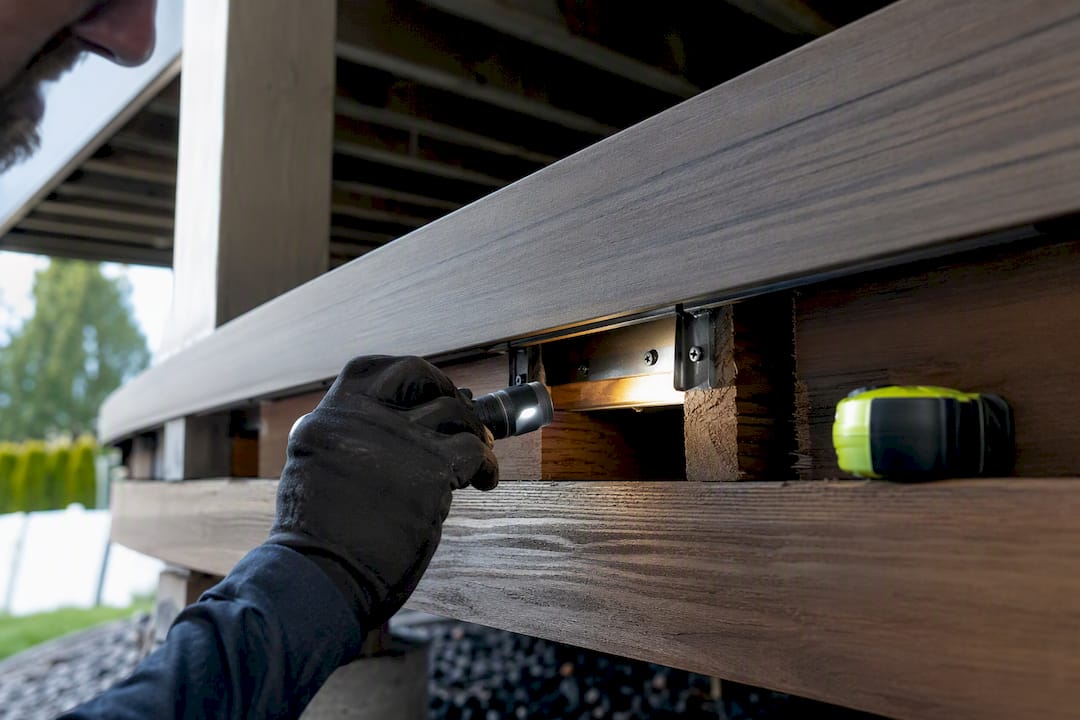
Before you sign anything, insist on a written workmanship warranty that names its duration, states plainly whether labor is covered, and spells out how you file a claim. That clause protects you far more than the manufacturer’s paperwork ever will, because the manufacturer’s composite decking warranty covers defective boards, not a contractor’s installation mistakes. Get the workmanship terms in the contract itself, not a verbal promise, and you’ve closed the gap where most deck disputes actually happen.
TL;DR:
- The contractor’s workmanship warranty should be explicitly included in the contract, covering specific issues like framing errors or loose fasteners for several years.
- Homeowners should verify that the workmanship clause clearly states scope, duration, transferability, and dispute process before paying a deposit.
- Document all issues immediately with photos and written notices, avoiding DIY repairs to keep warranty coverage valid and ensure proper claim procedures.
- Service exclusions such as owner modifications, neglect, or improper cleaning can void warranties, so maintaining records and following recommended care are crucial.
- If a contractor goes bankrupt, warranty protection may no longer apply unless coverage is through insurance or third-party administrators verified beforehand.
Table of Contents
- Composite Decking Warranty Coverage: Contractor Vs. Manufacturer
- Getting Workmanship Terms Into the Contract Before Work Begins
- How to File a Composite Decking Warranty Claim
- What Voids a Workmanship Warranty (and How to Avoid It)
- If Your Contractor Goes Out of Business
- Why the Workmanship Warranty Deserves More Attention Than the Manufacturer’s Fine Print
- Cactus Decking: Warranty-Backed Composite Deck Installs in Everett
- Sources
Composite Decking Warranty Coverage: Contractor Vs. Manufacturer
Two separate warranties protect your deck, and homeowners routinely confuse which one applies when something goes wrong. The contractor’s workmanship warranty covers how the deck was built. The manufacturer’s product warranty covers what the boards are made of. Mixing them up wastes time on a claim that’s headed for denial.
Workmanship warranties typically cover:
- Ledger board flashing that was installed incorrectly, letting water into the house structure
- Fasteners that pop loose because they weren’t set to the manufacturer’s spacing spec
- Railings that wobble due to poor post attachment
- Framing errors, like joists spaced too far apart for the composite board span rating
Manufacturer warranties, by contrast, cover manufacturing defects in the boards themselves, such as flaking, splitting, or fading beyond the rate their materials guarantee allows. Here’s the detail that catches homeowners off guard: manufacturer policies frequently exclude labor to remove and reinstall the defective boards. You might get free replacement decking and still pay a crew out of pocket to tear out the old boards and install the new ones.
Pro Tip: *Ask your contractor directly whether their workmanship term is prorated after year one.
Duration labels vary more than most homeowners expect. Short-term labor warranties often run just one year, while extended workmanship terms commonly span 3 to 10 years, and “lifetime” almost always means the lifetime of the original owner, not the deck itself. If you sell the house, that lifetime clause may end the day you hand over the keys, unless the contract says otherwise.
Getting Workmanship Terms Into the Contract Before Work Begins
A workmanship warranty that lives only in a sales conversation isn’t a warranty. It’s a sales pitch. The terms need to sit inside the signed construction contract, in language specific enough that a claims dispute has something concrete to point to.
Push for these five items in writing before you pay a deposit:
- A dedicated workmanship clause, separate from the manufacturer’s material warranty language.
- A stated duration in years, not a vague reference to “industry standard” coverage.
- Explicit scope, naming what’s covered (labor, materials, specific components) and what’s excluded.
- A transferability clause, so coverage survives a home sale if you plan to move within the warranty period.
- A defined claim window and dispute process, including how you notify the contractor and how long they have to respond.
Alongside the contract, collect the manufacturer’s warranty registration confirmation, permit and inspection records, and a milestone payment schedule tied to project stages rather than one lump sum upfront. Milestone payments and permit documentation give you leverage and evidence if a dispute ever lands in front of an inspector or a small claims judge.
Pro Tip: If a contractor tells you their workmanship warranty is “standard” and refuses to write specific terms into the contract, treat that as a red flag, not a formality. Verbal warranties hold up poorly, and a builder confident in their work has no reason to avoid putting it on paper.
How to File a Composite Decking Warranty Claim
The moment you spot a problem, whether it’s a squeaky board, a leaning post, or a stain that shouldn’t be there, your actions in the first week matter more than anything you do afterward.
Start documenting immediately:
- Take dated photos from multiple angles, including a wide shot showing the affected area’s location on the deck.
- Pull your original contract and any receipts for milestone payments.
- Resist the urge to fix it yourself. A DIY repair can void both the workmanship and manufacturer coverage.
Send formal written notice to the contractor, not a text message buried in a group chat. Include the photos, a description of the issue, the date you noticed it, and a reference to the specific contract clause covering it. Email with delivery confirmation or certified mail works best, since you’ll want a paper trail if the claim escalates.
A responsible contractor will schedule an inspection within a reasonable timeframe and propose a repair plan with a completion date. If the response is slow, vague, or nonexistent, that’s when you loop in a third-party inspector or your local building code office. Legal counsel typically advises giving the contractor a formal notice and a defined cure period before pursuing any legal action. Skipping that step can weaken your position even when you’re clearly right about the defect.
What Voids a Workmanship Warranty (and How to Avoid It)
Warranty language is full of quiet exit ramps, and most homeowners don’t find them until a claim gets denied. Owner modifications, neglect, storm damage, and improper cleaning top the list of routine exclusions across the industry.
Common coverage killers include:
- Drilling into railings or boards for planters, lighting, or hardware not approved by the installer
- Skipping the manufacturer’s recommended cleaning routine, which some warranties treat as a maintenance failure
- Hiring a different contractor for “minor” repairs, which can void the original workmanship term entirely
- Letting debris sit in board grooves long enough to trap moisture against the structure
Contracts can also shrink your protection in ways that aren’t obvious on a first read. Prorated remedy schedules, claim windows shorter than 30 days after discovery, and non-transferability clauses all reduce what you’re actually covered for compared to what the sales conversation implied. Keep your manufacturer warranty registered, your permit records filed, and your maintenance routine documented with dates. That paper trail is often the difference between a claim that gets approved in a week and one that drags out for months.
If Your Contractor Goes Out of Business
A workmanship warranty is only as strong as the business behind it, and contractor insolvency ends most of these agreements outright. There’s no bankruptcy court obligated to make good on a five-year labor promise from a company that no longer exists.
Two protections can survive that scenario. Completed operations insurance covers damage that shows up after the job is finished, and some larger installations use third-party warranty administrators who step in when the original builder can’t. Neither is universal, so verify both before signing anything.
Before you hire, check the contractor’s license status, confirm they carry completed operations insurance, pull their permit history with your local building department, and search their record with the Better Business Bureau. Document every warranty-related communication in writing, and escalate quickly. Notice deadlines don’t pause while you wait to see if the contractor calls back.
Why the Workmanship Warranty Deserves More Attention Than the Manufacturer’s Fine Print
Homeowners spend an outsized amount of energy comparing manufacturer warranty lengths, 25 years here, 50 years there, when the contractor’s workmanship terms are what actually get used in the first decade of owning a deck. Most composite board failures that show up early aren’t defective materials, but often result from common installation mistakes homeowners should be aware of, as detailed in common retractable roof installation errors to avoid. They’re installation errors: a joist spaced wrong, flashing skipped to save an hour, fasteners driven at the wrong angle. None of that is the manufacturer’s problem to fix.
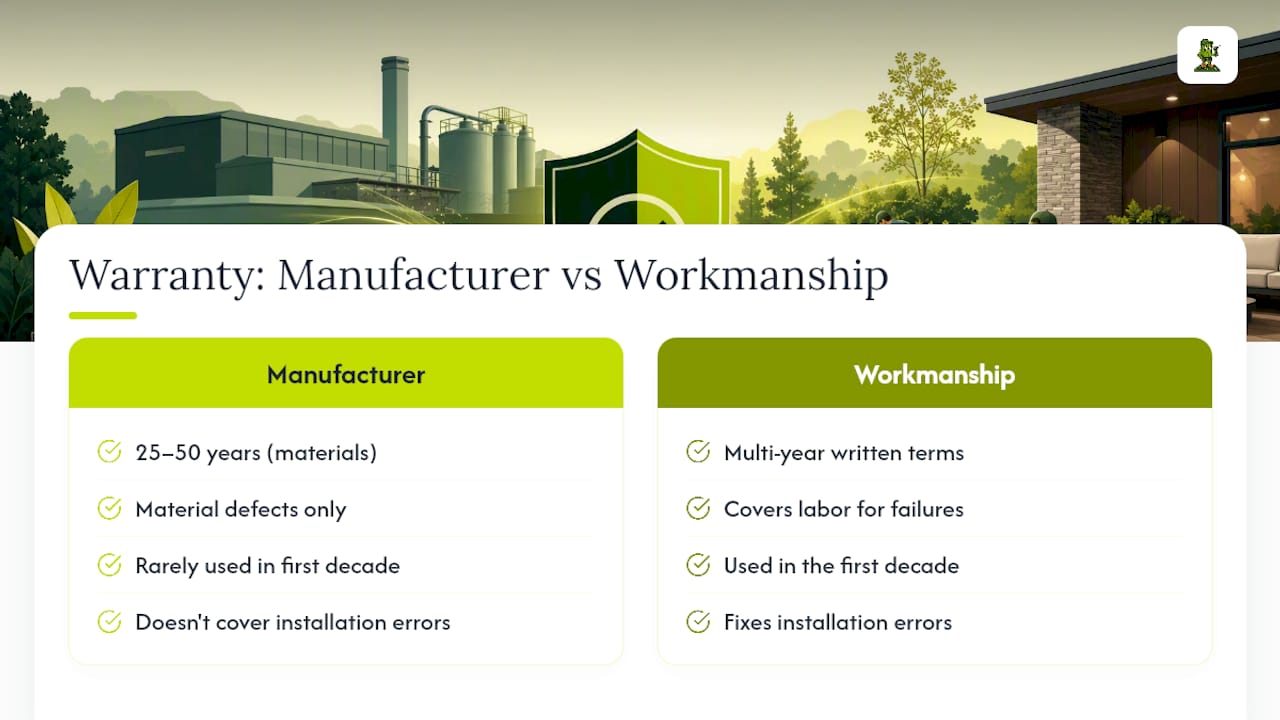
I’d argue the industry has trained homeowners to ask the wrong question. “How long is the warranty?” matters less than “who pays for labor when something fails in year three?” A composite material assurance program with a 50-year window looks impressive, but you realize it won’t cover a single hour of removal and reinstallation labor. The workmanship warranty is the document doing the real work.
At Cactus Decking, every installation carries written, multi-year workmanship terms because verbal assurances don’t hold up when a homeowner needs them most. Our in-house crew handles manufacturer registration paperwork and keeps permit and inspection records on file, so if a claim question ever comes up, the documentation already exists instead of needing to be reconstructed under pressure.
— Vlad
Cactus Decking: Warranty-Backed Composite Deck Installs in Everett
If you’re comparing contractors right now, the terms you require in writing are exactly what should separate the shortlist from everyone else. Cactus Decking builds every custom deck installation with a written workmanship warranty, an in-house crew rather than rotating subcontractors, and full manufacturer paperwork handled from day one instead of chased down after the fact.

Our process covers Everett deck design service, permitting, and construction under one roof, so the same team that pulls your permit is the team standing behind the finished railing five years from now. We document manufacturer registration, keep inspection records on file, and put duration, scope, and claim process directly into the contract before a single board goes down. You can browse completed projects in our deck gallery or reach out directly through Cactus Decking to schedule a consultation and get a written workmanship warranty attached to your project from the start.
Sources
- Deck Builder Warranty: 6 Traps That Void Your Coverage
- What Happens If You’re Unhappy with Work a Deck Company Did - Homly Wise


