

For most homeowners, capped composite decking is the better all-around choice. It delivers a convincing wood-grain look, lower upfront cost, and solid durability across a wide range of climates. PVC earns its place in specific situations where moisture is relentless and aesthetics are secondary.
Quick picks by site condition:
- Poolside or coastal: PVC. Its non-porous, wood-free construction eliminates mold risk where moisture is constant.
- Budget-first or elevated deck: Mid-tier capped composite. Better value per square foot with a realistic wood look.
- Shaded, ground-level, or damp site: PVC or fully capped composite with confirmed four-sided capping.
- Resale or curb appeal: Premium capped composite for the most convincing wood grain.
The sections below unpack the reasoning, walk through real cost math, and end with a contractor checklist you can bring to your first estimate.
Table of Contents
- What is PVC decking, and what should you expect from it?
- What is composite decking, and why does capping matter so much?
- How composite and PVC deck boards compare side by side
- What does each material actually cost over time?
- Maintenance, durability, and what actually goes wrong
- Which material fits your specific situation?
- Environmental impact: what to ask before you buy
- Questions to ask your contractor before signing anything
- How Cactusdecking evaluates and recommends materials for your project
- Key Takeaways
- The case for slowing down before you decide
- Ready to plan your deck? Cactusdecking can help
- Sources and further reading
What is PVC decking, and what should you expect from it?
PVC decking is made entirely from polyvinyl chloride, a synthetic polymer with no wood fiber whatsoever. That single fact drives almost every performance characteristic. Because there is nothing organic in the board, there is nothing for moisture to penetrate, mold to feed on, or insects to attack.
Premium PVC lines commonly carry fade-and-stain warranties of 25–50 years, with structural warranties that vary by manufacturer. Read the fine print: exclusions for improper installation or inadequate ventilation can void coverage faster than the boards ever would.
The trade-offs are real, though. PVC has a higher thermal expansion rate than composite, which means installers must follow gap-spacing specs precisely. Boards that are gapped too tight in summer heat will buckle; boards gapped too wide in cold weather look sloppy. That installation sensitivity is one of the most common causes of warranty claims on PVC decks.
PVC also tends to run hotter underfoot on sunny days, and some PVC surfaces can be slippery when wet, which matters if you have kids, older adults, or a pool nearby. Textured finishes help, but it is worth confirming slip ratings before you buy. On the aesthetic side, PVC has improved significantly, but it still reads as slightly more synthetic than the best capped composite options. If a convincing wood grain is your priority, composite usually wins.
What is composite decking, and why does capping matter so much?
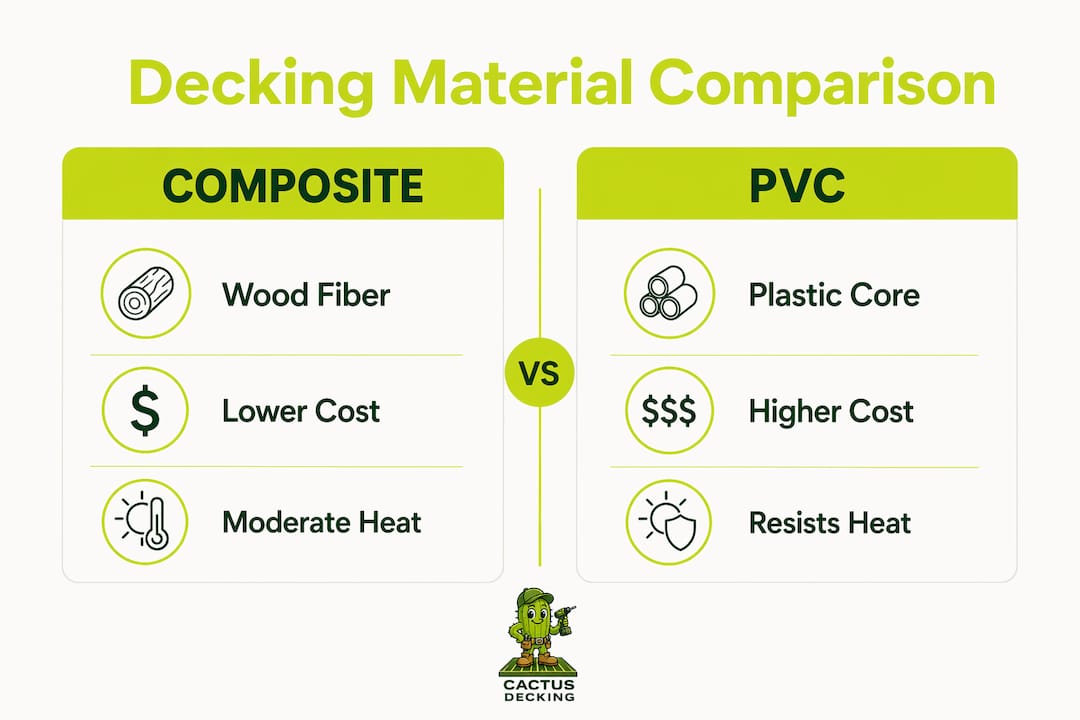
Composite decking combines wood fiber (from sawdust, reclaimed lumber, or agricultural waste) with recycled or virgin plastic, typically polyethylene or polypropylene. The result is a board that looks and feels closer to real wood than PVC while still resisting rot, insects, and most weather.
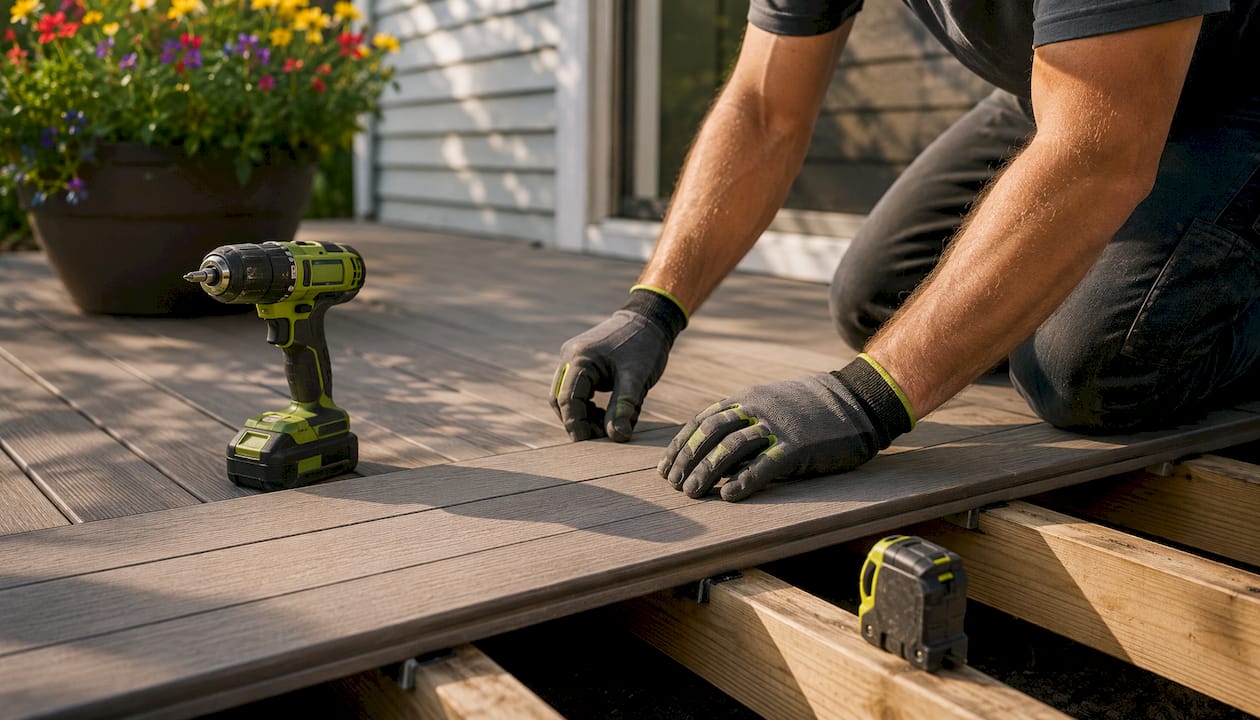
The word “capped” is where the real performance gap lives. An uncapped composite board has an exposed wood-fiber core on all sides. Moisture gets in, mold follows, and the board swells, stains, and degrades faster than you would expect for the price. A three-sided cap protects the top and sides but leaves the bottom exposed. Four-sided capping seals every face, including the underside, and it is the single biggest quality differentiator between budget and premium composite lines.
Composite decking: key pros and cons
- ✅ More convincing wood grain and texture than most PVC options
- ✅ Lower upfront cost at entry and mid tiers ($4.50–$13 per sq. ft.)
- ✅ Greater dimensional stability and board stiffness than PVC
- ✅ Wide color and finish selection; dozens of grain patterns available
- ✅ 25–30 year lifespan on quality capped lines
- ⚠️ Uncapped or three-sided-capped boards remain vulnerable in shaded, damp spots
- ⚠️ Cannot be repainted or re-stained if you want a color change later
- ⚠️ Heavier than PVC, which can affect shipping and handling on large projects
Modern four-sided capping technology has largely closed the performance gap with PVC for most residential settings. Contractors now steer homeowners toward fully capped boards as the baseline, not the upgrade.
How composite and PVC deck boards compare side by side
The table below uses the dimensions homeowners ask about most. Brand names are left out intentionally because performance varies more by product tier and capping quality than by manufacturer.
| Dimension | Capped Composite | PVC |
|---|---|---|
| Appearance / realism | More convincing wood grain; wide color range | Improved textures, still reads slightly synthetic |
| Water & mold resistance | Excellent with four-sided cap; vulnerable if uncapped | Superior; non-porous, no organic content |
| Maintenance needs | Semi-annual wash; no sealing or staining | Same; occasional soap-and-water rinse |
| Upfront cost (material) | $4.50–$13 per sq. ft. | $10–$15 per sq. ft. |
| Lifespan / durability | 25–30 years (premium lines) | 50+ years (premium lines) |
| Heat underfoot | Moderate; darker colors run hotter | Higher; can get uncomfortably hot in direct sun |
| Installation / joist spacing | Stiffer boards allow slightly wider joist spacing | Tighter gap specs required; more expansion-sensitive |
| Warranty claims | 25–50 years fade/stain; structural varies | 25–50 years fade/stain; structural varies |
Three factors that should drive your final decision:
- Moisture exposure. If your deck sits at ground level, under a canopy of trees, or next to a pool, PVC’s non-porous core is the safer long-term bet.
- Budget and timeline. Composite costs less upfront and still delivers decades of low-maintenance performance when you choose a fully capped board.
- Aesthetics. If the wood-grain look is non-negotiable, composite wins at every price tier.
What does each material actually cost over time?
Material prices alone tell half the story. Composite deck boards run roughly $4.50–$13 per sq. ft., while PVC typically lands in the $10–$15 range. On a 400 sq. ft. deck, that gap can be $2,000–$4,000 in materials before labor.

The more useful number is total cost of ownership. Wood decking carries annual maintenance costs that compound fast. One estimate puts pressure-treated wood maintenance at roughly $115 per year, which adds up to about $2,875 over 25 years on top of the install cost. Composite and PVC both drop that annual figure close to zero because they need no sealing, staining, or repainting.
| Scenario (400 sq. ft. deck) | Upfront Material Cost | Est. 25-Year Maintenance | Approx. 25-Year Total |
|---|---|---|---|
| Pressure-treated wood | — | ~$2,875 | — |
| Mid-tier capped composite | moderate material cost | low maintenance cost | total cost competitive over time |
| Premium PVC | higher material cost | very low maintenance cost | total cost competitive over time |
Mid-tier composite breaks even with treated wood somewhere between years 8 and 14, depending on your local labor rates and how diligently you maintain the wood. Premium composite and PVC often carry 25–50 year warranty windows, so the annualized cost over a full ownership period is competitive with wood even at the higher sticker price.
Pro Tip: When reviewing contractor quotes, ask for a line-item breakdown that separates material, fasteners, hidden clip systems, framing adjustments, and permit fees. A quote that bundles everything into one number makes it nearly impossible to compare bids accurately.
Maintenance, durability, and what actually goes wrong
Both composite and PVC are significantly lower maintenance than pressure-treated wood. The routine is straightforward: wash twice a year with soap and water or a gentle pressure rinse, clear debris from between boards after storms, and keep grill mats under any outdoor cooking equipment to prevent grease staining.
Where things go wrong is almost always tied to installation quality or capping gaps:
- Fading and staining: Uncapped or three-sided-capped composite boards stain and fade faster, especially in shaded spots where moisture lingers. Fully capped boards resist both.
- Mold and mildew: Mold does not damage PVC, but it looks bad. On composite, mold in the wood-fiber core of an uncapped board is a structural problem over time.
- Buckling: PVC’s higher expansion rate means a board installed without the correct gap in summer heat will push against its neighbor and bow. This is an installation error, not a material defect, but it voids warranties.
- Scratches: Both materials scratch. Composite tends to show scratches more on smooth-finish boards; textured surfaces hide them better.
On warranties: premium capped composite and high-end PVC often carry 25–50 year fade-and-stain warranties. The structural warranty is the one to read carefully. Watch for exclusions around improper installation, inadequate joist spacing, or underside moisture exposure on three-sided-capped boards.
Which material fits your specific situation?
The right answer shifts depending on where and how you live. Here is a quick map:
- Poolside or saltwater-adjacent: PVC. No organic content means no mold pathway, and it handles constant splash and humidity without degrading.
- Shaded, ground-level deck: PVC or fully four-sided-capped composite. Ground-level sites trap moisture and limit airflow; uncapped composite will fail faster here than anywhere else.
- High-heat climate or full-sun exposure: Capped composite in a lighter color. PVC runs hotter underfoot and can become uncomfortable in direct afternoon sun.
- Resale-minded homeowner: Premium capped composite. Buyers respond to the wood-grain look, and the long warranty is a selling point.
- Budget-first project: Entry or mid-tier capped composite. You get the low-maintenance benefits at a price closer to wood, and you can view finished composite and PVC installations to compare aesthetics before committing.
- Long-term owner (15+ years): Either premium material works. Focus on total cost of ownership rather than sticker price, and confirm the warranty covers your specific site conditions.
- Elevated deck with good drainage: Either material performs well here. Composite’s stiffer boards may allow slightly wider joist spacing, which can reduce framing costs.
When hiring a pro is non-negotiable: PVC installation in particular requires precise gap spacing and approved fastener systems. A single installation error can void the manufacturer warranty and cause visible board movement within one season. For any deck over 200 sq. ft. or any elevated structure, professional installation is worth the cost.
Environmental impact: what to ask before you buy
Neither material is a clean win on sustainability, but the differences are worth understanding.
- Composite: Many lines use recycled wood fiber (sawdust, reclaimed lumber) combined with post-consumer recycled plastic. That recycled content reduces landfill load and lowers the demand for virgin timber. Some manufacturers, like Trex and Fiberon, publish recycled-content percentages and operate take-back or recycling programs.
- PVC: Most PVC decking uses virgin polymer rather than recycled plastic. The manufacturing process is more energy-intensive, and end-of-life recyclability is limited because PVC is difficult to sort and reprocess at standard facilities.
- End-of-life reality: Some composite boards can be broken down and recycled into new WPC products. PVC boards generally cannot be recycled through standard municipal programs.
- What to ask manufacturers: Request the recycled-content percentage by weight, whether the product qualifies for any third-party environmental certification, and whether a take-back or recycling program exists in your region.
Lifecycle emissions and landfill impact favor composite at most tiers, primarily because of the recycled-content advantage. That said, greenwashing is common in this category. Verify claims independently rather than relying on marketing copy alone.
Questions to ask your contractor before signing anything
Bring this list to every estimate. The answers tell you whether the installer knows the material or is winging it.
- What joist spacing does this specific board line require? Composite boards are stiffer than PVC and can span slightly wider spacing; PVC specs are tighter. If the installer gives you a generic answer, that is a red flag.
- What gap spacing are you using, and does it match the manufacturer’s installation spec for the season we’re building in? PVC gaps must account for thermal expansion; the correct gap in January is different from the correct gap in July.
- What fastener system does the manufacturer approve for this product? Hidden clip systems, proprietary screws, and face-fastening all affect warranty validity. Ask to see the spec sheet.
- Is this board four-sided capped? If the answer is “I think so” or “most of them are,” ask for the product data sheet. Three-sided capping is a meaningful downgrade in wet or shaded conditions.
- How do you handle drainage under the deck? Poor drainage accelerates mold on composite and causes premature aging on any material.
- Will you register the manufacturer warranty on my behalf, or do I need to do that? Some warranties require registration within a set window after installation.
- Can you show me a photo-documented project using this exact board line? A contractor who installs a product regularly will have photos. One who cannot produce them may be unfamiliar with the material’s quirks.
- What permits are required, and who pulls them? Permit handling protects you legally and confirms the build meets local code.
Red flags to watch for: vague answers about capping quality, a single quote that bundles all costs without line items, or an installer who discourages you from reading the manufacturer’s installation guide.
How Cactusdecking evaluates and recommends materials for your project
Cactusdecking’s process starts before a single board is selected. The team conducts a site assessment that looks at drainage, sun exposure, proximity to water, and the existing framing condition. Those site factors drive the material recommendation, not the other way around.
A shaded backyard in the Pacific Northwest gets a different recommendation than a sun-drenched elevated deck in a dry climate. Ground-level sites with limited airflow almost always point toward PVC or fully capped composite. Elevated decks with good drainage open up the full range of composite options, including mid-tier lines that deliver excellent aesthetics at a lower cost.
Pro Tip: Ask your contractor to show you the manufacturer’s installation spec sheet for the board they’re recommending. A contractor who installs a product regularly will have it on hand. One who cannot produce it may not be familiar enough with that product’s gap, fastener, and joist requirements to protect your warranty.
Cactusdecking handles permitting in-house, registers manufacturer warranties on the homeowner’s behalf, and backs every installation with a workmanship warranty. The in-house crew means no subcontracting surprises mid-project. For homeowners replacing an aging wood deck, the deck replacement process includes a full assessment of the existing framing before any new material is specified.
Key Takeaways
For most homeowners, the choice between composite and PVC decking comes down to three things: moisture exposure at the site, upfront budget, and how important a realistic wood-grain look is to you.
| Point | Details |
|---|---|
| Moisture drives the decision | PVC’s non-porous core makes it the right call for poolside, coastal, or shaded ground-level sites. |
| Capping quality matters more than brand | Four-sided capped composite closes most of the performance gap with PVC for typical residential decks. |
| Total cost of ownership, not sticker price | Mid-tier composite breaks even with treated wood between years 8 and 14; premium lines carry 25–50 year warranties. |
| PVC installation is less forgiving | Precise gap spacing is required for PVC; installation errors are the leading cause of warranty claims. |
| Cactusdecking | Provides site-specific material recommendations, permit handling, and warranty-backed installations in Everett, WA. |
The case for slowing down before you decide
Most homeowners walk into this decision focused on the wrong variable. They compare price per square foot, pick a color they like online, and then hand the spec to whoever gives them the lowest bid. The material choice matters far less than the installation quality and the site match.
PVC gets a bad reputation for heat retention and slipperiness, but those are largely solved problems on modern textured lines. Composite gets oversold as the universal answer, but an uncapped board on a shaded ground-level deck will disappoint within five years. The real question is not which material is better in the abstract. It is which material, installed correctly, holds up at your specific address.
The other thing worth saying plainly: the 25–50 year warranty numbers that manufacturers advertise are real, but they come with conditions. Improper joist spacing, wrong fasteners, inadequate ventilation, and missing warranty registration all create gaps in coverage that most homeowners never discover until something goes wrong. Hiring a contractor who knows the spec sheet for the product they are installing is worth more than saving a few hundred dollars on labor.
Ready to plan your deck? Cactusdecking can help
Choosing between composite and PVC is easier when someone who has installed both walks your yard with you. Cactusdecking offers custom deck design and installation in Everett, WA, with material recommendations built around your actual site conditions, not a showroom display. The team handles permitting, sources fully capped boards from quality manufacturers, and registers your warranty at project close.
Whether you are building new or replacing an aging wood deck, the process starts with a free estimate. Get in touch with Cactusdecking to schedule a site visit and see what composite or PVC looks like on a deck built for your yard specifically.
Sources and further reading
The claims in this article draw on the following resources. Cost figures come from Decks.com and BuildEstimatory. Lifespan and moisture-resistance data come from ForestSource and DeckMath. Installation and expansion guidance comes from Family Handyman and Kelly O’Tools.
| Source | What it covers |
|---|---|
| Decks.com: PVC vs. Composite Decking | Material price ranges per sq. ft. for composite and PVC |
| ForestSource: Composite vs. Wood Decking Buyer’s Guide | Capping quality, moisture resistance, and use-case recommendations |
| BuildEstimatory: Composite vs. Wood Decking | Break-even math and total cost of ownership framing |
| DeckMath: 25-Year Comparison | Warranty terms, maintenance frequency, and long-term durability |
| Family Handyman: PVC vs. Composite | Joist spacing differences, slip resistance, and installation notes |
| Kelly O’Tools: PVC vs. Composite | Thermal expansion behavior and contractor installation tips |
| Decks.com: Composite vs. Wood | Composite pros/cons, warranty examples, and aesthetic comparisons |
| Prime Decor Furnishing: Outdoor Timber Decking Providers | International industry perspective on decking product lines |


