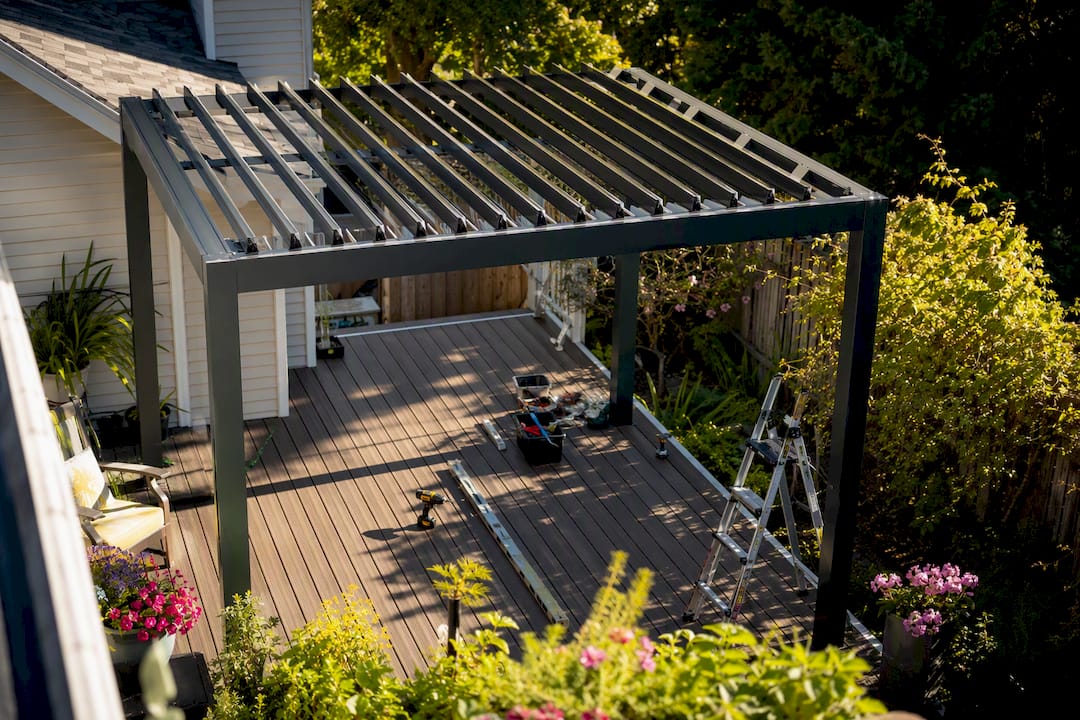

Composite decking can change color over time, and “fade resistant” means the boards change more slowly and evenly, not that they stay exactly the same. Boards with a factory cap, pigments and UV stabilizers perform best, though site conditions and upkeep still matter. Start by asking for capped boards, the manufacturer’s care instructions, and warranty language that covers color retention.
TL;DR:
- A USDA Forest Service field study lasting 17 years found capped boards weathered less, though stabilizers did not prevent mold or staining.
- Midtones with textured grain hide small color shifts better than very dark or light boards, which also show dirt more readily.
- Before buying, check how the warranty measures color change, what upkeep it requires, and whether cleaners or coatings can void coverage.
- Lift planters, clear debris beneath boards, maintain drainage and airflow, and avoid strong sprays, because lingering moisture combined with sunlight accelerates lightening.
- Put the approved sample, board lot numbers, maintenance schedule, warranty terms, drainage, and ventilation requirements in the contractor agreement before work begins.
Table of Contents
- Why does composite decking lose color in the first place?
- How do manufacturers make boards fade resistant, and where do those protections stop?
- How do you choose fade resistant decking before you buy?
- Which maintenance habits keep a composite deck looking its best?
- What does long-term research say about realistic fade expectations?
- What should you put in writing when you hire a deck contractor?
- How does our team help you get a fade resistant deck?
- FAQ
- Sources
Why does composite decking lose color in the first place?
Composite boards blend wood fiber with plastic, and sunlight attacks both. Ultraviolet light breaks down lignin in the wood fiber and the polymer around it, a process called photodegradation. That is why a dark brown board can drift toward gray or tan after a few seasons in full sun.

Water makes it worse. Accelerated weathering tests show that water spray combined with UV causes more lightening than UV alone, because moisture washes degraded material off the surface and exposes fresh material to the sun. Your deck’s color change is rarely just about sunshine.
Other factors pile on:
- Moisture that lingers: poor drainage, trapped condensation and planters sitting on the boards keep the surface wet.
- Surface contamination: mold, pollen, algae and chemical spills all alter how the color reads, even when the board itself has not changed.
- Abrasion: furniture dragged across the deck and gritty foot traffic wear the top surface and dull the finish.
- Installation choices: a tight, unventilated substructure holds humidity under the boards and speeds up problems that show on top.
Understanding these causes tells you where to spend effort. You cannot turn off the sun, but you can control water, airflow and cleanliness, and you can choose a board built to resist the rest.
How do manufacturers make boards fade resistant, and where do those protections stop?
Most premium composite boards are capped, meaning a protective polymer shell is coextruded around a wood-fiber core. Uncapped boards expose that core directly. In long-term field testing, the USDA Forest Service found that capped samples weathered less than uncapped samples, which is the main reason we steer homeowners toward capped products.
The cap’s color package usually combines pigments with UV stabilizers. Common stabilizers include UV absorbers and hindered amine light stabilizers, known as HALS. Research on coextruded caps over HDPE and wood-flour composites found that pigments often reduce lightening more than UV absorbers alone, so the combination matters more than any single additive.
A 17-year USDA Forest Service field study found that UV stabilizers and colorants slowed color change, yet mold and staining still occurred on above-ground boards.
That result sets honest expectations. A cap can crack, delaminate or let moisture reach the core, and once that happens the color change that follows can be uneven. Marketing words like “fade proof” tell you little. Cap quality, cap thickness and documented lab or field results tell you much more.
- Ask how the cap is bonded to the core.
- Ask what testing backs the color claims.
- Treat vague superlatives as a prompt for more questions.
How do you choose fade resistant decking before you buy?
Use this checklist when you compare boards, samples and bids:
- Insist on factory-capped boards. Ask the supplier for a sample piece or a cross-section so you can see the cap with your own eyes.
- Pick a mid-tone color with a textured grain. Very dark and very light shades show lightening and dirt fastest, while mid-tones and varied grain hide small shifts.
- Request the technical datasheet. Look for performance data on UV exposure, stain resistance and abrasion rather than adjectives.
- Read the warranty for color retention. Check how much change is allowed, how it is measured, and what maintenance the manufacturer requires.
- Confirm approved cleaners and coatings. Using a product the warranty does not allow can void coverage. For example, a warranty can exclude paints and stains from its stain-resistance protection, which shows why an applied coating is not the same as factory color protection.
- Compare how warranty claims actually work. Our guide to composite decking warranty clauses explains which terms homeowners should look for in writing.
Pro Tip: Leave a sample board outside in the exact spot where your deck will go, then spray it, let it dry and compare it with a fresh piece after a few weeks.
Sun exposure in the surrounding space matters too. If a south-facing patio door floods the area with glare, a UV-blocking window film on the glass can reduce some of the light reaching nearby surfaces and furnishings.
Which maintenance habits keep a composite deck looking its best?
Good habits preserve color longer than any single product feature. Follow the manufacturer’s instructions first, then build these routines around them:
- Run a soap test. Scrub a small area with mild soap and water. If the shade returns, the problem was surface grime, not permanent fading. Our soap test walkthrough shows how.
- Clean with approved methods. Our guide on cleaning composite decking without damaging it covers brushes, rinsing and what to avoid.
- Remove biological growth quickly. If you see green or black spots, follow the steps in our post on removing deck mold safely.
- Control standing water. Lift planters on feet, sweep off debris and keep gutters from dumping onto the boards.
- Keep air moving. Clear leaves from under the deck and keep the substructure open for ventilation.
- Skip the nozzle. Directing a strong spray at the surface adds the water-plus-UV combination you are trying to avoid.
- Add shade where the sun is relentless. A pergola, an awning or well-placed plantings reduce continuous exposure on the worst spots.
What does long-term research say about realistic fade expectations?
The strongest evidence we have comes from field exposure, not brochures. Researchers at the USDA Forest Service tracked boards for 17 years at sites near Saucier, Mississippi, and Madison, Wisconsin, using above-ground deck boards and in-ground stakes. Their long-term field exposure study found that site climate and moisture changed how the boards deteriorated.
Stabilizers and colorants slowed color change, but they did not eliminate mold or staining, and capped boards weathered less than uncapped ones.
Laboratory work points the same way. Water spray plus UV lightens boards more than UV alone, so moisture control belongs on your priority list. The practical takeaway: “fade resistant” delivers slower, more controlled change. Ask for samples and read warranty terms instead of trusting marketing alone.
What should you put in writing when you hire a deck contractor?
A professional builder protects your color investment with paperwork as much as with screws. Specify a factory-capped composite with a documented UV and pigment package. Approve the sample in writing, and put the maintenance schedule and warranty terms in the contract. Require attention to substructure, drainage and ventilation, since those details shape long-term appearance. Record board lot numbers or sample approvals so any future claim is simple.
— Vlad
How does our team help you get a fade resistant deck?
We design and build decks with composite, PVC or cedar, and we handle the details that decide how your boards age.
- We review samples with you during your consultation and talk through cap construction.
- Our in-house crews handle drainage and ventilation, and our installations are warranty-backed.
- We guide you toward eco-conscious materials suited to the Northwest climate.
Ready to start? Book a consultation or request a sample review through our new deck installation service page.
FAQ
Do deck stains fade faster than composite color?
Yes, usually. Applied stains rely on pigments and binders that UV, moisture and weathering break down. A warranty can exclude paints and stains from color coverage, so a coating is not equal to factory protection.
How do I make my composite deck less slippery?
Remove pollen, algae and grease with manufacturer-approved cleaning methods. Fix drainage and ventilation problems, and avoid unapproved coatings that could void your warranty. Research on composite deck slip and weathering also points to board texture and moisture management as key factors.
Does a capped board still need cleaning?
Yes. A cap slows color change, but mold, pollen and grime can still sit on the surface. Regular cleaning with approved products keeps the board looking closer to its original shade.
Is a darker or lighter color better for hiding fade?
Mid-tones with textured grain tend to hide small shifts best. Very dark and very light boards make lightening and dirt more noticeable.
Sources
- Long-term field exposure of wood-plastic composites processed on a commercial-size extruder | US Forest Service Research and Development
- Rex