Pair Fire Resistant Decking with Flashing and Screening for Homeowners
Contractor level checklist for homeowners: pair fire resistant decking with joist flashing, under deck screening, debris control, and defensible space to...
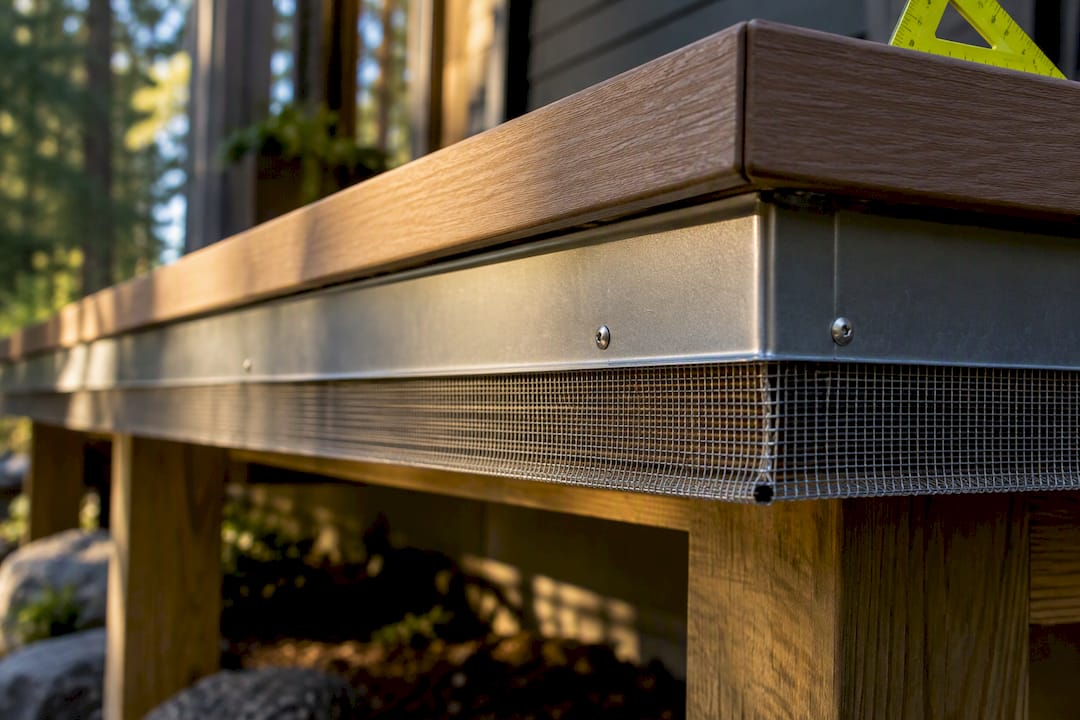
Pair Fire Resistant Decking with Flashing and Screening for Homeowners
The most effective fire resistant decking approach pairs an ignition-resistant or noncombustible walking surface with joist flashing, debris control, and a defensible-space buffer around the deck. No single material fixes the problem alone. Groups like NFPA/Firewise and the IBHS-informed guidance at Building America treat the deck as a system, and a builder like Cactus Decking installs it that way. Start by learning the classifications, then compare materials, then apply the construction fixes below.
TL;DR:
Fire-resistant decking materials alone do not guarantee safety; construction details such as joist flashing, screening, and noncombustible buffers are critical.
Concrete and metal surfaces are fully noncombustible but add weight and cost, while WUI-listed composites offer a practical balance with proper maintenance.
Flame-spread ratings from lab tests do not account for ember exposure, which remains the primary wildfire threat to decks in many areas.
Proper installation by knowledgeable contractors ensures hidden details like flashing and screening are correctly implemented and maintained.
Incorporating a system-level approach with defensible space and thoughtful design significantly reduces wildfire risk more than relying solely on fire-rated materials.
CactusdeckingBuild A Safer Outdoor Living SpaceCactus Decking creates custom decks with thoughtful material choices, quality craftsmanship, and organized installation from consultation through construction.Explore Cactus Decking
Table of Contents
What Do Fire Resistant Decking Classifications Actually Mean?
Which Decking Materials Actually Resist Fire?
What Construction Details Stop a Deck Fire From Spreading?
How Should You Maintain a Fire Resistant Deck?
What Should a Professional Installation Cover?
How Have Fire-Prone Homes Applied These Fixes?
A Realistic Take on Cost, Looks, and Safety
How Cactus Decking Builds This Into Every Project
Where to Verify Fire Resistance Claims and Codes
Sources
What Do Fire Resistant Decking Classifications Actually Mean?
Product labels throw around terms that sound more absolute than they are. Class A materials achieve the lowest flame-spread rating in standardized testing, Class B sits in the middle, and Class C allows the most flame travel across a surface. “Ignition resistant” is a related but separate designation, often tied to state building codes in wildfire zones, and it does not mean a product cannot burn.
Here’s the gap nobody puts on the marketing sheet: flame-spread numbers come from lab tests like ASTM E84, which measures how fire moves across a surface under controlled conditions. That test tells you almost nothing about ember exposure, which is the actual wildfire threat to most decks.
Class A: lowest flame spread rating, often required in areas with significant wildfire risk
Class B: moderate flame spread rating, allowed in many areas with moderate wildfire risk
Class C: higher allowable flame spread rating among rated materials
Ignition resistant: a designation from building codes indicating some resistance to ignition, distinct from flame-spread classification
Wildland-Urban Interface (WUI) codes exist precisely because flame-spread ratings don’t fully capture ember exposure. A board can pass its flame test and still ignite from a smoldering ember lodged in a gap. That’s why some jurisdictions require materials pulled from an official WUI product listing rather than accepting a manufacturer’s flame-spread claim at face value.
Which Decking Materials Actually Resist Fire?
Material choice sets your baseline risk, but every category has caveats worth knowing before you sign a contract.
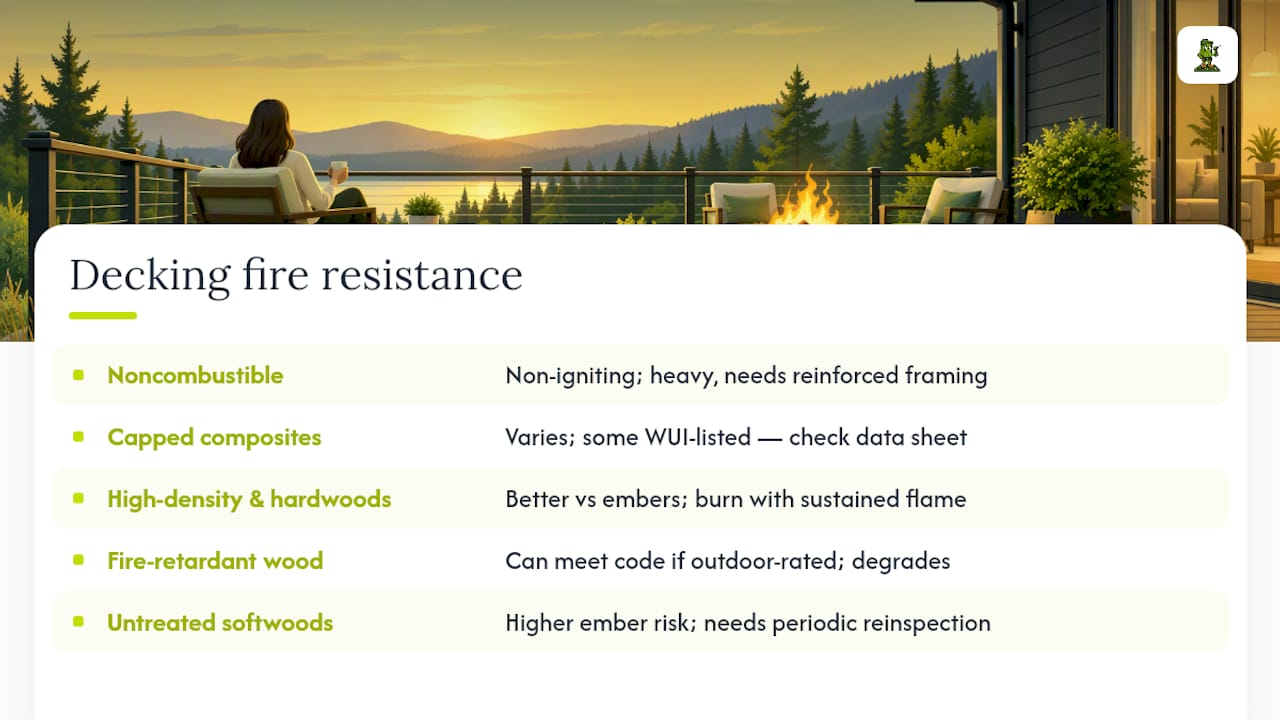
Noncombustible surfaces (concrete, metal, and fiber cement) simply don’t ignite, making them the highest-resistance walking-surface option available. The trade-off is weight. Concrete and metal decking often demand reinforced framing or a full structural review, which raises installation cost and complexity.
PVC and capped composites vary more than most homeowners expect. Some capped composite lines are ignition-resistant and appear on WUI product listings; others are simply weather-resistant with no wildfire testing behind them at all. Read the data sheet, not the marketing copy, before assuming a composite qualifies for a fire-prone build.
High-density composites and tropical hardwoods outperform standard softwood decking under ember exposure, but they still burn under sustained heat or flame contact. One detail matters more than the wood species: avoid hollow or plastic-core composite boards in high-exposure locations, since these can collapse or degrade faster under flame exposure than solid-core alternatives. A solid-core composite comparison is worth reviewing before you commit to a product line.
Fire-retardant-treated wood can satisfy code requirements when it uses treatments rated for outdoor and ground-contact exposure. Untreated cedar or pine, reviewed honestly against composite in this material breakdown, carries meaningfully higher risk in ember-prone areas and needs periodic reinspection since treatment effectiveness degrades over time.
Pro Tip: Ask any supplier for the specific WUI listing number on a composite product, not just a “fire resistant” label on the packaging. If they can’t produce one, assume the board hasn’t been tested for ember exposure.
What Construction Details Stop a Deck Fire From Spreading?
The deckboard is one variable. The joints, joists, and the space underneath the deck matter just as much, and often more.
Flash the joists at the house connection. Apply foil-faced self-adhering flashing tape where joists meet the structure. IBHS testing found embers lodge where boards rest on joists, and this is one of the highest-leverage fixes available for existing decks.
Widen joist spacing where recommended. USDA Forest Service experiments measured how wind and ember exposure raise heat flux against attached structures, and the findings support wider spacing in high-risk builds.
Screen or enclose the underside. Use noncombustible material or 1/8 inch metal mesh under the deck to block ember accumulation and keep anyone from stashing firewood or storage bins in that gap.
Use metal railings and noncombustible details near the house. The section of deck closest to the structure carries the highest consequence if it ignites, so prioritize noncombustible hardware there first.
Build in a noncombustible buffer downslope. A short noncombustible patio or low wall within roughly 20 feet of a vegetated slope can deflect radiant heat before it reaches the deck.
Keep vegetation clear. Maintain setbacks from slopes and prune branches at least 10 feet from the deck structure.
How Should You Maintain a Fire Resistant Deck?
Material and construction get most of the attention, but homeowners routinely overestimate what a single fire-rated board buys them. Maintenance and debris control often carry more weight than the product label itself.
Clear leaves, needles, and debris from board gaps every few weeks during fire season.
Sweep and hose out the space under the deck on a regular schedule, not just once a year.
Replace the board nearest the house with a noncombustible option or add metal flashing where embers are most likely to lodge.
Move furniture cushions and store firewood away from the deck entirely during high-risk weeks.
Consider a full solid-surface conversion if your framing can support concrete or stone, rather than patching a combustible deck piecemeal.
Pro Tip: Check for a fire pit or grill on or near the deck. A fire pit on a deck needs at least 3 feet of clearance from any combustible surface and a proper heat barrier underneath, regardless of what decking material surrounds it.
What Should a Professional Installation Cover?
A qualified contractor treats fire resistance as a checklist, not a single product decision. Before signing a contract, ask for a written site risk evaluation that accounts for your slope, vegetation, and prevailing wind exposure. That assessment should drive material recommendations tied to your actual exposure level, not a generic upsell.
The checklist worth insisting on: joist flashing at the house connection, under-deck screening, noncombustible skirting, and a maintenance schedule you can actually follow. In-house build crews matter here because subcontracted installs often skip the flashing and screening details that never show up on a finished deck’s surface but determine how it performs during an ember storm.
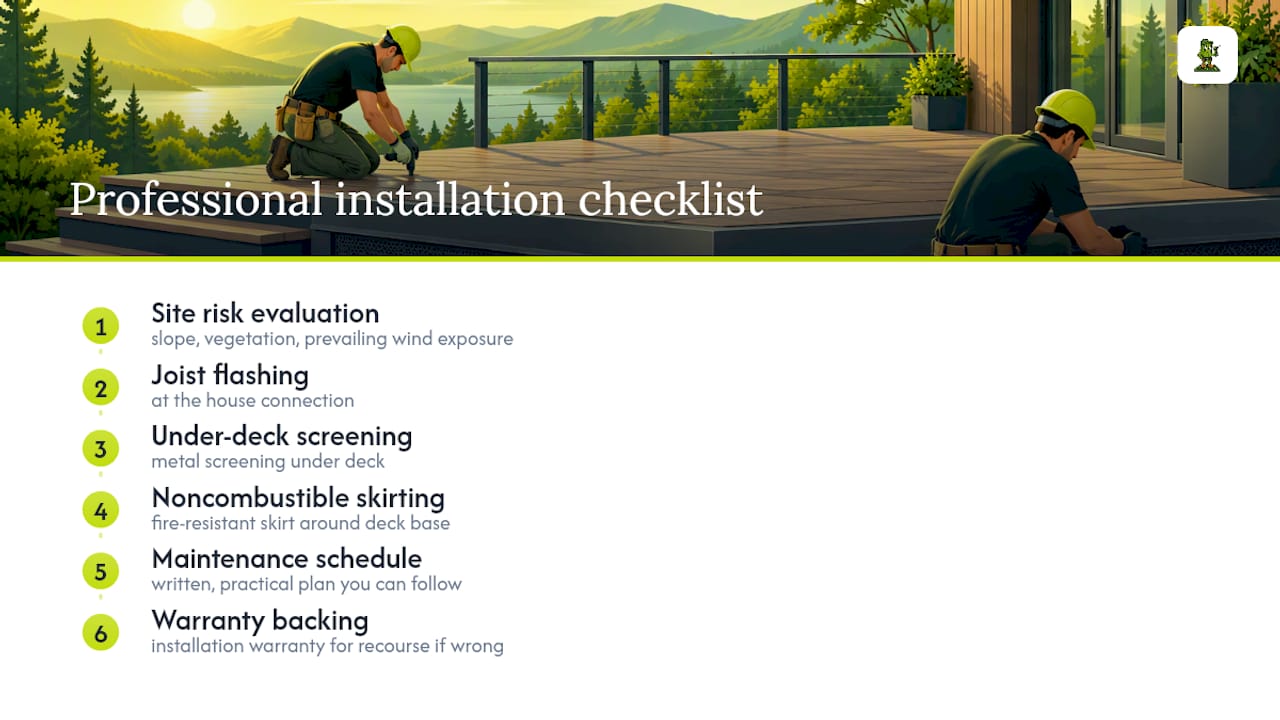
Warranty-backed installation gives you recourse if those hidden details were done wrong. Ask any contractor bidding your project for both the site assessment and a written maintenance plan before you compare pricing.
How Have Fire-Prone Homes Applied These Fixes?
Communities in wildfire-exposed regions of California, Colorado, and the Pacific Northwest have shifted deck design in a consistent direction over the past decade: away from open, exposed wood platforms and toward decks that combine a resistant surface with sealed, screened undersides.
The pattern that shows up again and again in defensible-space retrofits is not a single miracle product. It’s the combination. A home might keep a composite walking surface but add metal mesh screening under the deck, flash every joist at the house connection, and clear a noncombustible zone where the deck meets a slope. That system-level approach, backed by the USFS/PNNL research behind current Building America guidance, consistently outperforms homes that simply swapped wood boards for a “fire rated” composite and changed nothing else.
The lesson from these retrofits translates directly to new construction, too. A deck built low to noncombustible skirting, with screened gaps and metal railings near the house, gives embers fewer places to land and fewer paths to travel. None of it requires exotic materials. It requires attention to the joints, the underside, and the six feet closest to the structure, which is exactly where most standard installations cut corners.
A Realistic Take on Cost, Looks, and Safety
Homeowners rarely have unlimited budget, so trade-offs are real. If you have to choose, spend first on the details closest to the house: joist flashing, noncombustible skirting, and screening under the deck. Those interventions cost far less than a full noncombustible surface conversion and address the ignition pathways the research keeps pointing back to.
A composite surface with disciplined maintenance and solid construction details will often outperform an expensive “fire rated” board installed carelessly. Pair whatever material you choose with defensible space and a real cleaning routine, and you get more protection per dollar than chasing the highest-rated product alone.
— Vlad
How Cactus Decking Builds This Into Every Project
Some contractors offer construction that properly handles the details above the first time, not patched in after the fact. Projects sometimes use in-house crews instead of subcontractors, which can affect attention to details like joist flashing, under-deck screening, and noncombustible skirting that are hidden once the deck is finished.
Whether you need a full deck replacement after wildfire damage, a custom deck installation built around noncombustible details from the start, or deck design that plans your defensible-space setbacks before construction begins, the process starts with a site evaluation, not a sales pitch. Warranty-backed installation can provide recourse if flashing and screening work is done incorrectly, encouraging inspection rather than just installation. If your deck sits near vegetated slopes or wildfire-prone terrain, consider requesting a written site assessment and a maintenance schedule tailored to your property’s exposure.
Where to Verify Fire Resistance Claims and Codes
Product labels and contractor promises are only as good as the standards behind them. These sources let you check claims yourself before you buy.
NFPA/Firewise sets the defensible-space and WUI guidance that most local fire codes reference directly.
IBHS and USFS/PNNL research documents exactly how embers ignite decks and which construction fixes reduce that risk.
The USDA Forest Service burning deck experiments measured real heat flux data behind current joist spacing and flashing recommendations.
ASTM E84 explains what the flame-spread number on a product data sheet is actually measuring.
Local building departments maintain WUI product listing databases, which confirm whether a specific composite or PVC product has been tested and approved for your jurisdiction.
Sources
FAQ
What Is the Best Fire Resistant Decking Material?
Noncombustible surfaces like concrete, metal, and fiber cement offer the highest resistance since they simply don’t ignite. For most homeowners, a WUI-listed capped composite paired with joist flashing and under-deck screening delivers strong protection at a lower structural and cost burden.
Is Composite Decking Fire Resistant?
It depends entirely on the specific product line. Some capped composites carry an ignition-resistant designation and appear on official WUI listings, while others are only weather-resistant with no wildfire testing behind them, so checking the product’s actual listing matters more than the general category.
Is Composite Decking More Fire Resistant Than Wood?
High-density, solid-core composites generally resist ember ignition better than untreated softwood, but both remain combustible under sustained flame or heat exposure. Avoid hollow or plastic-core composite boards in high-risk locations, since they can degrade faster under flame exposure than solid alternatives.
Does a Fire-Rated Deckboard Guarantee My Home Is Protected?
No single board guarantees protection. Flame-spread ratings don’t fully capture ember exposure risk, and debris accumulation, joist protection, and under-deck clearance often determine outcomes more than the board label alone.
How Much Does Fire-Resistant Deck Construction Cost With Cactus Decking?
Pricing depends on material choice, structural requirements, and the scope of protective details like flashing and skirting, so current project quotes are available directly from Cactus Decking after a site evaluation.