Protect Your Deck: Ipe vs Cedar for Homeowners, Moisture Under 12%
Ipe vs cedar for homeowners: decide between decades-long, low-maintenance Ipe or budget cedar. Learn to check moisture below 12% and verify sourcing...
Protect Your Deck: Ipe vs Cedar for Homeowners, Moisture Under 12%
Ipe wins on durability, wear resistance, and service life, while cedar wins on upfront cost and ease of handling. Choose Ipe if you want decades of low-maintenance strength and can afford it; choose cedar if budget and workability matter more than longevity. Either choice can disappoint you, though, if the lumber is poorly dried, badly sourced, or installed by someone who cuts corners.
TL;DR:
Ipe offers decades of service life mainly due to its resistance to decay and termites, but poor installation or sourcing can significantly shorten its lifespan.
Cedar’s natural oils provide some decay resistance, but its shorter lifespan of around 25 years makes it less suitable for long-term durability.
Proper sourcing of Ipe requires chain-of-custody documentation and FSC certification, whereas domestic cedar does not face such legal or sustainability risks.
Installation quality heavily influences longevity; moisture content, pre-drilling, and fastener choice are critical for both woods’ performance.
Maintenance involves regular rinsing and timely reapplication of oil or finish, with cedar needing gentler cleaning methods to prevent fiber damage.
CactusdeckingBuild A Deck That LastsCactus Decking creates custom outdoor spaces with composite, PVC, or cedar materials and a clear process from consultation through construction.Visit Cactus Decking
Table of Contents
How Ipe and cedar compare on the attributes that matter most
Why one resists rot and termites far better than the other
What upkeep actually looks like for each wood
What each material costs to buy and install
How color, grain, and weathering differ over time
What to know about sourcing before you buy Ipe
How to choose between Ipe and cedar for your project
How professional installers protect your investment in either wood
My honest take after weighing both materials
Get a properly installed Ipe or cedar deck built right the first time
Sources
How Ipe and cedar compare on the attributes that matter most
The two woods sit at opposite ends of the hardness and weight spectrum, and that difference drives almost everything else about how they perform.
Ipe’s Janka hardness runs in the 3,300 to 4,000 lbf range, compared with roughly 350 lbf for Western red cedar. That gap means Ipe resists dents, scratches, and foot-traffic wear far better than cedar ever will, but it also makes the boards heavier and tougher to cut, drill, and carry.
Ipe: extremely dense, dent-resistant, and heavy; demands pre-drilling and stronger framing.
Cedar: lightweight, easy to cut and shape, and gentler on tools and backs during installation.
Ipe service life: often decades when dried and installed correctly, shortened mainly by installation defects rather than decay.
Cedar service life: around 25 years under normal care, shortened by moisture exposure, UV, and neglected finishing.
Neither wood automatically delivers its best-case lifespan. The numbers above describe the material’s potential, not a guarantee once weather, framing, and installation quality enter the picture.
Why one resists rot and termites far better than the other
Ipe’s density is not just about hardness. It also makes the wood naturally hostile to the organisms that destroy most outdoor lumber.
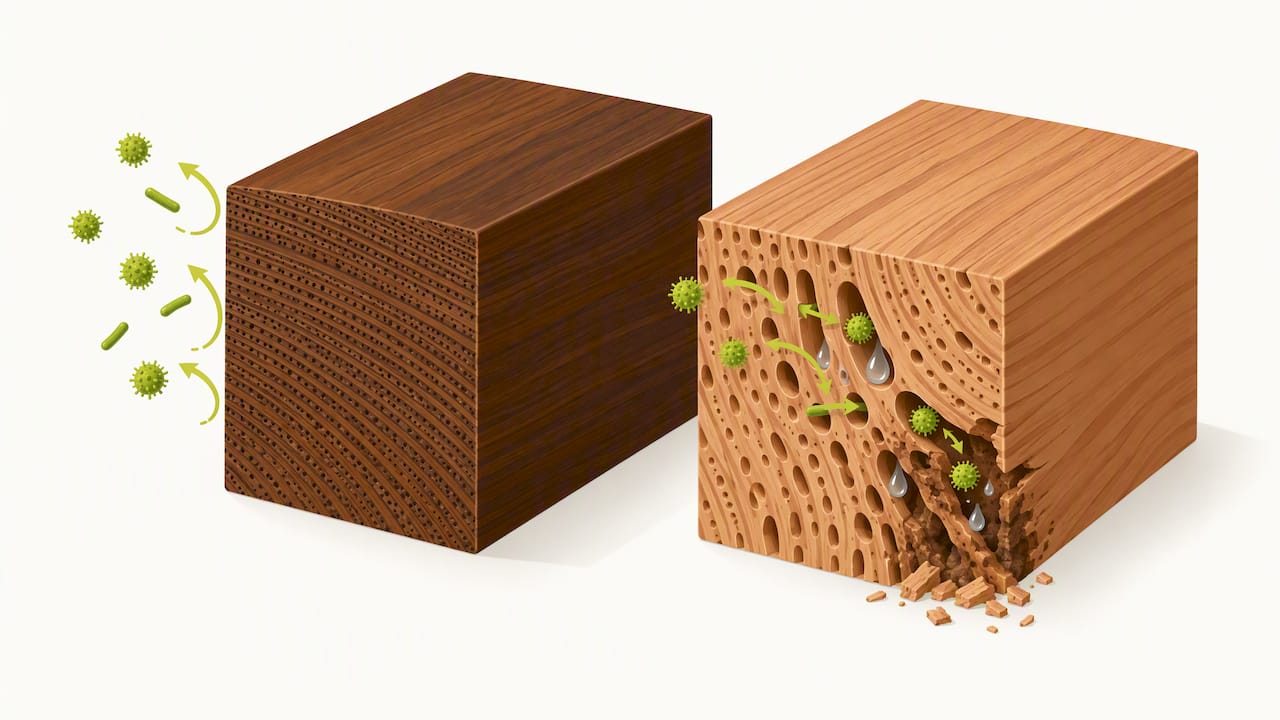
Field tests from Oregon State’s Forest Products Laboratory rated Ipe heartwood as highly resistant to both fungal decay and termite attack in above-ground exposure trials, which is a major reason it holds up in humid and insect-prone climates. Cedar has real natural durability too, thanks to its own decay-resistant oils, but it does not match Ipe’s performance against termites specifically, and sapwood or lower grades offer far less protection than heartwood.
The bigger threat to Ipe decks is not biology, it is installation. Installing green, undried Ipe is a common mistake that leads to shrinkage, cupping, and cracking as the boards dry in place, undoing the wood’s natural advantage.
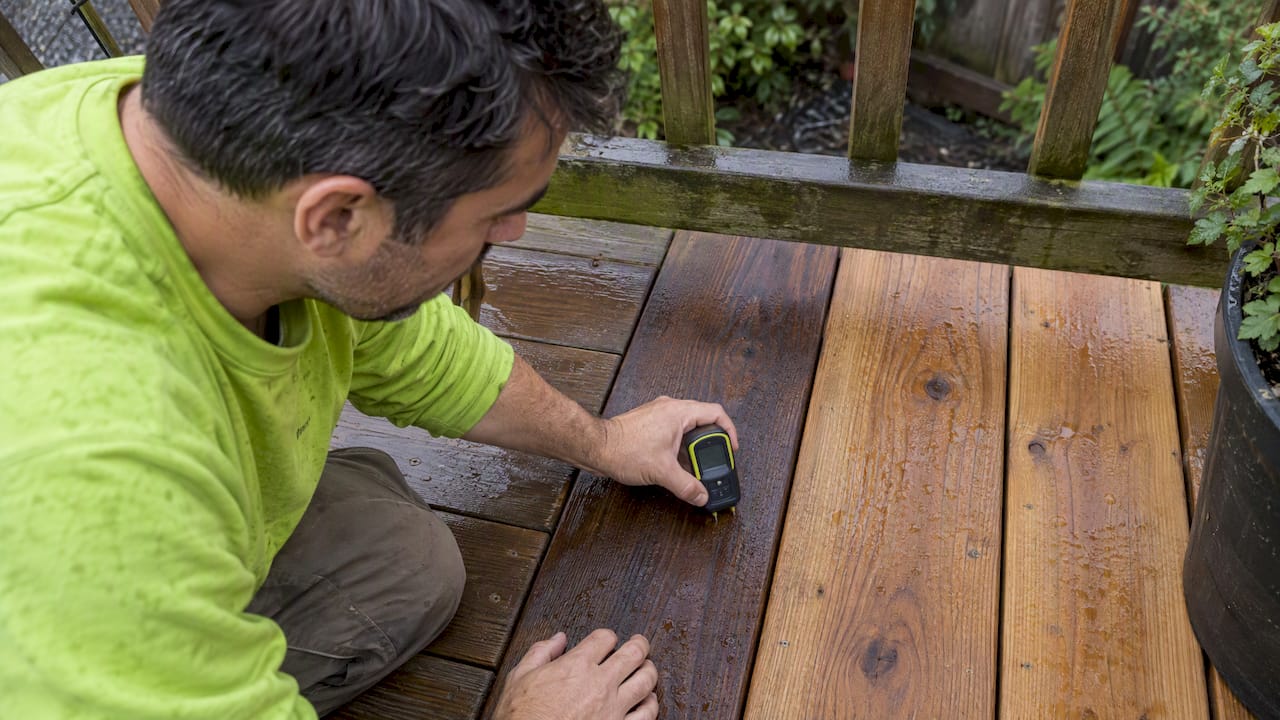
Ask for documented moisture content before accepting delivery; target below 12%.
Inspect several boards for straightness and consistent grade, not just the top layer of a bundle.
Confirm the lumber has had time to acclimate to your region’s humidity before installation begins.
What upkeep actually looks like for each wood
Maintenance is where the two materials diverge again, though not always in the direction homeowners expect.
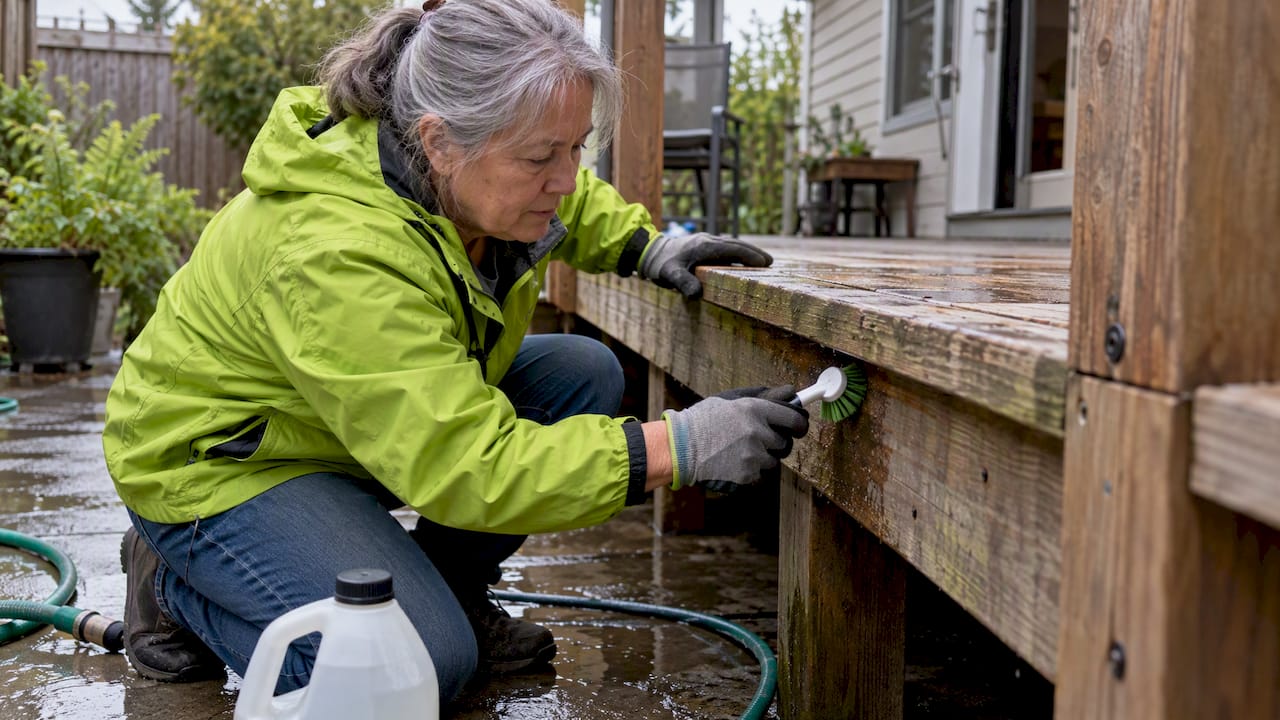
Ipe left unfinished will weather to a silvery gray, which many owners like. If you want to keep its original reddish-brown tone, plan on an oil application roughly once or twice a year depending on sun exposure, plus routine rinsing to clear debris from the gaps. Cedar needs its own rhythm of cleaning and refinishing, but the finish matters more: aggressive cleaning or improper bleach use can cause pulping and fiber loss on cedar, so gentle products and light pressure beat power-washing every time.
Rinse both materials regularly to prevent debris buildup in board gaps.
Reapply oil or finish on a schedule rather than waiting for visible fading.
Avoid high-pressure washing on cedar, since it can tear softened fibers loose.
For a full cedar care routine, see our cedar deck maintenance guide. A low-VOC, plant-based cleaner designed for hard outdoor surfaces, like the options covered in these deck cleaning tips, works well for both woods without the harsh chemical residue some commercial cleaners leave behind.
Pro Tip: Test any cleaner on a hidden board section first, and let it sit per the label instead of scrubbing harder to speed things up.
What each material costs to buy and install
Material cost is only part of the budget conversation. Labor requirements differ enough between these two woods that they can shift your total project cost more than the lumber price itself.
Ipe typically costs more per board foot than cedar, and the gap widens once you factor in shipping weight, grading, and the premium placed on properly dried stock. Cedar’s lighter weight and easier milling reduce labor hours, while Ipe’s density demands pre-drilling for every fastener and often calls for heavier-duty fasteners to prevent splitting.
Ipe’s weight can require additional joist spacing or framing reinforcement, so check your structure’s load capacity first.
Cedar cuts and shapes with standard tools, making trim work and custom angles faster to execute.
Hiring a professional is strongly worth it for Ipe, where pre-drilling, fastener choice, and acclimation mistakes are the main causes of early failure.
Our guide to cedar deck costs breaks down what drives pricing in more detail, and our comparison of Ipe and composite decking covers when hardwood is worth the extra investment.
How color, grain, and weathering differ over time
Ipe starts out a rich reddish-brown with a tight, fine grain, and it can either keep that tone with regular oiling or be allowed to weather naturally into a silver-gray patina. Cedar’s appearance depends heavily on grade: clear cedar gives a smooth, knot-free look, while knotty grades bring more rustic character at a lower price. Left unfinished, cedar fades to a soft gray similar to Ipe’s weathered state, though the transition happens faster given cedar’s softer surface.
Choose clear cedar or oiled Ipe for a polished, high-end look.
Choose knotty cedar for a rustic feel at a lower cost.
Let either wood weather naturally if you prefer a low-maintenance gray finish over time.
Our guide to cedar decking grades walks through the visual and performance differences between grades in more depth.
What to know about sourcing before you buy Ipe
Sourcing is where Ipe carries real risk that cedar simply does not. Peer-reviewed field assessments in the Amazon found frequent species misidentification and evidence suggesting fraud in ipê logging permits, meaning some lumber sold as Ipe may not be legally or sustainably harvested at all.
Recent CITES Appendix II listings have changed the paperwork required to import or export certain tropical timber species, including genera related to Ipe, so buyers should expect more documentation scrutiny than in past years.
Request chain-of-custody paperwork and species verification from any Ipe supplier.
Favor FSC-certified stock or suppliers who can produce traceable import documentation.
Remember that domestic cedar carries none of this import or legal risk, since it is harvested and sold within the same regulatory framework you live under.
How to choose between Ipe and cedar for your project
Match the material to your actual priorities rather than to which one sounds more impressive.
Pick Ipe if long-term durability and minimal replacement risk matter more than upfront price.
Pick cedar if budget, lighter framing, or DIY-friendly installation are higher priorities.
Check your site for termite activity, soil moisture, and whether your existing frame can handle Ipe’s weight.
Verify framing capacity with a contractor before committing to hardwood decking.
Ask suppliers for moisture readings, grading documentation, and chain-of-custody paperwork before placing an order.
Confirm fastening plans with your installer, since stainless fasteners and pre-drilling are non-negotiable for Ipe.
How professional installers protect your investment in either wood
A deck’s long-term performance depends as much on the build process as the species you choose. We design, build, and replace residential decks using composite, PVC, or cedar materials, backed by a local team rather than subcontractors, which helps maintain quality control throughout the process.
We check delivered lumber’s moisture content before installation begins to ensure suitability.
We specify fastener type and spacing based on the material and recommend appropriate hardware and pre-drilling for dense hardwoods.
We back installations with a service guarantee to help address issues that may arise later.
Pro Tip: Ask any contractor for a written installation checklist covering moisture checks, fastener specs, and board spacing before signing a contract.
My honest take after weighing both materials
If I were building a deck I planned to keep for 20 years in a humid or termite-prone area, I would choose Ipe and pay for professional installation, since the drying and fastening details matter more than the species itself. For a weekend project on a tighter budget, cedar’s forgiving nature makes more sense. Either way, run through the sourcing and site checklist before you order a single board.
— Vlad
Get a properly installed Ipe or cedar deck built right the first time
Choosing the right wood only pays off if the installation matches it, and that is where our in-house crew and warranty-backed builds make the difference. We handle deck design, new installation, and full deck replacement using cedar or other materials suited to your site and climate.
Explore deck design if you want help choosing between Ipe, cedar, or another material for your specific yard.
Start a deck installation project with a crew that pre-checks moisture and grading before building.
Consider deck replacement if your current deck is already showing shrinkage, cupping, or rot.
Request a consultation and we will walk through material options, framing requirements, and a realistic timeline for your project.
FAQ
Is Ipe more expensive than cedar?
Yes, Ipe typically costs more per board foot than cedar once you factor in its density, grading, and shipping weight. The gap widens further when you include the pre-drilling and heavier framing that dense hardwood installation requires.
What are the disadvantages of Ipe decking?
Ipe’s main drawbacks are its high upfront cost, heavy weight, and the risk of shrinkage or cracking if installers use undried, green lumber. It also requires more careful sourcing, since some ipê supply chains have documented misidentification and fraud risks.
Do termites eat Ipe wood?
Ipe heartwood is highly resistant to termite attack based on field exposure testing, making it one of the more reliable choices in termite-prone regions. No wood is entirely immune, so sapwood sections or improperly stored lumber can still be more vulnerable.
Is Ipe wood illegal?
Ipe itself is not illegal, but certain tropical timber species now fall under CITES Appendix II, which adds documentation requirements for import and export. Buying from a supplier who can provide chain-of-custody paperwork is the safest way to confirm your lumber was legally harvested.
Sources
Resistance of selected heartwoods to fungal and termite attack — Morrell et al., Oregon State (FPL)
CITES-listed timber and wood updates — U.S. Fish & Wildlife Service