Cedar Decking Grades: A Homeowner's Buying Guide
Translate WRCLA cedar grades into exact lumberyard order lines. A six point checklist covers grade names, moisture specs, board sizes, waste allowance,...
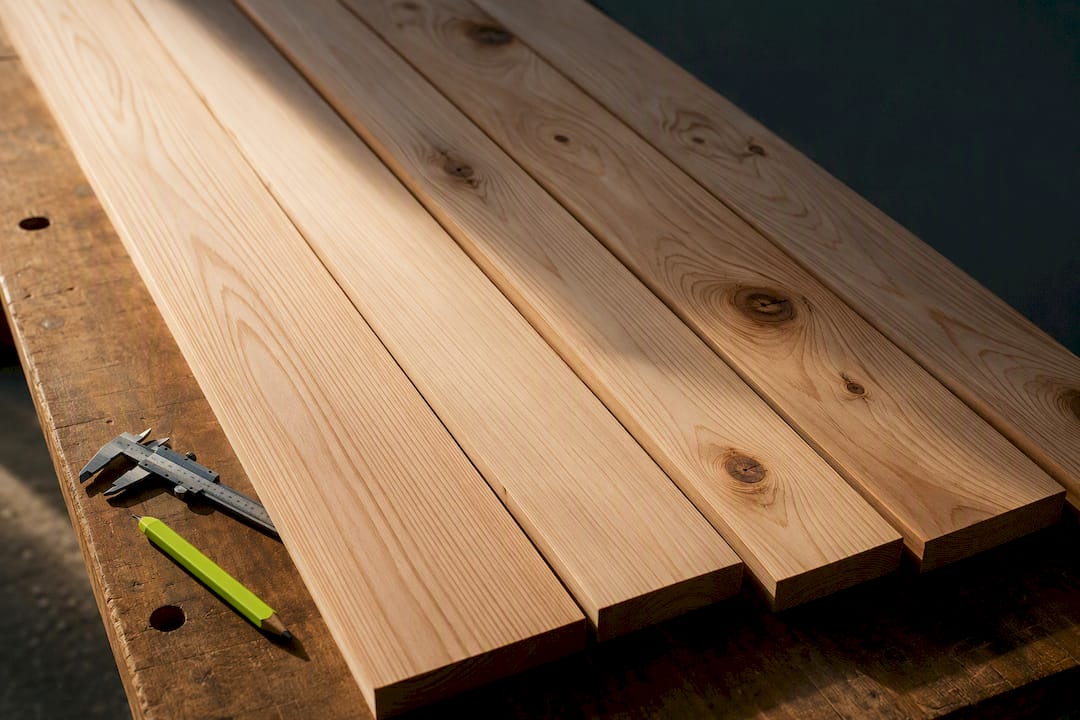
Cedar Decking Grades: A Homeowner’s Buying Guide
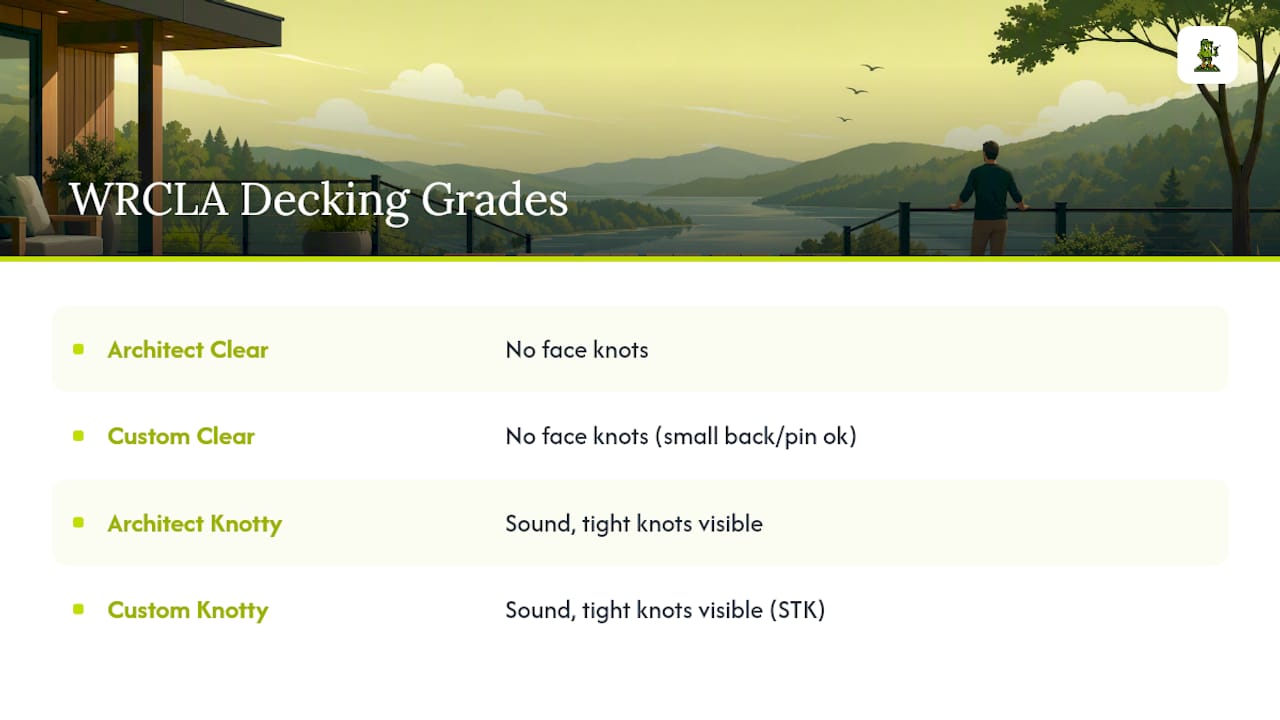
Western Red Cedar decking comes in four Western Red Cedar Lumber Association categories: Architect Clear, Custom Clear, Architect Knotty, and Custom Knotty. Pick Clear grades if you want a solid or painted finish with the most uniform surface; pick Knotty or STK for rustic character and lower cost. Whichever you choose, confirm the moisture conditioning, since kiln-dried (KD) versus green stock changes both your finishing timeline and your board spacing.
TL;DR:
Clear grades like Architect Clear offer the most uniform surface and are ideal for painted or solid-stained decks, but require longer lead times and higher costs.
Knotty grades permit sound, tight knots that add rustic character and tend to be shorter with more waste, making them suitable for natural cedar finishes.
Moisture conditioning is crucial, with kiln-dried (KD) cedar recommended at 12 to 15 percent moisture for better stability and finish longevity.
Proper fasteners, such as stainless steel, and correct board spacing (1/8 to 3/16 inch) are essential for preventing staining and ensuring durability regardless of grade.
Sourcing certified cedar with FSC documentation is advisable for environmentally responsible projects, especially for higher-grade, clear material.
CactusdeckingBuild Your Cedar Deck With ConfidenceCactus Decking creates tailored outdoor living spaces with cedar, composite, and PVC options, supported by an organized construction process.Explore Cactus Decking
Table of Contents
What Do WRCLA Cedar Decking Grades Actually Mean?
Clear vs. Knotty: What You’re Really Trading Off
Appearance Grades vs. Structural Grades: Don’t Confuse the Two
Moisture Content, Spacing, and Fasteners: The Installation Details That Matter
How to Specify and Order Cedar Decking Without Getting Burned
How Cedar Stacks Up Against Pressure-Treated Pine and Redwood
Defects and Natural Characteristics You’ll See in Each Grade
Does Grade Affect How Long Your Deck Lasts?
Sourcing and Sustainability: What to Ask Before You Buy
An Installer’s View: The Grade Won’t Save a Bad Install
Let Cactus Decking Handle the Grade Selection and the Build
Sources
What Do WRCLA Cedar Decking Grades Actually Mean?
The WRCLA groups decking into four categories to make specification simple: Architect Clear, Custom Clear, Architect Knotty, and Custom Knotty. Each name tells you exactly what you’re buying before the lumber ever leaves the mill.
Architect Clear allows no knots at all on the face. It’s the premium tier, usually a special order rather than something sitting on a yard shelf, and it’s the choice for high-visibility decks where a flawless surface matters more than price.
Custom Clear permits small back-face knots or pin knots that don’t show once the board is installed face-up. It gets you nearly the same clean look as Architect Clear at a lower cost, which makes it the more common “clear” pick for real budgets.
Architect Knotty and Custom Knotty, often labeled STK (Select Tight Knot), allow sound, tight knots that add visible character without compromising the board’s integrity. RealCedar’s decking grade guide notes these are the volume products most residential decks are actually built from.
One thing that trips up first-time buyers: older supplier catalogs still use letter grades like A, B, C, D, or terms like “VG” (vertical grain) and “Clear.” When you see those on a quote, ask the yard to map them to the WRCLA name so you know exactly what you’re ordering.
Clear vs. Knotty: What You’re Really Trading Off
The decision between clear and knotty boils down to look, stability, and money. The Wood Carpenter’s cedar deck guide describes clear grades as the more uniform, dimensionally stable option, while knotty grades remain the go-to for homeowners who want cedar’s warmth without cedar’s top-tier price tag.
Appearance: Clear grades give you a smooth, consistent face ideal for solid stains or paint; knotty grades show natural texture that reads as more rustic.
Stability: Clear boards tend to cup and twist less over a season, which matters most under a painted or solid-color finish where every imperfection shows.
Length and waste: Clear stock generally comes in longer, more consistent lengths, while knotty bundles run shorter on average and need more cutting around defects.
Finish limits: Knots bleed tannins through light paints and clear finishes over time, so knotty grades work best with penetrating oil stains rather than solid coatings.
If you’re planning a painted railing system to match trim elsewhere on the house, clear grades save you from callbacks. If you want a natural cedar look at a lower board cost, knotty is the practical answer.
Appearance Grades vs. Structural Grades: Don’t Confuse the Two
Cedar lumber actually carries two separate grading systems, and mixing them up leads to ordering headaches. Appearance grading, the A through D and Clear/STK scale, judges the face of the board: how many knots, checks, or blemishes are visible. Structural grading, No. 1 through No. 5, judges strength and is used for thicker framing members like posts and beams, not decking boards.
For a residential deck, you’re almost always making an appearance-grade decision. A “No. 2” stamp on a joist tells you nothing about how a decking board will look, and a Clear-grade decking board isn’t rated the same way a structural post is. When a supplier quotes you a number instead of a name like Custom Clear, ask which system they mean. Decking is a face call, not a strength call, unless you’re specifying oversized structural timbers for a heavy pergola or beam.
Moisture Content, Spacing, and Fasteners: The Installation Details That Matter
Kiln-dried (KD) cedar has been dried to a controlled moisture percentage before it leaves the mill; green cedar hasn’t. BuildMat Insight recommends KD 12 to 15 percent for clear grades destined for paint or solid stain, since wetter boards will shrink and crack the finish after installation. Green boards will shrink regardless of grade, so they need installation allowances that KD stock doesn’t.
A few practical rules from the field:
Space boards roughly 1/8 to 3/16 inch apart for KD cedar, wider if the stock is green, to allow for shrinkage and drainage.
Use 305 or 316 stainless steel fasteners. Cedar’s natural tannins react with regular galvanized screws, leaving black streaks that never fully wash out.
Let delivered boards acclimate on-site for a few days before cutting, especially if they arrived during a humid stretch.
Order 10 to 15% extra length on knotty grades to cover cutting around defects; clear grades typically need less waste allowance.
Pro Tip: Ask the yard to show you a sample board with the WRCLA grade stamp still visible before the whole order ships. It takes thirty seconds and it’s the easiest way to confirm you’re not getting mill-run lumber dressed up as a graded product.
How to Specify and Order Cedar Decking Without Getting Burned
Ordering cedar by phone or through a vague online form is how homeowners end up with the wrong grade. Use a written spec line instead.
State the species and grade name exactly, such as “Western Red Cedar, Custom Clear,” not just “cedar decking.”
Specify moisture content, either “KD 12 to 15%” for a painted finish or “seasoned to [X]%” if you’re working with a specific supplier’s terminology.
Call out the surface texture, S4S (surfaced four sides) for a smooth finished look or S1S2E for a rougher, more traditional face.
List the exact size and profile you need, including thickness and width, since cedar decking commonly runs 5/4 or 2 inch nominal.
Require a WRCLA grade stamp on a sample bundle before the full order ships, per ForestSource’s specification guide.
Ask about average board length and waste factor. Clear grades run longer with less waste; knotty grades need a higher waste allowance due to shorter average lengths.
Confirm the finish plan before you finalize the order. Paint or solid stain points you toward Clear grades and KD lumber; a penetrating oil stain gives you more flexibility to go knotty, even green, if you finish it quickly.
How Cedar Stacks Up Against Pressure-Treated Pine and Redwood
Cedar isn’t the only decking option, and knowing where it fits helps you decide if any grade of cedar is even the right call. Pressure-treated pine costs less upfront than nearly every cedar grade, clear or knotty, because the chemical treatment process is cheaper than growing and milling old-growth cedar. But treated pine tends to warp and check more over time, and many homeowners find its greenish or brown treated tint harder to finish evenly than cedar’s natural color.
Redwood sits closer to cedar in price and appearance, with its own clear and knotty grade equivalents. It’s naturally rot-resistant like cedar, but redwood is regionally scarcer outside the West Coast, which often pushes freight costs up for buyers elsewhere.
Cedar’s advantage over both is a combination of light weight, natural insect resistance, and a tighter grain that takes stain evenly across grades. Where cedar loses ground is raw board cost against treated pine, and availability against local softwoods depending on your region.
If your priority is lowest upfront material cost, treated pine wins. If you want the closest match to cedar’s rot resistance and grain quality, redwood is the alternative worth pricing out. If you want the best balance of workability, weight, and finish flexibility across a range of grades, cedar decking remains the practical middle ground for most residential projects.
Defects and Natural Characteristics You’ll See in Each Grade
Every decking grade, including the top tier, carries some natural characteristics. What changes grade to grade is how much and where.
Architect Clear allows essentially nothing visible, no knots, minimal checking, tight straight grain throughout. Custom Clear permits small pin knots on the back face only, invisible once installed, plus occasional minor grain variation. These small allowances are what keep Custom Clear’s price below Architect Clear’s without sacrificing the finished look.
Architect Knotty and Custom Knotty allow sound, tight knots on the face, meaning the knot is fully intact and won’t loosen or fall out over time. What you won’t see in a legitimately graded knotty board is a loose or “encased” knot that can eventually drop out and leave a hole. You will see occasional surface checking (small splits along the grain) as the board weathers, which is cosmetic and doesn’t affect structural performance on a decking board.
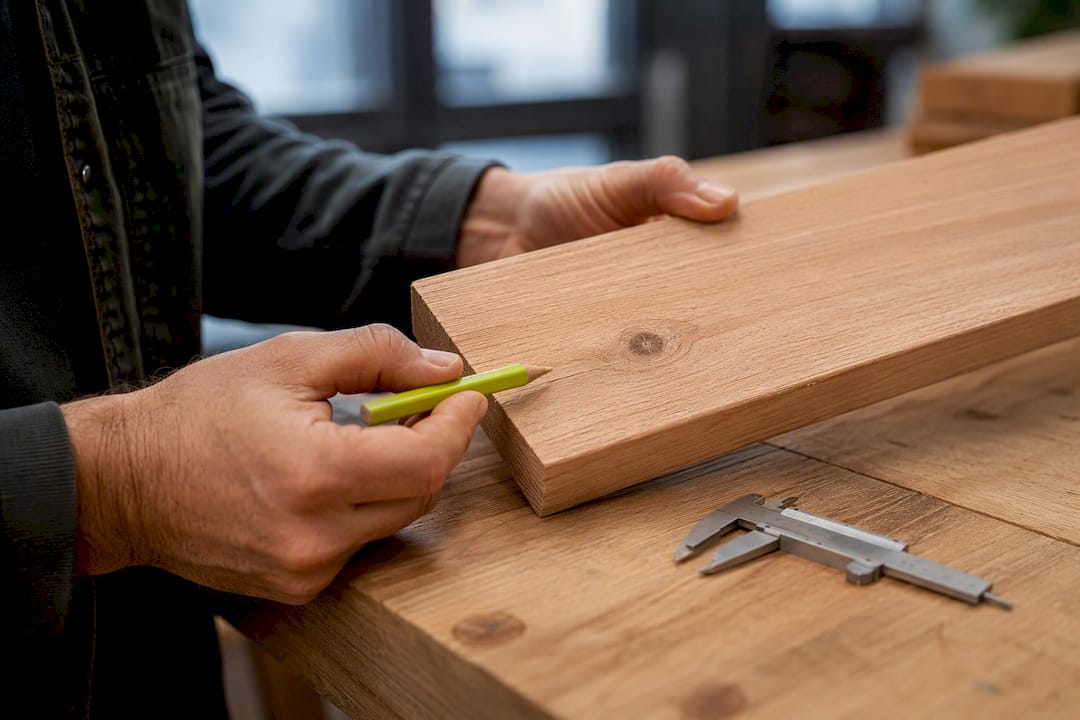
Color variation is normal across every grade. Cedar’s heartwood runs reddish brown while sapwood is paler, and a mixed board isn’t a defect unless it’s specifically excluded in your order. The real red flag at delivery is anything not covered by the grade stamp: loose knots, splits running through a knot, or wane (missing wood at the edge). Those are legitimate grounds to reject a bundle, regardless of whether you ordered clear or knotty.
Does Grade Affect How Long Your Deck Lasts?
Grade mostly determines appearance and workability, not decay resistance. Clear and knotty boards come from the same Western Red Cedar species and carry the same natural resistance to rot and insects, since that resistance lives in the wood’s chemistry, not its cosmetic grade.
Where grade does affect longevity is indirectly, through finish performance. A Clear board finished with solid paint holds that finish longer because there are no knots to bleed tannins through the coating. A knotty board finished the same way is more likely to show staining or premature peeling around knots within a few seasons, which pushes you into more frequent refinishing even though the wood underneath is just as durable.
Expect a well-maintained cedar deck, in either grade, to last multiple decades with periodic cleaning and refinishing. What shortens that lifespan isn’t the grade, it’s neglecting maintenance: skipping annual cleaning, letting standing water sit on the boards, or using the wrong fastener metal and letting galvanic staining eat into the surface over time. Our guide on cedar deck maintenance walks through the cleaning and refinishing schedule that keeps either grade looking sharp for years. If you’re weighing cedar against a lower-maintenance alternative, our cedar versus composite comparison breaks down that trade-off in more detail.
Sourcing and Sustainability: What to Ask Before You Buy
Western Red Cedar is a renewable resource, but not every board on the market is harvested or milled the same way. Look for suppliers who can point to certified sourcing, such as Forest Stewardship Council (FSC) chain-of-custody documentation, which tracks the lumber from forest to mill to yard.
Certification matters more for clear grades, since Architect Clear in particular often comes from larger, older-growth trees where sourcing practices carry more environmental weight. If sustainable sourcing matters to your project, ask your supplier directly whether their WRCLA-graded stock carries FSC certification or an equivalent chain-of-custody paper trail, rather than assuming a grade stamp alone confirms it. The two certifications answer different questions: the grade stamp tells you about wood quality, and FSC tells you about where and how it was harvested.
An Installer’s View: The Grade Won’t Save a Bad Install
Most early deck failures aren’t grade problems, they’re installation problems. Loose fasteners, missing joist tape, wrong spacing for the moisture content, cedar reacting with the wrong metal. A crew that specifies stainless fasteners and correct board spacing protects a mid-tier knotty deck better than sloppy work protects premium Architect Clear. Professional in-house crews and warranty-backed installs exist specifically to close that gap. Simple, single-level decks are reasonable DIY territory; complex spans, extensive flashing work, or anything you want backed by a real warranty is where hiring a pro pays for itself.
— Vlad
Let Cactus Decking Handle the Grade Selection and the Build
Some contractors specify the grade, moisture content, and surface texture for you, then build with an in-house crew instead of a rotating cast of subcontractors, often backed by a workmanship warranty.
If you’re weighing Custom Clear against Custom Knotty for a new build, our deck design team walks through the trade-offs against your budget and finish plans before a single board gets ordered. For homeowners replacing an aging deck that’s already showing tannin staining or loose boards, our deck replacement service handles teardown, grade selection, and rebuild as one project instead of three separate headaches. Custom builds with Architect Clear cedar and matching railing systems go through our custom deck installation process, with every board grade-stamped and verified before it touches a joist. Schedule a consultation and we’ll walk your project from grade selection through the final board.
Sources
FAQ
What Are the Main Cedar Decking Grades?
The four standard categories are Architect Clear, Custom Clear, Architect Knotty, and Custom Knotty, as defined by the Western Red Cedar Lumber Association. Clear grades have no or minimal visible knots; knotty grades allow sound, tight knots for a more rustic look.
What Is a No. 2 Grade Cedar Board?
No. 2 refers to a structural grade, not an appearance grade, and it’s used for framing members like posts and beams rather than decking boards. Decking is specified by appearance grade (Clear or Knotty), not by the structural No. 1 through No. 5 numbering system.
What Is the Best Grade of Western Red Cedar for a Deck?
There’s no single best grade. Custom Clear is the strongest choice for a painted or solid-stained deck since it resists tannin bleed and holds a smooth finish, while Architect Knotty or Custom Knotty suits homeowners who want visible character and a lower material cost.
What Are the Downsides of Cedar Decking?
Cedar costs more upfront than pressure-treated pine, and clear grades in particular can require special ordering with longer lead times. It also needs periodic refinishing to maintain color and weather resistance, and using the wrong fastener metal can cause visible staining around screws over time.
Does Cactus Decking Help With Grade Selection?
Yes. Cactus Decking specifies the grade, moisture content, and surface texture as part of its deck installation process, so homeowners don’t have to navigate WRCLA terminology alone. Current pricing for projects is available directly on the Cactus Decking site.