
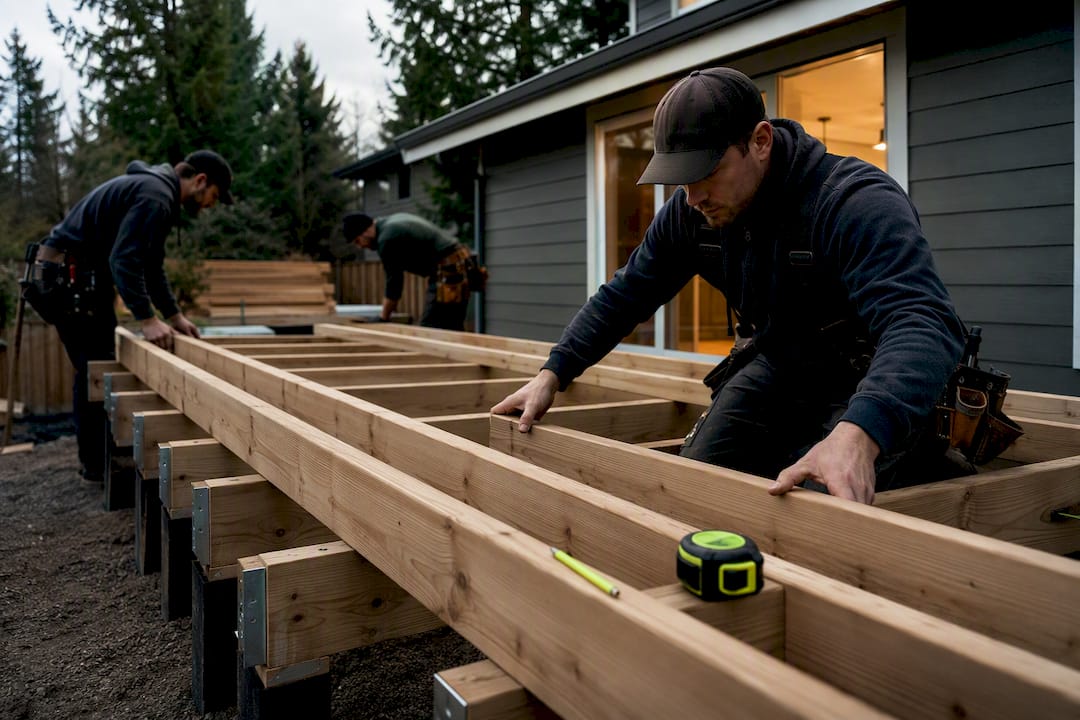
Expect roughly 4 to 12 weeks from your first consultation to the final walkthrough, with the actual on-site build eating up only 1 to 3 of those weeks. Permit review and material lead times cause most of the waiting in between. Size, material choice, and site conditions push you toward either end of that range, so the smartest move is locking in your design and filing for permits as early as possible.
TL;DR:
- Most custom decks in the 200 to 400 square foot range take six to twelve weeks from consultation to completion, with active construction lasting up to three weeks.
- Permit review and material lead times are the main delays, with simple ground-level platforms requiring as little as three to five weeks total.
- Building multi-level or complex decks can extend project duration beyond twelve weeks due to additional engineering and inspection requirements.
- Booking a consultation early in the season helps avoid peak-season delays, since summer months often add several weeks to the schedule.
- Coordinating permit submission with material orders and getting quick approvals can reduce overall timeline by up to three weeks.
Table of Contents
- Deck Building Timeline at a Glance
- What Actually Changes Your Deck Construction Schedule?
- The Correct Order of Operations for a Deck Build
- DIY vs. Hiring a Contractor: How the Timeline Actually Differs
- How Cactus Decking Manages the Schedule From Consultation to Completion
- A Contractor’s Rules for Keeping Your Deck on Schedule
- Get a Deck Schedule You Can Actually Count On
- Sources
Deck Building Timeline at a Glance
Where you land in that 4 to 12 week window depends almost entirely on what you’re building. A simple ground-level platform, the kind that skips permits in some jurisdictions because it sits low to the grade, can be framed and decked in as little as 3 to 5 days of active work, with a total timeline of 3 to 5 weeks once you account for material ordering.
A standard attached deck in the 200 to 400 square foot range, the size most homeowners actually build, is a different story. Most custom deck projects in this category run six to 12 weeks from first consultation to completion, with on-site construction taking 1 to 3 weeks depending on crew size and how many trades are involved (electrical for lighting, footings for a covered structure, and so on).
Multi-level or custom decks, especially those with built-in seating, pergolas, or mixed materials, routinely stretch past 12 weeks. Custom framing at multiple elevations adds engineering review time on top of standard permitting.
- Simple ground-level platform: 3 to 5 weeks total, 3 to 5 active build days
- 200 to 400 sqft attached deck: 6 to 12 weeks total, 1 to 3 active build weeks
- Multi-level or custom deck: 10 to 16+ weeks total, 2 to 4 active build weeks
Seasonal reality check: book a design consultation in March for an April build and you’re likely fine. Book it in May for a July Fourth deadline, and you’re competing with every other homeowner in your area for the same crews and the same lumber yards. Peak season (late spring through midsummer) commonly adds 2 to 4 weeks to every phase of the schedule.
What Actually Changes Your Deck Construction Schedule?
Six variables control most of the variance in a deck project timeline, and you have real influence over at least half of them.
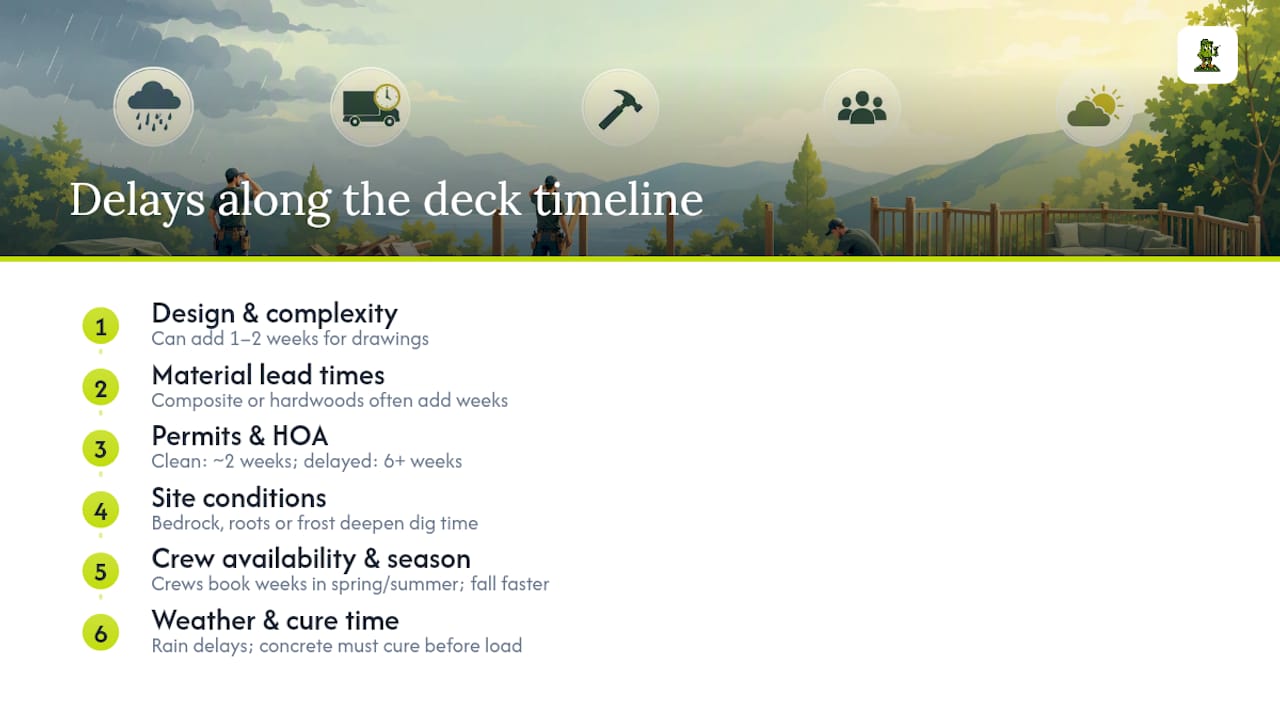
Size and complexity. A rectangular 12x16 deck with a single stair run is fast to design and fast to frame. Add a second level, an angled border, built-in benches, or a roof structure, and you’re adding both design time and inspection complexity, sometimes an extra week or two just for the architectural drawings.
Materials and lead times. Pressure-treated lumber usually ships within days because lumber yards stock it heavily. Composite and specialty hardwoods often carry longer lead times, sometimes weeks, particularly for less common colors or profiles that aren’t sitting on a local shelf.
Permits and HOA approval. This is the single biggest wildcard. A clean, complete application can clear in two weeks; one that needs corrections, or that sits behind a backed-up municipal office, can take six or more.
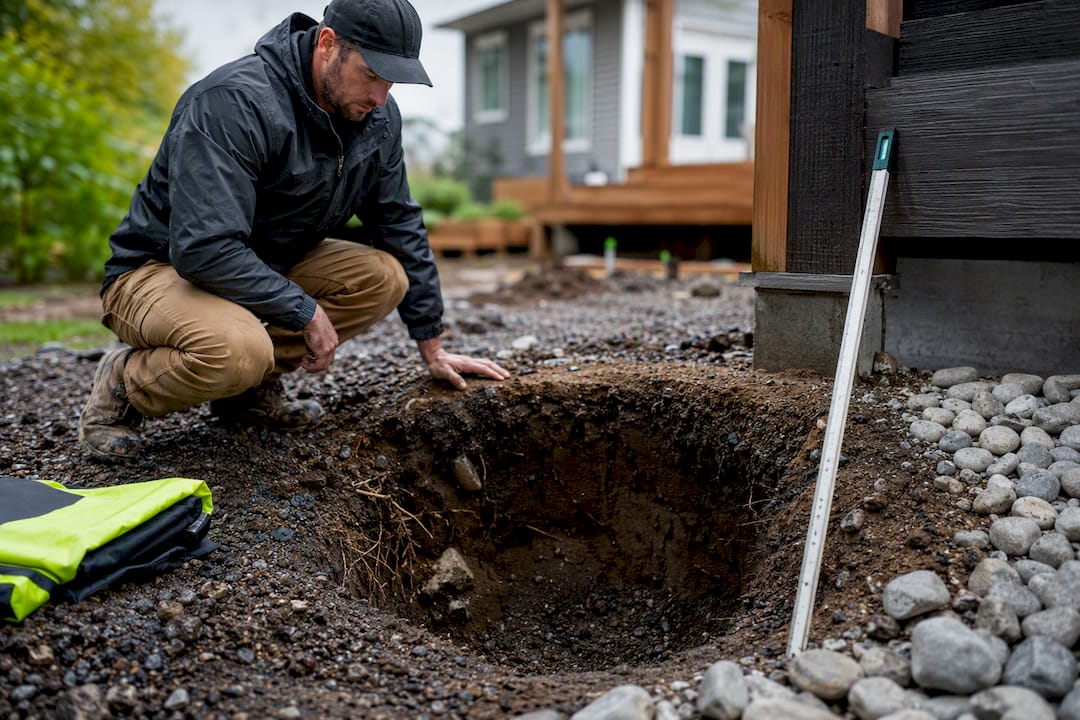
Site conditions. Excavation gets complicated fast if you hit bedrock, tree roots, or utility lines your locator flagged. Frost line depth in your region also dictates how deep your footings need to go, which affects both dig time and concrete volume.
Crew availability and season. Good crews book out weeks in advance during spring and summer. Fall and winter often mean faster scheduling, though weather introduces its own delays.
Weather and cure time. Concrete needs time to cure before it can bear weight, and rain postpones both excavation and pours.
Pro Tip: Submit your permit application the same week you finalize your material order, not after. Running these two clocks in parallel instead of back to back can shave two to three weeks off your total timeline.
The Correct Order of Operations for a Deck Build
A deck goes together in a fixed sequence, and skipping ahead is how homeowners end up with failed inspections and torn-out framing. Here’s the realistic phase-by-phase breakdown.
- Design and consultation (1 to 3 weeks). Finalize footprint, decking material, railing style, and stair placement. Every decision you leave open here delays the drawings that go into your permit application.
- Permit submission and review (2 to 6+ weeks). Standard review windows run 2 to 6 weeks, but incomplete submissions or HOA disputes can push that well past six. A clear, code-checked application dramatically reduces correction cycles, which is worth understanding before you file. Some municipalities also offer expedited review for an added fee.
- Material ordering and scheduling (1 to 3 weeks, run in parallel with permitting). Order composite or hardwood decking as soon as your design is locked. Don’t wait on permit approval to place the order.
- Pre-construction prep (1 to 2 days). Site clearing, dumpster delivery, and utility marking happen right before the crew arrives.
- Footings and foundations (3 to 7 days, including cure time). Excavation and concrete pours come first, and concrete needs standard cure time before it can bear framing weight, so don’t expect same-week progress here.
- Framing and joists (2 to 4 days). This is where correct footing depth relative to your local frost line and proper joist spacing matter most, since a framing inspection typically has to pass before decking goes down.
- Decking boards, stairs, and railings (3 to 6 days). Boards go down first, then stairs, then railings, in that order.
- Inspections and final walkthrough (1 to 2 days, plus scheduling buffer). Most jurisdictions require a final inspection before the deck is considered complete, and scheduling that visit can add a few days on its own.
The order-of-operations checklist that trips people up: footings must pass inspection before framing starts, framing must pass before decking goes down, and railings generally can’t be finalized until the decking inspection clears. If you’re planning stairs, check our deck stairs code guide before you finalize dimensions, since code violations at this stage mean tearing out finished work.
DIY vs. Hiring a Contractor: How the Timeline Actually Differs
If you’re building it yourself, your calendar depends heavily on experience. A first-time DIYer tackling a 320 square foot deck typically needs 8 to 12 weekends, roughly 60 to 80 hours of actual labor, spread across two to three months once you factor in permit waits between weekends. An experienced framer can knock out the same project in 4 to 6 weekends, 30 to 50 hours, because they’re not relearning each step.
A contractor changes the math differently: not by working faster per hour, but by removing the gaps between phases.
- Contractors handle permit submission and often know which applications get flagged before they’re even filed.
- Material orders go out immediately since there’s no research phase for the homeowner to work through.
- Crew days get scheduled as a block rather than fit around weekends and weather guesses.
- Hidden homeowner time sinks, like slow decision making on railing color or delayed site access, disappear when one point of contact manages the schedule.
How Cactus Decking Manages the Schedule From Consultation to Completion
Cactus Decking runs new deck installations and replacements through a defined sequence: consultation and design, permitting, material procurement, and in-house build, without handing any of those phases off to a subcontractor. That structure absorbs the three risks that blow up most homeowner timelines: permit corrections, inspection scheduling, and material backorders.
Your part of the equation stays simple. Approve the design and material choices promptly, keep the site accessible for the crew, and sign off on change requests without delay. Everything else, from filing the permit application to coordinating footing and framing inspections, runs through the same team, using composite, PVC, or cedar decking backed by warranty on the finished installation.
A Contractor’s Rules for Keeping Your Deck on Schedule
The homeowners who keep their build on track give firm decision deadlines: pick your decking color, railing style, and any add-ons like lighting or covers before framing starts, not during it. Mid-build changes are the single biggest source of schedule slip I see.
Pick your target completion date, then add a two-week permit buffer behind it. One point of contact and fast approval turnaround keep crews moving. Beyond the contractor’s own estimate, build in another 1 to 2 weeks of cushion. It’s rarely wasted.
— Vlad
Get a Deck Schedule You Can Actually Count On
Some deck builders offer an integrated approach to managing the schedule between permit offices, lumber yards, and crew availability. Professional services often provide a continuous process covering design, permitting, and construction to streamline the project timeline and reduce delays related to corrections or material backorders.
Browse the deck gallery to narrow down material and style choices before your consultation, that alone can cut a week off your design phase. When you’re ready, request a Everett deck design service and get a realistic completion date built around your project, not a generic estimate.
Sources
For permit specifics before you file, review deck permit requirements. For general construction sequencing context, the new home building process guide covers permitting and inspection principles that apply to decks too, and the Solid Ground project timeline breakdown offers another regional example of build-day durations.
- Deck Build Timeline Example for Homeowners | US Home Improvement
- How to build a deck (DeckMath)
- Deck Building Timeline: From Design to Installation | DuPont Decks
- How to build a deck (TimberTech)
- How to build a deck (Home Depot)


