
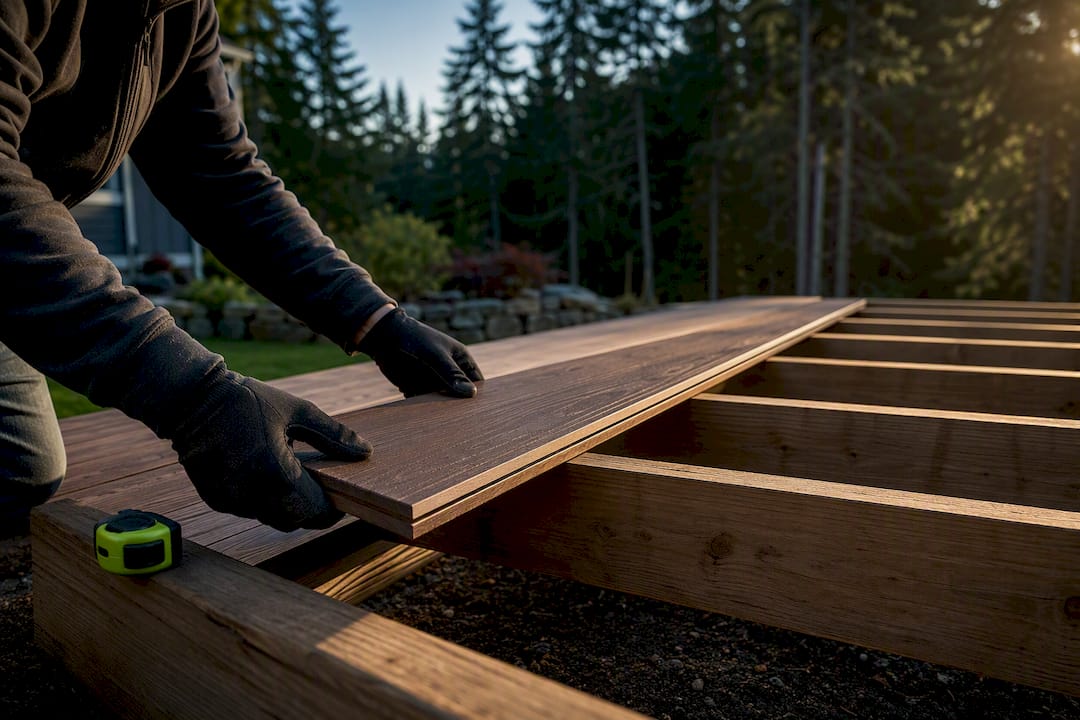
The best window for most homeowners is generally the period after summer’s rush, typically late fall through early winter. Contractors have open calendars, permit offices move faster, and materials cure in cooler, drier air, so your deck is finished and ready before the first warm weekend hits. That said, frost-prone regions and complex, multi-level designs can shift the math, so the right season still depends on where you live and what you’re building.
TL;DR:
- Building in fall generally offers the best balance of contractor availability, lower costs, and optimal weather for curing and sealing.
- Deck projects in cold climates should be scheduled before the ground freezes, with permits secured in winter and construction in early spring.
- Off-season discounts range from 10% to 30%, allowing upgrades or project expansion while saving money, especially when negotiating flexible start dates.
- Material selection impacts timing and weather considerations, with composite and PVC decks more tolerant of cold installation than wood options.
- Homeowners should plan their project at least six to twelve weeks ahead, focusing on permit approval, material delivery, and contractor scheduling to meet their desired use date.
Table of Contents
- Deck Building Season by the Numbers: Spring, Summer, Fall, and Winter
- What Actually Sets Your Start Date: Permits, Ground, and Access
- Your Deck Timeline: From First Sketch to First Cookout
- The Off-Season Discount: What Fall and Winter Building Actually Saves You
- Composite, PVC, Cedar, or Pressure-Treated: What Cold Weather Does to Each
- Vetting a Contractor for Off-Season and Seasonal Work
- How Long a Deck Actually Takes to Build
- Getting the Site Ready Before Crews Show Up
- Protecting a New Deck Through Its First Off-Season
- Warranty Fine Print: What Seasonal Timing Can Void
- A Builder’s View on Timing a Deck Right
- Get a Timing-Aware Quote Before the Season Fills Up
- Sources
Deck Building Season by the Numbers: Spring, Summer, Fall, and Winter
Every season has a trade-off, and none of them is universally wrong. What changes is what you’re willing to sacrifice: speed, price, or backyard access during the months you’d actually use it.
Spring looks like the obvious choice, and for a lot of homeowners it is. Contractors are shaking off winter, weather is mild, and you get a finished deck in time for summer barbecues. The catch is that everyone else has the same idea. Booked-out schedules stretch into June, and in the Midwest or Northeast, thawing ground turns into mud that delays footings and slows excavation.
Summer gives crews the longest workdays and the most predictable weather, which sounds great until you realize you’re paying peak-season rates and losing your yard during the exact weeks you’d want to grill on it. Contractors also tend to be booked solid, so lead times stretch out even for straightforward jobs.
Fall, specifically September through November, is the season most builders point to first. Contractor calendars open up as the summer rush fades, permitting queues shrink because fewer homeowners are filing, and the cooler, drier air is close to ideal for adhesive curing, staining, and sealing work. That combination of availability, cost, and weather is why fall consistently ranks as the strongest all-around window, and it sets you up to be using the deck the moment spring arrives.
Winter works fine in mild climates like the Pacific Northwest, the Gulf Coast, or coastal California, where ground doesn’t freeze and crews can work comfortably most days. It’s a different story anywhere frost depth matters. Frozen ground makes it unsafe or impossible to set footings, and concrete curing slows dramatically or fails outright below certain temperatures. If you’re in a hard-freeze region, winter is usually a planning month, not a building month.
A few regional notes worth keeping in mind:
- The South and West Coast have far more flexibility, with usable building weather nearly year round.
- The Midwest and Northeast face a tighter window, generally spring through fall, with winter reserved for design and permitting.
- Mountain and high-elevation areas can see early snow push the safe building season shorter than neighboring lowlands.
- Coastal regions with heavy rain seasons (parts of the Pacific Northwest, for instance) should treat rainy months like a cold-climate winter, even if temperatures stay mild.
What Actually Sets Your Start Date: Permits, Ground, and Access
Weather gets all the attention, but four other factors usually decide when your build can actually begin.
- Permit review timing. Building departments slow down in spring when everyone files at once. Submitting in fall or winter often means faster turnaround simply because fewer applications are competing for the same reviewer’s attention.
- Frost depth and footing safety. Footings need to sit below the local frost line, and that line moves depending on your county. In cold climates, a smart approach is signing the contract and locking permits in winter, then starting footings in early spring once the ground softens.
- Inspection scheduling. Most jurisdictions require at least a footing inspection and a final inspection, sometimes more. Booking those slots during a municipal busy season can add days or weeks to a project that’s otherwise ready to go.
- Landscaping and access constraints. If your build requires removing plants, rerouting irrigation, or protecting a lawn that’s mid growing season, timing around your landscaping calendar matters as much as timing around the weather. For code specifics on stairs, railings, and structural details that inspectors check, it helps to review deck stairs code requirements before you finalize your design.
Your Deck Timeline: From First Sketch to First Cookout
Work backward from the date you actually want to be using the deck, not the date you want to start building. That single mental shift avoids most of the scheduling headaches homeowners run into.
- Design and quotes: 2 to 4 weeks. This is when you nail down layout, materials, and get comparable bids. A Everett deck design service at this stage catches sizing and code issues before they become expensive change orders.
- Permit filing and approval: 2 to 8 weeks, depending on your municipality and season. Off-season filing tends to land on the shorter end.
- Material ordering: 1 to 3 weeks, longer if you’re special-ordering cedar or a less common composite color.
- Construction: anywhere from a few days to several weeks, covered in more detail below.
Most guides recommend planning six to twelve weeks ahead of your target start date, more for custom or multi-level designs. Lock in three milestones with your contractor early: the permit submission date, the material order date, and the confirmed start-of-construction week. Those three dates are what actually protect your ready-by target.
The Off-Season Discount: What Fall and Winter Building Actually Saves You
Building outside peak season isn’t just about faster scheduling. It’s measurably cheaper.
Off-season savings typically run 10% to 30%, depending on your region and the scope of the project, according to industry cost analyses. That gap exists because contractor demand drops, crews have open capacity they’d rather fill at a discount than leave idle, and material suppliers sometimes clear inventory before year end.
Smart homeowners don’t just pocket that difference. They redirect it:
- Upgrade from pressure-treated wood to composite or PVC decking for the same total budget.
- Add features that got cut from the original quote, like built-in lighting or a partial cover.
- Bank the savings and keep the same scope, which is perfectly reasonable if cash flow matters more than upgrades.
When negotiating, ask directly about end-of-season discounts, offer flexible start dates in exchange for a lower rate, and consider bundling in extra scope (railings, stairs, a small cover) while the crew is already on site.
Composite, PVC, Cedar, or Pressure-Treated: What Cold Weather Does to Each
Material choice and timing are more connected than most homeowners expect.
Composite and PVC decking hold up well to cold-weather installation because the boards are far less reactive to moisture swings than natural wood, which is exactly why they tend to open up more flexible building windows. They still need to acclimate to outdoor temperatures before installation, and fasteners may need slightly wider gaps in freezing conditions to allow for expansion later.
Pressure-treated wood and cedar behave differently. Both absorb and release moisture with the seasons, so a board installed tight in dry fall air can swell noticeably by a humid summer. That shrink-swell cycle affects when you can safely stain or seal: wood generally needs to dry out fully before finishing, which can push cedar projects toward a spring or early-summer finish window even if the framing went up in November.
Before booking a cold-season build, ask your contractor how they handle material staging and acclimation time, and whether fastener spacing changes for winter installs.
Pro Tip: If you’re building with composite or PVC in colder months, ask your contractor to stage the boards on site for at least 48 hours before installation so they acclimate to the ambient temperature and expand or contract before, not after, they’re fastened down.
Vetting a Contractor for Off-Season and Seasonal Work
Not every contractor handles cold-weather or off-season builds well, and the questions you ask upfront tell you a lot.
- Ask about their off-season track record. A contractor who regularly builds through fall and winter will have real answers about footing depth, concrete curing time, and material staging. A vague answer is a warning sign.
- Confirm who handles permits and inspections. You want a single point of contact managing that process, not a homeowner-driven scramble.
- Check crew size and subcontractor use. Smaller in-house crews often move faster and communicate better than a patchwork of subs.
- Watch for red flags: no proof of insurance, a timeline that keeps shifting without explanation, or reluctance to commit to inspection scheduling.
- Negotiate flexible windows. Tie deposits to milestones (permit approval, material delivery, framing complete) rather than paying a large sum upfront with no defined checkpoints.
How Long a Deck Actually Takes to Build
Timelines vary more by complexity than by season, though season still adds friction at the margins.
- Small, simple decks: 2 to 7 days once construction starts.
- Medium custom decks: 1 to 3 weeks, especially with railings, stairs, or multiple levels.
- Complex, multi-level builds: 3 to 6 weeks or more, particularly with covers, lighting, or custom features.
Weather, inspection scheduling, and material lead times are the biggest variables that stretch any of these ranges. To keep your project on the shorter end, pre-order materials before the contract is signed, stay flexible on the exact start week, and ask your contractor whether footing and framing inspections can be consolidated into fewer site visits.
Getting the Site Ready Before Crews Show Up
A little prep work before the season starts can shave days off your actual build.
Clear the footprint of furniture, planters, and anything else sitting where the deck will go, and mark utility lines if you haven’t already had a locate done. If your yard slopes or holds water after rain, mention it during design. Grading issues are far easier to solve on paper than mid-construction.
Trim back shrubs or trees that could interfere with equipment access, and think about how materials will get from the street to the build site. A narrow side yard or a fence that needs a temporary panel removed are the kind of details that catch crews off guard on day one if nobody flagged them.
If you’re building in fall specifically, rake and clear leaves regularly during construction. Wet leaves on fresh lumber or concrete footings aren’t dangerous, but they slow drying and curing time. And if landscaping is happening alongside the build, coordinate the sequence with your contractor. It’s much easier to protect a newly seeded lawn than to fix one that’s been driven over by equipment.
Protecting a New Deck Through Its First Off-Season
The months right after installation matter almost as much as the build itself, especially if you finished in late fall heading into winter.
Wood decks need time to dry before staining or sealing, sometimes 60 to 90 days for pressure-treated lumber depending on moisture content at installation. Sealing too early traps moisture instead of blocking it. Composite and PVC don’t need sealing, but manufacturers still recommend keeping heavy snow load off railings and clearing debris from between boards so water doesn’t sit and freeze.
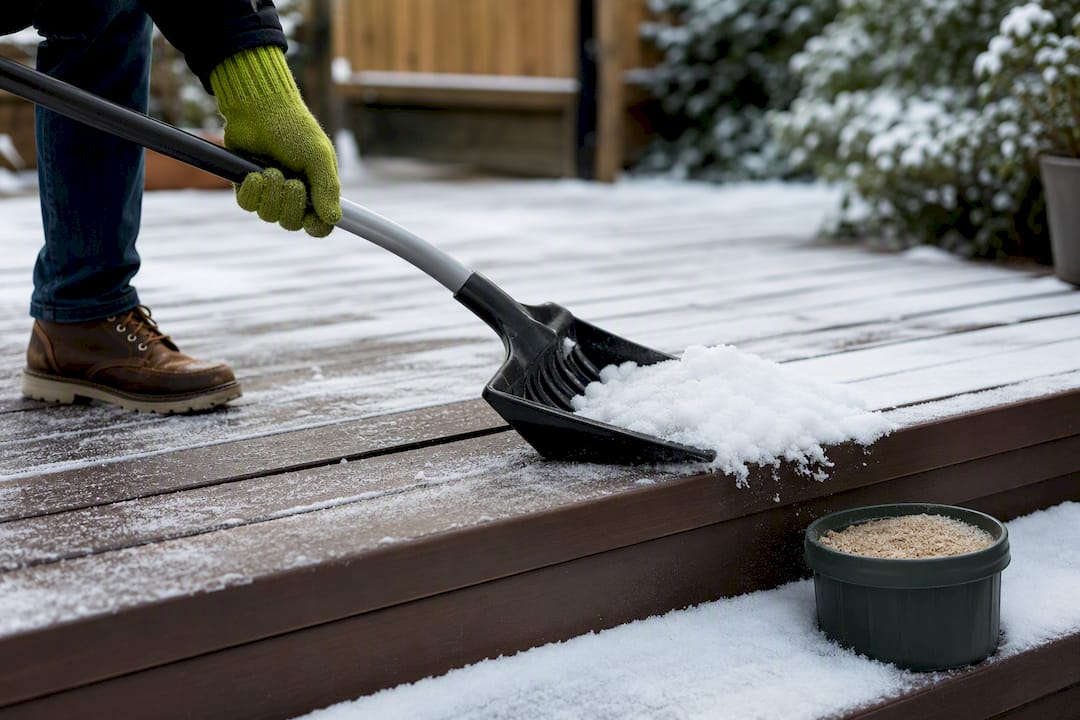
Salt and de-icing chemicals are a bigger threat than most homeowners expect. Many of them can discolor or degrade both wood finishes and composite surfaces, so stick to sand or a decking-safe ice melt near stairs and railings. Snow shovels with plastic edges, not metal, reduce the risk of scratching composite boards.
If your build coincided with exterior work elsewhere on the house, seasonal exposure matters there too; a resource like this guide on weatherproofing a roof before storm season covers similar principles: protect vulnerable surfaces before the weather turns, not after. A resource like this guide on weatherproofing a roof before storm season covers similar principles: protect vulnerable surfaces before the weather turns, not after.
Warranty Fine Print: What Seasonal Timing Can Void
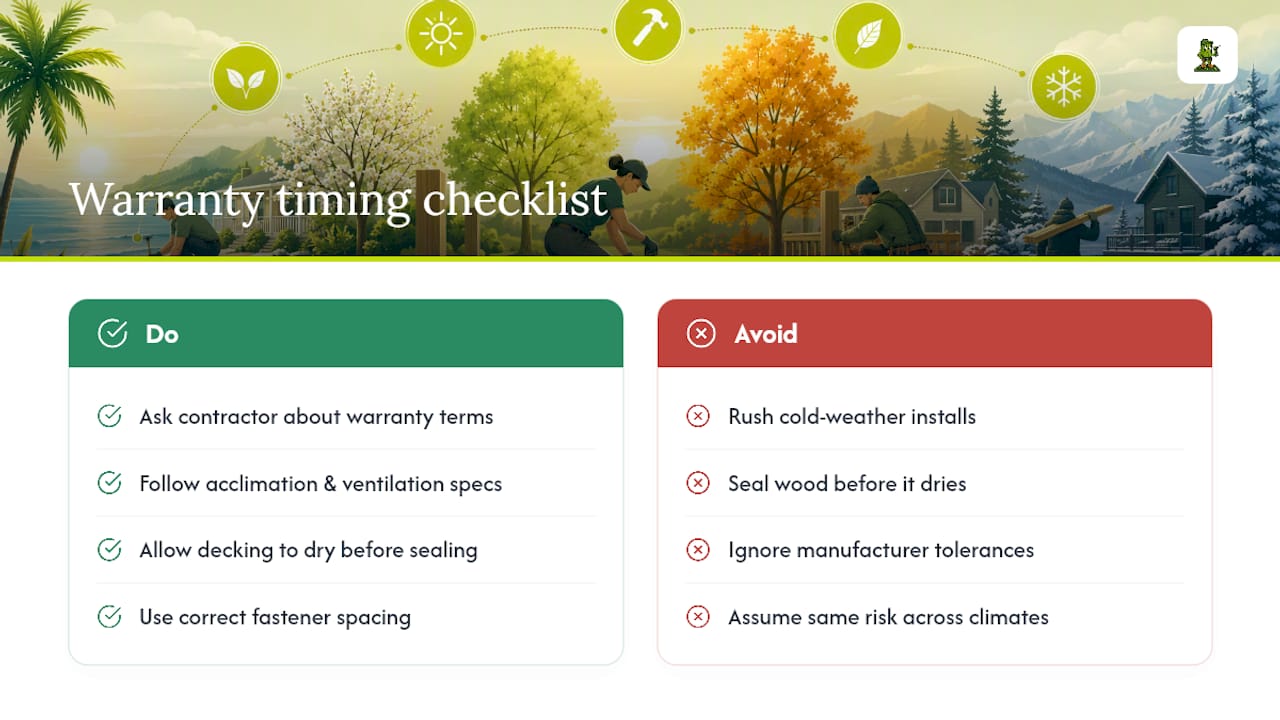
Manufacturer warranties on composite and PVC decking are more sensitive to installation season than most homeowners realize. Many warranties specify acclimation periods, fastener spacing tolerances, and ventilation requirements underneath the deck, and skipping those steps to rush a cold-weather install can technically void coverage even if the deck looks fine on the surface.
Wood decking warranties, where they exist, usually cover the pressure treatment against rot and insects, not the finish. A cedar or pressure-treated deck that gets sealed before it’s fully dried can see premature finish failure that has nothing to do with the wood itself and everything to do with timing.
The practical takeaway: ask your contractor which warranty terms apply to your specific install date and climate, not just the general manufacturer brochure. A deck built in December in Minnesota carries different risk factors than the same deck built in December in San Diego, and a builder who understands that difference is protecting your investment, not just meeting a deadline.
A Builder’s View on Timing a Deck Right
Homeowners tend to treat “when should I build” as a weather question. It’s really a scheduling and risk-management question, and that’s where a builder’s perspective differs from a general seasonal guide.
Some builders start with a realistic ready-by date and work backward through permitting, material ordering, and crew scheduling. Off-season bookings can benefit from faster permits and footing scheduling that considers frost risk, offering smoother coordination with fewer surprises and more schedule control. You can see the range of completed builds, across seasons and material types, in the project gallery.
— Vlad
Get a Timing-Aware Quote Before the Season Fills Up
Hiring a professional contractor is the practical alternative to guessing your way through permit offices and contractor calendars on your own. Booking in the off-season often means faster permit turnaround, potentially more attentive crews, and a build that’s finished and ready before the next warm season starts.
If you’re ready to lock in a build window, start with a deck design consultation, where the timeline gets mapped against your desired ready-by date rather than a generic estimate. Have your target completion date and preferred material (composite, PVC, or cedar) ready when you reach out. From there, custom deck installation or standard new deck installation service can be scheduled around permitting and weather instead of against them. Visit Cactus Decking to check current availability for your area.
Sources
- Decks
- Off-Season Deck Building: How to Save Money with Strategic Timing - The Owner-Builder Network
- Best Time of Year to Build a Deck (And When to Avoid)


