
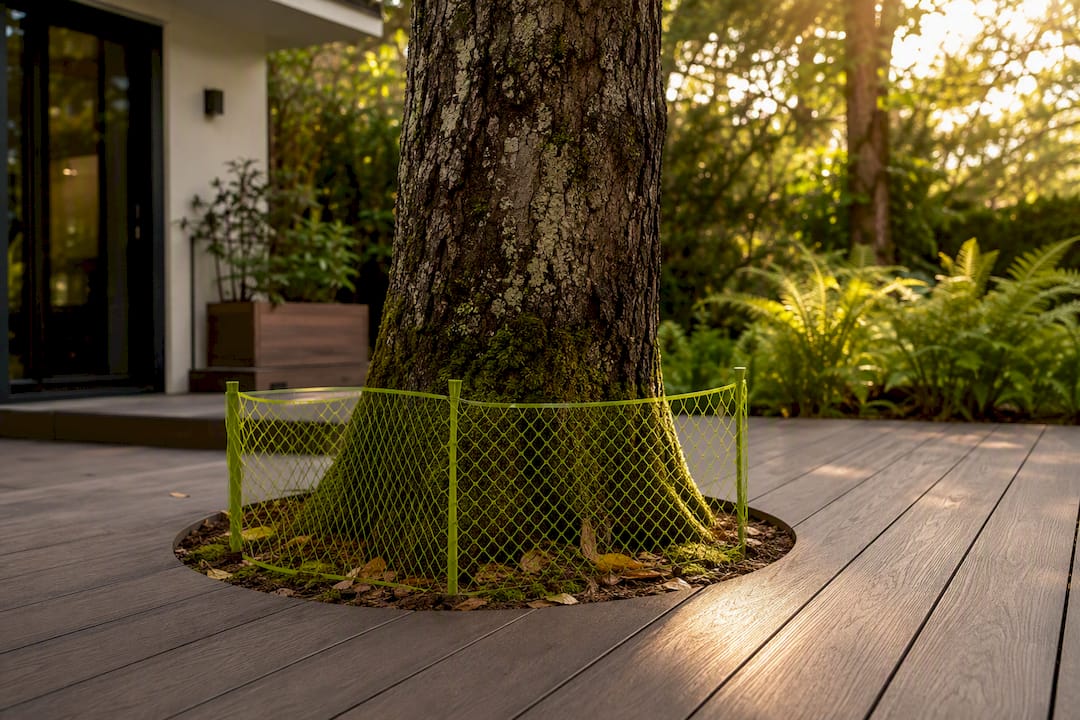
Yes, you can build a deck around a tree, but the framing can never touch the trunk. The whole structure has to stand on its own, independent of the tree, with room built in for years of growth. Before you buy a single board, get a certified arborist to check the tree’s health and pull local permit rules.
Three things to do this week:
- Book a certified arborist inspection to confirm the tree can handle nearby construction.
- Call your local permitting office and ask about height-above-grade rules and tree-removal restrictions.
- Pick one design approach (cutout, elevated, or step-around) to price out before committing.
If the project feels bigger than a weekend job, Cactusdecking builds tree-friendly decks around Everett, Washington, and can walk the site with you before anything gets cut.
TL;DR:
- Always build a fully freestanding deck frame that does not attach to the tree trunk to accommodate growth and sway over time.
- Get a certified arborist inspection to assess the tree’s health, root sensitivity, and growth projections before designing your deck.
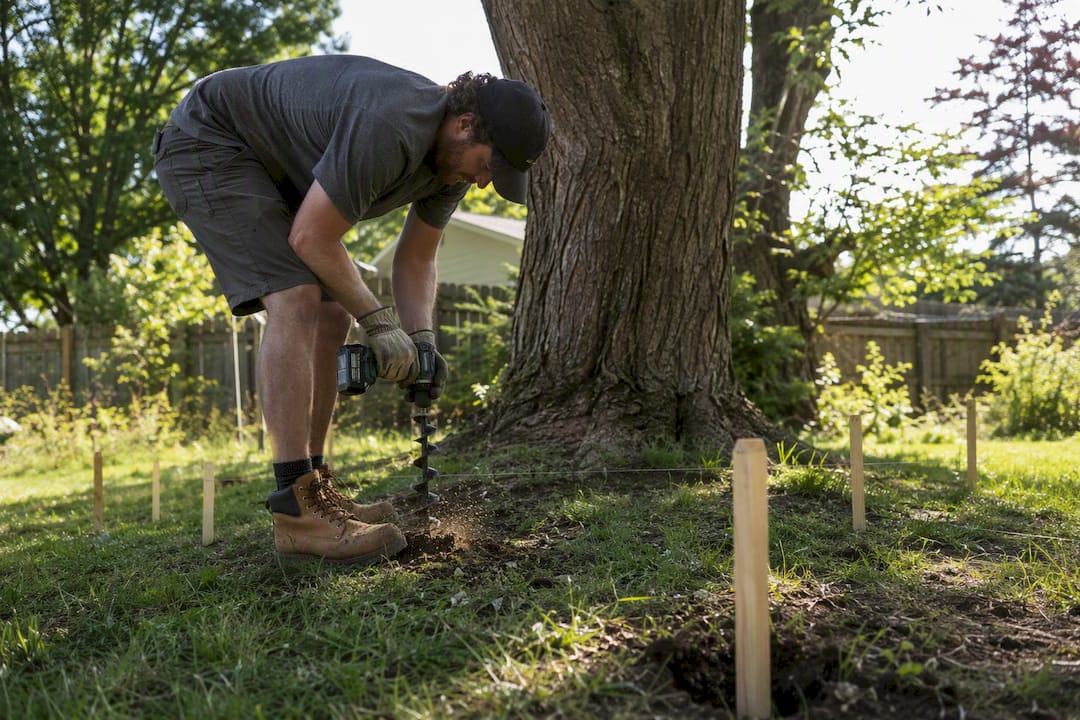
- Use low-impact footings like helical piles or diamond piers placed outside the critical root zone to prevent root damage during construction.
- Size the deck opening based on the projected mature trunk diameter, adding a safety margin, and plan for future expansion with removable framing.
- Carefully design drainage by sloping boards away from the trunk while leaving gaps to ensure water reaches the roots naturally and prevents rot.
Table of Contents
- How Do You Assess a Tree and Handle Permits Before Building a Deck Around It?
- Which Deck Layout Works Best Around an Existing Tree?
- How Do You Place Footings Without Damaging Tree Roots?
- How Do You Frame a Deck So It Can Grow With the Tree?
- How Do You Manage Drainage Around a Tree Growing Through Your Deck?
- What Materials Hold Up Best Under a Tree Canopy?
- What’s the Annual Maintenance Routine for a Tree-Deck Combo?
- What Do Arborists and Deck Builders Each Handle on This Project?
- Key Takeaways
- Sources
How Do You Assess a Tree and Handle Permits Before Building a Deck Around It?
A certified arborist consultation is the step most homeowners skip and later regret. An arborist looks at structural defects, signs of pests or disease, how sensitive the root system is to disturbance, and roughly how wide that trunk will get in ten or fifteen years. Skip this and you might build a beautiful deck around a tree that’s already dying.
Species matters too. A sweetgum drops spiky seed pods everywhere, a maple weeps sap onto fresh boards, and certain oaks attract aphids whose honeydew turns decking sticky and black. Any of those might be reason enough to shift the deck’s footprint a few feet.
Before you draw anything, check on:
- Maximum deck height above grade, since many jurisdictions require a permit past a certain elevation.
- Local tree-removal ordinances, especially for protected or heritage species.
- What structural drawings your inspector wants, which usually means footing locations and joist spans.
Cactusdecking’s permit requirements guide breaks down what most Washington inspectors expect to see.
Pro Tip: Take dated photos of the tree’s canopy and trunk base now. If a dispute ever comes up about pre-existing decline, that record protects you.
Which Deck Layout Works Best Around an Existing Tree?
Three layouts cover almost every backyard situation, and each trades off differently between tree health, build complexity, and long-term upkeep.
- Cutout design. The deck surrounds the trunk with an opening in the middle, which keeps the tree’s canopy as a centerpiece and preserves the most root access. Size the opening for the tree’s projected mature diameter, not its current size, or you’ll be tearing out boards in five years.
- Elevated or floating deck. Raising the structure on tall posts limits foot traffic and compaction near the root zone, but you need enough clearance underneath for air circulation and rain to keep reaching the soil. This works well for trees on a slope or in a low spot prone to standing water.
- Step-around or multi-level design. When the tree sits near a property line or the yard is tight, stepping the deck around the trunk at a lower level lets you keep square footage without crowding the root plate.
Before picking one, run through a quick checklist: species and its root spread, how much clearance you actually want around the trunk, your yard’s grade, and how much annual maintenance you’re willing to do. A homeowner who wants a low-maintenance backyard should lean elevated; someone who wants the tree as a focal point for entertaining should lean cutout. Built-in benches around the opening, detailed in Cactusdecking’s seating design guide, can also disguise an awkward-shaped cutout.
How Do You Place Footings Without Damaging Tree Roots?
Traditional deep concrete piers dug near a mature tree sever roots that took decades to grow, and that damage often doesn’t show up as canopy decline until a year or two later. That delay is exactly why so many homeowners don’t connect a dying tree to a deck they built last summer.
Low-impact foundations solve this:
- Helical piles, which screw into the ground with minimal soil disturbance and no excavation.
- Diamond piers, requiring no digging at all, ideal for tight root zones.
- Adjustable surface posts or minimal-dig platforms, good for lighter, low-elevation decks.
Helical piles are installed with torque and displacement rather than a shovel, though they need a certified installer who understands your soil type.
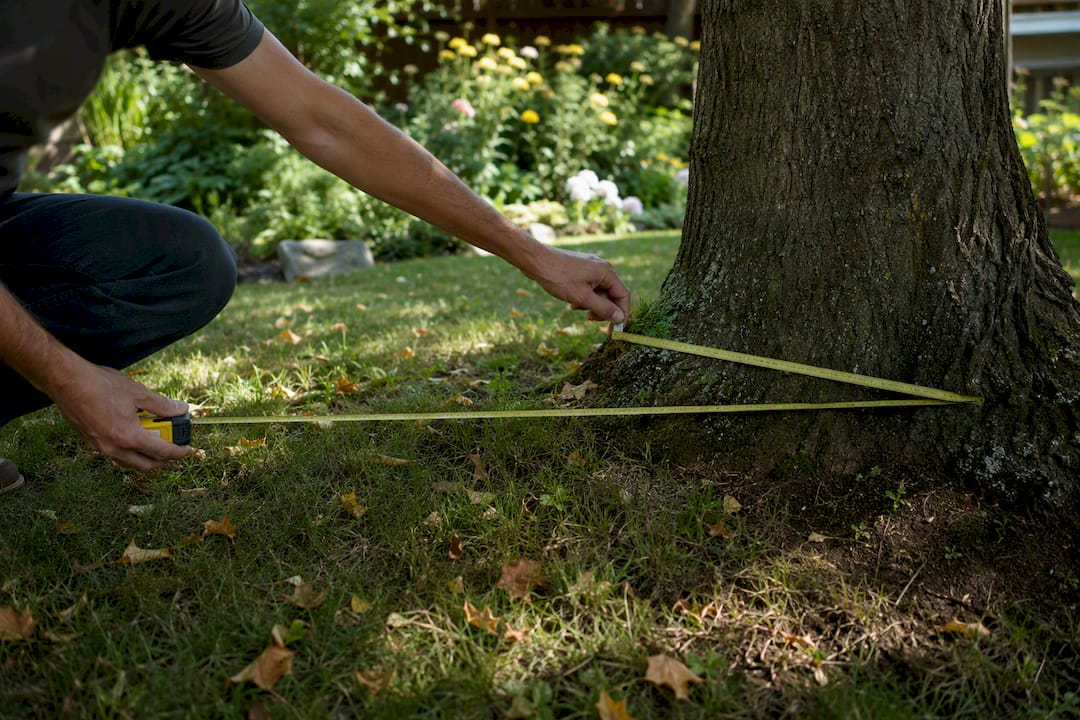
Map the critical root zone before placing any support. A rough rule: the root zone radius roughly matches the trunk’s radius multiplied by 10 to 12. Keep footings outside that line where possible, and never stack lumber or run heavy equipment inside it during construction.
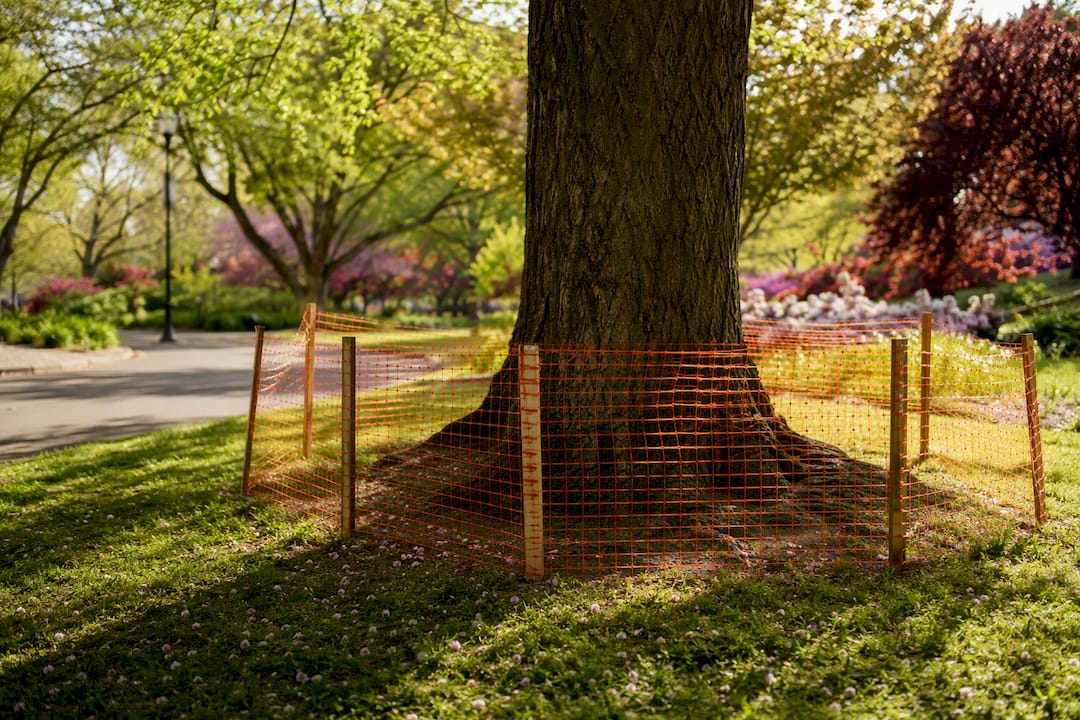
Pro Tip: Fence off the root zone with temporary orange barrier mesh on day one of the project. Crews respect a visible boundary far more than a verbal reminder.
How Do You Frame a Deck So It Can Grow With the Tree?
Never bolt a ledger board or beam to the trunk. The tree moves in wind, grows in diameter, and will eventually crush or be damaged by anything rigidly attached to it. Every reputable freestanding deck design treats the tree as an obstacle to build around, never a structural partner.
Here’s how to frame for the long haul:
- Build the outer frame first, fully independent of the tree, then fit an inner removable ring around the trunk sized generously for future growth.
- Attach that inner ring with structural screws and adjustable joist hangers so you can unbolt and reposition it in a decade without rebuilding the whole deck.
- Double up the joists a few feet from the trunk. Contractors call this a future load path, since those doubled members can support a larger opening once you expand it.
- Project the tree’s mature trunk diameter, add 2 to 4 inches of buffer, then pad that number with extra safety margin for uneven growth. Species with fast growth rates need the larger end of that range.
- Cut boards around the irregular trunk with a jigsaw for tight curves, then finish exposed edges with a router or trim board so no raw cut edge sits against the bark.
Contractors typically plan for 10 to 20 years of trunk expansion when sizing that opening.
How Do You Manage Drainage Around a Tree Growing Through Your Deck?
Water is where most tree-deck builds go wrong, more often than framing mistakes. Slope your boards to funnel rain straight at the trunk and you invite root rot, so consulting practical guidance on drainage design for decks is essential. Seal the opening too tightly and you starve the tree of water it would normally get.
- Slope decking away from the trunk in most of the field, but leave slotted boards or an open perimeter gap right at the opening edge.
- Add a slight grade or a discreet diverter if runoff naturally pools toward one side.
- Design so the tree receives close to what it would naturally get from rainfall, rather than cutting it off entirely.
Watch for pooling water, fungal growth at the base, or a thinning canopy after the first season. Any of those signals the drainage plan needs adjusting before the problem compounds.
What Materials Hold Up Best Under a Tree Canopy?
Shade and falling debris punish decking faster than open sun does. Composite and PVC boards resist rot, staining, and sap far better than untreated cedar in a damp, leaf-littered spot, though cedar still works fine if it’s sealed and inspected more often.
- Use stainless or coated fasteners near the trunk, since sap and moisture accelerate corrosion on standard hardware.
- Flash any framing member that sits close to the ground to block wicking moisture.
- Reapply sealant on wood decking yearly in shaded zones instead of the usual two- to three-year cycle.
- Build in a removable panel section near the trunk opening so you can clear leaf litter and check drainage without pulling up half the deck.
What’s the Annual Maintenance Routine for a Tree-Deck Combo?
Set a yearly check, ideally each spring:
- Measure trunk diameter against your opening’s clearance and note how much buffer is left.
- Check every fastener and joist hanger near the removable inner ring for rust or looseness.
- Look for standing water, algae, or soft spots in the decking near the trunk.
- Walk the canopy for dieback, unusual leaf drop, or fungal growth at the base.
Enlarge the opening once clearance drops below two inches. If you ever need to change the grading nearby, hand-dig instead of using machinery within the root zone, and consult an arborist first.
What Do Arborists and Deck Builders Each Handle on This Project?
An arborist maps roots, projects species-specific growth, and flags disease or structural risk before you design anything. A licensed contractor handles the permit-ready drawings, installs low-impact footings correctly, and backs the build with a warranty.
Cactusdecking brings design consultation, a choice of composite, PVC, or cedar materials, an in-house build crew, and warranty-backed installation to tree-sensitive projects. If your yard has a mature tree and a tight root zone, that’s exactly when hiring a pro beats a DIY weekend.
A Builder’s Take on the Mistakes That Actually Wreck These Projects
The single biggest error I see isn’t bad framing, it’s impatience. Homeowners skip the arborist because the tree “looks fine,” then compact the root zone with a rented mini excavator, and the canopy starts thinning eighteen months later with no obvious cause.
Attaching anything structural to the trunk is the second-most common mistake, closely followed by ignoring drainage until the boards near the opening start smelling musty. The fixes are cheap: temporary barriers before digging, a removable inner frame from day one, and joists doubled up now for the expansion you’ll want in ten years.
— Vlad
Ready to Build a Tree-Friendly Deck the Right Way?
A DIY cutout deck can work fine for a small maple and a patient weekend warrior. But once you’re dealing with a mature oak, a tight root zone, or a permit office that wants stamped drawings, the margin for error shrinks fast, and a bad footing placement can cost you both the deck and the tree. Cactusdecking handles the parts that punish guesswork: low-impact foundation installs, permit-ready plans, and removable framing sized for real growth projections, backed by an in-house crew and workmanship warranty.
Bring your arborist’s notes, a few photos of the trunk and canopy, and rough yard measurements to a site visit, and Cactusdecking’s Everett deck design service team can turn that into a buildable plan. If you already know you want a full installation rather than just a design consult, the custom deck installation page has details on warranty coverage and materials. Schedule a consultation to get a plan sketched around your tree, not just your patio furniture.
Key Takeaways
A deck built around a tree survives long term only when the frame stands independent of the trunk, footings avoid the root zone, and the opening is sized for decades of growth, not the tree’s current diameter.
| Point | Details |
|---|---|
| Never attach to the trunk | Build a fully freestanding frame so trunk growth and sway never stress the deck. |
| Get an arborist first | A certified arborist flags root sensitivity, disease, and growth projections before you design anything. |
| Choose low-impact footings | Helical piles or diamond piers avoid the excavation that severs roots near the trunk. |
| Size the opening for growth | Project mature trunk diameter, add a few inches of buffer, and use removable inner framing. |
| Balance drainage carefully | Slope boards away from the trunk but leave gaps so rainfall still reaches the roots naturally. |
| Hire a pro for complex sites | Cactusdecking pairs design consultation with warranty-backed, in-house installation for tree-sensitive builds. |
Sources
- Decks
- House Digest — Don’t let that tree stop you from building a deck
- Angi — Build a deck around a tree
Always confirm removal restrictions and height-above-grade rules with your local permitting office, since those requirements vary by city and county.


