Block Neighbors’ View From Your Deck: Weekend Fixes and Plant Screens
Block a neighbor’s view with fast bamboo, mesh, or curtain fixes, then compare built screens and layered plants. Check permits before attaching anything.
Block Neighbors’ View From Your Deck: Weekend Fixes and Plant Screens
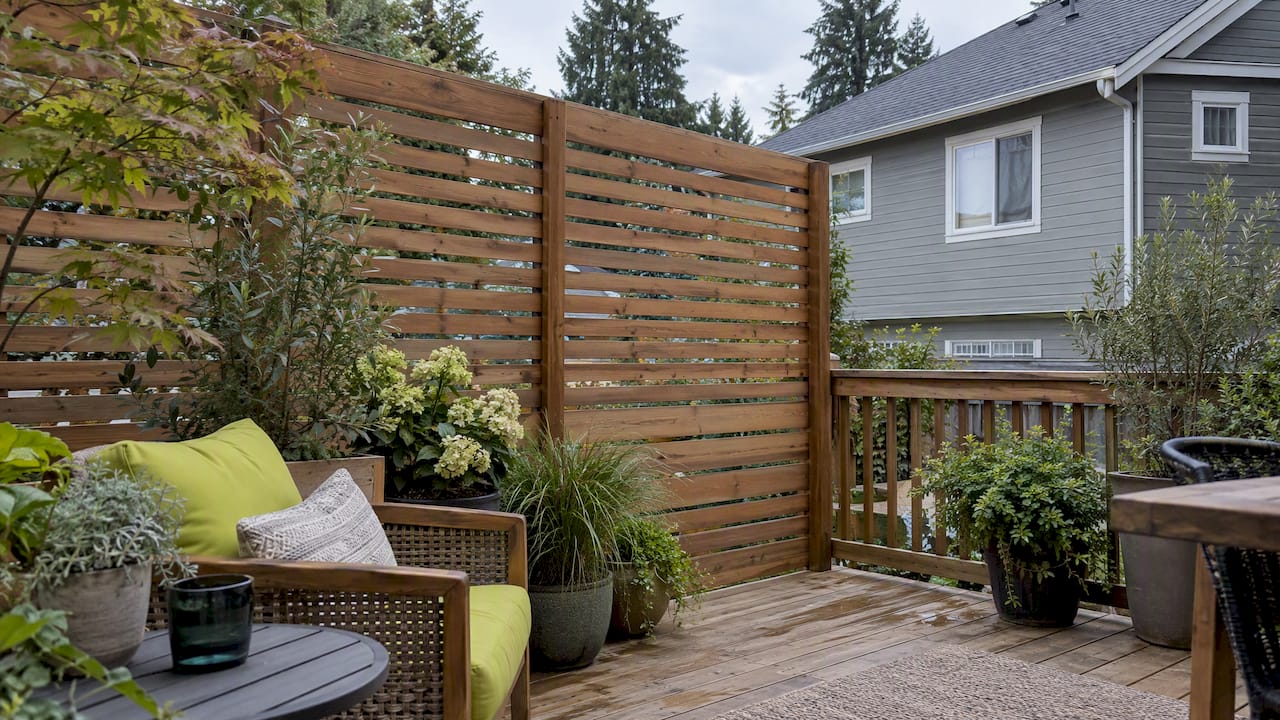
You can block a neighbor’s view from your deck quickly with temporary fabric screens or bamboo rolls, build something sturdier like a privacy railing or lattice panel over a weekend, or grow a layered plant screen for a natural long-term fix. Pick based on your budget, how permanent you want the result, and whether the project needs a permit. Anything attached to your house or deck framing is worth a quick permit check first.
TL;DR:
Bamboo rolls last one to three years outdoors, while UV rated curtains last two to four seasons; leave rolls loose so wind can pass through.
For structural attachments, new footings, or screens above local height limits, check municipal rules and HOA covenants before building because permit thresholds vary by location.
Check sightlines from your seats, including upstairs windows; blocking a six to ten foot section may solve the problem without screening the whole deck.
Use slats or lattice to preserve airflow; solid panels block more views but can make decks stuffy and shade south or west facing areas.
Layer native trees, shrubs, and grasses to fill gaps; check local invasive species lists before planting bamboo, privet, or barberry.
CactusdeckingCreate a More Private DeckCactus Decking builds custom outdoor spaces in Everett, with decking options designed around your needs and preferences.Explore deck options
Table of Contents
Quick, low-cost fixes you can install this weekend
Semi-permanent built screens that last for years
Plant-based screens that grow more private over time
Choosing materials that stay private without closing in your deck
How to pick the right approach for your deck
When a contractor makes more sense than a DIY weekend
A basic safety and permit note before you build
Where to place your screen for maximum privacy
How privacy screens affect airflow and sunlight on your deck
Balancing privacy, style, and the neighbors next door
Let us build a privacy solution that lasts
Sources
Quick, low-cost fixes you can install this weekend
When you need privacy fast and don’t want to commit to a big project, a few affordable options get the job done in an afternoon. Bamboo rolls are one of the most popular choices: zip-tie or wire them to an existing railing, leaving a couple of inches of slack so wind can pass through instead of tearing the material loose. Privacy mesh works the same way and comes in dozens of opacity levels, so you can block a direct sightline without turning your deck into a cave.
Outdoor curtain panels are another fast option, especially on covered decks where you can mount a tension rod between posts or under a roofline. Look for solution-dyed acrylic or polyester fabrics rated for outdoor use so they don’t mildew or fade after one season. For renters or balcony setups, freestanding screens and tall planter boxes with built-in trellises give you privacy without touching the structure at all, which means you take them with you when you move.
These low-cost options are a common entry point for a reason: a consumer guide to cheap privacy fixes lists bamboo rolls, curtains, lattice with vines, and tall planters as some of the most practical ways to block a neighbor’s view, often installed in a single afternoon.
Bamboo rolls and privacy mesh: fasten loosely to allow airflow, expect a one to three year lifespan outdoors.
Outdoor curtain panels: best on covered decks, typically last two to four seasons with UV-rated fabric.
Freestanding or planter-based screens: no installation required, ideal for renters or shared property lines.
Most of these temporary options cost well under a major remodel budget and can go up without tools beyond a drill or zip ties, according to the same cheap privacy ideas roundup.
Semi-permanent built screens that last for years
Once you’re ready for something sturdier, built options give you control over height, opacity, and style while lasting far longer than fabric or mesh. Privacy railing systems replace or supplement your existing railing with solid or semi-solid infill, which blocks sightlines at sitting or standing height while changing how light and breeze move across the deck. These systems typically bolt into your existing posts, though the structural work involved means it’s worth getting the connections checked.
Lattice panels are a middle-ground option: they block partial views immediately and become more effective over a season or two as climbing vines fill in the gaps. Pre-made panels mount to posts or a simple frame, and many homeowners pair them with a trellis for jasmine, clematis, or climbing hydrangea. Pergolas and attached covers take this further by combining overhead shade with vertical screens or retractable shades on the sides, turning the deck into a more enclosed room without fully walling it in. If you’re weighing a pergola against other cover styles, our pergola guide walks through the structural tradeoffs.
Privacy railing with solid infill: blocks sightlines at eye level, moderate cost, long lifespan.
Lattice panels: lower upfront cost, improves with climbing plants, needs a frame or post anchor.
Pergola with side screens: highest cost, adds shade and structure, often needs a permit.
Any of these that attach to your house framing, exceed typical fence height limits, or involve new footings can trigger a building or zoning permit, so check with your local planning department before you start cutting lumber.
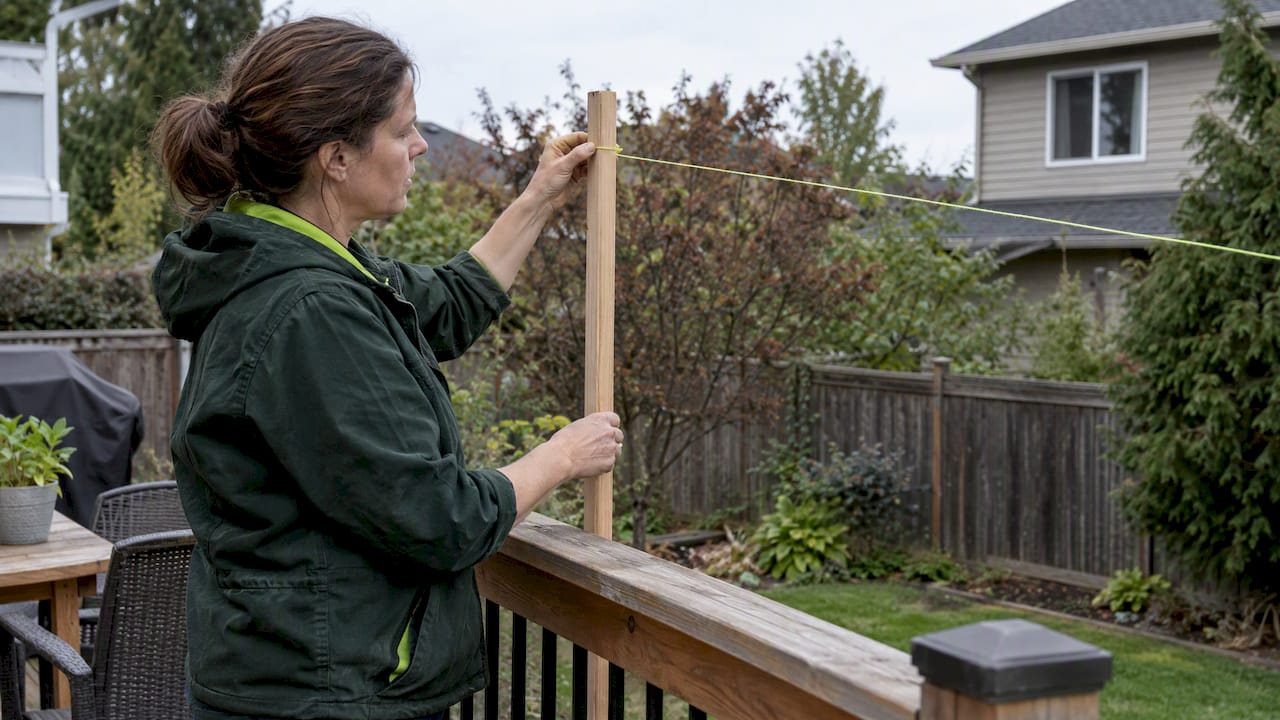
Pro Tip: Mock up your planned screen height with cardboard or stakes and string before building anything, so you can confirm it actually blocks the sightline from your neighbor’s upper-floor windows.
Plant-based screens that grow more private over time
A living screen takes longer to mature than a fabric curtain, but it tends to look better every year instead of wearing out. The strongest approach layers plants by height and structure: tall trees or large shrubs as a backdrop, mid-height shrubs to fill the middle layer, and ornamental grasses or low perennials in front. This layering closes gaps faster than a single row of identical plants and keeps the screen interesting to look at instead of a flat green wall.
Fast growers like arborvitae or bamboo give you quicker coverage, while slower, longer-lived trees fill in the gaps those fast growers eventually leave as they thin with age. Whatever you choose, favor native species suited to your climate zone, since native plants generally need less water and fertilizer once established. Some popular privacy plants, including certain bamboo varieties, European privet, and Japanese barberry, are classified as invasive in parts of the country, so it pays to check before planting a hedge you can’t easily remove later, according to University of Maryland Extension.
Backdrop layer: trees or tall evergreens for year-round height and structure.
Mid layer: flowering or evergreen shrubs to fill sightlines at eye level.
Foreground layer: ornamental grasses or low shrubs for texture and seasonal interest.
Mixed-species plantings resist pests and disease better than single-species hedges, according to University of Maryland Extension, which recommends layering trees, shrubs, and grasses rather than relying on one species for your entire screen. That diversity also means a single pest outbreak or disease won’t wipe out your whole privacy screen at once. For more layout ideas built around this layering principle, a landscaping guide on privacy plantings walks through practical combinations for small and mid-sized yards.
Choosing materials that stay private without closing in your deck
The material you choose for a built screen affects more than looks: it determines how much light and air still reach your deck. Composite panels resist rot and need almost no maintenance beyond occasional washing, making them a solid long-term pick if you want a screen that won’t warp or splinter. Cedar brings a warmer, natural look and takes stain well, but it needs resealing every couple of years to hold up against sun and rain. Metal screens, often laser-cut into decorative patterns, hold up well structurally but can get hot to the touch in direct sun. Fabric remains the lightest and most adjustable option, though it has the shortest lifespan of the group.
How you arrange the material matters as much as what it’s made from. Solid infill blocks the most light and airflow, which works well for a tight side yard but can make a small deck feel boxed in. Slatted panels and lattice let breeze and dappled light through while still breaking up a direct line of sight, which tends to suit larger or more open decks better. Pairing whichever screen you choose with deck lighting and a few planters ties the whole space together instead of looking like an afterthought bolted onto the railing.
Composite: low maintenance, consistent look, higher upfront cost.
Cedar: natural warmth, needs resealing every two to three years.
Metal or fabric: metal is durable but can heat up, fabric is lightweight but shorter-lived.
How to pick the right approach for your deck
Before you buy anything, run through a short checklist to match your situation to the right category of solution.
Decide how permanent you want the result: temporary for renters or short-term needs, built or planted for a long-term fix.
Set a budget range, since fabric and bamboo cost far less upfront than a built railing or mature landscaping.
Check HOA rules and local permit requirements before attaching anything to your house or digging new footings.
Map sightlines from your neighbor’s windows or yard to figure out exactly where and how tall your screen needs to be.
Be honest about maintenance tolerance: plants need pruning and watering, fabric needs replacing, built screens need the least upkeep.
If you decide a built option makes sense, a quick call to a contractor is worth it before you commit. Ask how they handle permit filing, what the realistic timeline looks like, which materials they recommend for your climate, and what warranty covers the installation. Those four questions alone will tell you a lot about how the project will actually go.
When a contractor makes more sense than a DIY weekend
Any project that involves structural attachment, like a privacy wall anchored into deck framing or a railing system tied into existing posts, benefits from a professional eyeball on ledger connections, load paths, and water intrusion prevention. A contractor also handles permit filing, which saves you from guessing at local code. For builds like that, consider hiring a contractor who can provide an in-house crew, eco-conscious material options, and warranty-backed installation to ensure quality as your project progresses beyond fabric and planters.
A basic safety and permit note before you build
Most jurisdictions regulate how tall a fence or privacy screen can be before it needs a permit, and that height limit often changes depending on whether the structure sits in a front yard, side yard, or backyard. Setback rules, which govern how close a structure can sit to a property line, add another layer homeowners frequently miss until a project is already underway. A privacy wall that looks perfectly reasonable on paper can still violate a setback rule if it sits too close to the boundary line.
Attaching a screen, cover, or railing directly to your house or deck framing is the detail most likely to trigger a permit requirement, since it becomes part of the structure rather than a freestanding addition. According to the City of Portland’s residential permitting guidance, home additions like attached covers or screens often need a building or zoning permit once they exceed a certain height or connect structurally to the house, and the specific thresholds vary by city and county.
Before you dig a footing or bolt a frame to your ledger board, a short call to your municipal planning department clears up exactly what applies to your lot. That five-minute check costs nothing and can save you from a stop-work order or a costly teardown later. HOA covenants add a separate layer of rules on top of city code, so if you live under one, check both before you buy materials.
Where to place your screen for maximum privacy
Placement matters more than most homeowners expect, and a screen positioned a few feet off can leave the exact sightline open that bothered you in the first place. Start by sitting in your usual deck chairs and having someone walk around your neighbor’s yard or stand at their windows to identify precisely where the view comes from. That single step often reveals that you only need to block a 6 to 10 foot section rather than screening the entire deck perimeter.
Height matters as much as width. A screen that blocks a ground-level view does nothing against a neighbor’s second-story window, so factor in elevation differences between the properties when you’re deciding how tall to build or plant. Corner placements, where two sightlines converge, often give you the most privacy for the least material, since one well-placed panel or dense shrub can block views from two directions at once.
Think about your own sightlines too. A screen placed to block the neighbor’s view can also block your view of a garden bed or a nice tree line, so test the placement from your seating area before committing. Movable options like planters or freestanding panels let you adjust position across a season before you settle on where a permanent fixture should go.
How privacy screens affect airflow and sunlight on your deck
Any screen you add changes how much breeze and sun reach your deck, and that tradeoff is worth thinking through before you pick a style. Solid panels, whether fabric, wood, or composite, block the most view but also block the most airflow, which can make a deck feel stuffy on a still summer evening. Slatted panels and lattice let air pass between the gaps while still breaking up a direct line of sight, which tends to keep a deck more comfortable in warmer climates.
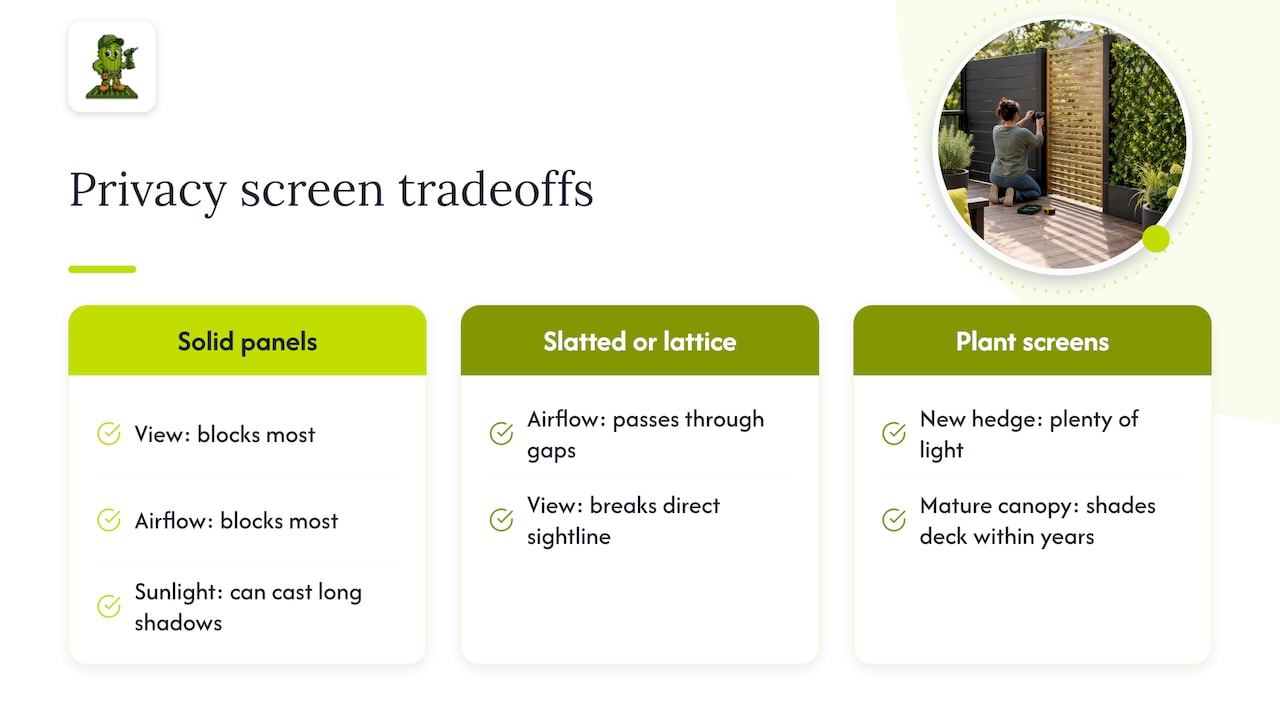
Sunlight works the same way. A solid privacy wall on the south or west side of a deck can cast a long shadow for part of the day, which might be welcome in a hot climate but disappointing if you were hoping for a sunny spot to read. Plant-based screens shift this balance over time: a newly planted hedge lets plenty of light through, but a mature tree canopy can shade a large section of the deck within a few years.
If airflow and light matter as much as privacy, consider mixing approaches rather than committing to one solid barrier. A slatted panel on the side with the most direct sightline, paired with a lower planter screen elsewhere, often gives you privacy where you need it without turning the whole deck into a shaded box.
Balancing privacy, style, and the neighbors next door
I’d start with the least permanent option that solves the actual problem. Permanent walls make sense once you’ve confirmed the sightline, the budget, and the rules, not before.
It’s also worth a short conversation with your neighbor before you build anything tall near a shared line. Most boundary friction comes from surprise, not the screen itself.
— Vlad
Let us build a privacy solution that lasts
Once you’ve decided a fabric curtain or a few planters won’t cut it, we can design and build something that actually holds up: custom deck railing systems with privacy infill, deck covers that combine shade with screening, or a full deck replacement if your current structure can’t support the addition you want.
Working with a professional contractor means a clear process from consultation through construction, an in-house crew handling the build instead of subcontractors, permitting support so you’re not guessing at local code, and warranty-backed work when it’s done. Here’s what that looks like in practice:
Deck covers that integrate shade and privacy screening in one structure.
Custom railing systems with solid or semi-solid infill for sitting-height privacy.
Full deck replacement when your existing frame can’t support a new attachment.
Deck design support to plan sightlines, materials, and placement before building.
Browse our deck gallery for examples, then reach out through our deck design page to schedule a consultation.
FAQ
How do you block your neighbors from seeing your deck?
Start with the sightline that bothers you most, then choose a temporary fix like a bamboo roll or outdoor curtain, a built option like a privacy railing or lattice panel, or a layered planting. Most homeowners combine at least two approaches, using a quick fabric or bamboo screen while a planted hedge matures.
What is the rule of three in landscaping?
Landscaping design often groups plants in odd numbers, commonly threes, because odd-numbered groupings tend to look more natural and less rigid than pairs or even rows. For a privacy screen, this usually means repeating a shrub or grass in clusters of three rather than planting a single straight line.
What are creative ways to separate a front yard from a neighbor’s?
A mixed planting bed with a small tree, a few shrubs, and ornamental grasses creates separation without a hard boundary line, while a low lattice fence with climbing vines does the same with more structure. Raised planter boxes along the property line work well too, especially where soil conditions or HOA rules limit a traditional hedge.
How should I handle a neighbor who ignores property boundaries?
Document the boundary location with a survey if there’s any dispute, then raise the issue directly and calmly before escalating. If a conversation doesn’t resolve it, a local mediation service or, as a last step, legal counsel familiar with property line disputes in your area can clarify your options.
Do I need a permit to add a privacy screen to my deck?
It depends on the height, location, and whether the screen attaches to your house or deck framing, so check with your local planning department before building. According to City of Portland permitting guidance, structures exceeding certain heights or connected structurally to the home often require a permit, and the exact thresholds vary by city.
Sources
Plants for mixed privacy screens | University of Maryland Extension
Residential permits for fences, decks and outdoor projects | City of Portland
9 Cheap Ways to Block Your Neighbor’s View Into Your Yard | MoneyTalksNews